Monthly Archives: July 2020

Airbus takes final step to end long-standing WTO dispute and U.S. tariffs

Airbus has agreed with the governments of France and Spain to make amendments to the A350 Repayable Launch Investment (RLI) contracts. After 16 years of litigation at the World Trade Organisation (WTO), this is the final step to stop the long-standing dispute and removes any justification for U.S. tariffs.

The tariffs imposed by the United States Trade Representative (USTR) are currently harming all targeted industry sectors, including U.S. airlines, and are adding to a very difficult environment as a consequence of the COVID-19 crisis. This is why Airbus has decided to make a final step to remove the last contentious point and amend the French and Spanish contracts to what the WTO considers the appropriate interest rate and risk assessment benchmarks. The WTO has already ruled that RLI is a valid instrument for governments to partner with industry by sharing investment risks. With this final move, Airbus considers itself in complete compliance with all WTO rulings.

โ€œWe have fully complied with all the WTO requirements. These additional amendments to the A350 RLIs demonstrate that Airbus has left no stone unturned to find a way towards a solution,โ€ said Airbus CEO Guillaume Faury. โ€œThis is a clear signal of support to those who are suffering from the severe impact of the tariffs imposed by the USTR, especially at a time when industries are hard hit by the consequences of the COVID-19 crisis.โ€

Vistara receives its first Airbus A321neo aircraft with flat-bed business class

Vistara, a joint venture between TATA group and Singapore Airlines Limited (SIA), took delivery of its first Airbus A321neo aircraft in New Delhi on July 24. The aircraft, arriving from Airbusโ€™ final assembly lines in Hamburg, Germany, features Indiaโ€™s most advanced aircraft cabin in the sky with fully flat beds in business class.

Overall, Vistaraโ€™s A321neo features a three-class layout with 12 seats in business class, 24 in premium economy and 152 in economy class. The aircraft is the first of six A321neo for the airline, on lease by Air Lease Corporation and part of the 50 A320neo Family aircraft order signed in 2018.

All Vistara A321neo will be powered by latest-generation CFM-Leap 1A engines. These aircraft will be supported by Airbusโ€™ Flight Hour Services Tailored Support Package (FHS-TSP) programme to optimise and secure Vistara fleet operations. The aircraft will complement Vistaraโ€™s current Airbus fleet of 32 A320 Family aircraft.

The A321neo is the largest member of the Airbusโ€™ benchmark A320 Family, seating up to 240 passengers, depending on cabin configuration. It incorporates the latest technologies, including latest-generation engines, aerodynamic advances and cabin innovations, delivering 20 percent fuel savings. The aircraft offers significant environmental benefits as at least 20 percent reduced emissions and a nearly 50 percent smaller noise footprint compared to previous generation aircraft. To date, the orderbook for the A320neo Family stands at 7,445 aircraft.

BER Airport to open on October 31, 2020

Flughafen Berlin Brandenburg made this announcement:

For the opening of the Berlin Brandenburg Airport (BER), the corporate communications department of the airport company is offering numerous media reporting opportunities between 25 October and 8 November.

Above Photo: Entrance hall, stairways to central check in at Terminal 1, Berlin Brandenburg Airport The photo may be used exclusively for editorial purposes. Graphical changes are not permitted, unless for the purpose of extracting the main motif. Usage is free of charge on quoting the reference “Photo: (Gรผnter Wicker)/Berlin Brandenburg Airport”

With the opening of BER Airport, all air traffic in the German capital region will be concentrated in one location. Berlin is a tourist magnet, a political centre and a trade fair city. Brandenburg is an up-and-coming economic region with global players such as Tesla and attracts holidaymakers from around the world with sights such as the Sanssouci Palace. The new airport location is thus an important hub for linking the strong economic and tourism region to more than 150 destinations worldwide.

In the period between 25 October and 8 November, there will be multiple press events surrounding the opening of BER Airport and the closure of Tegel Airport, which is rich in traditions. Trial operations at the new airport, the move from Tegel to BER, the start of airline flight operations and the reactions of passengers to the new terminal are other potential topics. In addition, we will also give you the opportunity to report on partners from all areas of the airport, such as gastronomy and shopping, airport services and mobility.

Wexford Capital acquires Via Airlines, will be rebranded

Wexford Capital has made this announcement:

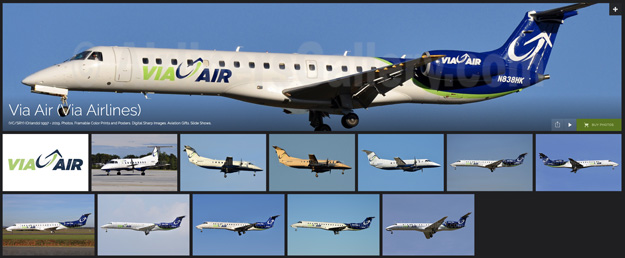
Wexford Capital LP announced that it and certain affiliates received bankruptcy court approval to reorganize and acquire Via Airlines, Inc., a FAA Part 121 regional airline based in Maitland, FL. This transaction allows Via, which will be rebranded, to restart domestic operations, once approved by the DOT and recertified by the FAA. The new airline will be supported by a highly experienced management team.

The reorganized company intends to provide regional air services in strategic markets that have been crippled in the wake of COVID-19. The Companyโ€™s new management team will be led by former COO of Republic Airways, Wayne Heller who will serve as the Companyโ€™s CEO.

โ€œWe are evaluating initial launch markets and strategic partnerships, including, but not limited to, the Southeast, Midwest and Alaskan markets,โ€ said Heller.ย  โ€œAlthough the Pandemic has decimated and challenged the airline industry today, we believe that a quality regional air services provider will continue to be highly desired and vital for the transportation of people and goods throughout the U.S for the foreseeable future, and we intend to be part of that solutionโ€, Heller went on to say.

โ€œWe are excited to reenter the regional airline space. Leveraging our decades of experience investing in the airline industry, we are excited about the opportunity to create the next best-in-class regional airline,โ€ added Arthur Amron, a Partner of Wexford.

Wexford has a long track record of investing in the airline industry, such as founding and driving the transformation of Republic Airways into a regional airline with over 200+ modern regional jets.

Via Airlines on October 8, 2019 announced it was filing for Chapter 11 bankruptcy and ceased all operations.

Via Air aircraft photo gallery:

Via Air aircraft slide show:

https://airlinersgallery.smugmug.com/frame/slideshow?key=cSFm7g&speed=3&transition=fade&autoStart=1&captions=0&navigation=0&playButton=0&randomize=0&transitionSpeed=2

Air Transat makes its first commercial flights on July 23

Transat, one of the largest integrated tourism companies in the world and Canada’s holiday travel leader, made its first commercial flights of Air Transit on July 23, the day it resumed air operations after four months of inactivity. There will be three international flights (MontrealToulouse, MontrealParis and TorontoLondon) and three domestic flights (MontrealToronto, TorontoMontreal and TorontoVancouver). Transat’s entire reduced summer schedule of 24 routes to some 20 destinations will be up and running by August 2.

To put things in perspective, September 11, 2001, was the most significant and transformative event in the travel and tourism industry in the last two decades. But as astonishing as it may seem today, by September 13, just two days later, Transat announced the gradual resumption of its flights.

Traveller Care for a totally safe trip
One of the key elements of the recovery is of course customers’ confidence in travelling safely. In this regard, Transat’s Traveller Care program offers a complete package of health and safety measures for people on the move. Based on the recommendations of regulatory authorities, the travel experience has been completely revamped: from the travel agency, to the airport, on board the aircraft, and all the way to the destination. The program is accompanied by a comprehensive practical guide that includes, among other information, the requirements of destination countries and airports. These are two online reference tools available to travel consultants and their customers.

A fleet in transformation
In July, Transat’s carrier took delivery of three new Airbus A321neo LR aircraft, which are the core of its fleet transformation. This new-generation aircraft is ideal to support the resumption of flight operations, because of, among other things, its medium capacity, extended range and fuel efficiency. The last two A321neo LRs to join the fleet made their first-ever delivery flights last weekend powered by sustainable fuel (SAF) from the Airbus assembly plant in Hamburg, Germany.

Air Transat aircraft photo gallery:

Air Transat aircraft slide show:

https://airlinersgallery.smugmug.com/frame/slideshow?key=C3vZQL&speed=3&transition=fade&autoStart=1&captions=0&navigation=0&playButton=0&randomize=0&transitionSpeed=2

Alaska Air Group reports a second quarter GAAP loss of $214 million

Alaska Air Group has made this announcement:

Financial Results:

  • Reported net loss for the second quarter of 2020 under Generally Accepted Accounting Principles (GAAP) of $214 million, or $1.73 per diluted share, compared to net income of $262 million, or $2.11 per diluted share in the second quarter of 2019.
  • Reported net loss for the second quarter of 2020, excluding the payroll support program wage offsets, special items and mark-to-market fuel hedge accounting adjustments, of $439 million, or $3.54 per diluted share, compared to net income of $270 million or $2.17 per diluted share, in the second quarter of 2019.
  • Reported a debt-to-capitalization ratio, including short-term borrowings related to COVID-19, of 51%.

Liquidity Updates:

  • Lowered cash burn from an exit rate of $400 million per month in March to $120 million in June, a 70% reduction.
  • Closed on an additional $164 million in secured financing in the second quarter, secured by seven aircraft.
  • Held $2.8 billion in unrestricted cash and marketable securities as of June 30, 2020.
  • Obtained nearly $1.2 billion in financing through the issuance of Enhanced Equipment Trust Certificates (EETC), secured by 42 Boeing and 19 Embraer aircraft, on July 2, 2020.
  • Held $3.8 billion in cash and marketable securities as of July 22, 2020, including EETC funds received in July.
  • Received $992 million in support for Alaska and Horizon under the Coronavirus Aid, Relief, and Economic Security (CARES) Act Payroll Support Program (PSP) in April 2020.
  • Reached an agreement for McGee to receive $30 million in CARES Act PSP support, $15 million of which was received in June 2020.
  • Signed a non-binding letter of intent with the U.S. Treasury to obtain up to $1.1 billion in additional CARES Act loans.

Operational Updates:

  • Received official oneworld invitation on July 23, 2020. The company is working to accelerate the timeline and join the partnership by the end of 2020.
  • Returned 43 mainline aircraft and all Horizon Air and SkyWest Airlines aircraft to service. As of July 22, 2020, 89 mainline aircraft remain temporarily parked.
  • In July 2020, eliminated 300 management positions, initiated early-out programs for frontline workers and offered incentive leaves to pilots as we work to mitigate involuntary furloughs.
  • Received FAA certification to transport cargo in the passenger cabin on five Boeing 737-900 passenger aircraft, and began cargo-only service to Unalakleet, Alaska.
  • Announced expansion to year-round service to King Salmon and Dillingham, Alaska, to be flown by Horizon E175 aircraft, as well as began weekly service on Boeing 737 aircraft to Cold Bay, Alaska.
  • Announced 12 new routes to be flown to various destinations from Los Angeles International Airport.

Next-Level Care:

  • Expanded the Company’s Next-Level Care initiative, including nearly 100 measures, offering layers of safety through every single stage of travel and helping guests build confidence in flying. Such measures include the following:

Covering and caring for guests

    • Flyers are required to complete a pre-travel wellness agreement at check-in. Guests aged 12 and older are required to wear a mask throughout all stages of travel.
    • Empowered flight attendants with the ability to issue “yellow card” warnings to guests refusing mask policies, with the consequence of suspension of future travel for non-compliance.
    • Provided hand sanitization stations throughout the airport, including lobby and gate areas. Personal sanitizing wipes made available onboard starting July 2020.
    • Extended “Peace-of-Mind” waiver, allowing changes to ticketed travel without change or cancellation fees for tickets booked through Sept. 8, 2020.

Personal Safety

    • Limiting the number of guests onboard and extended blocking middle seats on mainline aircraft through Sept. 30, 2020.
    • Reduced onboard service to limit interaction between flight crews and guests.
    • Placed floor decals throughout our airports, reminding guests to “mind their wingspan,” when at ticket counters, kiosks and boarding.
    • Limited capacity of airport lounges to 50% and extended lounge memberships active as of April 1 by six months.
    • Boarding aircraft from the rear, and in smaller groups, to limit interaction between guests.
    • Working with airports to install plexiglass barriers at all guest touchpoints along their journey.

Exceeding CDC guidelines and clearing the air

    • Aircraft are equipped with hospital-grade HEPA air filters, which are designed to remove 99.95% of airborne contaminants and bring outside air on board every three minutes.
    • Exceed CDC cleaning guidelines on board and use high-grade, EPA-certified disinfectant to clean critical areas, and perform a deep-clean and sanitization of all aircraft overnight.
    • Utilizing electrostatic disinfectant sprayers, which emit a safe, high-grade EPA cleaning solution to sanitize surfaces.

Alaska Air Group Inc. today reported second quarter 2020 GAAP net loss of $214 million, or $1.73 per diluted share, compared to net income of $262 million, or $2.11 per diluted share in the second quarter of 2019. Excluding the impact of payroll support program wage offsets, special items and mark-to-market fuel hedge adjustments, the company reported adjusted net loss of $439 million, or $3.54 per diluted share, compared to adjusted net income of $270 million, or $2.17 per diluted share in 2019.

“Airlines are currently navigating the biggest demand contraction in the history of aviation,” said Air Group CEO Brad Tilden. “The rest of the leadership team and I could not be more proud of how the people of Alaska and Horizon reacted quickly and decisively to adjust our operations and our business, and to help our guests feel safe when they fly with us. Being tested in moments like this reveals character, and I’m confident in our future because of the way our people are responding every day with grit, determination and perseverance. Those are the qualities that will carry our airline and our country through this crisis and beyond.”

Alaska Airlines aircraft photo gallery:

Alaska Airlines aircraft slide show:

https://airlinersgallery.smugmug.com/frame/slideshow?key=T7vbHq&speed=3&transition=fade&autoStart=1&captions=0&navigation=0&playButton=0&randomize=0&transitionSpeed=2

Southwest reports a second quarter net loss of $915 million as bookings soften

Southwest Airlines Companyย today reported its second quarter 2020 results:

  • Second quarter net loss of $915 million and $1.63 net loss per diluted share
  • Excluding special items1, net loss of $1.5 billion and $2.67 net loss per diluted share
  • Second quarter operating revenues of $1.0 billion, down 82.9 percent year-over-year
  • Ended second quarter with liquidity of $15.5 billion, well in excess of debt outstanding

Gary C. Kelly, Chairman of the Board and Chief Executive Officer, stated, “As our Nation continues to battle the COVID-19 pandemic, demand for air travel remains weak, which was the driver of our second quarter net loss of approximately $1.5 billion, excluding special items. We were encouraged by improvements in May and June leisure passenger traffic trends, compared with March and April; however, the improving trends in revenue and bookings have recently stalled in July with the rise in COVID-19 cases. We expect air travel demand to remain depressed until a vaccine or therapeutics are available to combat the infection and spread of COVID-19. We will adjust our flight schedule aggressively and frequently in response to this volatile demand environment. I am incredibly proud of our Employees for their superb planning and cost management, swift actions to bolster liquidity, quick adaptation of our route network, and outstanding Customer Service. Our top priority is the safety and health of our People and our Customers.

“During second quarter 2020, we restructured our route network and launched the Southwest Promiseโ€”added additional cleaning practices throughout our operation; modified procedures to support physical-distancing; required Passengers and Customer-facing Employees to wear face masks or face coverings; and implemented additional policies and procedures for our Employees to protect themselves and safely transport our Customers. As part of our Promise, we are limiting seats sold on each flight through at least October 2020 to allow for middle seats to remain open to allow for physical-distancing onboard our aircraft. Customer feedback has been very positive.

“We have strong liquidity, with cash and short-term investments of $14.5ย billion as of June 30, 2020; the only investment-grade credit rating in the U.S. airline industry by all three agencies; and unencumbered assets of $12 billion, including $10 billion in aircraft. We remain diligent in meticulously managing our cash burn. Since March, we have reduced annual 2020 spending by more than $7 billion compared with original plans. Average core cash burn2ย decreased by nearly half during second quarter 2020, from approximately $900 million in April, or $30 millionper day, to approximately $500 million in June, or $16 million per day, resulting in second quarter 2020 average core cash burn of $23 millionper day, primarily due to strengthening revenue trends. Our average core cash burn in July 2020 is currently estimated to be approximately $18 million per day, higher than June as a result of weakening revenue trends. Due to the reversal in trends, we are re-evaluating our August and September 2020 capacity plans in an effort to improve our third quarter 2020 average daily core cash burn, which is currently estimated to be in line with second quarter 2020 of $23 million per day. We are laser-focused on returning to break-even cash flow, and we will continue exploring opportunities for further cost efficiencies.

“We are grateful for the Payroll Support Program (PSP) proceeds we received from the U.S. Treasury under the Coronavirus Aid, Relief, and Economic Security Act (CARES Act), which has helped to protect jobs for our more than 60,000 Southwest Employees. During second quarter 2020, we introduced voluntary extended emergency time off and separation programs with the goal of aligning staffing to reduced flight schedules to avoid involuntary furloughs and layoffs. Employees had until July 15thย to elect to participate in these voluntary programs, and I am proud to share that, combined, approximately 16,900 Employees volunteered for these programs, representing nearly 27 percent of our workforce. The benefits of these programs are expected to result in more than $400 million in lower salaries, wages, and benefits costs in fourth quarter 2020, alone. In addition, the emergency time off element provides the Company flexibility to adjust to increased demand. For those Employees that elected these programs, I am immensely grateful for their outstanding support of and service to our great Company. Based on the strong take rates from these voluntary programs, currently, we do not intend to pursue furloughs and layoffs, or pay and benefits cuts, through yearend; however, we will continue to plan for multiple weak scenarios and maintain our preparedness.

“In a time where much is uncertain, I am even more grateful for the position of strength that Southwest Employees have built over the last five decades. Our founder, Herb Kelleher, always reminded us: we manage, in good times, so that all of us will be protected from bad times; that is why keeping costs low and spirits high, at all times, is so very important. By living Herb’s basic credo, we entered this crisis prepared with the U.S. airline industry’s strongest balance sheet and most successful business model. While the impact of this pandemic is unprecedented, we believe that demand for air travel will rebound, and we fully intend to be ready and well-positioned when it does.”

Revenue Results and Outlook

The Company’s second quarter 2020 total operating revenues decreased 82.9 percent, year-over-year, to $1.0 billion, as a result of continued negative impacts to passenger demand and bookings due to the pandemic. Second quarter 2020 operating revenue per available seat mile (RASM, or unit revenues) was 5.63 cents, a decrease of 61.9 percent, driven by a load factor decrease of 55.0 points and a passenger revenue yield decrease of 21.1 percent, all year-over-year.

Beginning in early May 2020, the Company saw a modest improvement in passenger demand, bookings, and trip cancellation trends, resulting in net positive bookings where new passenger bookings outpaced trip cancellations. This represented a reversal in the net negative booking trends experienced during the majority of March and April 2020, when trip cancellations outpaced new passenger bookings. The Company continued to experience net positive bookings for the remainder of second quarter 2020 and July to date.

The Company’s April 2020 operating revenues decreased 91.8 percent, year-over-year; available seat miles (ASMs, or capacity) decreased 58.3 percent, year-over-year; and load factor was 7.8 percent. The Company’s May 2020 operating revenues decreased 84.7 percent, year-over-year; capacity decreased 63.8 percent, year-over-year; and load factor was 29.9 percent. The Company’s June 2020 operating revenues decreased 73.3 percent, year-over-year; capacity decreased 43.6 percent, year-over-year; and load factor was 49.5 percent.

Thus far in July 2020, bookings for all months have softened; trip cancellations have increased modestly; and the rate of sequential monthly improvement for July revenue trends has slowed. The Company’s July 2020 operating revenues are currently estimated to decrease, year-over-year, in the range of 70 to 75 percent; capacity is estimated to decrease approximately 30 percent, year-over-year; and load factor is estimated to be in the range of 40 to 45 percent. The Company’s August 2020 operating revenues are currently estimated to decrease, year-over-year, in the range of 70 to 80 percent; capacity is estimated to decrease approximately 20 percent, year-over-year; and load factor is estimated to be in the range of 30 to 40 percent.

The Company continued to make progress on its global distribution system (GDS) launch during second quarter 2020, now at industry-standard participation, including Airline Reporting Corporation (ARC) ticketing and settlement, with Travelport’s GDS platforms: Apollo, Worldspan, and Galileo. The Company expects to launch its fourth industry-standard GDS platform with Amadeus by yearend. The Company’s enhancement of its GDS channel strategy complements its expansion of direct connect via Airline Tariff Publishing Company’s (ATPCO) New Distribution Capability (NDC) Exchange and SWABIZยฎ options with the goal of distributing its everyday low fares to more business travelers through their preferred channel. The Company has been exploring an industry-standard GDS relationship with Sabre, but has been unable to reach an agreement, and has provided Sabre notice of termination of its current basic booking request (BBR) agreement at the end of 2020.

Cost Performance and Outlook

Second quarter 2020 total operating expenses decreased 56.8 percent, year-over-year, to $2.1 billion. Total operating expenses per available seat mile (CASM, or unit costs) decreased 3.4 percent, compared with second quarter 2019.

Second quarter 2020 economic fuel costs1ย were $1.33 per gallon and included $24 million, or $.12 per gallon, in premium expense and no cash settlements from fuel derivative contracts, compared with $2.13 per gallon in second quarter 2019, which included $28 million, or $.05per gallon, in premium expense and $.06 per gallon in favorable cash settlements from fuel derivative contracts. Market fuel prices have increased since the end of first quarter 2020, but are still favorable compared with last year, and resulted in an approximate $153 millionreduction in second quarter 2020 fuel and oil expense compared with original market fuel price projections in January 2020. The Company continued to operate fewer of its oldest, least fuel-efficient Boeing 737-700 aircraft as a result of capacity cuts due to the pandemic which, combined with lower load factors, resulted in a year-over-year improvement of 14.5 percent in ASMs per gallon (fuel efficiency) in second quarter 2020.

Based on the Company’s existing fuel derivative contracts and market prices as of July 16, 2020, third quarter 2020 economic fuel costs are estimated to be in the range of $1.20 to $1.30 per gallon3, including $24 million, or $.07 per gallon, in premium expense and no cash settlements from fuel derivative contracts, compared with $2.07 per gallon in third quarter 2019, which included $20 million, or $.04 per gallon, in premium expense and no cash settlements from fuel derivative contracts. As of July 16, 2020, the fair market value of the Company’s fuel derivative contracts for the remainder of 2020 was an asset of approximately $1 million, and the fair market value of the fuel hedge portfolio settling in 2021 and beyond was an asset of approximately $109 million. Additional information regarding the Company’s fuel derivative contracts is included in the accompanying tables.

Excluding fuel and oil expense, second quarter 2020 operating expenses decreased 50.6 percent, compared with second quarter 2019. The Company’s second quarter 2020 results included a special item related to the $1.1 billion benefit of PSP proceeds recognized during the quarter. The Company expects to recognize an additional $1.2 billion benefit of PSP proceeds as a third quarter 2020 special item.The Company’s second quarter 2020 results also included a special item related to the costs for Employees who accepted the Company’s offer in second quarter 2020 to participateย inits voluntary separation program. In accordance with the accounting guidance in ASC Topic 712 (Compensation โ€” Nonretirement Postemployment Benefits), the Company accrued a charge related to such special termination benefits of $307 million during second quarter 2020, all of which will be paid out in subsequent periods to these Employees. The Company estimates an additional charge of approximately $540 million in third quarter 2020 for the Employees who completed their election in July 2020 to participate in the voluntary separation program. The Company also estimates a charge of more than $800 million in third quarter 2020 associated with its voluntary extended emergency time off program, upon final approval of Employee elections. Approximately 16,900 Employees have elected to participate in these voluntary programs: approximately 4,400 have elected the voluntary separation program and will be leaving the Company, and approximately 12,500 have elected the voluntary extended emergency time off program. The Company estimates nearly half of cash payments related to its voluntary separation program will be made during 2020, with payments for some Pilots occurring over a period up to five years based on the terms of the program. These programs allow the Company to reduce its fixed cost structure in the near-term, while maintaining the ability to adjust to a recovery in travel demand. Also treated as a special item in the Company’s second quarter 2020 results was a $222 million gain recognized in other operating expenses from sale-leaseback transactions for 10 of the Company’s 737-800 aircraft and 10 of the Company’s 737 MAX 8 (MAX) aircraft.

Excluding fuel and oil expense and special items, second quarter 2020 operating expenses decreased 24.2 percent, compared with second quarter 2019. No profitsharing expense was accrued in second quarter 2020 due to the Company’s net loss, compared with a profitsharing accrual of $170 million in second quarter 2019. Excluding fuel and oil expense, special items, and prior year profitsharing expense, second quarter 2020 operating expenses decreased 20.7 percent year-over-year. The significant year-over-year decrease was driven primarily by the decrease in variable, flight-driven expenses, such as salaries, wages, and benefits; maintenance expense; and landing fees; combined with the Company’s continued focus on eliminating non-essential spending and managing cash burn. On a unit basis, second quarter 2020 operating expenses, excluding fuel and oil expense, special items, and profitsharing expense, increased 77.3 percent, year-over-year, driven primarily by the significant reduction in capacity. Third quarter 2020 operating expenses, excluding fuel and oil expense, special items, and profitsharing expense, are expected to decrease in the range of 10 to 20 percent, year-over-year, representing a modest sequential increase in third quarter 2020 operating expenses compared with second quarter 2020 operating expenses, relative to the sequential increase in third quarter 2020 capacity compared with second quarter 2020 capacity4. The Company remains intensely focused on managing its operating costs while maintaining flexibility with its capacity plans.

Other expenses in second quarter 2020 increased by $112 million, year-over-year, primarily due to an increase in interest expense driven by new debt issued during the first half of 2020; a $9 million write-off of remaining unamortized costs from the Company’s 364-day term loan entered into in first quarter 2020 and repaid in full during second quarter 2020; lower interest income as a result of lower interest rates; and an increase in other losses driven by adjustments for fuel derivative contracts not designated as fuel hedges, which are excluded from the Company’s non-GAAP results as a special item. Based on current debt outstanding, the Company currently expects third quarter 2020 interest expense to be approximately $105 million.

The Company’s second quarter 2020 effective tax rate was 26.2 percent, and the Company currently estimates its annual 2020 effective tax rate to be in the range of 27 to 29 percent.

Liquidity and Capital Deployment

As of Juneย 30, 2020, the Company had approximately $14.5 billion in cash and short-term investments, and a fully available revolving credit facility of $1.0 billion. Since the Company’s previous update of cash and short-term investments of approximately $13.9 billion as of June 17, 2020, the Company received its third disbursement of PSP proceeds in the amount of $652 million. The remaining $326 million of PSP proceeds is expected to be received by the end of this month. Since the beginning of 2020, the Company has raised cash of approximately $17.3 billion, net of fees, including $12.2 billion in financings and sale-leaseback transactions, $2.2 billion through a common stock offering, and $2.9 billion of PSP proceeds. The Company currently has unencumbered assets worth approximately $12 billion, including approximately $10 billion in aircraft. As of June 30, 2020, the Company was in a net cash position5ย of $4.9 billion, and its adjusted debt6ย to average invested capital (leverage) was 49 percent.

Net cash provided by operations during second quarter 2020 was $897 million, driven primarily by PSP proceeds. Capital expenditures during second quarter 2020 were $113 million, which were more than offset by $128 million of supplier proceeds and $815ย million in proceeds from sale-leaseback transactions, both of which the Company accounted for as a reduction to aircraft capital expenditures. The Company has more than offset its originally planned annual 2020 capital spending of approximately $1.4 billion to $1.5 billion, primarily due to its 2020 and 2021 fleet delivery agreement with Boeing, proceeds from sale-leaseback transactions, and the cancellation or deferral of the majority of its capital investment projects originally planned for this year. In addition to the full repayment of its $3.7 billion 364-day term loan, and the full repayment of amounts drawn under its $1.0 billion revolving credit facility, the Company repaid approximately $159 million in debt and finance lease obligations during second quarter 2020, and expects to repay approximately $600 million in debt and finance lease obligations in the remainder of 2020.

Earlier this month, pursuant to a separate secured loan program established under the CARES Act, the Company signed a non-binding letter of intent with the U.S. Treasury with respect to a secured loan with an estimated principal amount of approximately $2.8 billion. This was the next step in the loan process, and the Company has not yet determined if it will ultimately participate in the secured loan program.

As previously disclosed, the Company suspended dividends and share repurchase programs until further notice. The Company had $899 million remaining under its May 2019 $2.0 billion share repurchase authorization at the time of the program’s suspension.

Fleet and Capacity

The Company returned five leased 737-700 aircraft during second quarter 2020, ending the quarter with 737 aircraft in its fleet. The Company has not received any MAX aircraft deliveries since February 2019, and Boeing is not currently delivering new MAX aircraft. Based on the Company’s latest agreement with Boeing and current planning assumptions, the Company expects to take delivery of no more than 48 MAX aircraft through December 31, 2021. The timeline and quantity of deliveries under this agreement with Boeing through 2021 are not yet finalized, and the Company will continue evaluating its fleet needs in light of current demand trends. Through the end of 2026, in addition to the 48 aircraft deliveries the Company is evaluating for 2020 and 2021, combined, the Company has another 217 firm orders and 115 options for MAX aircraft in its order book. Additional information regarding the Company’s aircraft delivery schedule is available in the Company’s Quarterly Report on Form 10-Q for the fiscal quarter ended March 31, 2020.

In response to capacity reductions due to the effects of the pandemic, the Company had approximately 400 aircraft in long-term storage or temporary parking in April 2020, including the Company’s 34 MAX aircraft that were grounded as of March 13, 2019, to comply with the Federal Aviation Administration (FAA) emergency order issued for all U.S. airlines to ground all MAX aircraft. The Company currently has nearly 100 aircraft in storage, including the 34 MAX aircraft. The Company has returned aircraft to service in recent months to support more flying in July as compared with April and to allow for middle seats to remain open to support physical-distancing onboard our aircraft. The Company continues to manage its active fleet based on passenger demand trends and has flexibility to adjust, as needed.

The Company is encouraged by Boeing and the FAA’s recent completion of a series of certification flights of the MAX. The Company continues to closely monitor the remaining milestones to be completed in order for the MAX to return to service. Regulatory approval of MAX return to service is subject to Boeing’s ongoing work with the FAA, who will determine the timing of MAX return to service. Upon a rescission of the FAA order to ground the MAX fleet, the Company will work closely with Boeing and the FAA to safely reintroduce the 34 MAX aircraft currently in its fleet into service and estimates it will take the Company several months to comply with applicable FAA requirements, including all necessary Pilot simulator training. The MAX is currently out of the Company’s published flight schedules through mid-December 2020. The Company offers no assurances that current estimations and timelines are correct. Any changes to current estimations could result in further delays in MAX aircraft deliveries, additional flight schedule adjustments and reductions beyond mid-December 2020, and additional financial damages.

The Company’s second quarter 2020 ASMs decreased 55.3 percent, year-over-year, due to the capacity reductions in light of the significant decrease in passenger demand and bookings as a result of the pandemic. Earlier this week, the Company reduced its September 2020 published capacity as a result of weaker revenue and booking trends, while being mindful of capacity required to uphold its Southwest Promise to support physical-distancing by limiting the number of seats sold on each flight to allow for middle seats to remain open for Customers who are not traveling together. As a result, September 2020 capacity is currently estimated to decrease in the range of 20 to 25 percent, year-over-year, and third quarter 2020 capacity is currently estimated to decrease in the range of 20 to 30 percent, year-over-year.

The Company continues to plan for multiple scenarios for its fleet and capacity given the uncertainty caused by the pandemic. Based on current demand and bookings,as well as results from voluntary separation and emergency extended time off programs, the Company currently expects to reduce its fourth quarter 2020 year-over-year capacity to better align to current demand trends and lower estimated staffing levels in fourth quarter 2020. As such, the Company’s actual flown capacity may differ materially from currently published schedules.

Awards and Recognitions

  • Named Loyalty Program of the Year for Rapid Rewardsยฎ Program and recognized for providing the Best Loyalty Credit Card and the Best Airline Redemption Ability for the eighth consecutive year by the Freddie Awards; Received the Freddie Awards title of Best Customer Service for the fifth consecutive year
  • Named a Top 100 Company by BetterInvesting Magazine
  • Highest ranking Carrier for Customer satisfaction in the J.D. Power 2020 North America Satisfaction Study
  • Scored a top score (100) on Disability:IN’s benchmarking tool for disability inclusion: the 2020 Disability Equality Index
  • Southwest Cargoยฎ was honored by Air Cargo World Magazine with a Diamond Award in its 2020 Air Cargo Excellence Survey

Southwest Airlines aircraft photo gallery:

Southwest aircraft slide show:

https://airlinersgallery.smugmug.com/frame/slideshow?key=Hx86cX&speed=3&transition=fade&autoStart=1&captions=0&navigation=0&playButton=0&randomize=0&transitionSpeed=2

American Airlines strengthens its commitment to safety with expanded face covering requirements and enforcement

American Airlines has made this announcement:

American Airlines will require all customers over the age of 2 to wear face coverings at airports and on board, strengthening the airlineโ€™s commitment to keep customers and team members safe. This requirement will become effective on July 29, 2020. Due to safety risk of asymptomatic COVID-19 transmission by individuals without face coverings, all customers must wear a face covering from the time they enter their departure airport and not remove it until they exit their arrival airport. This updated policy expands Americanโ€™s face covering requirement to include all areas of the airports at which American operates, including Admirals Club lounges, as well as on board all American flights and does not allow for exemptions for those over 2 years old.

โ€œAccording to the Centers for Disease Control and Prevention one of the best ways we can slow the spread of COVID-19 is to wear a face covering,โ€ said Alison Taylor, Chief Customer Officer of American Airlines. โ€œCustomers and team members have been clear that they feel more safe when everyone is wearing a face covering. In light of this important feedback, we are expanding and enhancing our requirements onboard and at airports.โ€

The only time face coverings may be removed at the airport or on board is when the customer is eating or drinking. Those unwilling to comply with this face covering requirement at any time during their journey with American may be barred from future travel for the duration of this face covering requirement.

Clean Commitment

Americanโ€™s more stringent face covering policy is a part of the airlineโ€™s Clean Commitment to provide customers peace of mind while traveling. This Commitment includes partnerships with leading health and safety institutions to support Americanโ€™s efforts by providing guidance on health matters and cleaning procedures. The airline has implemented multiple layers of protection for customers that include clean airports and airplanes and looking out for the health of team members.

During the check-in process, customers are asked questions to certify that they have been free of coronavirus (COVID-19) symptoms for the past 14 days. At the airport, American has created a new touchless check-in experience for customers, allowing them to proceed to the gate without touching the kiosk screen, even if they are checking a bag. The airline also expanded the use of plexiglass barriers and the frequency of cleaning in airport areas under its control, including gate areas, ticket counters, passenger service counters, baggage service offices and team member rooms.

Customers on many flights receive sanitizing wipes or gel, and American has limited food and beverage delivery to reduce interactions between flight attendants and customers. Every aircraft is disinfected, including hand-cleaning seat buckles, seats, tray table and other surfaces. American also applies an electrostatic spray inside the aircraft every seven days, which kills 99.9999% of viruses and bacteria within 10 minutes and lasts for 14 days. All mainline aircraft and the majority of regional jets use HEPA filters. On all of Americanโ€™s aircraft, the air in our cabins is refreshed every two to four minutes which is similar to hospital standards.

The airline continues to work with the Global Biorisk Advisory Council for GBAC STAR accreditation for its fleet of aircraft and customer lounges. American is the first airline to seek GBAC STAR accreditation and expects to receive the designation by the end of 2020.

American Airlines aircraft photo gallery:

American Airlines aircraft slide show:

https://airlinersgallery.smugmug.com/frame/slideshow?key=x6kpth&speed=3&transition=fade&autoStart=1&captions=0&navigation=0&playButton=0&randomize=0&transitionSpeed=2

Delta to block middle seats through September 30, 2020

Delta Air Lines has made this announcement:

From the check-in line to Delta Sky Club seating to an empty middle seat onboard, Delta is giving customers more space for safer travel during the pandemic.

We know that having extra space is important to our customers, with 64 percent of survey responders listing it as the most important factor when travelling.

A part of Delta CareStandard โ€“ our ongoing commitment to keeping your spaces clean, giving you more space and offering you safer service, have a look at what โ€œmore spaceโ€ means for customers:

  • Onboard the flight:
  • In the check-in lobby:
    • Customers will see markers on the floor to indicate where to safely stand
    • Plexiglass shields are installed at counters to protect customers and employees
  • In the Delta Sky Clubs:
    • Similar to the check-in lobby, customers will see markers on the floor and plexiglass shields at the counter and bar
    • Over the next several weeks, plexiglass will be installed between seating areas in the Clubs and Clubs will be reconfigured to have 40 percent fewer seats and more space
  • At the gate:
    • Similar to other parts of the airport, there are markers on the jetbridge and plexiglass shields at the counters
    • Over the coming weeks, stanchions indicating where to stand and reminding customers to wear face coverings, as well as seat decals prompting customers to maintain a safe distance from each other will be installed across the network
    • Aircraft are now being boarded back to front and in small groups of about ten customers at a time

Delta is constantly updating best practices and improving the new standard of care based on expert medical advice and the feedback of customers. Using the same innovative spirit for which we are known, we will continue to evolve and look to do better with cleanliness and safety top of mind.

NTSB Board Meeting: Atlas Air flight 3591 cargo plane crash

From NTSB:

The National Transportation Safety Board determined during a public board meeting held Tuesday that Atlas Air flight 3591 crashed in Trinity Bay, Texas, because of the first officerโ€™s inappropriate response to an inadvertent activation of the airplaneโ€™s go-around mode, resulting in his spatial disorientation that led him to place the airplane in a steep descent from which the crew did not recover.

The accident happened Feb. 23, 2019, when the Atlas Air Boeing 767 cargo jet entered a rapid descent from about 6,000 feet and impacted a marshy bay about 40 miles from Houstonโ€™s George Bush Intercontinental Airport. The captain, first officer and a non-revenue, jumpseat pilot, died in the crash. The airplane โ€“ which was carrying cargo from Miami to Houston for Amazon.com Services LLC., and the US Postal Service โ€“ was destroyed. The first officer was the pilot flying the airplane at the time of the accident.

The NTSB also determined the captainโ€™s failure to adequately monitor the airplaneโ€™s flightpath and to assume positive control of the airplane to effectively intervene contributed to the crash. Also cited as a contributing factor is the aviation industryโ€™s selection and performance measurement practices that failed to address the first officerโ€™s aptitude related deficiencies and maladaptive stress response.

??????????

The NTSB concluded the first officer likely experienced a pitch-up somatogravic illusion โ€“ a specific kind of spatial disorientation in which forward acceleration is misinterpreted as the airplane pitching up โ€“ as the airplane accelerated due to the inadvertent activation of the go-around mode, which prompted the first officer to push forward on the elevator control column. The first officer subsequently believed the airplane was stalling and continued to push the control column forward, exacerbating the airplaneโ€™s dive. However, no cues consistent with an aerodynamic stall โ€”such as stick shaker activation, stall warning annunciations, nose-high pitch indications or low airspeed indicationsโ€”were present. Additionally, the NTSBโ€™s airplane performance study found the airplaneโ€™s airspeed and angle of attack were not consistent with having been at or near a nose-high stalled condition. The first officerโ€™s response was contrary to standard procedures and training for responding to a stall. Graphic depicting of the descent of Atlas Air flight 3591 before final impact on Feb. 23, 2019. (Graphic depicting of the descent of Atlas Air flight 3591 before final impact on Feb. 23, 2019. NTSB Graphic)

The NTSB concluded that while the captain, as the pilot monitoring, was setting up the approach to Houston and communicating with air traffic control, his attention was diverted from monitoring the airplaneโ€™s state and verifying that the flight was proceeding as planned. This delayed his recognition of, and his response to, the first officerโ€™s unexpected actions that placed the plane in a dive. Investigators also concluded the captainโ€™s failure to command a positive transfer of control of the airplane as soon as he attempted to intervene on the controls enabled the first officer to continue to force the airplane into a steepening dive.

While the first officer took deliberate actions to conceal his history of performance deficiencies, Atlasโ€™ reliance on designated agents to review pilot background records and to flag significant concerns was inappropriate and resulted in the companyโ€™s failure to evaluate the first officerโ€™s unsuccessful attempt to upgrade to captain at his previous employer. Additionally, the NTSB found that had the FAA met the deadline and complied with the requirements for implementing the pilot records database as stated in Section 203 of the Airline Safety and Federal Aviation Administration Extension Act of 2010, the pilot records database would have provided hiring employers relevant information about the first officerโ€™s employment history and long history of training performance deficiencies.

โ€œThe first officer in this accident deliberately concealed his history of performance deficiencies, which limited Atlas Airโ€™s ability to fully evaluate his aptitude and competency as a pilot,โ€ said NTSB Chairman Robert Sumwalt. โ€œTherefore, today we are recommending that the pilot records database include all background information necessary for a complete evaluation of a pilotโ€™s competency and proficiency.โ€

An abstract of the final report, which includes the findings, probable cause, and all safety recommendations, is available at https://go.usa.gov/xfbcb. Links to the accident docket and other publicly released information about this investigation are available at https://go.usa.gov/xfTNs.

The final report for the investigation of the accident is expected to post to the NTSB website in the next few weeks.