Tag Archives: Alaska Horizon (Horizon Air)

Horizon Air’s pilots ratify the new agreement

Horizon Air’s more than 700 pilots, who are represented by the International Brotherhood of Teamsters (IBT), voted to ratify a new agreement aimed at supporting the company’s pilots and retaining talent as mainline airlines continue hiring pilots away from regional airlines at record levels. The agreement includes important pay increases and enhancements to retirement benefits. Additional improvements involve commuter policies and instructor benefits.

More than 91% of Horizon pilots voted, and the agreement passed by 99%.

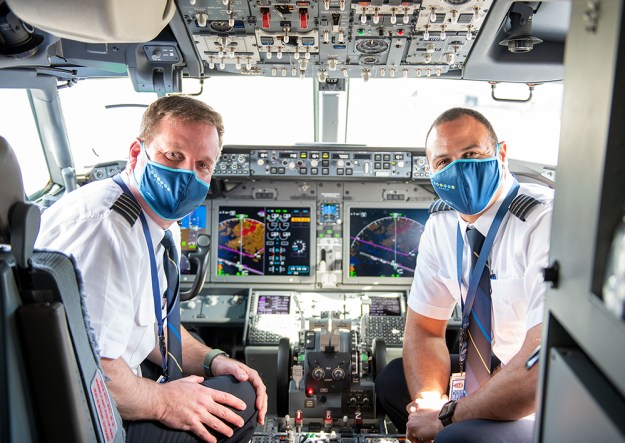
Horizon Air pilot

A tentative agreement was reached with the IBT on Sept. 2 and is effective immediately upon today’s ratification.

The pilot shortage and the transition to a single fleet of Embraer 175 aircraft has resulted in a temporary reduction of Horizon’s scheduled flying. Nonetheless, Horizon continues to fly to every community we serve. Regional air service provides essential support for economic development and strong local communities. We’re committed to ensuring this service remains strong into the future.

The new agreement with Horizon pilots complements other company efforts that are expanding and diversifying the pilot pipeline through investments in the Ascend Pilot Academy and the Pilot Development Program. This is a priority, as Alaska and Horizon estimate the need to hire 500 pilots each year through 2025.

With bases in Washington, Oregon, Idaho and Alaska, Horizon serves more than 45 cities throughout the Pacific Northwest, California, the Midwest, and British Columbia and Alberta in Canada. Horizon maintains pilot crew bases in Anchorage, Boise, Everett, Medford, Portland, Seattle and Spokane.

Horizon Air was formed in response to the Airline Deregulation Act of 1978. One of the results of this act was that many larger airlines abandoned routes within the Northwest. To fill this gap in the market, entrepreneur Milt Kuolt and a group of venture capitalists founded Horizon in Seattle in September 1981. Horizon brought together 36 enthusiastic employees and a fleet consisting of two leased Fairchild F-27 turboprop aircraft to begin service between Yakima, Pasco, and Seattle.

In the early 1980s, Horizon grew rapidly and in 1982, Horizon acquired Air Oregon, which had served the state of Oregon for a number of years. In 1983, Horizon acquired Utah-based Transwestern Airlines, which served the intermountain West, including Boise. Both these acquisitions expanded Horizon’s system map considerably.

In early 1984, Horizon became a public company with an initial stock offering of 750,000 shares. The stock sale was an immediate success and was used to retire debt and provide funding for future aircraft acquisition.

By 1986 the company’s proven track record attracted the attention of larger airlines. In the end Horizon was acquired by Seattle-based Alaska Air Group, Inc., a holding company that includes us, Alaska Airlines. While remaining independently managed, Horizon gained the competitive advantage of connections with us, her sister carrier, and partnership in our Mileage Plan frequent flier program. Along with Alaska, Horizon also code-shares with a wide range of other airline partners.

On Jan. 1, 2011, Horizon shifted to a capacity purchase agreement (CPA) business model, which is the regional airline industry standard. Under this arrangement, Horizon operates and maintains its aircraft while Alaska is responsible for scheduling, marketing and pricing all flights. The change also included the rebranding of all Horizon aircraft to feature the Alaska brand.

Today, Horizon Air maintains an operational fleet of 52 Bombardier Q400 aircraft with an average age of 10 years. In 2016, the airline announced the purchase of 33 Embraer E175 aircraft, the first of which was delivered in spring 2017.

Horizon is about 4,000 employees strong and serves more than 45 cities in Alaska, California, Colorado, Idaho, Montana, Oregon, Utah, Washington, and Alberta and British Columbia, Canada.

The airline has a general office in Seattle and a primary maintenance base in Portland, Oregon, with additional maintenance facilities in Boise, Idaho; Seattle, Washington; Medford, Oregon; Redmond/Bend, Oregon, and Spokane, Washington.

Alaska Horizon aircraft photo gallery:

Horizon Air aircraft photo gallery (historic):

Alaska Air Group reports second quarter GAAP net income of $139 million

Alaska Airlines Boeing 737-900 ER SSWL N298AK (msn 60583) IAH (Jarrod Wilkening). Image: 958261.

Alaska Air Group today announced another quarter of improvement in its financial results for the second quarter ending June 30, 2022, and provided outlook for the third quarter ending Sept. 30, 2022.

“It’s clear that travel is one of the things people have missed the most these past two years. They are excited to fly again and our team is delivering on the safe, reliable and caring experience they expect from us,” said CEO Ben Minicucci. “Revenue in June topped $1 billion, the highest single month in our history. Our 14% adjusted pretax margin in Q2 is near the top of the industry, and our operation is on track in June with the #1 on-time performance and a schedule completion rate over 99%. I’m feeling so much gratitude for the people of Alaska, Horizon and McGee for pulling together. We have a strong platform for growth in 2023 and a lot to be optimistic about.”

Financial Results for the Second Quarter:
  • Reported net income for the second quarter of 2022 under Generally Accepted Accounting Principles (GAAP) of $139 million, or $1.09 per share, compared to a net income of $397 million, or $3.13 per share, in the second quarter of 2021.
  • Reported net income for the second quarter of 2022, excluding special items and mark-to-market fuel hedge accounting adjustments, of $280 million, or $2.19 per share, compared to a net loss, excluding special items and mark-to-market fuel hedge accounting adjustments, of $38 million, or $0.30 per share, in the second quarter of 2021.
  • Reported adjusted pretax margin for the second quarter of 14%.
  • Recorded $2.7 billion in operating revenues for the second quarter, the highest revenue-generating quarter in company history.
Balance Sheet and Liquidity:
  • Generated $948 million in operating cash flow for the second quarter, inclusive of $231 million in net federal income tax refunds.
  • Held $3.4 billion in unrestricted cash and marketable securities as of June 30, 2022.
  • Maintained a debt-to-capitalization ratio of 50% as of June 30, 2022, within our target range of 40% to 50%.
Operational Updates and Milestones for the Second Quarter:
  • Flew a record load factor for the quarter of 88%, driven by high demand on reduced capacity.
  • Led the industry in on-time performance for the month of June, meeting our commitment to operational reliability.
  • Received nine Boeing 737-9 aircraft in the second quarter, bringing the total number of 737-9s in our mainline fleet to 28.
  • Ratified new contracts with Alaska Airlines dispatchers and Horizon Air aircraft technicians and fleet service agents; and reached a tentative agreement with Alaska Airlines IAM represented employees.
  • Expanded pilot training throughput by 20% from April, and added 100 active mainline pilots in the second quarter.
  • Began nonstop service to Miami and Cleveland from Seattle, bringing the total nonstop destinations served from Seattle to 100.
  • Launched $8 flat rate satellite Wi-Fi on mainline aircraft in partnership with Intelsat.
Awards and Employee Recognition:
  • Ranked as one of America’s Best Employers for Diversity by Forbes, recognizing our commitment to increasing diverse leadership representation and equity initiatives.
  • Named the Best Major Airline in North America by the Airline Passenger Experience Association, highlighting Alaska’s inflight experience.
  • Recognized the company’s workforce for their relentless commitment to caring for our guests for 90 years by giving each employee 90,000 miles redeemable for travel anywhere in the world.
Second Quarter Environmental, Social and Governance Updates:
  • Released our 2021 Care Report, highlighting the company’s progress in various environmental, social and governance areas and outlining ongoing initiatives and future goals.
  • Signed agreement with Aemetis to purchase 13 million gallons of sustainable aviation fuel to be delivered over the seven-year term of the agreement.
  • Subsequent to quarter end, announced a partnership with Microsoft and Twelve, a carbon transformation technology company, to advance the availability of sustainable aviation fuels.
  • Scored 100% in our first year participating in Disability:IN’s Disability Equality Index, which benchmarks companies on their disability inclusion and equality.

The following table reconciles the company’s reported GAAP net income (loss) per share (EPS) for the three and six months ended June 30, 2022, and 2021 to adjusted amounts.

Three Months Ended June 30,
2022 2021
(in millions, except per-share amounts) Dollars Diluted EPS Dollars Diluted EPS
GAAP net income per share $               139 $              1.09 $               397 $              3.13
Payroll Support Program grant wage offset (503) (3.97)
Mark-to-market fuel hedge adjustments 40 0.31 (46) (0.36)
Special items – fleet transition and related charges(a) 146 1.14 (4) (0.03)
Special items – restructuring charges(b) (23) (0.18)
Income tax effect of reconciling items above (45) (0.35) 141 1.11
Non-GAAP adjusted net income (loss) per share $               280 $              2.19 $               (38) $            (0.30)
Six Months Ended June 30,
2022 2021
(in millions, except per-share amounts) Dollars Diluted EPS Dollars Diluted EPS
GAAP net income (loss) per share $                  (4) $            (0.03) $               266 $              2.10
Payroll support program grant wage offset (914) (7.23)
Mark-to-market fuel hedge adjustments (67) (0.53) (68) (0.54)
Special items – fleet transition and related charges(a) 221 1.75 14 0.11
Special items – restructuring charges(b) (12) (0.09)
Income tax effect of reconciling items above (37) (0.30) 240 1.90
Non-GAAP adjusted net income (loss) per share $               113 $              0.89 $             (474) $            (3.75)
(a) Special items – fleet transition and related charges in the three and six months ended June 30, 2022 are primarily for impairment charges and accelerated costs associated with the retirement of the A320 and Q400 fleets. The A320 fleet is expected to be retired from operating service by the end of 2022; the Q400 fleet is expected to be retired from operating service in early 2023.
(b) Special items – restructuring charges in the three and six months ended June 30, 2021 are related to the estimated costs for pilot incentive leaves.

Statistical data, as well as a reconciliation of the reported non-GAAP financial measures, can be found in the accompanying tables. A glossary of financial terms can be found on the last page of this release.

Alaska will hold its quarterly conference call to discuss second quarter results at 8:30 a.m. PDT on July 21, 2022. A webcast of the call is available to the public at www.alaskaair.com/investors. For those unable to listen to the live broadcast, a replay will be available after the call.

Third Quarter and Full Year 2022 Outlook

Q3 Expectation(a)
Capacity (ASMs) % change versus 2019(a) Down 5% to 8%
Revenue passengers % change versus 2019(a) Down 8% to 10%
Passenger load factor 85% to 88%
Total revenue % change versus 2019(a) Up 16% to 19%
Cost per ASM excluding fuel and special items (CASMex) % change versus 2019(a) Up 16% to 19%
Economic fuel cost per gallon $3.79 to $3.89
Non-operating expense $2 million to $4 million
Adjusted tax rate 24% to 25%
(a) Due to the unusual nature of 2021 and 2020, all 2022 comparisons are versus the third quarter of 2019.

For full year 2022, we expect our capacity to be down 8% to 9% versus 2019, and expect our CASMex to be up 15% to 17% versus 2019. We continue to expect our full year adjusted pre-tax margin to be between 6% and 9%.

CONDENSED CONSOLIDATED STATEMENTS OF OPERATIONS (unaudited)
Alaska Air Group, Inc.
Three Months Ended June 30, Six Months Ended June 30,
(in millions, except per share amounts) 2022 2021 Change 2022 2021 Change
Operating Revenues
Passenger revenue $        2,418 $        1,352 79 % $        3,929 $        2,011 95 %
Mileage Plan other revenue 175 118 48 % 287 212 35 %
Cargo and other 65 57 14 % 123 101 22 %
Total Operating Revenues 2,658 1,527 74 % 4,339 2,324 87 %
Operating Expenses
Wages and benefits 639 510 25 % 1,245 1,003 24 %
Variable incentive pay 56 34 65 % 92 67 37 %
Payroll Support Program grant wage offset (503) NM (914) NM
Aircraft fuel, including hedging gains and losses 776 274 183 % 1,123 477 135 %
Aircraft maintenance 104 102 2 % 239 183 31 %
Aircraft rent 73 62 18 % 146 124 18 %
Landing fees and other rentals 136 144 (6) % 274 273 — %
Contracted services 82 54 52 % 160 105 52 %
Selling expenses 78 41 90 % 136 74 84 %
Depreciation and amortization 104 98 6 % 206 195 6 %
Food and beverage service 50 35 43 % 91 58 57 %
Third-party regional carrier expense 50 37 35 % 92 67 37 %
Other 177 117 51 % 329 222 48 %
Special items – fleet transition and related charges 146 (4) NM 221 14 NM
Special items – restructuring charges (23) . NM (12) NM
Total Operating Expenses 2,471 978 153 % 4,354 1,936 125 %
Operating Income (Loss) 187 549 (66) % (15) 388 (104) %
Non-operating Income (Expense)
Interest income 11 6 100 % 18 13 38 %
Interest expense (26) (39) (33) % (53) (71) (25) %
Interest capitalized 3 3 7 % 5 6 (17) %
Other – net 10 9 10 % 24 19 25 %
Total Non-operating Income (Expense) (2) (21) (90) % (6) (33) (82) %
Income (Loss) Before Income Tax 185 528 (21) 355
Income tax expense (benefit) 46 131 (17) 89
Net Income (Loss) $           139 $           397 $              (4) $           266
Basic Earnings (Loss) Per Share $          1.10 $          3.18 $        (0.03) $          2.13
Diluted Earnings (Loss) Per Share $          1.09 $          3.13 $        (0.03) $          2.10
Shares used for computation:
Basic 126.543 124.977 126.265 124.640
Diluted 127.795 126.825 126.265 126.388


CONDENSED CONSOLIDATED BALANCE SHEETS (unaudited)
Alaska Air Group, Inc.
(in millions) June 30, 2022 December 31, 2021
ASSETS
Current Assets
Cash and cash equivalents $                            778 $                            470
Marketable securities 2,647 2,646
   Total cash and marketable securities 3,425 3,116
Receivables – net 401 546
Inventories and supplies – net 93 62
Prepaid expenses and other current assets 313 196
Total Current Assets 4,232 3,920
Property and Equipment
Aircraft and other flight equipment 8,569 8,127
Other property and equipment 1,532 1,489
Deposits for future flight equipment 292 384
10,393 10,000
Less accumulated depreciation and amortization 3,922 3,862
Total Property and Equipment – Net 6,471 6,138
Other Assets
Operating lease assets 1,669 1,453
Goodwill and intangible assets 2,041 2,044
Other noncurrent assets 387 396
Other Assets 4,097 3,893
Total Assets $                      14,800 $                      13,951


CONDENSED CONSOLIDATED BALANCE SHEETS (unaudited)
Alaska Air Group, Inc.
(in millions, except share amounts) June 30, 2022 December 31, 2021
LIABILITIES AND SHAREHOLDERS’ EQUITY
Current Liabilities
Accounts payable $                            286 $                            200
Accrued wages, vacation and payroll taxes 416 457
Air traffic liability 1,778 1,163
Other accrued liabilities 794 625
Deferred revenue 1,012 912
Current portion of operating lease liabilities 274 268
Current portion of long-term debt 342 366
Total Current Liabilities 4,902 3,991
Long-Term Debt, Net of Current Portion 1,961 2,173
Noncurrent Liabilities
Long-term operating lease liabilities, net of current portion 1,505 1,279
Deferred income taxes 552 578
Deferred revenue 1,429 1,446
Obligation for pension and postretirement medical benefits 299 305
Other liabilities 353 378
Total Noncurrent Liabilities 4,138 3,986
Commitments and Contingencies
Shareholders’ Equity
Preferred stock, $0.01 par value, Authorized: 5,000,000 shares, none issued or outstanding
Common stock, $0.01 par value, Authorized: 400,000,000 shares, Issued: 2022 – 136,109,649 shares; 2021 – 135,255,808 shares, Outstanding: 2022 – 126,759,705 shares; 2021 – 125,905,864 shares 1 1
Capital in excess of par value 542 494
Treasury stock (common), at cost: 2022 – 9,349,944 shares; 2021 – 9,349,944 shares (674) (674)
Accumulated other comprehensive loss (308) (262)
Retained earnings 4,238 4,242
3,799 3,801
Total Liabilities and Shareholders’ Equity $                      14,800 $                      13,951


SUMMARY CASH FLOW (unaudited)
Alaska Air Group, Inc.
(in millions) Six Months
Ended

June 30, 2022

Three Months Ended
March 31,
2022(a)
Three Months Ended
June 30,
2022(b)
Cash Flows from Operating Activities:
Net income (loss) $                           (4) $                      (143) $                        139
Non-cash reconciling items 447 182 265
Changes in working capital 792 248 544
Net cash provided by (used in) operating activities 1,235 287 948
Cash Flows from Investing Activities:
Property and equipment additions (632) (288) (344)
Other investing activities (89) 327 (416)
Net cash provided by (used in) investing activities (721) 39 (760)
Cash Flows from Financing Activities: (206) (168) (38)
Net increase (decrease) in cash and cash equivalents 308 158 150
Cash, cash equivalents, and restricted cash at beginning of period 494 494 652
Cash, cash equivalents, and restricted cash at end of the period $                        802 $                        652 $                        802
(a) As reported in Form 10-Q for the first quarter of 2022.
(b) Cash flows for the three months ended June 30, 2022, can be calculated by subtracting cash flows for the three months ended March 31,
2022, as reported in Form 10-Q for the first quarter 2022, from the six months ended June 30, 2022.


OPERATING STATISTICS SUMMARY (unaudited)
Alaska Air Group, Inc.
Three Months Ended June 30, Six Months Ended June 30,
2022 2021 Change 2022 2021 Change
Consolidated Operating Statistics:(a)
Revenue passengers (000) 11,005 8,712 26.3 % 19,700 13,379 47.2 %
RPMs (000,000) “traffic” 13,746 10,334 33.0 % 24,332 15,727 54.7 %
ASMs (000,000) “capacity” 15,611 13,413 16.4 % 29,394 23,810 23.5 %
Load factor 88.1 % 77.0 % 11.1 pts 82.8 % 66.1 % 16.7 pts
Yield 17.59¢ 13.09¢ 34.4 % 16.15¢ 12.79¢ 26.3 %
RASM 17.03¢ 11.38¢ 49.6 % 14.76¢ 9.76¢ 51.2 %
CASMex(b) 9.92¢ 9.20¢ 7.8 % 10.24¢ 9.95¢ 2.9 %
Economic fuel cost per gallon(b) $3.76 $1.90 97.9 % $3.23 $1.85 74.6 %
Fuel gallons (000,000) 196 168 16.7 % 368 294 25.2 %
ASMs per gallon 79.6 79.8 (0.3) % 79.9 81.0 (1.4) %
Average full-time equivalent employees (FTEs) 22,603 19,001 19.0 % 22,092 18,071 22.3 %
Mainline Operating Statistics:
Revenue passengers (000) 8,321 6,151 35.3 % 14,887 9,302 60.0 %
RPMs (000,000) “traffic” 12,460 8,966 39.0 % 21,972 13,555 62.1 %
ASMs (000,000) “capacity” 14,052 11,611 21.0 % 26,439 20,464 29.2 %
Load factor 88.7 % 77.2 % 11.5 pts 83.1 % 66.2 % 16.9 pts
Yield 16.28¢ 11.96¢ 36.1 % 14.89¢ 11.64¢ 27.9 %
RASM 16.02¢ 10.59¢ 51.3 % 13.81¢ 9.09¢ 51.9 %
CASMex(b) 8.98¢ 8.48¢ 5.9 % 9.29¢ 9.17¢ 1.3 %
Economic fuel cost per gallon(b) $3.74 $1.88 98.9 % $3.21 $1.84 74.4 %
Fuel gallons (000,000) 165 135 22.2 % 311 233 33.5 %
ASMs per gallon 85.2 86.0 (0.9) % 85.0 87.8 (3.2) %
Average number of FTEs 17,315 14,021 23.5 % 16,825 13,247 27.0 %
Aircraft utilization 10.1 9.9 2.0 % 9.8 9.2 6.5 %
Average aircraft stage length 1,363 1,320 3.3 % 1,349 1,313 2.7 %
Operating fleet(d) 233 202 31 a/c 233 202 31 a/c
Regional Operating Statistics:(c)
Revenue passengers (000) 2,685 2,562 4.8 % 4,813 4,077 18.1 %
RPMs (000,000) “traffic” 1,285 1,367 (6.0) % 2,360 2,172 8.7 %
ASMs (000,000) “capacity” 1,559 1,802 (13.5) % 2,955 3,346 (11.7) %
Load factor 82.4 % 75.9 % 6.5 pts 79.9 % 64.9 % 15.0 pts
Yield 30.35¢ 20.48¢ 48.2 % 27.88¢ 19.95¢ 39.7 %
RASM 26.04¢ 16.41¢ 58.7 % 23.21¢ 13.84¢ 67.7 %
Operating fleet(d) 104 94 10 a/c 104 94 10 a/c
(a) Except for FTEs, data includes information related to third-party regional capacity purchase flying arrangements.
(b) See a reconciliation of this non-GAAP measure and Note A for a discussion of the importance of this measure to investors in the accompanying pages.
(c) Data presented includes information for flights operated by Horizon and third-party carriers.
(d) Excludes all aircraft removed from operating service.


Given the unusual nature of 2021 and 2020, we believe that some analysis of specific financial and operational results compared to 2019 provides meaningful insight. The table below includes comparative results from 2022 to 2019.

FINANCIAL INFORMATION AND OPERATING STATISTICS – 2022 Compared to 2019 (unaudited)
Alaska Air Group, Inc.
Three Months Ended June 30, Six Months Ended June 30,
2022 2019 Change 2022 2019 Change
Passenger revenue $        2,418 $        2,111 15 % $        3,929 $        3,827 3 %
Mileage plan other revenue 175 118 48 % 287 228 26 %
Cargo and other 65 59 10 % 123 109 13 %
Total Operating Revenues 2,658 2,288 16 % 4,339 4,164 4 %
Operating expenses, excluding fuel and special items 1,549 1,414 10 % 3,010 2,819 7 %
Aircraft fuel, including hedging gains and losses 776 502 55 % 1,123 922 22 %
Special items 146 8 NM 221 34 NM
Total Operating Expenses 2,471 1,924 28 % 4,354 3,775 15 %
Total Non-operating Expense (2) (13) (85) % (6) (32) (81) %
Income (Loss) Before Income Tax $            185 $            351 (47) % $            (21) $            357 (106) %
Consolidated Operating Statistics:
Revenue passengers (000) 11,005 12,026 (8) % 19,700 22,442 (12) %
RPMs (000,000) “traffic” 13,746 14,638 (6) % 24,332 27,087 (10) %
ASMs (000,000) “capacity” 15,611 16,980 (8) % 29,394 32,487 (10) %
Load Factor 88.1 % 86.2 %          1.9 pts 82.8 % 83.4 %        (0.6) pts
Yield 17.59¢ 14.43¢ 22 % 16.15¢ 14.13¢ 14 %
RASM 17.03¢ 13.48¢ 26 % 14.76¢ 12.82¢ 15 %
CASMex 9.92¢ 8.33¢ 19 % 10.24¢ 8.68¢ 18 %
FTEs 22,603 21,921 3 % 22,092 21,876 1 %


OPERATING SEGMENTS (unaudited)
Alaska Air Group, Inc.
Three Months Ended June 30, 2022
(in millions) Mainline Regional Horizon Consolidating
& Other(a)
Air Group
Adjusted(b)
Special
Items(c)
Consolidated
Operating Revenues
Passenger revenues $     2,028 $        390 $          — $                  — $     2,418 $          — $        2,418
CPA revenues 101 (101)
Mileage Plan other revenue 159 16 175 175
Cargo and other 64 1 65 65
Total Operating Revenues 2,251 406 101 (100) 2,658 2,658
Operating Expenses
Operating expenses, excluding fuel 1,262 289 98 (100) 1,549 146 1,695
Fuel expense 617 119 736 40 776
Total Operating Expenses 1,879 408 98 (100) 2,285 186 2,471
Non-operating Income (Expense) 3 (5) (2) (2)
Income (Loss) Before Income Tax $        375 $           (2) $           (2) $                  — $        371 $       (186) $           185
Pretax Margin 14.0 % 7.0 %
Three Months Ended June 30, 2021
(in millions) Mainline Regional Horizon Consolidating
& Other(a)
Air Group
Adjusted(b)
Special
Items(c)
Consolidated
Operating Revenues
Passenger revenues $     1,072 $        280 $          — $                  — $     1,352 $          — $        1,352
CPA revenues 111 (111)
Mileage Plan other revenue 102 16 118 118
Cargo and other 55 2 57 57
Total Operating Revenues 1,229 296 111 (109) 1,527 1,527
Operating Expenses
Operating expenses, excluding fuel 984 286 91 (127) 1,234 (530) 704
Fuel expense 253 66 1 320 (46) 274
Total Operating Expenses 1,237 352 91 (126) 1,554 (576) 978
Non-operating Income (Expense) (16) (5) (21) (21)
Income (Loss) Before Income Tax $         (24) $         (56) $          15 $                  17 $         (48) $        576 $           528
Pretax Margin (3.1) % 34.6 %


Six Months Ended June 30, 2022
(in millions) Mainline Regional Horizon Consolidating
& Other(a)
Air Group
Adjusted(b)
Special
Items(c)
Consolidated
Operating Revenues
Passenger revenues $     3,271 $        658 $          — $                  — $    3,929 $          — $        3,929
CPA revenues 195 (195)
Mileage Plan other revenue 259 28 287 287
Cargo and other 121 2 123 123
Total Operating Revenues 3,651 686 195 (193) 4,339 4,339
Operating Expenses
Operating expenses, excluding fuel 2,456 551 197 (194) 3,010 221 3,231
Fuel expense 998 192 1,190 (67) 1,123
Total Operating Expenses 3,454 743 197 (194) 4,200 154 4,354
Non-operating Income (Expense) 4 (10) (6) (6)
Income (Loss) Before Income Tax $        201 $         (57) $         (12) $                    1 $       133 $       (154) $            (21)
Pretax Margin 3.1 % (0.5) %
Six Months Ended June 30, 2021
(in millions) Mainline Regional Horizon Consolidating
& Other(a)
Air Group
Adjusted(b)
Special
Items(c)
Consolidated
Operating Revenues
Passenger revenues $     1,578 $        433 $          — $                  — $    2,011 $          — $        2,011
CPA revenues 215 (215)
Mileage Plan other revenue 182 30 212 212
Cargo and other 99 2 101 101
Total Operating Revenues 1,859 463 215 (213) 2,324 2,324
Operating Expenses
Operating expenses, excluding fuel 1,877 551 179 (236) 2,371 (912) 1,459
Fuel expense 427 118 545 (68) 477
Total Operating Expenses 2,304 669 179 (236) 2,916 (980) 1,936
Non-operating Income (Expense) (23) (10) (33) (33)
Income (Loss) Before Income Tax $       (468) $       (206) $          26 $                  23 $      (625) $        980 $           355
Pretax Margin (26.9) % 15.3 %
(a) Includes consolidating entries, Air Group parent company, McGee Air Services, and other immaterial business units.
(b) The Air Group Adjusted column represents the financial information that is reviewed by management to assess performance of operations
and determine capital allocation and excludes certain charges. See Note A in the accompanying pages for further information.
(c) Includes payroll support program grant wage offsets, special items, and mark-to-market fuel hedge accounting adjustments.


GAAP TO NON-GAAP RECONCILIATIONS (unaudited)
Alaska Air Group, Inc.
CASM Excluding Fuel and Special Items Reconciliation
Three Months Ended June 30, Six Months Ended June 30,
(in cents) 2022 2021 2022 2021
Consolidated:
CASM                 15.84 ¢                   7.29 ¢                 14.81 ¢                   8.13 ¢
Less the following components:
Payroll Support Program grant wage offset (3.75) (3.84)
Aircraft fuel, including hedging gains and losses 4.98 2.04 3.82 2.00
Special items – fleet transition and related charges(a) 0.94 (0.03) 0.75 0.07
Special items – restructuring charges(b) (0.17) (0.05)
CASM excluding fuel and special items                   9.92 ¢                   9.20 ¢                 10.24 ¢                   9.95 ¢
Mainline:
CASM                 15.06 ¢                   6.24 ¢                 13.69 ¢                   6.72 ¢
Less the following components:
Payroll Support Program grant wage offset (3.79) (4.21)
Aircraft fuel, including hedging gains and losses 5.06 1.78 3.84 1.75
Special items – fleet transition and related charges(a) 1.02 (0.03) 0.56 0.07
Special items – restructuring charges(b) (0.20) (0.06)
CASM excluding fuel and special items                   8.98 ¢                   8.48 ¢                   9.29 ¢                   9.17 ¢
(a) Special items – fleet transition and related charges in the three and six months ended June 30, 2022 are primarily for impairment charges and accelerated costs associated with the retirement of the A320 and Q400 fleets. The A320 fleet is expected to be retired from operating service by the end of 2022; the Q400 fleet is expected to be retired from operating service in early 2023.
(b) Special items – restructuring charges in the three and six months ended June 30, 2021 are related to the estimated costs for pilot incentive leaves.


Fuel Reconciliation
Three Months Ended June 30,
2022 2021
(in millions, except for per-gallon amounts) Dollars Cost/Gallon Dollars Cost/Gallon
Raw or “into-plane” fuel cost $                   824 $                  4.20 $                   330 $                  1.96
Losses (gains) on settled hedges (88) (0.44) (10) (0.06)
Consolidated economic fuel expense 736 3.76 320 1.90
Mark-to-market fuel hedge adjustment 40 0.20 (46) (0.27)
GAAP fuel expense $                   776 $                  3.96 $                   274 $                  1.63
Fuel gallons 196 168
Six Months Ended June 30,
2022 2021
(in millions, except for per gallon amounts) Dollars Cost/Gallon Dollars Cost/Gallon
Raw or “into-plane” fuel cost $                1,328 $                  3.61 $                   552 $                  1.87
Losses (gains) on settled hedges (138) (0.38) (7) (0.02)
Consolidated economic fuel expense 1,190 3.23 545 1.85
Mark-to-market fuel hedge adjustment (67) (0.18) (68) (0.23)
GAAP fuel expense $                1,123 $                  3.05 $                   477 $                  1.62
Fuel gallons 368 294


Debt-to-capitalization, including operating leases
(in millions) June 30, 2022 December 31, 2021
Long-term debt, net of current portion $                           1,961 $                            2,173
Long-term and current capitalized operating leases 1,779 1,547
Adjusted debt, net of current portion of long-term debt 3,740 3,720
Shareholders’ equity 3,799 3,801
Total Invested Capital $                           7,539 $                            7,521
Debt-to-capitalization ratio, including operating leases 50 % 49 %


Adjusted net debt to earnings before interest, taxes, depreciation, amortization, rent and special items
(in millions) June 30, 2022 December 31, 2021
Current portion of long-term debt $                                   342 $                                   366
Current portion of operating lease liabilities 274 268
Long-term debt 1,961 2,173
Long-term operating lease liabilities, net of current portion 1,505 1,279
Total adjusted debt 4,082 4,086
Less: Total cash and marketable securities (3,425) (3,116)
Adjusted net debt $                                   657 $                                   970
(in millions) Twelve Months Ended
June 30, 2022
Twelve Months Ended
December 31, 2021
GAAP Operating Income(a) $                                   282 $                                   685
Adjusted for:
Payroll Support Program grant wage offset and special items 208 (925)
Mark-to-market fuel hedge adjustments (46) (47)
Depreciation and amortization 405 394
Aircraft rent 276 254
EBITDAR $                               1,125 $                                   361
Adjusted net debt to EBITDAR 0.6x 2.7x
(a) Operating income can be reconciled using the trailing twelve month operating income as filed quarterly with the SEC.


Note A: Pursuant to Regulation G, we are providing reconciliations of reported non-GAAP financial measures to their most directly comparable financial measures reported on a GAAP basis. We believe that consideration of these non-GAAP financial measures may be important to investors for the following reasons:

  • By eliminating fuel expense and certain special items (including Payroll Support Program wage offset, fleet transition and related charges, and restructuring charges) from our unit metrics, we believe that we have better visibility into the results of operations. Our industry is highly competitive and is characterized by high fixed costs, so even a small reduction in non-fuel operating costs can result in a significant improvement in operating results. In addition, we believe that all domestic carriers are similarly impacted by changes in jet fuel costs over the long run, so it is important for management (and thus investors) to understand the impact of (and trends in) company-specific cost drivers such as labor rates and productivity, airport costs, maintenance costs, etc., which are more controllable by management.
  • Cost per ASM (CASM) excluding fuel and certain special items, such as Payroll Support Program wage offset, fleet transition and related charges, and restructuring charges, is one of the most important measures used by management and by the Air Group Board of Directors in assessing quarterly and annual cost performance.
  • Adjusted income before income tax (and other items as specified in our plan documents) is an important metric for the employee incentive plan, which covers the majority of Air Group employees.
  • CASM excluding fuel and certain special items is a measure commonly used by industry analysts, and we believe it is the basis by which they have historically compared our airline to others in the industry. The measure is also the subject of frequent questions from investors.
  • Disclosure of the individual impact of certain noted items provides investors the ability to measure and monitor performance both with and without these special items. We believe that disclosing the impact of these items as noted above. Industry analysts and investors consistently measure our performance without these items for better comparability between periods and among other airlines.
  • Although we disclose our passenger unit revenues, we do not (nor are we able to) evaluate unit revenues excluding the impact that changes in fuel costs have had on ticket prices. Fuel expense represents a large percentage of our total operating expenses. Fluctuations in fuel prices often drive changes in unit revenues in the mid-to-long term. Although we believe it is useful to evaluate non-fuel unit costs for the reasons noted above, we would caution readers of these financial statements not to place undue reliance on unit costs excluding fuel as a measure or predictor of future profitability because of the significant impact of fuel costs on our business.

Top Copyright Photo: Alaska Airlines Boeing 737-900 ER SSWL N298AK (msn 60583) IAH (Jarrod Wilkening). Image: 958261.

Alaska Airlines aircraft slide show:

Alaska Airlines aircraft photo gallery:


Horizon Air celebrates 40 years of flying in the Pacific Northwest

From the Alaska Airlines blog:

On September 1, 40 years ago, Horizon Air, our sister airline in the Pacific Northwest, flew its first flight between Seattle and Yakima, Washington.

If you’re from the PNW there’s a strong chance you’ve flown with Horizon. They’re the regional airline for Alaska Airlines and help connect our guests in the West with the world.

“Horizon connects us all to the Pacific Northwest’s incredible outdoor communities and amazing small cities and enables our connection to the country and world. Horizon Air employees make travel feel personal and bring incredible heart and care to every guest,” said Ben Minicucci, Alaska CEO.

Meet Travion Smith, a ground service agent in Seattle who stays “grounded” through kindness and awareness. Read more

Did you know?

  • Horizon flies to more than 50 destinations in our route network.
  • First airline to serve Starbucks coffee in the sky.
  • Are always looking for great new team members. Check out current job openings!
  • Known for delivering performance with excellence and developing industry leading innovations to create safe, incomparable flying experiences.
  • Flies 32 Bombardier Q400 aircraft—perfectly suited for serving smaller communities in the PNW—and 30 Embraer E175 aircraft.
  • Well known for offering FREE beer + wine to guests 21 years young on Q400 flights!

To commemorate Horizon’s momentous day, a special flight will fly the same route that started it all on Sept 1, 1981. This time, it will be flown on Horizon’s “Meatball” plane, a custom-painted retro-themed aircraft, which will fly some of its beloved employees and guests from Seattle to Yakima.

“We’re flying our meatball livery on the same route Horizon flew 40 years ago,” said Capt. Perry Solmonson, 40th Anniversary Committee Chair. “This is a huge milestone for us and this anniversary flight recognizes not only the hard and successful work accomplished to date, but also celebrate our up-and-coming team members of the future.”

40 years of history

Founded in 1981 by entrepreneur Milt Kuolt and a group of venture capitalists in Seattle, Horizon had fewer than 100 employees at that time and operated a fleet of two Fairchild F-27 propjets.

Kuolt believed that every guest deserved more than just a ride from point A to B, which turned into the superior service that Horizon is still known for today.

“Service began with complimentary wine then blossomed into other little but much-appreciated amenities such as free newspapers handed out at the gate, complimentary coffee, and baskets on board filled with munching snacks that included all kinds of goodies,” wrote Robert J. Serling in the chapter on Horizon Air in the book, Character & Characters: The Spirit of Alaska Airlines.

The service created a culture, a way of life and a state of mind that was “firmly embedded in the work ethic and attitude of every Horizon employee,” wrote Serling.

Today, Horizon has more than 3,500 employees and operates a fleet of 62 aircraft.

Reaching 40 years is a huge milestone. Despite the ups and downs of the industry, it’s been the people of Horizon who have carried the company forward. Our 40th anniversary is all about our people.

First Officer Perry Solmonson waves from the cockpit.

“What I love most about Horizon is our family unit. I have never seen a group of people come together more for the good of a company or each other as I have witnesses during my time with QX. The commitment to our values, the love and respect we show each other and the service to our guests across all work groups is unmatched. I look forward to seeing my colleagues who I consider extended family.” – Natalie Razor, Flight Attendant. SEA

“I love the opportunities to travel around the world on behalf of Horizon Air. I love the opportunities I’ve had to mentor the next generations of Maintenance Technicians. I love the opportunities to travel through the system and assist in new station openings. I love the dynamics of the business, always learning the new aircraft, working through the highs and lows, (9-11, the pandemic). Raising my family.” – Willard Clark, lead technician, GEG

“Being a part of the Horizon family is exactly that. Like any family, we have our ups and downs, highs and lows. We support our Horizon family members and help each other overcome our problems. Some say you can’t pick your family; Horizon is the exception.” – Bill Bowling, Q400 Captain, PDX

“Growing up in the tiny town of Connell, WA; Horizon Air was the airline I trusted to get me to the nearest major airport. It is always the airline I flew on my voyage outside of home and back to my home. Now I am living in Seattle and Horizon still connects me to my parents in my hometown that I love flying to! I am proud to be part of the airline that keeps us connected through the years. #PSC” – Jaime Chavez, passenger service agent, SEA

“I love the loyalty and dedication the employees have and flying with a regional airline I see that same loyalty with our customers. In the short 10 months I have already seen several of our elites on a regular basis and it feels good to be able to build that relationship with them.” – Catherine Alder, Flight Attendant, PDX 

Updated 2021 University of Washington college livery

Above Copyright Photo: Alaska Horizon (Horizon Air) Bombardier DHC-8-402 (Q400) N435QX (msn 4232) (Huskies – Go Dawgs) SEA (Michael B. Ing). Image: 954699.

Horizon Air aircraft slide show:

Alaska Horizon aircraft slide show:

Horizon Air pilots pass vote to amend labor contract

Horizon Air pilots, represented by the Airline Professionals Association, Teamsters Local 1224 (IBT), have voted to ratify a new wage agreement. IBT represents Horizon’s more than 800 pilots.

The agreement, which passed with 74% of the vote, includes competitive wage increases aimed to attract and retain pilots.

Airline employees are covered by the Railway Labor Act, so labor agreements do not expire; they become amendable and remain in effect until a new contract is ratified.

Horizon Air is a subsidiary of Alaska Air Group and flies to 63 cities across the United States, Canada and Mexico.

Alaska Airlines to resume full schedule at Paine Field by spring 2022

"Honoring those who serve"

Alaska Airlines has made this announcement:

With increasing confidence that air travel is on a steady climb to return to pre-pandemic levels in the coming year, Alaska Airlines is planning to resume our full schedule of 18 daily nonstop departures at Paine Field-Snohomish County Airport by spring 2022, possibly earlier. The airport in Everett, north of Seattle, remains very popular with our guests.

As part of the path to recovery, we’ll have 13 daily departures at Paine Field later this fall – up from five now – as we bring back more destinations, increase flight frequencies and even add an exciting new route to Tucson, Arizona.

On June 17, Alaska will fly to five destinations from Everett: Las Vegas, Orange County, Phoenix, San Diego and San Francisco. Here’s more of what’s ahead at Paine Field:

  • On Sept. 8, we’ll jump to 11 daily departures to seven destinations as we add two flights a day to both Boise and Spokane, along with second daily flights to both Las Vegas and Phoenix.
  • On Oct. 7, we bring back our seasonal flight to Palm Springs.
  • On Nov. 19, we’ll launch our new seasonal service to Tucson, another popular getaway for wintertime warmth in the desert.

That means, just in time for the holiday travel season, Alaska will have 13 daily departures to nine destinations from the north Puget Sound airport that’s easy to get in and out of.

Horizon Air provides the all-jet service for our flights that serve Paine Field with the Embraer 175 aircraft, which features First Class and Premium Class, and only window and aisle seating – there are no middle seats. Guests can enjoy hundreds of free movies and TV shows available for viewing on personal devices; free texting on most flights; and Wi-Fi connectivity for purchase.

Top Copyright Photo: Alaska Horizon (Horizon Air) Embraer ERJ 170-200LR (ERJ 175) N651QX (msn 17000812) (Honoring those who serve) PAE (Nick Dean). Image: 947388.

Alaska Horizon aircraft slide show:

Alaska Air Group orders nine new E175 aircraft for operation with Horizon Air

Embraer has agreed the sale of nine new E175 jets to Alaska Air Group and its subsidiary Horizon Air. The E175 aircraft will fly exclusively with Alaska Airlines under a Capacity Purchase Agreement (CPA).

Alaska Airlines, a new member of the oneworld Alliance, currently has 62 Embraer E175 jets in their fleet, operated by Horizon Air and SkyWest Airlines. The 76-seat aircraft will be delivered in Alaska’s livery and three-class configuration, starting in 2022.

Alaska to grow its fleet by 30 aircraft, will add Belize City

First MAX 9 for Alaska Airlines, in service March 1, 2021 SEA-SAN

Alaska Airlines has made this announcement:

With recovery on the horizon, Alaska Airlines is taking advantage of strategic opportunities by adding 30 mainline and regional aircraft to fulfill capacity needs in the years ahead. And as more travelers search for additional leisure getaways, Alaska will begin flying to Belize City, Belize.

Growing the Alaska Air Group fleet

Alaska expects domestic travel to return to pre-COVID levels by the summer of 2022, which will require more aircraft across Air Group. To prime the airline for growth, Alaska is taking the following actions:

  • Adding 17 new Embraer 175 jets to the regional fleet in 2022 and 2023 – nine to be operated by Horizon Air and eight by SkyWest.
  • Exercising options for 13 Boeing 737-9 MAX deliveries in 2023 and 2024.

"Honoring Those Who Serve"

Above Copyright Photo: Alaska Horizon (Horizon Air) Embraer ERJ 170-200LR (ERJ 175) N651QX (msn 17000812) (Honoring those who serve) PAE (Nick Dean). Image: 947748.

The 17 regional aircraft additions grow Air Group’s regional fleet to 111 planes: 71 at Horizon and 40 with SkyWest. Horizon will receive its nine additional E175s in the next two years: five scheduled for delivery in 2022 and four in 2023. This is in addition to three existing firm E175 orders to be operated by Horizon. All eight SkyWest aircraft will enter service for Alaska in 2022.

Photo: Alaska Airlines. In order to fly the 737-9, pilots are required to take eight hours of flight simulator and computer-based training that focus on the operation of the MAX. The pilot training program for the MAX is more extensive than what’s required by the FAA.

Alaska announced a restructured agreement with Boeing in December 2020 to acquire 68 737-9 MAX aircraft between 2021 to 2024, with options for another 52 deliveries between 2023 and 2026. The airline will accept the first 13 options over two years: nine in 2023 and four in 2024.

Alaska adds Belize to its international destinations

Alaska also announced today new nonstop service to Belize City, Belize, in Central America from the West Coast. Belize will be the fourth country Alaska flies to from its West Coast hubs, joining Canada, Mexico and Costa Rica.

Routes and schedules to Belize will be announced when ticket sales begin in early June.

Video:

Top Copyright Photo: Alaska Airlines Boeing 737-9 MAX 9 N915AK (msn 44080) PAE (Nick Dean). Image: 947423.

Alaska Airlines aircraft slide show:

Alaska Air Group reports a first quarter GAAP net loss of $232 million

Alaska Air Cargo (Alaska Airlines) Boeing 737-790 (F) WL N626AS (msn 30793) ANC (Michael B. Ing). Image: 951702.

Alaska Airlines Group issued this financial report:

Financial Results:

  • Reported a net loss for the first quarter of 2021 under Generally Accepted Accounting Principles (GAAP) of $131 million, or $1.05 per share, compared to a net loss of $232 million, or $1.89 per share in the first quarter of 2020.
  • Reported a net loss for the first quarter of 2021, excluding CARES Act Payroll Support Program (PSP) wage offsets, special items and mark-to-market fuel hedge accounting adjustments, of $436 million, or $3.51 per share, compared to an adjusted net loss of $102 million or $0.83 per share, in the first quarter of 2020.
  • Decreased adjusted net debt to $1.6 billion at March 31, 2021 from $1.7 billion at December 31, 2020.
  • Reported a debt-to-capitalization ratio, including short-term borrowings related to COVID-19, of 62%.
  • Held $3.5 billion in unrestricted cash and marketable securities as of March 31, 2021, and available total liquidity of $5.3 billion.
  • Generated $167 million in operating cash flow in the first quarter, inclusive of PSP funding, bolstered by improved advance bookings for increased demand for air travel.

Operational Updates:

  • Welcomed Ben Minicucci as Air Group CEO and Constance von Muehlen as Alaska COO.
  • Formally joined the oneworld alliance on March 31 as the 14th member airline. Entry into the alliance transforms Alaska into a global airline, provides guests a seamless travel experience and increases the value of our loyalty and corporate travel offerings.
  • Finalized a previously announced amendment to the existing aircraft purchase agreement with Boeing to expand our total 737-9 MAX firm deliveries to 68 between 2021 and 2024, inclusive of 13 leased aircraft.
  • Took delivery of four 737-9 MAX aircraft during the first quarter.
  • Announced 12 new routes during the first quarter, aimed at offering our guests greater connectivity to and from West Coast destinations.
  • Announced plans to open a new Alaska Lounge in Terminal 2 of San Francisco International Airport.
  • Issued early recall notices to nearly 350 Alaska pilots on extended leaves to prepare for capacity growth.

Liquidity Updates:

  • Received $546 million through a combination of grants and loans from the U.S. Treasury under an extension of the PSP, and anticipate a supplemental payment of $80 million in late April.
  • Received notification from the U.S. Treasury that Alaska, Horizon and McGee are eligible to obtain an additional $584 million in incremental payroll support funding under a third round of the PSP.
  • Extended maturity of the 364-day Senior Secured Term Loan previously due to expire in March 2021 to March 2022, and in conjunction funded an incremental $54 million.

Sustainability Updates:

  • Published 2020 LIFT Sustainability Report including final data on our 2020 sustainability goals and Sustainable Accounting Standards Board disclosure, and shared new 2025 goals related to Environmental Social Governance.
  • Announced specific commitments for diversity, equity, and inclusion to increase diverse leadership representation, cultivate an inclusive culture, and to continue supporting education.
  • Set a course for net-zero carbon emissions by 2040, with 2025 milestone goals to be the most fuel-efficient U.S. airline, maintain carbon neutral growth, and cut ground service equipment climate emissions by 50%. As part of the net-zero commitment, joined The Climate Pledge alongside Amazon and other major businesses.
  • Announced a memorandum of understanding with SkyNRG focused on increasing the supply and production of sustainable aviation fuel from municipal solid waste and other waste streams, especially in the western United States.

Alaska Air Group Inc. today reported a first quarter 2021 GAAP net loss of $131 million, or $1.05 per share, compared to a net loss of $232 million, or $1.89 per share in the first quarter of 2020. Excluding the impact of payroll support program wage offsets, special items and mark-to-market fuel hedge adjustments, the company reported an adjusted net loss of $436 million, or $3.51 per diluted share, compared to an adjusted net loss of $102 million, or $0.83 per diluted share in 2020.

“This has been a long road, and I want to thank the employees at Alaska and Horizon for providing great guest service and everything they’ve done to get through the last challenging year and help us achieve positive cash flow in March,” said CEO Ben Minicucci. “We’re a big company, but still small enough that each person’s work makes a difference. We’re now laser focused on a return to profitability and growth, with aggressive cost control, optimal productivity across all our work groups, and the operational and financial discipline that Alaska is known for.”

The following table reconciles the company’s reported GAAP net loss per share (EPS) for the three months ended March 31, 2021 and 2020 to adjusted amounts.

Statistical data, as well as a reconciliation of the reported non-GAAP financial measures, can be found in the accompanying tables. A glossary of financial terms can be found on the last page of this release.

Alaska Airlines and its regional partners serve more than 120 destinations across the United States and to MexicoCanada and Costa Rica. The airline emphasizes Next-Level Care for its guests, along with providing low fares, award-winning customer service and sustainability efforts. On March 31, 2021Alaska became the 14th member of oneworld. With the global alliance and Alaska Airlines’ additional partners, guests can travel to more than 1,000 destinations on more than 20 airlines while earning and redeeming miles on flights to locations around the world. Learn more about Alaska at newsroom.alaskaair.com and blog.alaskaair.com. Alaska Airlines and Horizon Air are subsidiaries of Alaska Air Group (NYSE: ALK).


Given the unusual nature of 2020, we believe that some analysis of specific financial and operational results compared to 2019 provides meaningful insight. The table below includes comparative results from 2021 to 2019.


Note A: Pursuant to Regulation G, we are providing reconciliations of reported non-GAAP financial measures to their most directly comparable financial measures reported on a GAAP basis. We believe that consideration of these non-GAAP financial measures may be important to investors for the following reasons:

  • By eliminating fuel expense and certain special items (including the payroll support program wage offset, impairment and restructuring charges and merger-related costs) from our unit metrics, we believe that we have better visibility into the results of operations as we focus on cost-reduction initiatives emerging from the COVID-19 pandemic. Our industry is highly competitive and is characterized by high fixed costs, so even a small reduction in non-fuel operating costs can result in a significant improvement in operating results. In addition, we believe that all domestic carriers are similarly impacted by changes in jet fuel costs over the long run, so it is important for management (and thus investors) to understand the impact of (and trends in) company-specific cost drivers such as labor rates and productivity, airport costs, maintenance costs, etc., which are more controllable by management.
  • Cost per ASM (CASM) excluding fuel and certain special items, such as the payroll support program wage offset, impairment and restructuring charges and merger-related costs, is one of the most important measures used by management and by the Air Group Board of Directors in assessing quarterly and annual cost performance.
  • Adjusted income before income tax (and other items as specified in our plan documents) is an important metric for the employee incentive plan, which covers the majority of Air Group employees.
  • CASM excluding fuel and certain special items is a measure commonly used by industry analysts, and we believe it is the basis by which they have historically compared our airline to others in the industry. The measure is also the subject of frequent questions from investors.
  • Disclosure of the individual impact of certain noted items provides investors the ability to measure and monitor performance both with and without these special items. We believe that disclosing the impact of these items as noted above. Industry analysts and investors consistently measure our performance without these items for better comparability between periods and among other airlines.
  • Although we disclose our passenger unit revenues, we do not (nor are we able to) evaluate unit revenues excluding the impact that changes in fuel costs have had on ticket prices. Fuel expense represents a large percentage of our total operating expenses. Fluctuations in fuel prices often drive changes in unit revenues in the mid-to-long term. Although we believe it is useful to evaluate non-fuel unit costs for the reasons noted above, we would caution readers of these financial statements not to place undue reliance on unit costs excluding fuel as a measure or predictor of future profitability because of the significant impact of fuel costs on our business.

GLOSSARY OF TERMS

Adjusted net debt – long-term debt, including current portion, plus capitalized operating leases, less cash and marketable securities

Adjusted net debt to EBITDAR – represents net adjusted debt divided by EBITDAR (trailing twelve months earnings before interest, taxes, depreciation, amortization, special items and rent)

Aircraft Utilization – block hours per day; this represents the average number of hours per day our aircraft are in transit

Aircraft Stage Length – represents the average miles flown per aircraft departure

ASMs – available seat miles, or “capacity”; represents total seats available across the fleet multiplied by the number of miles flown

CASM – operating costs per ASM, or “unit cost”; represents all operating expenses including fuel and special items

CASMex – operating costs excluding fuel and special items per ASM; this metric is used to help track progress toward reduction of non-fuel operating costs since fuel is largely out of our control

Debt-to-capitalization ratio – represents adjusted debt (long-term debt plus capitalized operating lease liabilities) divided by total equity plus adjusted debt

Diluted Earnings per Share – represents earnings per share (EPS) using fully diluted shares outstanding

Diluted Shares – represents the total number of shares that would be outstanding if all possible sources of conversion, such as stock options, were exercised

Economic Fuel – best estimate of the cash cost of fuel, net of the impact of our fuel-hedging program

Load Factor – RPMs as a percentage of ASMs; represents the number of available seats that were filled with paying passengers

Mainline – represents flying Boeing 737, Airbus 320 and Airbus 321neo family jets and all associated revenues and costs

Productivity – number of revenue passengers per full-time equivalent employee

RASM – operating revenue per ASMs, or “unit revenue”; operating revenue includes all passenger revenue, freight & mail, Mileage Plan and other ancillary revenue; represents the average total revenue for flying one seat one mile

Regional – represents capacity purchased by Alaska from Horizon and SkyWest. In this segment, Regional records actual on-board passenger revenue, less costs such as fuel, distribution costs, and payments made to Horizon and SkyWest under the respective capacity purchased arrangement (CPAs). Additionally, Regional includes an allocation of corporate overhead such as IT, finance, other administrative costs incurred by Alaska and on behalf of Horizon.

RPMs – revenue passenger miles, or “traffic”; represents the number of seats that were filled with paying passengers; one passenger traveling one mile is one RPM

Yield – passenger revenue per RPM; represents the average revenue for flying one passenger one mile

Top Copyright Photo: Alaska Air Cargo (Alaska Airlines) Boeing 737-790 (F) WL N626AS (msn 30793) ANC (Michael B. Ing). Image: 951702.

Alaska Airlines aircraft slide show:

Alaska Airlines announces additional service from Monterey to San Diego

Alaska Airlines today announced a second nonstop flight between Monterey Regional Airport and San Diego, California beginning on September 9, 2020. The new flight will be in addition to the existing service Alaska provides between the two markets.

The new flight begins operation on September 9, 2020 and compliments the airlines existing daily flight between Monterey and San Diego. The flight will leave San Diego at 4:30 pm and will arrive Monterey at 5:58 pm. The flight to San Diego will leave Monterey at 6:40pm arriving San Diego at 8:03 pm.

The all-jet service between San Diego and Monterey will be provided by Alaska’s sister carrier, Horizon Air, flying the Embraer 175 aircraft featuring first class and premium class cabins. On the E175, every seat is either a window or an aisle seat, there are no middle seats. Guests will enjoy Wi-Fi connectivity, hundreds of free movies and TV shows that can be streamed on personal devices and free texting while onboard. It’s all part of Alaska’s award-winning service and focus on offering low fares and great value to our guests.

Alaska Horizon aircraft photo gallery:

Alaska to add Paine Field – Boise service

Alaska Airlines meanwhile will add new daily Everett (Paine Field) – Boise service on June 18, 2020.

The new route will be operated by Alaska Horizon.

Alaska Horizon aircraft photo gallery:

Current Alaska routes from PAE: