Category Archives: Air Canada

Air Canada reduces its first quarter 2022 loss to $550 million

  • First quarter operating revenues of $2.573 billion, or about three-and-a-half times first quarter 2021 operating revenues
  • First quarter 2022 operating loss of $550 million compared to an operating loss of $1.049 billion in the first quarter of 2021
  • Advance ticket sales grew about $1.2 billion in the first quarter of 2022 from year end 2021
  • Airbus A321XLR order increased by four to 30 aircraft with IAE to supply related PW1100G-JM engines

Air Canada today reported its first quarter 2022 financial results.

“The substantial year-over-year improvement in Air Canada’s first quarter results is clear evidence that a recovery is underway. Our strong improvementย is a testament to our employees, and I thank them for their hard work taking care of our customers throughout more than two years of a global pandemic. Now, our employees are demonstrating this same level of determination, commitment and passion in executing on our recovery strategy,” said Michael Rousseau, President and Chief Executive Officer of Air Canada.

“The year began with weakness brought on by the Omicron variant and travel restrictions. However, we quickly rebounded in March with passenger volumes exceeding the strong December levels and passenger ticket sales in March 2022 over 90 per cent of March 2019 levels, a leading indicator to much stronger 2022 second and third quarter results. For the quarter, Air Canada had operating revenues of $2.573 billion, more than triple that of the same quarter in the prior year.ย  This was accompanied by a strict cost discipline that reduced adjusted CASM* by over six per cent from the fourth quarter of 2021. Quarterly EBITDA*, while a negative $143 million, improved $620 million over last year and we ended the quarter with $10.162 billion in unrestricted liquidity, close to 2021 year-end levels.

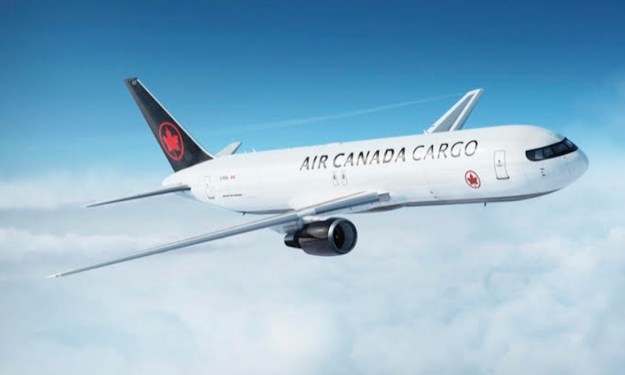
“In anticipation of our recovery, Air Canada has kept the course with key long-term projects to increase and diversify revenue and lower costs. One such program is the expansion of Air Canada Cargo, with quarterly revenue up 42 per cent to $398 million from the first quarter of 2021, and now further expanded with the addition of two new Boeing 767-300 freighters to be delivered in 2022.ย  The renegotiation of key engine maintenance contracts completed in the quarter, will also yield savings over the remaining life of the contracts. ย Aeroplan air redemption bookings in the quarter exceeded those of the same quarter in 2019 by 19 per cent.ย  The relaunched program saw the highest new member acquisitions and redemptions in a quarter, and generated third-party gross billings exceeding first quarter 2019 levels by 21 per cent,” said Mr. Rousseau.

“Air Canada is rapidly adapting for the post-pandemic world. We are doing our part by contributing to the travel of Ukrainians to Canada, with a substantial donation of 100 million Aeroplan points.ย  We have also advanced our ESG goals in the quarter by announcing an order for 26 fuel-efficient Airbus A321XLR aircraft, which we have now increased to 30 aircraft. As well, we have recently entered into a long-term agreement with International Aero Engines, LLC (Pratt & Whitney) for the selection of the PW1100G-JM engines, spare engines and related maintenance services for these new aircraft.ย  We are responding to the evolving competitive landscape through our Rise Higher strategy to elevate all aspects of our business, particularly as it relates to the customer experience. Given pent-up travel demand, the demonstrated loyalty of our customers, and the expected further removal of travel-related government restrictions, Air Canada anticipates its recovery will gain momentum through the balance of 2022 and beyond,” said Mr. Rousseau.

First Quarter 2022 Financial Results
  • In the first quarter of 2022, Air Canada’s operating capacity, measured by Available Seat Miles (ASMs) increased about 3.4 times from the first quarter of 2021. When compared to the first quarter of 2019, ASM capacity represented a decline of 45 per cent, which was generally in line with the capacity expectations projected in Air Canada’s fourth quarter 2021 earnings release dated February 18, 2022.
  • First quarter 2022 passenger revenues of $1.917 billion increased nearly five times from the first quarter of 2021.
  • First quarter 2022 operating revenues of $2.573 billion increased about three-and-a-half times from the first quarter of 2021.
  • First quarter 2022 total operating expenses of $3.123 billion increased $1.345 billion or 76 per cent from the first quarter of 2021.
  • First quarter 2022 cost per available seat mile (CASM) of 21.8 cents compared to first quarter 2021 CASM of 42.2 cents.
  • First quarter 2022 adjusted cost per available seat mile* (adjusted CASM) of 15.6 cents compared to first quarter 2021 adjusted CASM of 40.4 cents.
  • First quarter 2022 EBITDA (excluding special items)* or earnings before interest, taxes, depreciation and amortization of negative $143 million compared to negative EBITDA of $763 million in the first quarter of 2021.
  • First quarter 2022 net loss of $974 million or $2.72 per diluted share compared to a net loss of $1.304 billion or $3.90 per diluted share in the first quarter of 2021.
  • First quarter 2022 cash from operations was $335 million compared to cash used in operations of $888 million in the first quarter of 2021, an improvement of $1,223 million driven by improved operating results and strong advance ticket sales. Free cash flow of $59 million in the first quarter of 2022 improved by $1,221 million when compared to the same period in 2021.

*ย EBITDA,ย EBITDA margin,ย adjusted CASM and free cash flow (discussed further below)ย areย non-GAAP financial measures or non-GAAP ratios. Such measures are not recognized measures for financial statement presentation under GAAP, do not have standardized meanings, may not be comparable to similar measures presented by other entities and should not be considered a substitute for or superior to GAAP results. Refer to the “Non-GAAP Financial Measures” section of this news release for descriptions of Air Canada’s non-GAAP financial measures and non-GAAP ratios and for a reconciliation of Air Canada non-GAAP measures to the most comparable GAAP financial measure.

First Quarter 2022 Overview

Over the quarter, and until February 28, 2022, all travellers, regardless of vaccination status, were required to provide a negative pre-entry COVID-19 PCR test result taken within 72 hours of departure or a proof of a positive test result received in the previous 11 to 180 days. On February 15, 2022, the Government of Canada announced changes to certain travel restrictions for fully vaccinated travellers. ย Refer to section 4 “Overview & First Quarter 2022 Highlights” of Air Canada’s First Quarter 2022ย MD&A for additional informationย on such changes.

On March 17, 2022, the Government of Canada announced additional changes that came into effect on April 1, 2022, allowing for fully vaccinated travellers to no longer be required to provide a pre-entry COVID-19 test result to enter Canada by air, land or water. Foreign nationals who do not meet the requirements to be considered fully vaccinated are not able to enter Canada unless they meet an exemption set out in the Orders made under the Quarantine Act. Unvaccinated or partially vaccinated travellers allowed to enter Canada remain subject to the federal requirement to quarantine and take a COVID-19 PCR test at the time of arrival and on day eight after arrival.

Route Network and Schedule

Since the onset of the pandemic, Air Canada has actively managed its ASM capacity based on prevailing market trends and travel demand. In January 2022, in response to the emergence of the Omicron variant and the associated short-term decline in demand, Air Canada suspended flights to certain Caribbean destinations from January 24 to April 30, 2022.

In February 2022, Air Canada made the following announcementsย (adding to the schedule updates announced in the second half of 2021):

  • An expansion of its North American network for Summer 2022 that includes the launch of new service on four transborder and three domestic routes, as well as the restoration of 41 North American routes. Air Canada plans to operate to 51 Canadian and 46 U.S airports this summer and offer customers the largest network and most travel options of any Canadian carrier.
  • Expanded Summer 2022 international schedule with 34 routes relaunching across the Atlantic and Pacific.

Further information on the schedule updates announced inย 2021 can be found in section 4 “2021 Highlights” of Air Canada’s 2021 MD&A.

Outlook

For the second quarter of 2022, Air Canada plans to increase its ASM capacity by approximatelyย 414 per cent from the same quarter inย 2021ย (or about 73 per cent ofย second quarter 2019 ASM capacity).

Air Canada is reiterating the following guidance for the full year 2022 provided in its news release dated March 30, 2022:

  • Air Canada plans to increase its full year 2022 ASM capacity by about 150 per cent from 2021 ASM levels (or about 75 per cent of 2019 ASM levels). Air Canadawill continue to adjust capacity and take other measures as required, including to account for passenger demand, public health guidelines, and travel restrictions globally, as well as other factors, such as inflation and other cost pressures.
  • For 2022, Air Canada expects adjusted cost per available seat mile (CASM)* to remain about 13 to 15 per cent above 2019 levels.
  • For 2022, Air Canada expects an annual EBITDA margin* of about 8 to 11 per cent.
Major Assumptions

Assumptions were made by Air Canada in preparing and making forward-looking statements. Among these, Air Canada assumes moderate Canadian GDP growth for 2022. Air Canada also expects that the Canadian dollar will trade, on average, at C$1.26 per U.S. dollar for the full year 2022 and that the price of jet fuel will average $1.24 per litre for the full year 2022.

Non-GAAP Financial Measures

Below is a description of certain non-GAAP financial measures used by Air Canada to provide readers with additional information on its financial and operating performance. Such measures are not recognized measures for financial statement presentation under GAAP, do not have standardized meanings, may not be comparable to similar measures presented by other entities and should not be considered a substitute for, or superior to, GAAP results. Refer to the discussion below for descriptions of non-GAAP financial measuresย andย to the tables accompanying thisย newsย release for reconciliations of the non-GAAP financial measures, used in this news release to the most comparable GAAP financial measures.

EBITDA

EBITDA (earnings before interest, taxes, depreciation and amortization) is commonly used in the airline industry and is used by Air Canada as a means to view operating results before interest, taxes, depreciation and amortization as these costs can vary significantly among airlines due to differences in the way airlines finance their aircraft and other assets. Air Canadaexcludes special items from EBITDA as these items may distort the analysis of certain business trends and render comparative analysis across periods or to other airlines less meaningful.

EBITDA Margin

EBITDA margin (EBITDA as a percentage of operating revenue) is commonly used in the airline industry and is used by Air Canada as a means to measure the operating margin before interest, taxes, depreciation and amortization as these costs can vary significantly among airlines due to differences in the way airlines finance their aircraft and other assets.

Air Canada celebrates Earth Day by dedicating Sustainable Aviation Fuel to four flights through its Leave Less Travel Program

Air Canada announced today that it will dedicate Sustainable Aviation Fuel (SAF) to four commercial flights departing fromย San Franciscoย to its major hubs inย Toronto,ย Vancouver,ย Calgary, andย Montreal.


Through its Leave Less Travel Program, Air Canada is sourcing its SAF from Neste, a leading producer of renewable fuels, which will provide the airline with Neste MY Sustainable Aviation FuelTM. Powering aircraft with SAF directly reduces greenhouse gas emissions (GHG) at the source. Theseย four flights will allow Air Canada to reduce emissions by approximately 39 tonnes of CO2e, compared with the combustion of conventional fossil jet fuel. This represents the equivalent of two rounds trips betweenย Ottawaย andย Vancouver, or roughly 19,000 km, by car.

Through its Leave Less Travel Program, Air Canada is sourcing its SAF from Neste, a leading producer of renewable fuels, which will provide the airline with Neste MY Sustainable Aviation FuelTM. (CNW Group/Air Canada)

Scheduled SAF Flights

Flight #

Routes

Schedule

Fleet Type

AC738

San Francisco-Toronto

April 22, 2022

Boeing 737 Max-8

AC575

San Francisco-Vancouver

April 22, 2022

Boeing 737 Max-8

AC8648

San Francisco-Calgary

April 22, 2022

Mitsubishi CRJ-900

AC760

San Francisco-Montreal

April 23, 2022

Airbus A220-300


Leave Less Travel Program


With Air Canada’sย Leave Less Travel Program, corporate customers can purchase SAF, carbon offsets or a combination of both to offset or reduce GHG emissions related to business travel and reduce their carbon footprint. This program is one of the many comprehensive initiatives being implemented as part of Air Canada’s Climate Action Plan and an additional step towards achieving the airline’s long-term goal of net-zero GHG emissions by 2050.

As part of itsย Climate Action Plan, Air Canada committed to investย $50 millionย in SAF and carbon reduction and removal technologies.ย According to IATA, SAF has the potential to provide a lifecycle GHG emissions reduction of up to 80% compared to conventional jet fuel.

Key SAF Collaborations:
  • Airย Canadaย is a founding member of the newly launchedย ย Canadian Council for Sustainable Aviation Fuelsย (C-SAF), a not-for-profit organization that aims to accelerate the commercial production and deployment of SAF inย Canada.
  • Airย Canadaย is a founding member of, and the first Canadian carrier to join theย Aviation Climate Taskforceย (ACT), formed to tackle the challenge of rising CO2ย emissions from commercial aviation. Made up of ten global airlines and the Boston Consulting Group, the ACT was established to accelerate research and advance innovation related to emerging decarbonization technologies, including through the development of sustainable aviation fuels.
  • Airย Canadaย is a signatory of theย Clean Skies for Tomorrow Coalition. The coalition’s mission is to accelerate the deployment and use of SAF technologies to reach 10% of global jet aviation fuel supply by 2030.

Air Canada facilitates flights for Ukrainians to travel to Canada with Aeroplan Donation

Air Canada today said it is donating 100 million Aeroplan points to support the Canadian government’s initiative to bring Ukrainians to Canada.ย The points will contribute towards facilitating transportation and can be used on flights operated by Air Canada and itsย Star Allianceย partners including Lufthansa, LOT Polish Airlines, SWISS, United Airlines and other carriers.ย  The Shapiro Foundation is also contributing to this effort and Miles4Migrants, a non-profit charity will manage and facilitate the flight bookings.

“Together with our employees, we are ready and prepared to assist andย support the Canadian Government’s plans to bring Ukrainian people toย Canada. With our 100 million Aeroplan points donation, we offer our global network and the strength of ourย Star Allianceย partnerships, in facilitating travel toย Canada. We are proud to work with other organizations and international programs to contribute towards a goal to enable up to 10,000 people to travel toย Canadaย as quickly as possible,” saidย Michael Rousseau, President and Chief Executive Officer of Air Canada.

“Our vision at Miles4Migrants is a world where displaced persons of all backgrounds can find safety and community in new homes. As we have been seeing Ukrainians become displaced, our community of donors has once again responded, donating to support flights for Ukrainian families to reach safety over the past weeks,” saidย Dianeย Padilla, Executive Director of Miles4Migrants.

“We are honoured and ready to join the Government ofย Canada, The Shapiro Foundation, and Air Canada to expand our impact andย help fly thousands of Ukrainians to their new homes. We are confident that the Canadian public and private sector will join us in our effort to fund their flights.”

“We are humbled to be able to play a part in assisting Ukrainian families who are being so warmly welcomed by Canadians. We know that access to flights is a criticalย need and we are proud to partner with Air Canada. We will double Aeroplan member donations towards Ukrainian travel, and donate the equivalent of up to 50 million Aeroplan points to help more people travel toย Canada,” saidย Ed Shapiro, trustee for The Shapiro Foundation.

Aeroplan members may elect to contribute towards this initiative facilitating Ukrainians travelling toย Canadaย by donating Aeroplan points atย Ukrainian Relief Fund.ย ย Fromย April 20ย 2022 untilย July 2022, members who donate Aeroplan Points to the Ukrainian Relief Fund or toย Miles4Migrantsย will double the impact of their contribution as the value of the points donated will be matched, by a donation equal to up to 50,000,000 points, by the Shapiro Foundation.

Airย Canada’sย support for Ukrainian relief aid to date includes:

  • An Air Canada donation ofย $10ย per booking made on its website startingย March 22ย for a total donation ofย $250,000ย toย Ukraineย relief aid;
  • Airย Canadaย employees and the Air Canada Foundation donatedย $170,000ย to supportย Ukraineย relief;
  • Onย March 9ย Air Canada operated a humanitarian special cargo flight on behalf of Airlink and other aid partners transport hospital beds, humanitarian and medical supplies toย Warsaw, Polandย and medicines destined for Lviv,ย Ukraine;
  • Ongoing transportation of medical supplies toย Europeย with a final destination in theย Ukraine;
  • Transportation of rapid response teams to scale up operations inย Europeย to help arriving Ukrainian families.

Air Canada and Air Canada Cargo inaugurate freighter service into Halifax

Air Canada’s Boeing 767-300ER freighter receives a water cannon salute on its first arrival into Halifax on April 20, 2022 (CNW Group/Air Canada)

Air Canada and Air Canada Cargo today operated the first dedicated freighter flight into Halifax Stanfield International Airport using the second Boeing 767-300ER to enter service. The addition of this aircraft will allow Air Canada Cargo to start high frequency, direct freighter capacity from Halifaxto Air Canada Cargo’s global network, including service to Frankfurt, Cologne, Istanbul, and Madrid, starting in May.

Today’s flight from Toronto arrived in Halifax with freight coming from around Air Canada’s global network and destined for Atlantic Canada. It will be loaded up with fresh lobster, fish, aerospace parts, and pharmaceuticals for its journey back to Toronto, from where those goods will be shipped to their final destinations around the globe.

The new service to Halifax complements Air Canada Cargo’s regular freighter service to Latin American cities.

Atlantic Canada Schedule from Toronto

  • To Halifax: Six flights per week starting today

European Schedule from Toronto Starting in May

  • To Frankfurt: Two flights per week
  • To Cologne: One flight per week
  • To Istanbul: One flight per week
  • To Madrid: Three flights per week

Air Canada’s one-day passenger load exceeds 100,000 customers

Air Canada has flown more than 100,000 customers in a single day for the first time since early in the pandemic as passenger loads continue to rebound with customers returning to travel.

“We were very pleased to have had 100,701 customers board our planes on April 15, 2022, as travellers steadily return. Clearly there is a pent-up demand for travel that is matched only by our enthusiasm to welcome back our customers. It is also significant that we passed this milestone smoothly, indicating Air Canada has recovered operationally from COVID-19’s effects and is prepared to safely and conveniently transport customers during the busy summer ahead,” said Kevin O’Connor, Vice President of Air Canada’s Systems Operations Control, which manages the airline’s daily operation.

The last time Air Canada carried more than 100,000 customers in one day was March 13, 2020. During the pandemic passenger loads fell as low as 2,175 on April 23, 2020, as global air traffic ground to a virtual halt. In 2019, prior to the pandemic, Air Canada carried on average nearly 150,000 people daily and its single-day, passenger-load record was 187,000 customers on August 16, 2019.

Air Canada announces its full-year guidance for the rest of 2022

Air Canada’s Boeing 787 Dreamliner. (CNW Group/Air Canada)

Air Canada today announced its 2022 full-year outlook and 2022-2024 key targets in conjunction with its 2022 Investor Day being held today fromย 9:00 a.m. to 1:00 p.m. ET.

“With the pandemic receding and travel returning, Air Canada has put in place a strategy to return to profitability and increase long-term shareholder value. Our expectations for the long-term success of our airline give us confidence to set out key targets that will serve to drive continuous improvement within the company and provide transparency for investors to track our progress,” saidย Michael Rousseau, President and Chief Executive Officer of Air Canada. “Central to our efforts will be our continuing emphasis on controlling costs while also making strategic investments, including those to advance ESG commitments, promote network growth, elevate the customer experience and heighten employee engagement. Through our focus on these priorities, propelled by our people and award-winning culture, we aim to command a highly competitive position emerging from the pandemic as a Canadian global champion.”

Investor Day Agenda

At Air Canada’s 2022 Investor Day, Mr. Rousseau will provide an update on the airline’s strategy. In addition, members of the Air Canada executive team will detail recent and upcoming initiatives, as follows:

  • Overview of the Commercial Strategy – Our Flight Path
    Lucie Guillemetteย – Executive Vice-President and Chief Commercial Officer
  • Reaching New Frontiers
    Mark Galardoย – Senior Vice President, Network Planning and Revenue Management
  • Elevating Customer Loyalty with Aeroplan
    Mark Nasrย – Senior Vice President, Products, Marketing and eCommerce
  • The Accelerated Growth of Air Canada Cargo
    Jason Berryย – Vice President, Cargo
  • Raising the Customer Experience and Operational Excellence
    Craig Landryย – Executive Vice President and Chief Operations Officer
  • Leveraging AI and Driving Business Transformation
    Mel Crockerย – Vice President and Chief Information Officer
  • The Long-Term Growth Trajectory
    Amos Kazzazย – Executive Vice-President and Chief Financial Officer
  • Our ESG Value Proposition
    Fireside chat withย Arielle Meloul-Wechslerย – Executive Vice President, Chief Human Resources Officer and Public Affairs, andย Marc Barbeauย – Executive Vice President and Chief Legal Officer

2022 Full Year Outlook

In addition to its key targets for 2022-2024 described further below, Air Canada is providing the following 2022 full-year outlook:

  • Airย Canadaย plans to increase its full year 2022 ASM capacity by about 150 per cent from 2021 ASM levels (or about 75 per cent of 2019 ASM levels). Airย Canadaย will continue to adjust capacity and take other measures as required, including so as to account for passenger demand, public health guidelines, and travel restrictions globally, as well as other factors, such as inflation and other cost pressures.
  • For 2022, Air Canada expects adjusted cost per available seat mile (CASM)* to increase about 13 to 15 per cent when compared to 2019.
  • For 2022, Air Canada expects an annual EBITDA margin* of about 8 to 11 per cent.

*EBITDA margin and adjusted CASM are each non-GAAP financial measures or non-GAAP ratios. Such measures are not recognized measures for financial statement presentation under GAAP, do not have standardized meanings, may not be comparable to similar measures presented by other entities and should not be considered a substitute for or superior to GAAP results. Refer to the “Non-GAAP Financial Measures” section of this news release for descriptions of Air Canada’s non-GAAP financial measures and non-GAAP ratios and for a reconciliation to the most comparable GAAP financial measure.

The 2022 full-year outlook provided in this news release constitutes forward-looking statements within the meaning of applicable securities laws, is based on a number of assumptions, including those discussed below, and is subject to a number of risks and uncertainties. Please see the section below entitled “Caution Regarding Forward-Looking Information”.

2022-2024 Long-Term Targets

Airย Canadaย is targeting:

  • an annual EBITDA* margin (earnings before interest, taxes, depreciation, and amortization, as a percentage of operating revenue) of about 19 per cent for full year 2024,
  • an annual return on invested capital (ROIC)* of about 15 per cent by year-end 2024,
  • a net debt to trailing 12-month EBITDA (leverage ratio)* approaching 1.0 by year-end 2024,
  • cumulative free cash flow* generation of aboutย $3.5 billionย for the 2022-2024 period,
  • 2024 full year ASM capacity of about 95 per cent of 2019 ASM levels,
  • 2024 adjusted cost per available seat mile (CASM)* increase of about 2 to 4 per cent when compared to 2019, and
  • 40 per cent growth in the Aeroplan membership base by the end of 2024, when compared toย February 2019ย levels.

*EBITDA margin, ROIC, leverage ratio, free cash flow and adjusted CASM are each non-GAAP financial measures or non-GAAP ratios. Such measures are not recognized measures for financial statement presentation under GAAP, do not have standardized meanings, may not be comparable to similar measures presented by other entities and should not be considered a substitute for or superior to GAAP results. Refer to the “Non-GAAP Financial Measures” section of this news release for descriptions of Air Canada’s non-GAAP financial measures and non-GAAP ratios and for a reconciliation to the most comparable GAAP financial measure.

The 2022-2024 long-term targets provided in this news release do not constitute guidance or outlook, but rather are provided for the purpose of assisting the reader in measuring progress toward Air Canada’s objectives. The reader is cautioned that using this information for other purposes may be inappropriate. Airย Canadaย may review and revise these targets as economic, geopolitical, market and regulatory environments change. These targets are used as goals as Air Canada executes on its strategic priorities, and they assume a normal business environment. Airย Canada’sย ability to achieve these targets is dependent on its success in achieving initiatives and business objectives that are described in the Investor Day presentation and on certain major assumptions, including those discussed below, and are subject to a number of risks and uncertainties. Please see the section below entitled “Caution Regarding Forward-Looking Information”.

Major Assumptions

Assumptions were made by Air Canada in preparing and making forward-looking statements.

As part of its assumptions, during the 2022 to 2024 period, Air Canada assumes moderate ย Canadian GDP growth. Airย Canadaย also assumes that the Canadian dollar will trade, on average, atย C$1.27ย per U.S. dollar in 2022,ย and atย C$1.30ย per U.S. dollar in 2023-2024, and that the price of jet fuel will averageย C$1.10 per litre in 2022,ย while it expects to be able to manage 2023-2024 jet fuel price volatility within a reasonable range above the prices that existed prior to the impact of theย Ukraine–Russiaย conflict.

Non-GAAP Financial Measures

Below is a description of certain non-GAAP financial measures and ratios used by Air Canada to provide readers with additional information on its financial and operating performance. Such measures are not recognized measures for financial statement presentation under GAAP, do not have standardized meanings, may not be comparable to similar measures presented by other entities and should not be considered a substitute for or superior to GAAP results.

EBITDA

EBITDA (earnings before interest, taxes, depreciation and amortization) is commonly used in the airline industry and is used by Air Canada as a means to view operating results before interest, taxes, depreciation and amortization as these costs can vary significantly among airlines due to differences in the way airlines finance their aircraft and other assets. Airย Canadaย excludes special items from EBITDA as these items may distort the analysis of certain business trends and render comparative analysis across periods or to other airlines less meaningful.

EBITDA Margin

EBITDA margin (EBITDA as a percentage of operating revenue) is commonly used in the airline industry and is used by Air Canada as a means to measure the operating margin before interest, taxes, depreciation and amortization as these costs can vary significantly among airlines due to differences in the way airlines finance their aircraft and other assets.

EBITDA is reconciled to GAAP operating income (loss) as follows:

(Canadian dollars in millions, except where indicated)

2019

2020

2021

GAAP operating income (loss)

$

1,650

$

(3,776)

$

(3,049)

Add back:

Depreciation and amortization

1,986

1,849

1,616

EBITDA (including special items)

$

3,636

$

(1,927)

$

(1,433)

Remove:

ย  ย Special Items

–

(116)

(31)

EBITDA (excluding special items)

$

3,636

$

(2,043)

$

(1,464)

Total operating revenues

$

19,131

$

5,833

$

6,400

Operating margin (%)

8.6%

(64.7)%

(47.6)%

EBITDA margin (%)

19.0%

(35.0)%

(22.9)%

Free Cash Flow

Airย Canadaย uses free cash flow as an indicator of the financial strength and performance of its business, indicating the amount of cash Air Canada can generate from operations and after capital expenditures. Free cash flow is calculated as net cash flows from operating activities minus additions to property, equipment, and intangible assets, and is net of proceeds from sale and leaseback transactions. The one-time proceeds related to the acquisition of Aeroplan in 2019 were also excluded from Air Canada’s calculation of free cash flow.

Free cash flow reconciles to GAAP net cash flows from (used in) operating activities as follows:

(Canadian dollars in millions)

2019

2020

2021

Net cash flows from (used in) operating activities

$

5,712

$

(2,353)

$

(1,563)

ย  ย Additions to property, equipment, and intangible assets,
ย  ย net of proceeds from sale and leaseback transactions

(2,025)

(717)

(1,062)

ย  ย One-time proceeds related to the acquisition of Aeroplan

(1,612)

–

–

Free cash flow

$

2,075

$

(3,070)

$

(2,625)

Adjusted CASM

Airย Canadaย uses adjusted CASM to assess the operating and cost performance of its ongoing airline business without the effects of aircraft fuel expense, the cost of ground packages at Air Canada Vacations, freighter costs, and special items as these items may distort the analysis of certain business trends and render comparative analysis across periods or to other airlines less meaningful.

In calculating adjusted CASM, aircraft fuel expense is excluded from operating expense results as it fluctuates widely depending on many factors, including international market conditions, geopolitical events, jet fuel refining costs andย Canada/U.S. currency exchange rates. Airย Canadaย also incurs expenses related to ground packages at Air Canada Vacations which some airlines, without comparable tour operator businesses, may not incur. In addition, these costs do not generate ASMs and therefore excluding these costs from operating expense results provides for a more meaningful comparison across periods when such costs may vary.

Airย Canadaย also incurs expenses related to the operation of freighter aircraft which some airlines, without comparable cargo businesses, may not incur. Airย Canadaย introduced one Boeing 767 dedicated freighter to its fleet inย December 2021ย and expects to have a fleet of eight Boeing 767 dedicated freighters in the next 12-18 months. Prior to 2021, Air Canada did not incur any costs related to the operation of dedicated freighter aircraft. These costs do not generate ASMs and therefore excluding these costs from operating expense results provides for a more meaningful comparison across periods when such costs may vary.

Excluding aircraft fuel expense, the cost of ground packages at Air Canada Vacations, dedicated freighter expenses and special items from operating expenses generally allows for a more meaningful analysis of Air Canada’s operating expense performance and a more meaningful comparison to that of other airlines.

Adjusted CASM is reconciled to GAAP operating expense as follows:

(Canadian dollars in millions, except where indicated)

2019

2020

2021

GAAP operating expense

$

17,481

$

9,609

$

9,449

Adjusted for:

ย  ย Aircraft fuel

(4,347)

(1,322)

(1,576)

ย  ย Ground package costs

(627)

(250)

(120)

ย  ย Special items

–

116

31

ย  ย Freighter costs

–

–

(1)

Operating expense, adjusted for the above-noted items

$

12,507

8,153

7,783

ASMs (millions)

112,814

37,703

33,384

Adjusted CASM (cents)

ยข

11.09

ยข

21.62

ยข

23.31

Net Debt to Trailing 12-Month EBITDA (Leverage Ratio)

Net debt to trailing 12-month EBITDA ratio (also referred to as “leverage ratio”) is commonly used in the airline industry and is used by Air Canada as a means to measure financial leverage. Leverage ratio is calculated by dividing net debt by trailing 12-month EBITDA (excluding special items). As mentioned previously, Air Canada excludes special items from EBITDA results (which are used to determine leverage ratio) as these items may distort the analysis of certain business trends and render comparative analysis across periods or to other airlines less meaningful.

(Canadian dollars in millions, except where indicated)

2019

2020

2021

EBITDA (excluding special items)

$

3,636

$

(2,043)

$

(1,464)

Total long-term debt and lease liabilities

8,024

11,201

15,511

Current portion of long-term debt and lease liabilities

1,218

1,788

1,012

Total long-term debt and lease liabilities (including current portion)

$

9,242

$

12,989

$

16,523

Remove:

ย  ย Cash, cash equivalents and short and long-term investments

6,401

8,013

9,403

Net debt

$

2,841

$

4,976

$

7,120

Leverage ratio

0.8x

(2.4)x

(4.9)x

Return on Invested Capital

Airย Canadaย uses return on invested capital (“ROIC”) as a means to assess the efficiency with which it allocates its capital to generate returns. ROIC is calculated as the ratio between adjusted pre-tax income (loss), excluding interest expense, and invested capital. Invested capital includes average year-over-year long-term debt and lease obligations, average year-over-year shareholders’ equity, and the embedded derivative on Air Canada’s convertible notes. In 2020, Air Canada issued convertible unsecured notes. Airย Canadaย has the option to deliver cash or a combination of cash and shares on the conversion date in lieu of shares, giving rise to an embedded derivative that is included as part of the definition of capital. Airย Canadaย calculates invested capital on a book value-based method when calculating ROIC. Due to the low book value of equity given the impact of the COVID-19 pandemic, excess cash is no longer removed from the calculation of invested capital.

Adjusted Pre-tax Income (Loss)

Adjusted pre-tax income (loss) is used by Air Canada to assess the overall pre-tax financial performance of its business without the effects of foreign exchange gains or losses, net financing expense relating to employee benefits, gains or losses on financial instruments recorded at fair value, gains or losses on sale and leaseback of assets, gains or losses on disposal of assets, gains or losses on debt settlements and modifications, and special items as these items may distort the analysis of certain business trends and render comparative analysis across periods or to other airlines less meaningful.

Return on invested capital is reconciled to GAAP income (loss) before income taxes as follows:

(Canadian dollars in millions, except where indicated)

2019

2020

2021

Income (loss) before income taxes

$

1,775

$

(4,853)

$

(3,981)

Adjusted for:

Special items

–

(116)

(31)

(Gain) loss foreign exchange

(499)

293

52

Net financing expense relating to employee benefits

39

27

8

(Gain) loss on financial instruments recorded at fair value

(23)

242

55

(Gain) loss on debt settlements and modifications

(6)

–

129

Gain on sale and leaseback of assets

–

(18)

–

Gain on disposal of assets

(13)

–

–

Adjusted pre-tax income (loss)

$

1,273

$

(4,425)

$

(3,768)

Adjusted for:

Interest expense

515

656

749

Adjusted pre-tax income (loss) before interest

$

1,788

$

(3,769)

$

(3,019)

Average long-term debt and lease liabilities (including current portion)

9,582

11,116

14,756

Embedded derivative on convertible notes

–

534

579

Average shareholder equity

3,839

3,058

862

Invested capital

$

13,421

$

14,708

$

16,197

Return on invested capital

13.3%

(25.6)%

(18.6)%

Air Canada expands initiatives to support Ukraine

Air Canada has announced it will be donating $10ย for every booking made on aircanada.com to supportย Ukraineย relief aid, with a total donation of up toย $250,000. Thisย $250,000ย donation will complement theย $170,000ย contribution recently made by Air Canada’s employees and the Air Canada Foundation to the Canadian Red Cross and other charities, as well as the ongoing humanitarian aid destined toย Polandย andย Ukraineย transported through Air Canada Cargo.

Additionally, Aeroplan Members may donate Aeroplan points atย Ukrainian Relief Fund, with 100% of points to be redistributed to various charitable organizations supporting relief efforts for Ukrainian refugees as well as providing critical aid to those in need.

Customers may also elect to donate further to theย Air Canada Foundationย which will focus donations to registered organizations in their work supporting the people ofย Ukraine.

“Together with our employees, our hearts are firmly in solidarity withย Ukraine’sย people in need. We will be donating up toย $250,000ย towardsย Ukraineย relief aid, complementing the donations made last week by our employees and the Air Canada Foundation. It is clear the scale of this extraordinary worldwide crisis requires combined efforts and to collectively enable additional global humanitarian support, we have made it possible for Aeroplan Members to donate points towardsย Ukraineย relief. We also remain in close contact with various stakeholders to determine how Air Canada and its employees can support Ukrainian people further, including those coming toย Canada,” saidย Michael Rousseau, President and Chief Executive Officer at Air Canada.

In addition to Air Canada’s initiatives detailed above, its support for Ukrainian relief aid to date includes:

  • Airย Canadaย employees and the Air Canada Foundation donation ofย $170,000ย to supportingย Ukraineย relief aid,
  • Mar. 9ย Air Canada-operated humanitarian special cargo flight on behalf of Airlink and other aid partners transport hospital beds, humanitarian and medical supplies toย Warsaw, Polandย and medicines destined for Lviv,ย Ukraine,
  • Ongoing transportation of medical supplies toย Europeย with final destination ofย Ukraine,
  • Transportation of rapid response teams to scale up operations inย Europeย to help arriving Ukrainian families.

Airย Canadaย and Air Canada Cargo are able to accept requests for free or discounted transport of shipments including excess baggage waivers from registered charitable organizations only. These must be viaย Airย Canada’sย online application process. Individuals who wish to contribute supplies or other forms of aid are requested to work directly with a registered organization.

Air Canada announces the acquisition of 26 Airbus A321neo extra-long range aircraft

Air Canada today announced it is acquiring 26 extra-long range (XLR) versions of the Airbus A321neo aircraft. The aircraft has sufficient range to serve all North American and select transatlantic markets, while offering customers added comfort and improving the carrier’s fuel efficiency to advance its environmental programs.


Deliveries are to begin in the first quarter of 2024 with the final aircraft to arrive in the first quarter of 2027. Fifteen of the aircraft will be leased from Air Lease Corporation, five will be leased from AerCap and six are being acquired under a purchase agreement with Airbus S.A.S. that includes purchase rights to acquire an additional 14 of the aircraft between 2027 and 2030.

Airย Canada’sย A321XLRs will accommodate 182 passengers in a configuration of 14 lie flat Air Canada Signature Class seats and 168 Economy Class seats. Among the aircraft’s amenities, customers will enjoy next generation seatback entertainment, access to inflight Wifi and a spacious cabin design featuring generous overhead baggage storage bins. With a range of approximately 8,700 kilometres andย an ability to fly up to 11 hours, the A321XLR can operate non-stop anywhere acrossย North Americaย and, pending Transport Canada approval for overseas operations, also fly transatlantic missions, bolstering the carrier’s hubs and network. Airย Canadaย is in the process of selecting an engine manufacturer for its A321XLR aircraft.

GHG reductions

The A321XLR will be used both for incremental growth of Air Canada’s fleet and to replace older, less-efficient aircraft expected to exit the fleet. As a result, the new aircraft will yield significant operational cost savings and environmental benefits. Airย Canadaย projects it will have up to 17 per cent lower fuel burn per seat than the previous generation narrow-body on a typical transcontinental flight and a projected reduction of up to 23 per cent versus previous generation wide-body aircraft on a transatlantic flight. This will reduce greenhouse gas emissions to help Air Canada fulfill its environmental commitments, which include the achievement of net carbon neutrality by 2050. The A321XLR is also expected to be quieter for passengers and airports than the aircraft being replaced with the A321XLR.

As ofย December 31, 2021, Air Canada had a combined 214 aircraft in its mainline and Air Canada Rouge fleets, including 136 single-aisle, narrow-body aircraft.


Air Canada welcomes the removal of pre-departure COVID-19 testing for fully vaccinated travelers Entering Canada

Air Canada welcomes the Government of Canada’sannouncement to remove pre-departure testing requirements as of April 1, 2022 for fully vaccinated travellers entering Canada.

Air Canada’s recovery remains strong and well underway. The airline has expanded its domestic, transborder, Europe and South Pacific international route networks, giving customers by far the widest choice of routings and destinations of any Canadian carrier this summer. Air Canada is offering new service on four transborder and three domestic routes, restoring 41 North American routes and will operate to 51 Canadian and 46 U.S. airports. Internationally, the airline is relaunching 33 routes to Europe, Africa, and the Middle East, including popular destinations such as Barcelona, Copenhagen, Madrid, Milan and Venice. Air Canada is also expanding its South Pacific network with the return of daily service to Sydney and resumption of services to both Brisbane and Auckland.

Air Canada strategically expands its South Pacific Network

Air Canada today announced a strategic expansion of its South Pacific schedule with the return of daily service toย Sydneyย and resumption of services to bothย Brisbaneย andย Auckland. ย Air Canada’sย Australiaย andย New Zealandย flights operate from its trans-Pacific hub atย Vancouver International Airport which the carrier has built to conveniently connect its international network to its vast North American network.

Australiaย and New Zealand Schedule

Flight

From

To

Days of Week

Departs

Arrives

Aircraft

Begins

AC033

YVR

SYD

Ramps up to daily beginning early May

23:15

07:45 (+2 days)

Boeing 777

Currently operating

AC034

SYD

YVR

Ramps up to daily beginning early May

09:30

07:10

Boeing 777

Currently operating

AC035

YVR

BNE

Mon/Wed/Fri/Sun

22:55

06:35 (+2 days)

Boeing 787 Dreamliner

Jul. 1

AC036

BNE

YVR

Tue/Wed/Fri/Sun

10:15

06:50

Boeing 787 Dreamliner

Jul. 3

AC039

YVR

AKL

Tue/Thu/Sat

22:45

10:05 (+2 days)

Boeing 787 Dreamliner

Nov. 10

AC040

AKL

YVR

Mon/Thu/Sat

14:30

06:30

Boeing 787 Dreamliner

Nov. 12

Airย Canadaย may continue to adjust its schedule as more opportunities arise or based on COVID-19’s trajectory and the further easing of travel restrictions by government. For details on the full schedule please visit aircanada.com

Easy and convenient connections
Airย Canada’sย South Pacific flights connect seamlessly and conveniently to and from its extensive North American network in YVR including:ย New York–Newark,ย Toronto,ย Montreal,ย Ottawa,ย Calgary,ย Edmonton,ย Kelowna,ย Victoria,ย Seattle,ย San Francisco,ย Los Angelesย among other cities.

Inย Sydneyย andย Brisbane, Air Canada’s flights will connect easily to and fromย Melbourne,ย Canberra,ย Perth, Cairns and other destinations with code-share partner Virgin Australia.