Category Archives: Boeing

Boeing loses $636 million in 2019

Boeing issued this financial report:

The Boeing Company reported fourth-quarter revenue of $17.9ย billion, GAAP loss per share of ($1.79) and core loss per share (non-GAAP)* of ($2.33), primarily reflecting the impacts of the 737 MAX grounding (Table 1). Boeing recorded operating cash flow of ($2.2) billion and paid $1.2ย billion of dividends.

“We recognize we have a lot of work to do,” said Boeing President and Chief Executive Officer David Calhoun. “We are focused on returning the 737 MAX to service safely and restoring the long-standing trust that the Boeing brand represents with the flying public.ย We are committed to transparency and excellence in everything we do.ย  Safety will underwrite every decision, every action and every step we take as we move forward. Fortunately, the strength of our overall Boeing portfolio of businesses provides the financial liquidity to follow a thorough and disciplined recovery process.”

Commercial Airplanes fourth-quarter revenue was $7.5 billion and fourth-quarter operating margin decreased to (38.1) percent reflecting lower 737 deliveries and an additional pre-tax charge of $2.6 billion related to estimated potential concessions and other considerations to customers related to the 737 MAX grounding (Table 4). The estimated costs to produce 737 aircraft included in the accounting quantity increased by $2.6 billion during the quarter, primarily to reflect updated production and delivery assumptions. In addition, the suspension of 737 MAX production and a gradual resumption of production at low production rates will result in approximately $4 billion of abnormal production costs that will be expensed as incurred, primarily in 2020.

Commercial Airplanes delivered 79 airplanes during the quarter, including 45 787’s, and captured orders for 30 737 MAX aircraft at the Dubai Air Show and 2 777 freighters for Lufthansa. The 787 program also booked 36 net orders in the quarter. As previously announced, the 787 production rate will be reduced from the current rate of 14 airplanes per month to 12 airplanes per month in late 2020. Based on the current environment and near-term market outlook, the production rate is expected to be further adjusted to 10 airplanes per month in early 2021, and return to 12 airplanes per month in 2023. The first flight of the 777X was completed on January 25, and first delivery is targeted for 2021.

Commercial Airplanes backlog included over 5,400 airplanes valued at $377 billion.

Full-Year 2019

  • Revenue of $76.6ย billion, GAAP loss per share of ($1.12) and core (non-GAAP)* loss per share of ($3.47)
  • Operating cash flow of ($2.4)ย billion; cash and marketable securities of $10.0 billion
  • Total backlog of $463 billion, including over 5,400 commercial aeroplanes

Boeing and Embraer welcome Brazilian approval

Boeing and Embraer welcome the unconditional approval of their strategic partnership by the Administrative Council for Economic Defense (CADE)’s General-Superintendence (SG) in Brazil. The decision will become final within the next 15 days unless a review is requested by CADE Commissioners. The partnership has now received unconditional clearance from every regulatory jurisdiction with the exception of the European Commission, which continues to assess the deal.

“This latest clearance is yet another endorsement of our partnership, which will bring greater competition to the regional jet marketplace, better value for our customers and opportunities for our employees,” said Marc Allen, Boeing’s president of Embraer Partnership & Group Operations.

Brazil’s approval of the deal is a clear demonstration of the pro-competitive nature of our partnership,” said Francisco Gomes Neto, president and CEO of Embraer. “It will not only benefit our customers, but also allow the growth of Embraer and the Brazilian aeronautical industry as a whole.”

Unconditional clearance has now been granted in Brazil, United States, China, Japan, South Africa, Montenegro, Colombia, and Kenya.

Boeing and Embraer have been in discussion with the European Commission since late 2018, and continue to engage with the Commission as it proceeds through its assessment of the transaction.

“We have been productively engaged with the Commission to demonstrate the pro-competitive nature of our planned partnership, and we look forward to a positive outcome,” Boeing’s Allen said. “Given the positive endorsement we’ve seen from customers across Europe and the unconditional clearance we’ve received from every other regulator who has considered the transaction, we look forward to securing final approval for the transaction as soon as possible.”

The planned strategic partnership between Embraer and Boeing comprises two joint ventures: one joint venture made up of the commercial aircraft and services operations of Embraer (Boeing Brasil โ€“ Commercial) in which Boeing will own 80 percent and Embraer will hold 20 percent; and another joint venture to promote and develop markets for the multi-mission medium airlift C-390 Millennium (Boeing Embraer โ€“ Defense) in which Embraer will own a 51 percent stake and Boeing will own the remaining 49 percent.

New Boeing 777-9 completes its successful first flight

Boeing 777X WH001 makes its first flight at Paine Field in Everett, Washington on January 25, 2020.

Boeing made this announcement:

The new Boeing 777X jetliner took to the skies on January 25, 2020, entering the next phase of its rigorous test program. Based on the popular 777 and with proven technologies from the 787 Dreamliner, the 777X took off in front of thousands at Paine Field in Everett, Washington, atย 10:09 a.m. local time for a three hour, 51 minute flight over Washington state before landing at Seattle’s Boeing Field.

“The 777X flew beautifully, and today’s testing was very productive,” said Capt. Van Chaney, 777/777X chief pilot for Boeing Test & Evaluation. “Thank you to all the teams who made today possible. I can’t wait to go fly your airplane again.”

Capt. Chaney and Boeing Chief Pilot Craig Bomben worked through a detailed test plan to exercise the airplane’s systems and structures while the test team in Seattle monitored the data in real time.

“Our Boeing team has taken the most successful twin-aisle jet of all time and made it even more efficient, more capable and more comfortable for all,” said Stan Deal, president and CEO of Boeing Commercial Airplanes. “Today’s safe first flight of the 777X is a tribute to the years of hard work and dedication from our teammates, our suppliers and our community partners in Washington state and across the globe.”


The first of four dedicated 777-9 flight test airplanes, WH001 will now undergo checks before resuming testing in the coming days. The test fleet, which began ground testing in Everett last year, will endure a comprehensive series of tests and conditions on the ground and in the air over the coming months to demonstrate the safety and reliability of the design.

The newest member of Boeing’s market-leading widebody family, the 777X will deliver 10 percent lower fuel use and emissions and 10 percent lower operating costs than the competition through advanced aerodynamics, the latest generation carbon-fiber composite wing and the most advanced commercial engine ever built, GE Aviation’s GE9X.

The new 777X also combines the best of the passenger-preferred 777 and 787 Dreamliner cabins with new innovations to deliver the flight experience of the future. Passengers will enjoy a wide, spacious cabin, large overhead bins that close easily for convenient access to their belongings, larger windows for a view from every seat, better cabin altitude and humidity, less noise and a smoother ride.

Boeing expects to deliver the first 777X in 2021. The program has won 340 orders and commitments from leading carriers around the world, including ANA, British Airways, Cathay Pacific Airways, Emirates, Etihad Airways, Lufthansa, Qatar Airways and Singapore Airlines. Since its launch in 2013, the 777X family has outsold the competition nearly 2 to 1.

All photos by Boeing.

About the Boeing 777X Family

The 777X includes the 777-8 and the 777-9, the newest members of Boeing’s market-leading widebody family.

Seat Count:ย ย ย ย ย ย ย ย ย ย ย ย ย ย ย ย ย ย ย ย ย ย ย ย ย ย ย ย  777-8: 384 passengers
(typical 2-class)ย ย ย ย ย ย ย ย ย ย ย ย ย ย ย ย ย ย ย ย ย ย  777-9: 426 passengers

Engine:ย ย ย ย ย ย ย ย ย ย ย ย ย ย ย ย ย ย ย ย ย ย ย ย ย ย ย ย ย ย ย ย ย ย ย  GE9X, supplied by GE Aviation

Range:ย ย ย ย ย ย ย ย ย ย ย ย ย ย ย ย ย ย ย ย ย ย ย ย ย ย ย ย ย ย ย ย ย ย ย  777-8: 8,730 nautical miles (16,170 km)
777-9: 7,285 nautical miles (13,500 km)

Wingspan:ย ย ย ย ย ย ย ย ย ย ย ย ย ย ย ย ย ย ย ย ย ย ย ย ย ย ย ย ย ย  Extended: 235 ft, 5 in. (71.8 m)
On ground: 212 ft, 8 in (64.8 m)

Length:ย ย ย ย ย ย ย ย ย ย ย ย ย ย ย ย ย ย ย ย ย ย ย ย ย ย ย ย ย ย ย ย ย ย ย  777-8: 229 ft (69.8 m)
777-9: 251 ft, 9 in (76.7 m)

Boeing statement on 737 MAX return to service

Boeing has made this announcement:

As we have emphasized, the FAA and other global regulators will determine when the 737 MAX returns to service. However, in order to help our customers and suppliers plan their operations, we periodically provide them with our best estimate of when regulators will begin to authorize the ungrounding of the 737 MAX.

We are informing our customers and suppliers that we are currently estimating that the ungrounding of the 737 MAX will begin during mid-2020. This updated estimate is informed by our experience to date with the certification process. It is subject to our ongoing attempts to address known schedule risks and further developments that may arise in connection with the certification process. It also accounts for the rigorous scrutiny that regulatory authorities are rightly applying at every step of their review of the 737 MAX’s flight control system and the Joint Operations Evaluation Board process which determines pilot training requirements.

Returning the MAX safely to service is our number one priority, and we are confident that will happen. We acknowledge and regret the continued difficulties that the grounding of the 737 MAX has presented to our customers, our regulators, our suppliers, and the flying public. We will provide additional information about our efforts to safely return the 737 MAX to service in connection with our quarterly financial disclosures next week.

Copyright Photo: Joe G. Walker.

Boeing statement on employee messages provided to U.S. Congress and FAA

Boeing has issued this statement in light of the release of internal company emails regarding the 737 MAX:

In December, Boeing proactively brought these communications to the FAAโ€™s attention in furtherance of the companyโ€™s commitment to transparency with our regulator and strong safety oversight of our industry. We also provided copies to the Senate Committee on Commerce, Science, and Technology and the House Committee on Transportation and Infrastructure in recognition of their oversight functions. These documents have been released publicly at the encouragement of Chairman DeFazio and Chairman Wicker.

Some of these communications relate to the development and qualification of Boeingโ€™s MAX simulators in 2017 and 2018. These communications contain provocative language, and, in certain instances, raise questions about Boeingโ€™s interactions with the FAA in connection with the simulator qualification process.

Having carefully reviewed the issue, we are confident that all of Boeingโ€™s MAX simulators are functioning effectively. The qualification activities referenced in these communications occurred early in the service life of these simulators. Since that time, both internal and external subject matter experts have repeatedly tested and qualified the simulators at issue. Indeed, more than twenty regulatory qualifications of MAX simulators, performed by the FAA and multiple international regulators, have been conducted since early 2017. The specific Miami simulator that was used for the early qualification tests has been re-evaluated six times during this time period. The simulator software has been constantly improving during this time, through repeated cycles of testing, qualification, and revision of the software code.

These communications do not reflect the company we are and need to be, and they are completely unacceptable. That said, we remain confident in the regulatory process for qualifying these simulators.

In the context of providing these communications to the FAA, and having carefully considered the FAAโ€™s perspective on these matters, we also decided to provide additional documents that were identified in the course of legal reviews of the 737 MAX program. We provided these documents to the FAA and Congress as a reflection of our commitment to transparency and cooperation with the authorities responsible for regulating and overseeing our industry. We welcome, and will fully support, any additional review the FAA believes is appropriate in connection with any of these matters, as well as the continued involvement of the relevant congressional committees with these issues.

We regret the content of these communications, and apologize to the FAA, Congress, our airline customers, and to the flying public for them. We have made significant changes as a company to enhance our safety processes, organizations, and culture. The language used in these communications, and some of the sentiments they express, are inconsistent with Boeing values, and the company is taking appropriate action in response. This will ultimately include disciplinary or other personnel action, once the necessary reviews are completed.

Read the comments.

Boeing is recommending 737 MAX simulator training

Boeing has made this announcement:

Boeing is recommending 737 MAX simulator training in addition to computer based training for all MAX pilots prior to return to service of the 737 MAX. This recommendation takes into account our unstinting commitment to the safe return of service as well as changes to the airplane and test results. Final determination will be established by the regulators.

Dennis A. Muilenburg resigns as CEO of Boeing

Boeing is announcing a shake-up of its top management:

Boeing announced today that its Board of Directors has named current Chairman, David L. Calhoun, as Chief Executive Officer and President, effective January 13, 2020. Mr. Calhoun will remain a member of the Board. In addition, Board member Lawrence W. Kellner will become non-executive Chairman of the Board effective immediately.

The Company also announced that Dennis A. Muilenburg has resigned from his positions as Chief Executive Officer and Board director effective immediately. Boeing Chief Financial Officer Greg Smith will serve as interim CEO during the brief transition period, while Mr. Calhoun exits his non-Boeing commitments.

The Board of Directors decided that a change in leadership was necessary to restore confidence in the Company moving forward as it works to repair relationships with regulators, customers, and all other stakeholders.

Under the Company’s new leadership, Boeing will operate with a renewed commitment to full transparency, including effective and proactive communication with the FAA, other global regulators and its customers.

“On behalf of the entire Board of Directors, I am pleased that Dave has agreed to lead Boeing at this critical juncture,” Mr. Kellner said.ย  He added, “Dave has deep industry experience and a proven track record of strong leadership, and he recognizes the challenges we must confront. The Board and I look forward to working with him and the rest of the Boeing team to ensure that today marks a new way forward for our company.”

Mr. Calhoun said, “I strongly believe in the future of Boeing and the 737 MAX. I am honored to lead this great company and the 150,000 dedicated employees who are working hard to create the future of aviation.”

Boeing suspends 737 MAX production starting in January

Boeing has made this announcement:

Safely returning the 737 MAX to service is our top priority. We know that the process of approving the 737 MAX’s return to service, and of determining appropriate training requirements, must be extraordinarily thorough and robust, to ensure that our regulators, customers, and the flying public have confidence in the 737 MAX updates. As we have previously said, the FAA and global regulatory authorities determine the timeline for certification and return to service. We remain fully committed to supporting this process. It is our duty to ensure that every requirement is fulfilled, and every question from our regulators answered.

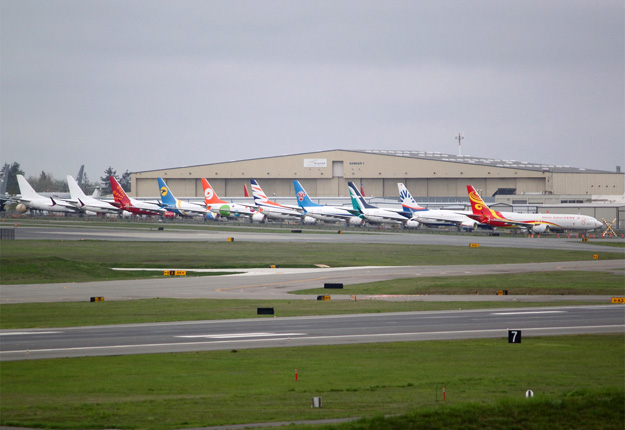
Throughout the grounding of the 737 MAX, Boeing has continued to build new airplanes and there are now approximately 400 airplanes in storage. We have previously stated that we would continually evaluate our production plans should the MAX grounding continue longer than we expected. As a result of this ongoing evaluation, we have decided to prioritize the delivery of stored aircraft and temporarily suspend production on the 737 program beginning next month.

We believe this decision is least disruptive to maintaining long-term production system and supply chain health. This decision is driven by a number of factors, including the extension of certification into 2020, the uncertainty about the timing and conditions of return to service and global training approvals, and the importance of ensuring that we can prioritize the delivery of stored aircraft. We will continue to assess our progress towards return to service milestones and make determinations about resuming production and deliveries accordingly.

During this time, it is our plan that affected employees will continue 737-related work, or be temporarily assigned to other teams in Puget Sound. As we have throughout the 737 MAX grounding, we will keep our customers, employees, and supply chain top of mind as we continue to assess appropriate actions. This will include efforts to sustain the gains in production system and supply chain quality and health made over the last many months.

We will provide financial information regarding the production suspension in connection with our 4Q19 earnings release in late January.

Copyright Photo: Joe G. Walker.

Reuters: Boeing board meets as company considers 737 MAX production changes

From Reuters:

“Boeing Co is considering whether to cut or halt production of its grounded 737 MAX after the Federal Aviation Administration said last week it would not approve the planeโ€™s return to service before 2020, a person briefed on the matter said on Sunday.”

Read the full story.

Copyright Photo: Joe G. Walker.

Boeing unveils the new 737-10 MAX 10

Boeing marked a key milestone as thousands of employees gathered for the debut of the first 737 MAX 10 at the companyโ€™s Renton, Washington factory on Friday. During a ceremony, Boeing leaders highlighted the teamโ€™s accomplishments and recognized their efforts in completing production of the newest member of the 737 MAX family.

The 737 MAX 10, the largest variant of the MAX family, can seat up to 230 passengers and offers the lowest seat-mile cost of any single-aisle airplane ever produced. The airplane will now undergo system checks and engine runs prior to first flight next year.

โ€œIโ€™m honored to take this airplane on its first flight and show the world what youโ€™ve put your heart and soul into,โ€ 737 Chief Pilot Jennifer Henderson told the employee crowd.

The 737 MAX 10 currently has more than 550 orders and commitments from more than 20 customers around the globe.

Photo: Boeing.