Category Archives: Spirit Airlines

Spirit Airlines to add new routes from Detroit and Dallas/Fort Worth

Despite problems with Airbus deliveries, Spirit Airlines is planning to add new routes from both Detroit and Dallas/Fort Worth.

From Detroit (DTW), the carrier will add new spoke routes to Charleston, SC, Kansas City and Nashville.

Photo: Spirit Airlines

From Dallas/Fort Worth (DFW), the carrier will add new spoke routes to Columbus, Kansas City, Memphis, Milwaukee and San Antonio.

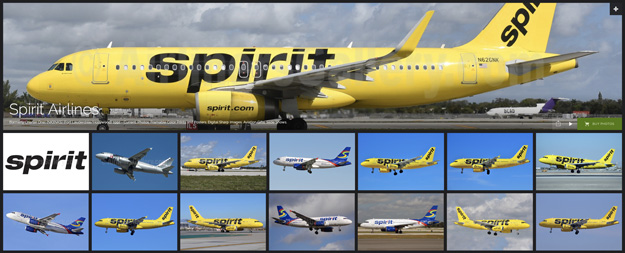
Spirit Airlines aircraft photo gallery:

Screenshot

Spirit Airlines to restore the Fort Lauderdale/Hollywood – Managua route

Spirit Airlines today announced the resumption of its daily, nonstop service connecting Managua (MGA) and Fort Lauderdale/Hollywood (FLL).

The daily, nonstop service to FLL starts November 30 and offers connections to 26 cities across Spirit’s network.

Spirit Airlines Connection Options to/from MGA:  

Aguadilla (BQN)

Cleveland (CLE)

Louisville (SDF)

San Juan (SJU)

Atlanta (ATL)

Dallas (DFW)

Myrtle Beach (MYR)

St Thomas (STT)

Atlantic City (ACY)

Detroit (DTW)

Nashville (BNA)

St. Louis (STL)

Baltimore (BWI)

Houston (IAH)

Newark (EWR)

Tampa (TPA)

Boston (BOS)

Indianapolis (IND)

Orlando (MCO)

Charlotte (CLT)

LaGuardia (LGA)

Philadelphia (PHL)

Chicago (ORD)

Latrobe (LBE)

Richmond (RIC)

The resumption of Managua service increases the airline’s international service to 29 markets across Latin America and the Caribbean, including neighboring Central American destinations in Costa Rica, El Salvador, Honduras, Guatemala, and Panama.

Spirit Airlines aircraft photo gallery:

Spirit Airlines touts its summer operational performance

While the U.S. airline industry faced many challenges and cancellations this summer, Spirit Airlines issued this report on its performance this summer:

Spirit Airlines today announced its operational performance ranked among the industry best in the two-month period following when Spirit’s peak summer schedule went into effect on June 5. The carrier also set a company record for its highest-ever completion factor performance for the month of July.

“These great results are among the best in the industry and are due to the relentless dedication of our Spirit Family. Our team rose to the occasion to serve record numbers of summer travelers and work through industry challenges to deliver a high value experience for our Guests,” said John Bendoraitis, Spirit Airlines Executive Vice President and Chief Operating Officer.

Summary of Spirit’s operational performance from June 5August 5:

  • Operated more than 44,000 domestic and international flights
  • Delivered a completion factor of 99.2% that ranked No. 3 in the U.S. industry; outperformed all major legacy airlines; included 25 days of 100 percent completion factor; and set a new company record for the month of July
  • 77.5% of flights arrived within 14 minutes of scheduled arrival time, which is the standard “A14” industry metric, and ranked No. 4 in the U.S.
  • Launched new Albuquerque (ABQ) and Boise (BOI) stations during this period, and Reno (RNO) flights started August 10

Results are based on Spirit’s data compared to major and regional U.S. airlines. Official monthly performance results are published in the Department of Transportation’s Air Travel Consumer Reports. Spirit’s company record for July completion factor omitted July 2020, which was a reduced schedule due to the industry-wide drawdown during that period.

Spirit Airlines aircraft photo gallery:


Spirit Airlines reports a second quarter net loss of $52.4 million

Spirit Airlines, Inc. reported second quarter 2022 financial results.

Ended the second quarter 2022 with $1.5 billion of unrestricted cash, cash equivalents, short-term investment securities and liquidity available under the Company’s revolving credit facility.


As Reported

(unaudited)

Second Quarter 2022

Second Quarter 2021

Second Quarter 2019

Total operating revenues

$1,366.6 million

$859.3 million

$1,013.0 million

Pre-tax income (loss)

$(67.5) million

$(273.3) million

$148.6 million

Pre-tax margin

(4.9) %

(31.8) %

14.7 %

Net income (loss)

$(52.4) million

$(287.9) million

$114.5 million

Diluted earnings (loss) per share

$(0.48)

$(2.73)

$1.67


Adjusted 1

Second Quarter 2022

Second Quarter 2021

Second Quarter 2019

Total Operating Revenues

$1,366.6 million

$859.3 million

$1,013.0 million

Adj. Pre-tax income (loss)

$(38.9) million

$(56.9) million

$150.1 million

Adj. Pre-tax margin

(2.8) %

(6.6) %

14.8 %

Adj. Net income (loss)

$(32.2) million

$(45.7) million

$115.7 million

Adj. Net income (loss) per share, diluted

$(0.30)

$(0.43)

$1.69


“Top line revenue growth in the second quarter 2022 exceeded our expectations, driving a better-than-expected adjusted pre-tax margin despite much higher than anticipated fuel prices. On the operations side, following a rough start to the quarter, we implemented key operational changes and quickly saw meaningful improvements in our operational reliability and recoverability.  We finished the quarter on a strong note with a 98.8 percent completion factor for June.  And, our completion factor for July was 99.7 percent, including 15 days of 100 percent completion factor,” said Ted Christie, Spirit’s President and Chief Executive Officer.  “The robust demand for leisure travel during the peak summer period resulted in busy airports and high load factors, and I want to thank our Team Members for staying focused on supporting each other and delivering a high value experience for our Guests.”

“On July 28, 2022, we announced plans to unite with JetBlue Airways Corporation (“JetBlue”) to create a compelling national low-fare challenger to the dominant U.S. carriers.  I am thrilled we were able to reach an agreement with JetBlue that delivers value for our stockholders, Team Members, and Guests.”

The Company believes that providing analysis of financial and operational performance compared to second quarter 2019 is a more relevant measure of performance than comparing to second quarter 2021 due to the severe impacts from the COVID-19 pandemic on the Company’s financial results and operational performance for 2021.

Second Quarter 2022 Results
For the second quarter 2022, Spirit reported a net loss of $52.4 million, or a net loss of $0.48 per diluted share. Excluding special items, adjusted net loss for the second quarter 2022 was $32.2 million1, or an adjusted net loss of $0.30 per diluted share1.

For the second quarter 2022, Spirit reported a pre-tax loss of $67.5 million and a pre-tax margin of negative 4.9 percent. Adjusted pre-tax loss for the second quarter was $38.9 million and adjusted pre-tax margin was negative 2.8 percent.

Capacity and Load Factor
Capacity, or available seat miles (“ASMs”), in the second quarter 2022 increased 9.9 percent compared to the same period in 2019. Load factor for the second quarter 2022 was 86.0 percent, up 1.0 percentage point compared to the second quarter 2019.

Aircraft utilization in the second quarter 2022 was 10.7 hours, down 16.4 percent compared to the 12.8 hours in the same period of 2019.

Revenue Performance
Total operating revenues for the second quarter 2022 were $1.4 billion, an increase of 34.9 percent compared to the second quarter 2019 primarily due to increased flight volume and higher operating yields. Total revenue per ASM (“TRASM”) was 11.54 cents, up 22.8 percent compared to second quarter 2019.

On a per passenger flight segment basis, compared to the same period in 2019, total revenue per passenger flight segment (“segment”) for the second quarter 2022 increased 24.3 percent to $140.61. Compared to the second quarter 2019, fare revenue per segment increased 25.7 percent to $72.41 and non-ticket revenue per segment increased 22.8 percent to $68.202.

Cost Performance
Total GAAP operating expenses for the second quarter 2022 increased 66.3 percent compared to the second quarter 2019 to $1,412.0 million. Adjusted operating expenses for the second quarter 2022 increased 63.2 percent compared to the second quarter 2019 to $1,383.3 million3. Compared to the second quarter 2019, these increases were primarily driven by increases in flight volume, additional aircraft, higher fuel prices and inflationary wage pressures.

“Good cost management and benefits from improved reliability resulted in better-than-expected non-fuel costs for the second quarter, mitigating the majority of the impact from higher-than-expected fuel prices,” said Scott Haralson, Spirit’s Chief Financial Officer. “Looking ahead to the third quarter, we continue to face constraints that limit our ability to both optimize our network and operate our fleet at full utilization. One of the primary limiters is the continued constraint on U.S. continental flights to/from Florida. Therefore,  while demand trends continue to be strong as we head into the off-peak shoulder season, we are estimating pre-tax margins will be between negative one percent to positive one percent for the third quarter 2022.”

Fleet
Spirit took delivery of four new A320neo aircraft during the second quarter 2022. The Company ended the quarter with 180 aircraft in its fleet, an increase of 33.3 percent since the end of second quarter 2019.

Liquidity and Capital Deployment
Spirit ended second quarter 2022 with unrestricted cash, cash equivalents, short-term investment securities and liquidity available under the Company’s revolving credit facility of $1.5 billion.

Total capital expenditures, including net pre-delivery purchase deposits, for the six months ended June 30, 2022, were $113.6 million, primarily related to the purchase of spare parts, including two spare engines, and expenditures related to the building of Spirit’s new facilities in Dania Beach, Florida.

Tax Rate
On a GAAP basis, the Company’s effective tax rate for the second quarter 2022 was 22.4 percent. The Company’s non-GAAP tax rate for the second quarter 2022 was 17.2 percent.

Spirit Airlines aircraft photo gallery:
Spirit Airlines arrives in Boise, Idaho

Spirit Airlines made this announcement:

Spirit Airlines on August 5 launched its first Idaho service at Boise Airport (BOI). The daily, nonstop route connects Las Vegas’ entertainment and attractions to Boise’s vibrant, tree-lined city and its surrounding outdoor recreation opportunities.

Las Vegas is one of Spirit’s largest airport operations with about 70 flights each day, which now provides one-stop options between BOI and more than a dozen cities across the airline’s route map.

Spirit Airlines Connection Options to/from BOI:   

Atlanta (ATL)

Los Angeles (LAX)

Portland (PDX)

Charlotte (CLT)

Newark (EWR)

Sacramento (SMF)

Chicago (ORD)

Oakland (OAK)

San Diego (SAN)

Dallas-Fort Worth (DFW)

Orange County (SNA)

Seattle (SEA)

Detroit (DTW)

Orlando (MCO)

Tampa (TPA)

Houston (IAH)

Phoenix (PHX)


Spirit Airlines aircraft photo gallery:

TWU statement on JetBlue Airways acquiring Spirit Airlines

The following statement can be attributed to TWU International President John Samuelsen regarding JetBlue Airways plans to acquire Spirit Airlines.

“The Transport Workers Union continues to believe that workers and the flying public would be better served if JetBlue and Spirit remain separate carriers. Airline workers must have a seat at the table to ensure that major transactions like this do not undermine their rights and livelihoods. While JetBlue management attempts to move forward with its acquisition of Spirit, the TWU will be working with government regulators, the carriers themselves, and other stakeholders to ensure that this deal protects jobs and actually benefits the public interest. Until we see firm commitments, we oppose the deal entirely. Since JetBlue and Spirit already share a number of flight routes, a combined airline would likely be required to divest some of those routes. We have seen this many times before: another mega airline could lead to significant job cuts, reduced choices for consumers and higher prices. The TWU represents workers at both JetBlue and Spirit, and will be working hard to engage DOJ regulators to advocate for the interests of workers and consumers alike. We know that corporate management teams often put profit ahead of working people — it is up to the Transport Workers Union, other unions, and consumer advocate groups to hold both corporations and regulators accountable.”

JetBlue and Spirit to merge and create a national low-fare challenger to the dominant big four airlines

JetBlue Airways Corporation (JetBlue Airways) and Spirit Airlines, Inc. today announced that their boards of directors have approved a definitive merger agreement under which JetBlue will acquire Spirit for $33.50 per share in cash, including a prepayment of $2.50 per share in cash payable upon Spirit stockholders’ approval of the transaction and a ticking fee of $0.10 per month starting in January 2023 through closing, for an aggregate fully diluted equity value of $3.8 billion1 and an adjusted enterprise value of $7.6 billion2.

“We are excited to deliver this compelling combination that turbocharges our strategic growth, enabling JetBlue to bring our unique blend of low fares and exceptional service to more customers, on more routes,” said Robin Hayes, chief executive officer, JetBlue.“We look forward to welcoming Spirit’s outstanding Team Members to JetBlue and together creating a customer-centric, fifth-largest carrier in the United States. Spirit and JetBlue will continue to advance our shared goal of disrupting the industry to bring down fares from the Big Four airlines. This combination is an exciting opportunity to diversify and expand our network, add jobs and new possibilities for Crewmembers, and expand our platform for profitable growth.”

“Combining with Spirit will give JetBlue an even larger platform to deliver on our mission to inspire humanity,” said Peter Boneparth, chair of the board, JetBlue. “With the best Crewmembers and Team Members in the industry, our Board and leadership team look forward to building long-term sustainable value for all our stakeholders as an even stronger, more competitive low-fare airline.”

Ted Christie, president and chief executive officer, Spirit, said, “We are thrilled to unite with JetBlue through our improved agreement to create the most compelling national low-fare challenger to the dominant U.S. carriers, and we look forward to working with JetBlue to complete the transaction. Bringing our two airlines together will be a game changer, and we are confident that JetBlue will deliver opportunities for our Guests and Team Members with JetBlue’s unique blend of low fares and award-winning service. We especially appreciate the commitment of our Spirit Family throughout this process. Today’s exciting announcement reflects JetBlue’s admiration for Spirit and a shared belief in what the combined airline can bring for our Guests.”

“We are pleased that the Spirit Board of Directors’ robust and diligent process has delivered additional value to our stockholders,” said Mac Gardner, chairman of the board, Spirit. “This is a compelling combination that provides meaningful protections for stockholders against an adverse regulatory outcome with a significant cash premium that reflects the continued hard work and dedication of the Spirit Family.”

Increases JetBlue’s relevance and offers consumers more choices by leveraging the airlines’ complementary networks and fleets

  • The airline will offer its combined 77 million customers more options and choices.
  • JetBlue plans to bring the JetBlue Experience to all aircraft, offering JetBlue’s unique combination of low fares and award-winning service to more customers.
  • The acquisition will accelerate JetBlue’s organic growth plan with 1,700+ daily flights to more than 125 destinations in 30 countries based on December 2022 schedules.
  • The acquisition will increase relevance for JetBlue in certain key focus cities (Fort Lauderdale, Orlando, San Juan, and Los Angeles) as well as Big Four airline hubs (Las Vegas, Dallas, Houston, Chicago, Detroit, Atlanta, and Miami).
  • The combined airline will have a fleet of 458 aircraft on a pro forma basis and an order book of over 300 Airbus aircraft with fuel-efficient, lower-carbon new engine option, or neo, engines, providing increased flexibility and efficiency while mitigating the risk of limited availability of aircraft.

Brings together the best of both airlines’ cultures and values to create job growth and career opportunities for Crewmembers and Team Members

  • The combined airline will provide more career growth options, broader travel benefits, more opportunities to make a difference in the communities JetBlue and Spirit serve, and a deeper bench of intellectual capital to support the future growth of the airline.
  • The mission-driven, customer-centric airline of more than 34,000 crewmembers will further job growth, including planned insourcing of Spirit’s outsourced operations in cities where JetBlue has its own Crewmembers.
  • JetBlue will expand its no furlough commitment to Spirit’s Team Members as they are welcomed into JetBlue after closing.
  • JetBlue will ensure a smooth transition for Spirit’s corporate Team Members by retaining a Fort Lauderdalesupport center, in addition to JetBlue’s other support centers.
  • JetBlue is committed to working with labor leaders at both airlines and JetBlue values committee representatives to ensure the combination supports the needs of those that operate the airline.

Delivers significant value to stockholders of both airlines

  • JetBlue will acquire Spirit for $33.50 to up to $34.15 per share in cash, depending on the timing of closing, including 1) an accelerated prepayment of $2.50 per share in cash, payable promptly after Spirit’s stockholders approve the transaction, and 2) a ticking fee prepayment of $0.10 per share per month between January 2023 and the consummation or termination of the transaction.
    • In the event the transaction is consummated on or before December 2023, the transaction consideration will be $33.50 per share, increasing over time to up to $34.15 per share, in the event the transaction is consummated at the outside date in July 2024.
    • The transaction consideration of $33.50 per share implies an aggregate fully diluted equity value of approximately $3.8 billion3 and an adjusted enterprise value of $7.6 billion4.
  • JetBlue expects to achieve $600-700 million in net annual synergies once integration is complete, driven in large part by expanded customer offerings resulting from the greater breadth and depth of the combined network.
  • The combined company is projected to have annual revenues of approximately $11.9 billion based on 2019 revenues. JetBlue expects the transaction to be significantly accretive to earnings per share in the first full year following closing.
  • JetBlue expects to maintain balance sheet flexibility with post-transaction leverage of 3.0-3.5x, well inside historical levels, and to continue its deleveraging trajectory as it captures synergies.

Expands the reach of JetBlue’s sustainability leadership

  • The all-Airbus combined fleet would include new A220s and A320neos, proven to deliver double-digit improvements in fuel and carbon emissions. After closing, JetBlue will leverage the order book for the combined company to accelerate the fleet transition to next generation, fuel-efficient aircraft.
  • JetBlue expects to extend its industry-leading climate commitments to the combined airline, including its target to achieve net zero carbon emissions by 2040, which is ten years ahead of the broader U.S. airline industry’s goal.
  • JetBlue would extend its goal to convert 10% of jet fuel to sustainable aviation fuel (SAF) by 2030 to the combined airline, with plans to introduce regular use of SAF into Spirit’s West Coast operations after closing.

Path to regulatory approval

The completion of the acquisition is subject to customary closing conditions, including receipt of required regulatory approvals and approval of Spirit’s stockholders. The companies expect to conclude the regulatory process and close the transaction no later than the first half of 2024.

“We believe we can uniquely be a solution to the lack of competition in the U.S. airline industry and the continued dominance of the Big Four,” Hayes continued. “By enabling JetBlue to grow faster, we can go head-to-head with the legacies in more places to lower fares and improve service for everyone. Even combined with Spirit, JetBlue will still be significantly smaller than the Big Four, but we’ll be much better positioned to bring the proven JetBlue Effect to many more routes and locations.”

  • The four largest carriers control more than 80% of the market. Creating a low-fare, customer-centric challenger with size and scale is the best opportunity to disrupt legacy carrier pricing in the current landscape.
  • Even as the fifth-largest carrier, JetBlue, with Spirit, would have only 9% market share, compared to 13% for the fourth-largest airline and 23% for the largest carrier. After the combination and with its committed upfront divestitures, the largest seat share a combined JetBlue-Spirit will have in any of its largest metro areas is 40%, compared to the 57-91% share legacy carriers have in their largest metro areas.
  • With its unique combination of everyday low fares and award-winning service, JetBlue has the best track record of disrupting legacy airlines. This has been at the heart of its approach since it first launched in 2000 with all-coach service, as it grew its much-loved brand on the East Coast and the Caribbean/Latin America, with its fresh take on transcontinental travel and premium experience with Mint, and most recently in transatlantic travel as it added flights to London.
  • JetBlue’s acquisition of Spirit will give U.S. travelers the best of both worlds with a hefty boost in competition and choices as JetBlue accelerates its expansion and ultra-low-fare carriers continue to expand rapidly in number and routes.
  • The Northeast Alliance (“NEA”) with American Airlines is accelerating growth of JetBlue’s low-fare service in the Northeast where Delta Air Lines and United Airlines previously had limited competition, and where JetBlue was locked out of future growth in slot-constrained and congested airports. In connection with the agreement, JetBlue has made the upfront commitment to divest Spirit’s holdings at the NEA airports to allow for allocation to other ultra-low-cost carriers.
  • JetBlue has also committed to divesting Spirit assets up to a material adverse effect on the combined JetBlue-Spirit, with a limited carve-out to this divestiture obligation for actions that would be reasonably likely to materially and adversely affect the anticipated benefits under JetBlue’s NEA. In the unlikely event the proposed agreement is not consummated for antitrust reasons, JetBlue will pay (i) Spirit a reverse break-up fee of $70 million and (ii) stockholders of Spirit a reverse break-up fee of $400 million less any amounts paid to stockholders of Spirit prior to termination.

JetBlue and Spirit will continue operating independently until closing

The airlines will continue to operate independently until after the transaction closes and their respective loyalty programs remain unchanged and customer accounts will not be affected in any way.

Following completion of the acquisition, the combined airline will be based in New York and be led by Robin Hayes.

As previously announced, Spirit has terminated its prior merger agreement with Frontier. JetBlue has terminated its previously announced all-cash tender offer to acquire Spirit common stock.

Spirit Airlines brand will eventually disappear under this proposed acquistion.

Spirit Airlines aircraft photo gallery:

Spirit completes Wi-Fi installation on its Airbus A320 and A321 fleets, A319s to come later, adds San Antonio

Spirit Airlines has completed yet another groundbreaking investment in the Guest experience. Guests can now binge their favorite shows via Spirit Wi-Fi on flights operated by its Airbus A320 and A321 aircraft. The major milestone marks the first time a U.S.-based ultra-low fare airline has offered high-speed Wi-Fi.

Spirit partnered with Thales to install the high-speed connectivity solution FlytLIVE to cover Spirit’s network across the U.S., Latin America and the Caribbean. This state-of-the-art system offers access to internet services. Guests can enjoy an at-home level of experience in the air while viewing video from their streaming services, playing games and connecting on social media with their personal devices. As another major milestone, Spirit expects to provide the fastest Wi-Fi service of any U.S.-based airline when all FlytLIVE-enabled planes are connected to the new, very high-throughput SES-17 satellite by September 2022.

Spirit Wi-Fi


Spirit is the leader in providing customizable travel options that allow Guests to pay only for the options they choose like bags, seat assignments, refreshments, and now, Wi-Fi service will be part of this À La Smarte approach to travel. In addition to purchasing Wi-Fi on the flight, Guests can pre-purchase Wi-Fi at the time of booking on spirit.com effective July 13, 2022, and on the mobile app effective August 10, 2022, for flights on or after August 24, 2022. The voucher codes received from the pre-purchase option are for entry in the online Wi-Fi portal on the plane.

Wi-Fi Your Way
  • Browsing: browse the web and stay in touch via email, chat, and social media starting at $2.99
  • Streaming: stream, browse, and chat on board with high-speed internet that’s 20x faster than our browsing option starting at $5.99
How To Connect
  • Turn on your device’s Wi-Fi and choose “Spirit_WiFi”
  • Open your web browser and visit SpiritWiFi.com
  • Choose the plan, enter your payment or voucher code information, and enjoy Spirit Wi-Fi
Features:
  • The most advanced Ka-band high-throughput connectivity
  • FlytLIVE uses SES & Hughes next-generation aviation satellite network and technology
  • SES-17 satellite built to serve routes across the Americas and Atlantic with Ka-band coverage
  • SES-17 is SES’s first satellite to have a totally digital payload, powered by a Thales advanced digital transparent processor (DTP), enabling greater flexibility and efficiency than previously available. Using Thales’ FlytLIVE and SES-17, Spirit expects to offer the best availability in the Americas and will be faster than other airlines based on published data.
Additional program details:


In total, more than 80 percent of Spirit’s fleet has Wi-Fi capability with system installations completed on Spirit’s existing A320 and A321 sub-fleets. The expansion of Wi-Fi functionality to Spirit’s existing A319 sub-fleet will be determined at a later date. Spirit plans to gain 24 brand new A320neo planes in 2022 for a projected fleet-wide total of 197 by the end of the year, and 33 more new planes projected for delivery in 2023.

The price of the Wi-Fi options is based on the duration of the flight. While inflight, Guests can enjoy complimentary access to Spirit.com—check your flight status on connecting flights, access your mobile boarding pass, and join Free Spirit to earn points from your flight.

In other news, Spirit is coming to San Antonio on November 17 with service to Las Vegas and Orlando

Spirit Airlines aircraft photo gallery:

JetBlue comments on Spirit’s adjournment of Special Meeting

JetBlue Airways issued the following statement from Robin Hayes, chief executive officer, regarding the decision by the Spirit Airlines’ Board of Directors to adjourn its special meeting:

We are encouraged by our discussions with Spirit and are hopeful they now recognize that Spirit shareholders have indicated their clear, overwhelming preference for an agreement with JetBlue.

We strongly recommend that Spirit shareholders continue to let the Spirit Board know they want to receive the superior value JetBlue has proposed, by voting AGAINST the Frontier transaction.

JetBlue comments on Spirit’s adjournment of special meeting

JetBlue Airways has issued the following statement from Robin Hayes, chief executive officer, regarding the decision by the Spirit Airlines’ Board of Directors to adjourn its special meeting:

We compliment the Spirit Board for listening to their shareholders, who clearly were not supportive of the Frontier transaction, and adjourning the Special Meeting. We look forward to commencing a constructive and substantive dialogue with them.

It’s clear that Spirit shareholders have now handed the Spirit Board an undeniable mandate to reach an agreement with JetBlue. The Spirit Board has so far not walked away from the Frontier transaction and we continue to strongly recommend that Spirit shareholders let the Spirit Board know that preventing their shareholders from receiving the superior value JetBlue has proposed is unacceptable, by voting AGAINST the Frontier transaction.

A combined JetBlue-Spirit would create a truly compelling national competitor to the legacy carriers and a winning combination for customers, JetBlue crewmembers and Spirit Team Members, and shareholders of both airlines. We urge the Spirit Board to listen to its shareholders and accept our superior proposal without further delay.