Tag Archives: Spirit Airlines

Frontier Airlines and Spirit Airlines announce an amended merger agreement

Spirit Airlines, Inc. and Frontier Group Holdings, Inc., parent company of Frontier Airlines, Inc., have announced an amendment to their previously announced merger agreement dated February 5, 2022.

Under the terms of the amended merger agreement, which has been unanimously approved by the boards of directors of both companies, Frontier would pay a reverse termination fee of $250 million, or $2.23 per share, to Spirit in the unlikely event the combination is not consummated for antitrust reasons.

William A. Franke, the Chair of Frontier’s Board of Directors and the managing partner of Indigo Partners, Frontier’s majority shareholder, said, “We continue to believe in the strategic rationale of a combined Spirit and Frontier, which brings together two complementary businesses to create America’s most competitive ultra-low fare airline. Given our conviction that regulators will find this combination to be pro-competitive, we have agreed to institute a reverse termination fee. We look forward to bringing these two companies together and delivering on the benefits for all stakeholders.”

Ted Christie, President and CEO of Spirit, said, “Since announcing our transaction with Frontier, we have had extensive constructive conversations with our stockholders, who have expressed support for the strategic rationale of our combination but a desire for additional stockholder protections. After discussing this feedback with the Frontier Board and management team, we have agreed to amend the merger agreement. We look forward to closing the transaction and bringing more ultra-low fares to more people in more places.”

“We continue to be excited about the combination with Spirit, which will create a true nationwide ultra-low fare airline to compete against the dominant ‘Big Four’ carriers and other high-cost airlines,” said Barry Biffle, President and CEO of Frontier. “We will continue to work closely with the Spirit team to successfully complete the transaction and deliver enhanced value to all of our stakeholders.”

“The combination of a higher reverse termination fee and a much greater likelihood to close in a Frontier merger provides substantially more regulatory protection for Spirit stockholders than the transaction proposed by JetBlue,” said Mac Gardner, Chairman of the Board of Spirit. “We look forward to closing the transaction with Frontier and giving Spirit stockholders the opportunity to benefit from pandemic recovery and share in approximately $500 million in annual net synergies.”

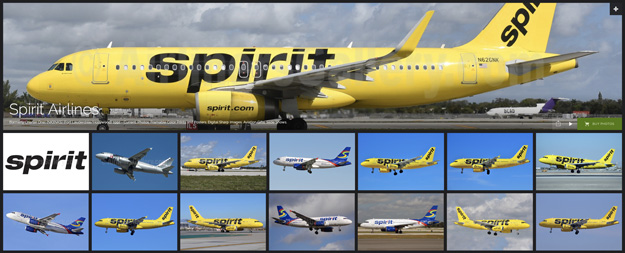
Spirit Airlines aircraft photo gallery:

Spirit Airlines disagrees with ISS recommendation on proposed transaction with Frontier

Spirit Airlines, Inc. has commented on a report from Institutional Shareholder Services (ISS) regarding the Company’s definitive merger agreement with Frontier Group Holdings, Inc., parent company of Frontier Airlines, Inc.

(PRNewsfoto/Spirit Airlines, Inc.)

“We disagree with ISS’ recommendation against the Frontier-Spirit merger, which we continue to believe is in the best interest of Spirit stockholders. ISS appears overfocused on the absence of a reverse termination fee in that deal, and we have consistently maintained (as ISS also acknowledges) that the JetBlue proposal carries significantly greater regulatory obstacles, and JetBlue absolutely should pay Spirit stockholders more to compensate for that risk,” said Ted Christie, President and CEO of Spirit. “During the extensive discussions held between Spirit and JetBlue, JetBlue admitted that a lawsuit from DOJ seeking to block a merger with Spirit was a 100% certainty; therefore, JetBlue would have to prevail in or settle DOJ litigation in order to consummate the deal. Moreover, ISS did not recognize the elevated business disruption that Spirit would face from a lengthy review and litigation process ultimately resulting from a failed transaction with JetBlue after 18-24 months, nor did it adequately weigh the loss of substantial value Spirit stockholders otherwise would have received in a merger between Spirit and Frontier. We continue to believe the reverse termination fee is a moot point because there is nothing stopping JetBlue from walking away after achieving their goal of disrupting the Spirit-Frontier combination.

“Further, we disagree with ISS’ characterization that stockholders can reinvest the cash proceeds from a JetBlue transaction to maintain exposure to the airline industry recovery. Spirit stockholders would not receive $30 of cash per share for up to two years, if ever, during which time the airline industry recovery may have delivered value for stockholders that far exceeds JetBlue’s capped, inadequate and highly opportunistic offer. In contrast, the Frontier combination presents a compelling value creation opportunity due to the combination of cash and stock consideration, which gives our stockholders the chance to participate in the upside of the post-pandemic recovery in the airline industry upon close and benefit from up to $500 million in annual run-rate operating synergies.

“ISS also recommends Spirit stockholders do not voteย JetBlue’s proxy card, indicating ISS still sees a potential path forward for Spirit to merge with Frontier. Overall, we ask our stockholders not to be distracted by JetBlue’s highly conditional tender offer, and our Board continues to unanimously recommend that Spirit stockholders vote FORย the merger proposal with Frontier,” said Christie.

In its report, ISS highlights:

  • “The Frontier offer does have a sound strategic rationale, as the combined company will be the fifth largest U.S. airline and largest ultra-low cost carrier, and the equity component of the merger consideration would allow shareholders to participate in the potential upside of the combined company.”
  • “Spirit’s argument that the proposed transaction with Frontier has an easier glide path to obtain regulatory approval than JetBlue’s proposed transaction does appear reasonable. While a transaction with Frontier does eliminate the largest ULCC competitor to Frontier, it would create an overall larger ULCC with a more robust nationwide network.”
  • “JetBlue’s proposal arguably faces more complex regulatory headwinds, particularly given the ongoing DOJ lawsuit against the NEA.”
  • “JetBlue’s proposal would likewise remove the largest ULCC from the market, whose planes would be retrofitted to JetBlue standards, resulting in less seats per plane and therefore removing capacity from the market; JetBlue fares are also typically higher than Spirit’s.”
  • “[JetBlue’s offer] is clearly a defensive offer that may also prove to be opportunistic, given that Spirit traded above $33.00 for a sustained period in 2021.”
  • “The board’s view that more patient shareholders would reap greater benefits by staying invested in a combined Frontier/Spirit could prove out over time, as there is robust strategic rationale for the proposed merger.”
  • “Investors reacted positively to the merger announcement with Frontier, driving the SAVE share price up by 17.2 percent to close at $25.46 per share, compared to a 2.8 percent rise in the US Global Jets Index and a 0.3 percent decline in the Russell 3000 Index on the same day.”

Merger Agreement with Frontier

As previously announced, Spirit Airlines, Inc. entered into a merger agreement with Frontier Group Holdings, Inc. on February 5, 2022. The merger is expected to close in the second half of 2022, subject to satisfaction of customary closing conditions, including completion of the regulatory review process and approval by Spirit stockholders. The Spirit Board of Directors unanimously recommends that stockholders vote FOR all proposals relating to the transaction with Frontier.

Spirit Airlines aircraft photo gallery:


Spirit Airlines Board of Directors urges stockholders to reject JetBlue tender offer

Spirit Airlines issued this statement:

Spirit Airlines, Inc. has announced that its Board of Directors, after consultation with its outside financial and legal advisors, has unanimously determined that the unsolicited tender offer from JetBlue Airways Corporation to acquire all outstanding shares of Spiritโ€™s common stock for $30 per share in cash (the โ€œOfferโ€) is NOT in the best interests of Spirit and its stockholders. In its comprehensive analysis, the Board determined that the JetBlue transaction faces substantial regulatory hurdles, especially while the Northeast Alliance with American Airlines remains in effect, and is, as a result, not reasonably capable of being consummated and is not superior to Spiritโ€™s agreed merger transaction with Frontier.

Accordingly, the Spirit Board unanimously recommends that Spirit stockholders not tender any of their shares into the Offer and continues to recommend that stockholders vote FOR the merger agreement with Frontier. Additional information about the significant strategic and financial benefits of the merger with Frontier and voting instructions are at http://ir.spirit.com and in the proxy statement/prospectus mailed to Spirit stockholders on May 11, 2022.

โ€œJetBlueโ€™s tender offer has not addressed the core issue of the significant completion risk and insufficient protections for Spirit stockholders,โ€ said Mac Gardner, Chairman of the Board of Directors for Spirit Airlines. โ€œBased on our own research and the advice of antitrust and economic experts, our view is that the proposed combination of JetBlue and Spirit lacks any realistic likelihood of obtaining regulatory approval, while our company faces a long and bleak limbo period as we await resolution. In that scenario, a $1.83 per share reverse break-up fee will not come close to adequately compensating Spirit stockholders for the significant business disruption Spirit will face during what JetBlue acknowledges will be a protracted regulatory process. Our pending merger with Frontier is advancing as planned, and we continue to recommend that Spirit stockholders vote FOR the merger with Frontier on June 10th, as we believe the combination of these two ULCCs is the best way to deliver maximum valueto Spirit stockholders.โ€

The Spirit Board conducted a comprehensive review of the Offer and recommends Spirit stockholders reject the Offer for the following reasons:

โ€ข The JetBlue transaction faces very substantial regulatory hurdles, especially while the NEA is in effect

o SpiritdoesnotbelievethattheJetBluetransactionislikelytoreceiveregulatory approval.

o Spirit retained top-tier aviation and economic consultants and worked with JetBlue and its advisors for four weeks to reach an informed view about the regulatory risk posed byย the JetBlue proposals of March 29 and April 29 and the subsequent JetBlue tender offer. In the end, after several weeks and counting, Spirit concluded that the consummation of the proposed JetBlue combination, with the NEA remaining in place, seemed almost inconceivable โ€“ especially given the cavalier manner in which JetBlue intends to address the significant regulatory risk.

o The U.S. Department of Justice (DOJ) is currently suing JetBlue and American Airlines, alleging that the NEA is anti-competitive. Not only Spirit, but also many other airlines and air travel constituencies have publicly opposed the NEA on grounds that it is anticompetitive. Spirit does not believe that the JetBlue proposal to acquire Spirit will be approved by the DOJ in light of that litigation.

o Moreover, Spirit does not believe the DOJ, or a court, will be persuaded that JetBlue should be allowed to form an anticompetitive alliance that aligns its interests with a legacy carrier (American) and then undertake an acquisition that will eliminate the largest ULCC carrier in the U.S. (Spirit).

o Nonetheless, by insisting on prioritizing its position in the NEA as it pursues a Spirit merger, JetBlue effectively imposes this heightened regulatory risk entirely on Spirit stockholders.

o Even putting aside the NEA, Spirit believes the DOJ โ€“ and a court โ€“ will be very concerned that a JetBlue-Spirit combination will result in a higher-cost/higher fare airline that would eliminate a lower-cost/lower fare airline and remove about half of the ULCC capacity in the United States.

o The conversion of Spirit aircraft to JetBlue configuration will result in significantly diminished capacity on former Spirit routes, and, as JetBlue has stated, will also result in higher prices for consumers.

โ€ข JetBlueโ€™s proposed divestitures are highly unlikely to resolve the DOJโ€™s concerns given the NEAโ€™s alignment of JetBlueโ€™s and Americanโ€™s incentives across the country

o JetBlueโ€™s proposed divestiture of Spirit assets in New York and Boston does not address the broader competitive implications of effectively merging Spirit into JetBlueโ€™s alliance with American.

o The DOJ has alleged that โ€œthe harms threatened by the [NEA] … extend well beyond Boston and New York City. … The [NEA] allows American to forgo independent growth that would have benefited consumers. By effectively absorbing JetBlueโ€™s operations in Boston and New York City, American can reduce investments not just in those cities, but also in other parts of its network where it otherwise would maintain or add service. Consequently, consumers across the country will have fewer options and pay higher fares.โ€

o Current DOJ antitrust leadership has expressed deep skepticism about the effectiveness of divestiture remedies and a preference for seeking to block transactions rather than accept divestiture-based settlements.

โ€ข JetBlueโ€™s offer puts the risk of the antitrust condition NOT being satisfied on Spirit stockholders

o Any JetBlue transaction cannot close without HSR approval, which even JetBlue concedes could take up to 24 months. Spirit shareholders are being asked to bear substantial risks without commensurate protections.

o The Spirit Board expects the DOJ would bring a lawsuit to block the acquisition, and that any such lawsuit is unlikely to be resolved until between 18 and 24 months after the date of JetBlueโ€™s initial HSR filing.

o During the extensive discussions held between Spirit and JetBlue, JetBlue itself admitted that a lawsuit from DOJ seeking to block the merger was a 100% certainty; therefore, JetBlue would have to prevail or settle (which would be contrary to DOJโ€™s avowed enforcement approach) in order to consummate its proposed acquisition of Spirit.

โ€ข JetBlueโ€™s conditions to the Offer also subject Spirit stockholders to significant risk from fluctuating market conditions and stock market volatility

o The Offer excuses JetBlue from consummating the transaction if there is any decline in either the Dow Jones, the S&P 500 or the NASDAQ-100 Index by an amount in excess of 10%, measured from the close of business on May 13, 2022, prior to receipt of regulatory approval, which could take up to two years.

o Since JetBlue first submitted its proposal to acquire Spirit on March 29, 2022, the Dow Jones is down 10.8%, the S&P 500 is down 15.3% and the NASDAQ-100 is down 21.7%.

โ€ข Debt financing for an acquisition of Spirit by JetBlue remains questionable

o According to JetBlue, the financing commitment letters have an expiration date 14ย months from the date of the commitment letters, with certain possible extensions that are subject to (undisclosed) conditions. The Spirit Board believes the regulatory review and challenge process for any acquisition by JetBlue would likely require more than 14 months.

In public comments issued on Monday, May 16, 2022, JetBlue misleads Spirit and JetBlue stockholders with inaccurate statements and mischaracterizations. The facts are:

โ€ข Spirit Airlinesโ€™ independent Board is acting in the best interests of all Spirit stockholders and engaged constructively with JetBlue

o Seven of Spiritโ€™s eight Board members are independent. The Board has been advised by outside legal counsel and financial advisors and conducted a thorough process in evaluating JetBlueโ€™s original proposal.

o Spiritโ€™s Board made the requisite determination to allow Spirit to enter into a non- disclosure agreement with JetBlue to allow discussions.

o Spirit shared projections with JetBlueโ€™s financial advisors and provided voluminous documentary due diligence material through a secure virtual data room.

o Spiritโ€™s antitrust advisors spent many hours, involving seven separate calls, with JetBlueโ€™s antitrust advisors seeking to understand the anti-trust risks of the JetBlue proposal and JetBlueโ€™s plans to address those risks.

o Following a two-hour call with the JetBlue CEO, CFO and members of its management team in which Spiritโ€™s management team addressed all of the questions asked by the JetBlue team, JetBlue and its advisors thanked Spirit for their openness and transparency.

โ€ข Spirit believes JetBlueโ€™s proposals and offer are a cynical attempt to disrupt Spiritโ€™s merger with Frontier, which JetBlue views as a competitive threat

o JetBlue claims it has harbored an interest in a combination with Spirit for โ€œmany years.โ€ Yet JetBlue waited over seven weeks after the announcement of the Frontier mergerย agreement to submit a proposal to acquire Spirit, and JetBlue chose to launch the Offer shortly after the merger proxy statement for the Frontier merger was mailed to Spirit stockholders. That timing does not seem coincidental.

o Spirit and JetBlueโ€™s CEOs know each other well and Spirit and JetBlue speak regularly on general industry matters, especially recently as both carriers were managing through the pandemic, but JetBlue has never indicated any interest in a combination with Spirit. Moreover, Spiritโ€™s former CEO sits on the Board of JetBlue. JetBlueโ€™s familiarity with Spirit would have made it easy for it to initiate engagement regarding a combination at any time.

โ€ข JetBlueโ€™s focus on Spirit appears to be an attempt to distract from the fact that JetBlueโ€™s own business is in disarray

o Since March 29, the date of JetBlueโ€™s initial proposal to acquire Spirit, JetBlueโ€™s stock has fallen about 34%. Indeed, JetBlueโ€™s stock price has repeatedly fallen whenever JetBlue makes public comments regarding a proposed transaction with Spirit. JetBluestockholders obviously agree that that their companyโ€™s quixotic offer for Spirit is a dead end, posing substantial risks to their own business.

o As noted in multiple public reports, JetBlue โ€œhas a host of issues to resolve in-house.โ€ As stated by Emilie Feldman, a management professor at the University of Pennsylvaniaโ€™s Wharton School, โ€œA lot of times companies will do acquisitions to avoid having to fix their own house. Sometimes itโ€™s better to let the acquisition go and fix your own business.โ€ (CNBC, May 6, 2022).

o JetBlue has run last or near last in DOT operational metrics in 2022 and for the past several years.

โ€ข JetBlueโ€™s claims about the so-called โ€˜JetBlue Effectโ€™ are based on economic modeling that Spirit believes has significant defects and overstates the impact of JetBlue on legacy carriers, when in reality, it is Spirit that continues to be a check on other airlinesโ€™ fares โ€“ including JetBlueโ€™s

o After receiving the summary output of JetBlueโ€™s economic model from JetBlueโ€™s advisors, Spiritโ€™s economic consultants identified reasons to doubt that such an effect would significantly exceed any similar โ€œULCC effect.โ€

JetBlueโ€™s illusory Offer would deprive Spirit stockholders of the long-term benefits and deprive consumers of savings expected to result from the Frontier merger

โ€ข Spirit stockholders would not have the opportunity to participate in the upside from airline industry recovery and benefits from the Frontier transaction

o JetBlueโ€™s Offer comes at a time when airline stocks are trading significantly below their pre-pandemic levels. The airline industry recovering to pre-pandemic levels would alone deliver Spirit shareholders value well in excess of JetBlueโ€™s offer.

o JetBlue is asking Spirit shareholders to submit to a cap on their value at $30/share, and be forced to wait for up to two years to receive their cash, while the rest of the industryโ€™s shareholders get to participate in a full post-pandemic recovery.

o Unlike the Frontier transaction, in JetBlueโ€™s Offer, Spirit stockholders will not participate in substantial ongoing synergies created in the combined business. In the Frontierย combination, Spirit stockholders continue to own 48.5% of the combined company andย thereby participate in its future growth.

โ€ข The Spirit and Frontier merger will create Americaโ€™s most competitive ultra-low fare airline

o A combination of Spirit and Frontier is a merger of two ULCCs producing $1 billion ofย consumer benefit and synergies derived from more flying on existing assets.

o On a combined basis, the company would have annual revenues of ~$5.3 billion basedย on 2021 results.

o The combined airline will add new routes and offer more than 1,000 daily flights to overย 145 destinations in 19 countries across complementary networks.

o Once combined, Frontier and Spirit expect to deliver annual run-rate operatingย synergies of $500 million once full integration is completed, which will be primarily driven by scale efficiencies and procurement savings across the enterprise with approximately $400 million in one-time costs.

The basis for the Board’s decision is set forth in the Solicitation/Recommendation Statement on Schedule 14D-9 (the “Schedule 14D-9”) filed today with the U.S. Securities and Exchange Commission.

Barclays and Morgan Stanley & Co. LLC are serving as financial advisors to Spirit, and Debevoise & Plimpton LLP and Paul, Weiss, Rifkind, Wharton & Garrison LLP are serving as legal advisors.

Spirit Airlines aircraft photo gallery:

Spirit Airlines Board of Directors to review unsolicited tender offer from JetBlue

Spirit Airlines issued this statement:

Spirit Airlines, Inc. has confirmed that JetBlue Airways has commenced an unsolicited tender offer to acquire all outstanding shares of Spirit’s common stock for $30 per share in cash and a proxy solicitation opposing Spirit’s merger agreement with Frontier Group Holdings, Inc., parent company of Frontier Airlines, Inc.

Consistent with its fiduciary duties and applicable law, and in consultation with outside financial and legal advisors, the Spirit Board of Directors will carefully review JetBlue’s tender offer to determine the course of action that it believes is in the best interests of Spirit and its stockholders. Spirit stockholders are urged to take no action with respect to the JetBlue tender offer at this time pending the Board’s evaluation of the offer.

Spirit intends to advise its stockholders of the Board’s formal position regarding the JetBlue tender offer within ten business days by making available to Spirit stockholders and filing with the Securities and Exchange Commission a solicitation/recommendation statement on Schedule 14D-9. Applicable securities laws prevent Spirit from making any further comments with respect to JetBlue’s tender offer or the terms thereof until after the Schedule 14D-9 is filed with the SEC.

On May 2, 2022, Spirit announced that its Board unanimously determined that the unsolicited proposals received from JetBlue in March and April 2022 did not constitute a ‘Superior Proposal’ as defined in Spirit’s merger agreement with Frontier, because it determined that the proposed transaction was not reasonably capable of being consummated.

Barclays and Morgan Stanley & Co. LLC are serving as financial advisors to Spirit, and Debevoise & Plimpton LLP and Paul, Weiss, Rifkind, Wharton & Garrison LLP are serving as legal advisors.

JetBlue urges Spirit shareholders to protect their interests and โ€˜Vote Noโ€™ on Frontier transaction

JetBlue Airways has issued this statement:

JetBlue Airways today announced that it has filed a โ€œVote Noโ€ proxy statement urging Spirit Airlines shareholders to vote AGAINST the inferior, high risk, and low value Spirit/Frontier transaction at Spiritโ€™s upcoming special meeting.

In addition, JetBlue commenced an all-cash, fully financed tender offer to acquire all of the outstanding shares of Spirit for $30 per share, without interest and less any required withholding taxes. Given the Spirit Board of Directorsโ€™ complete unwillingness to share the same necessary diligence information that was shared with Frontier, JetBlue is now offering to acquire Spirit for $30 per share in cash through a fully financed tender offer. This represents a 60% premium to the value of the Frontier transaction as of May 13, 2022 โ€“ a very compelling offer and higher than the premium implied by JetBlueโ€™s original proposal. JetBlue is fully prepared to negotiate in good faith a consensual transaction at $33, subject to receiving necessary diligence.

JetBlue launched a website at www.JetBlueOffersMore.com and issued a letter to Spirit shareholders detailing the benefits of its transaction, the certainty of closing, and the misleading statements made by Spirit. In the letter, JetBlue CEO Robin Hayes states:

โ€œJetBlue offers more value โ€“ a significant premium in cash โ€“ more certainty, and more benefits for all stakeholders. Frontier offers less value, more risk, no divestiture commitments, and no reverse break-up fee, despite more overlap on non-stop routes and their own regulatory challenges.”

โ€œYet the Spirit Board failed to provide us the necessary diligence information it had provided Frontier and then summarily rejected our proposal, which addressed its regulatory concerns, without asking us even a single question about it. The Spirit Board based its rejection on unsupportable claims that are easily refuted.”

โ€œAsk yourself a simple question: why wonโ€™t the Spirit Board engage with us constructively? The interests of Bill Frankeโ€™s Indigo Partners and the long-standing relationships between the two companies is the obvious answer.โ€

The letter goes on to note that JetBlueโ€™s current proposal still offers more value and certainty for Spirit shareholders than Frontier, and stresses that the company is prepared to engage on the basis of its original proposal, if the Spirit Board acts in good faith:

โ€œBased on the clear superiority of our offer, we expected the Spirit Board to engage constructively. Given its unwillingness to share necessary information or negotiate in good faith, we adjusted our price accordingly, but will work towards a consensual transaction at $33 per share, subject to receiving the information to support it.โ€

The full letter follows:

May 16, 2022

Dear Spirit Shareholder,

You have an important choice to make about your investment in Spirit Airlines.

We believe the Spirit Board of Directors (the โ€œSpirit Boardโ€) has failed to act in your best interests by refusing to engage constructively on our clearly superior proposal to acquire Spirit.

JetBlue offers more value โ€“ a significant premium in cash โ€“ more certainty, and more benefits for all stakeholders. Frontier offers less value, more risk, no divestiture commitments, and no reverse break-up fee, despite more overlap on non-stop routes and their own regulatory challenges.

Yet the Spirit Board failed to provide us the necessary diligence information it had provided Frontier and then summarily rejected our proposal, which addressed its regulatory concerns, without asking us even a single question about it. The Spirit Board based its rejection on unsupportable claims that are easily refuted.

Ask yourself a simple question: why wonโ€™t the Spirit Board engage with us constructively? The interests of Bill Frankeโ€™s Indigo Partners and the long-standing relationships between the two companies is the obvious answer.

Given the Spirit Boardโ€™s unjustified refusal to engage, we have decided to bring our proposal directly to the Spirit shareholders,and we urge you to vote โ€œAGAINSTโ€ the Frontier transaction at Spiritโ€™s upcoming special meeting. This will send a message to the Spirit Board that you want it to negotiate with us in good faith. We also launched an all-cash, fully financed tender offer to purchase all the outstanding shares of common stock at $30.00 per share and we encourage you to underscore your message to Spiritโ€™s Board by tendering your shares into our offer. If the Spirit shareholders vote against the transaction with Frontier and compel the Spirit Board to negotiate with us in good faith, we will work towards a consensual transaction at $33 per share, subject to receiving the information to support it.

Our current proposal offers:

  • More value and more certainty for Spirit shareholders with our ALL-CASH offer. JetBlue offers you $30 per share in cash, representing a 60% premium to the value of the Frontier transaction as of May 13, 20221, a 77% premium to Spiritโ€™s latest closing price2, and a 38% premium to Spiritโ€™s unaffected share price3 โ€“ a very compelling value, and, no matter how you measure it, a higher premium than in our original proposal.
  • Even more value potential after diligence and good faith negotiation. Based on the clear superiority of our offer, we expected the Spirit Board to engage constructively. Given its unwillingness to share necessary information or negotiate in good faith, we adjusted our price accordingly, but will work towards a consensual transaction at $33 per share, subject to receiving the information to support it.
  • More regulatory certainty through our divestiture commitment and $200 million reverse break-up fee.

In contrast, the proposed Frontier transaction offers Spirit shareholders LESS:

  • Less value. Our current proposal represents a compelling 60% premium to the value of the Frontier transaction as of May 13, 2022.
  • Less value certainty. Frontierโ€™s stock price has declined 30% since the announcement of the Frontier transaction4,resulting in approx. $770 million decrease in the value of the Frontier transaction to you. Plus, the future value of the Frontier / Spirit combined companyโ€™s stock is uncertain, especially in a continually challenging operational and market environment. Spiritโ€™s and Frontierโ€™s projections underpinning their transaction are based on flawed assumptions, including with respect to personnel attrition and wage inflation.
  • Less regulatory commitments and less closing certainty. Despite having a similar regulatory profile to JetBlue, Frontier offers no divestiture commitment or reverse break-up fee.

JetBlue Offers More Value and Certainty to Spirit Shareholders โ€“ in Any Scenario…

Our current proposal provides superior value to the Frontier offer, regardless of whether either transaction is completed.

  • When we complete our proposed transaction, Spirit shareholders would receive at least $30.00 per share in cash, compared to $18.815 per share from the Frontier transaction.
  • In the unlikely event our proposed transaction is not consummated, Spirit shareholders will receive a reverse break-up fee of approximately $1.83 per share, compared to no break-up fee in the Frontier transaction. We estimate that translates into total economic value of approximately $17 per share from JetBlue against approximately $15 in the Frontier transaction6.

โ€ฆ And Better Trading Value in the Short Term.

In addition, we expect the outcome of the Spirit special meeting to influence how the Spirit shares will trade in the short term. Based on the trading patterns since the Frontier transaction was announced, we expect that, if the transaction is approved, Spiritโ€™s shares will trade at approximately $177. On the other hand, basedon what we observed since our proposal became public, if the Frontier transaction is rejected, we expect Spirit shares to trade between approximately $23.1 and $25.58, at least a 36% premium to Spiritโ€™s latest closing share price9.

Transaction Does Not
Close

Transaction
Closes

Short Term Trading Depending
on Meeting Outcome

Frontier
Transaction

~15

~19

~17

JetBlue
Transaction

~17
(including RBF of
1.83/share)

30-33

~23-25

A vote AGAINST the Frontier transaction is a vote for a higher Spirit share price, regardless of any consideration concerning the actual consummation of either transaction. A vote for the Frontier transaction is a vote for a lower Spirit share price.

JetBlue Is Confident We Will Obtain Regulatory Approval.

A combined JetBlue-Spirit will create a more compelling and viable competitor to the Big Four airlines that control more than 80% of the U.S. market. JetBlueโ€™s entry into new routes triggers fare decreases from legacy airlines that are more significant than those resulting from ultra-low-cost carriers; this phenomenon has been described as the โ€œJetBlue Effectโ€.

Our recent economic analysis, using Department of Transportation Data, shows JetBlueโ€™s presence on a nonstop route decreases legacy fares by ~16%, about three times as much as the presence of an ultra-low-cost carrier. This phenomenon is well established and foundational to JetBlueโ€™s business model.

We are not the only ones who cite the JetBlue Effect. Coined by an MIT study in 2013, the JetBlue Effect has been acknowledged by the Department of Justice (DOJ) as recently as 2021 when it said, โ€œJetBlueโ€™s reputation for lowering fares is so well known in the airline industry that it has earned a name: the โ€˜JetBlue Effect.โ€™ JetBlueโ€™s record in Boston and New York illustrates why.โ€

We are confident we can address any regulatory concerns the Spirit Board, regulators or courts may have through:

  • JetBlueโ€™s expedited expansion and the resulting net fare decreases;
  • demonstrated ease of other ultra-low-cost carriersโ€™ continued expansion; and
  • the divestitures we are prepared to undertake.

Donโ€™t Be Misled: Spiritโ€™s Transaction with Frontier Has Similar Regulatory Risk.

  • Both transactions would create the #5 player with very similar market share. A combined JetBlue and Spirit would have an 8% market share based on full year 2021 seats compared to 7% for a combined Frontier and Spirit.
  • Frontier overlaps with Spirit on significantly more nonstop routes (104) than JetBlue (54)10, and JetBlue has less overlap in flights, seats, and ASMs than Frontier in the metropolitan areas served by both11.

Spiritโ€™s Suggestion that Our Northeast Alliance Is a Regulatory Obstacle Has No Basis in Fact or in Law.

JetBlueโ€™s Northeast Alliance is already demonstrating its positive benefits for customers in the Northeast. Regardless of what one thinks of the Northeast Alliance, it is irrelevant to our ability to complete the acquisition of Spirit.

  • The Northeast Alliance is a limited, procompetitive alliance with American Airlines focused on unlocking growth for JetBlue in one of the nationโ€™s most constrained geographies, the Northeast US. The alliance creates a compelling third competitor in a market previously dominated by two players and has already started delivering benefits to consumers.
  • Divestitures: We will proactively offer the DOJ a remedy package that contemplates the divestiture of all Spirit assets located in the area covered by the Northeast Alliance (New York and Boston) so, as a result of our proposed transaction, we will not increase our presence in these airports.
  • The Northeast Alliance litigation will go to trial this September, and we believe the outcome of that trial will not impact the outcome of the regulatory process for the acquisition of Spirit, which will likely take place later. If the court allows the DOJ to block the Northeast Alliance, by definition it will not be an obstacle to the acquisition of Spirit. If we are successful in defending the case, as we think we will be, it will be a testament that the alliance is procompetitive, disproving Spiritโ€™s claim. In either case, the Northeast Alliance litigation does not impact JetBlueโ€™s ability to acquire Spirit.

Given the clear superiority of our offer, including the regulatory commitments we have made to back up our high confidence in our ability to complete our transaction, why hasnโ€™t the Spirit Board engaged?

Clearly because Spiritโ€™s Board is prioritizing its own self-interest and personal relationships with Frontier over its shareholdersโ€™ interests.

There is good reason to believe the Spirit Board is not acting in the best interests of its own shareholders.

  • Multiple Spirit directors involved in the decision to merge with Frontier have significant ties to Bill Franke, who appointed each to the Spirit Board when he was chairman of Spirit, and while Indigo Partners (the current controlling shareholder of Frontier) was a large shareholder of Spirit.
  • This includes McIntyre Gardner, current chairman of Spirit, who replaced Mr. Franke, current chairman of Frontier, both of whom led the negotiations between the two companies.
  • 5 of the 8 Spirit directors will continue as Board members of the Frontier / Spirit combined company if the Frontier transaction is consummated.

After eight months of discussions, Spirit agreed to an inferior transaction with Frontier without considering what other alternatives were available to Spiritโ€™s shareholders. Further, the outsized concessions to Frontier by the Spirit Board do not reflect a meaningful effort to maximize shareholder value.

  • The final terms of the Frontier transaction reflected only an 18.9% premium to the Spirit share price at the time of the announcement12, compared to an average premium in precedent airline transactions of 86%13.
  • The final value of the Frontier transaction reflected only an approximate 6% increase from the terms initially offered by Frontier14.
  • The original value of the Frontier transaction of $25.83 per share was significantly below the standalone value resulting from the discounted cash flow analysis of Spiritโ€™s financial advisors15.
  • Frontier is not providing any divestiture commitment or a reverse break-up fee. The absence of both means that despite obvious hurdles for its own transaction, Frontier, at its own option, could simply decline to make any regulatory concessions and abandon the Frontier transaction at no cost (or compensation to Spirit or its shareholders).

Since our original proposal was made, the Spirit Board consistently refused to engage constructively with us.

  • On April 7, the Spirit Board determined that our original proposal could reasonably be expected to lead to a โ€œSuperior Proposalโ€; and yet, it refused to provide the limited diligence information we requested which it had already provided to Frontier.
  • On April 25, the Spirit Board requested we agree to unprecedented contractual terms as a precursor to sharing the diligence information we had originally requested.
    • These demands were off-market and contrasted starkly to the limited regulatory commitments made by Frontier, a transaction with a similar regulatory profile.
  • On April 29, we presented an enhanced proposal, which was responsive to the concerns of the Spirit Board on closing certainty and included regulatory commitments representing a significant improvement from those offered by Frontier.
  • Two days later, the Spirit Board rejected our enhanced proposal, without ever contacting us to discuss it, and, according to its own proxy, without considering the clearly superior economics.

By refusing to engage on our original proposal, the Spirit Board has deprived its shareholders of the most attractive value creating opportunity available to them.

WE URGE YOU TO SEND A MESSAGE TO THE SPIRIT BOARD BY VOTING โ€œAGAINSTโ€ ALL PROPOSALS RELATED TO THE FRONTIER TRANSACTION AT THE SPIRIT SPECIAL MEETING ON JUNE 10, 2022 AND TENDERING YOUR SHARES INTO OUR OFFER.

In addition to voting โ€œAGAINSTโ€ the Frontier transaction at the Spirit Special Meeting, we urge all Spirit shareholders voting against the Frontier transaction to exercise their appraisal rights under Section 262 of the Delaware General Corporation Law, which entitles Spirit shareholders who perfect these rights to the fair value of their shares, as determined by a Delaware court. Spirit, by admission of its own financial advisors, is worth more than the value of the Frontier transaction and this and the superior value of our current proposal, as well as our original proposal, would be factors used by the court in determining fair value of your shares. If the Spirit Board continues to refuse to negotiate with us and the Frontier transaction is approved, appraisal is the only way to capture the value included in our proposals. Please consult your legal advisor before exercising appraisal rights.

Additional details about JetBlueโ€™s superior offer can be found at JetBlueOffersMore.com.

Protect Your Own Best Interests

Our proposal represents a compelling opportunity to receive a significant premium in cash, with greater value and certainty than the Frontier transaction. Spiritโ€™s Board has prevented you from receiving it.

We are fully committed to pursuing our original $33 per share proposal. We urge you to protect your own best interests. Let the Spirit Board know you want the opportunity to receive our superior offer by voting AGAINST the Frontier transaction and tendering your shares in our cash tender offer.

Sincerely,
Robin Hayes
Chief Executive Officer

JetBlue aircraft photo gallery:

Spirit Airlines reports a loss in the first quarter

Spirit Airlines issued this financial report:

Spirit Airlines, Inc. has reported its first quarter 2022 financial results.

(PRNewsfoto/Spirit Airlines, Inc.)

Ended the first quarter 2022 withย $1.6 billionย of unrestricted cash, cash equivalents, short-term investment securities and liquidity available under the Company’s revolving credit facility.

As Reported
(unaudited)
First Quarter 2022 First Quarter 2021 First Quarter 2019
Total operating revenues $967.3 million $461.3 million $855.8 million
Pre-tax income (loss) $(244.0) million $(138.2) million $72.1 million
Net income (loss) $(194.7) million $(112.3) million $56.1 million
Diluted earnings (loss) per share $(1.79) $(1.15) $0.82
Adjusted1
First Quarter 2022 First Quarter 2021 First Quarter 2019
Adjusted EBITDA $(108.2) million $(204.0) million $140.4 million
Adjusted EBITDA margin (11.2)% (44.2)% 16.4%
Adjusted Pre-tax income (loss) $(216.9) million $(312.2) million $74.0 million
Adjusted Net income (loss) $(173.5) million $(245.9) million $57.5 million
Adjusted Net income (loss) per share, diluted $(1.60) $(2.51) $0.84

“Sinceย mid-February 2022, we’ve seen a dramatic improvement in demand trends, with March total revenue per passenger segment up nearly 10 percent compared toย March 2019. Our non-ticket production has been very strong driven by enhanced revenue management and merchandising of products that allow our Guests to customize their travel experience. As a result, we achieved record-high non-ticket revenue per passenger segment ofย $64.53ย for the first quarter 2022, an increase of 14.8 percent compared to first quarter 2019, and we anticipate beating that record again in the second quarter 2022,” saidย Ted Christie, Spirit’s President and Chief Executive Officer. “In addition, based on our current booking trends, we expect second quarter 2022 ticket revenue per segment to be significantly higher than it was in the second quarter 2019.”

“I also want to acknowledge and thank the entire Spirit team for their continued efforts to care for our Guests and each other. Late last year, we cut our planned capacity growth for 2022 in light of various staffing challenges and felt very good about our ability to operate the revised summer schedule. However, the airline industry has been impacted by an increase in Air Traffic Control (“ATC”) programs and restrictions inย Florida, largely driven by ATC staffing shortages. This has had an outsized impact on our operations given our large concentration inย Florida. As a result, in mid-April, we made the decision to decrease some flying inย Floridaย and increase the buffers in our schedule, which drove additional capacity reductions. We expect to resume our planned capacity levels in the fourth quarter this year due to already-planned crew network changes set to deploy this summer and increased pilot hiring that has been happening throughout the year.”

The Company believes that providing analysis of financial and operational performance compared to first quarter 2019 is a more relevant measure of performance than comparing to first quarter 2021 due to the severe impacts from the COVID-19 pandemic on the Company’s financial results and operational performance for 2021.

First Quarter 2022 Results
For the first quarter 2022, Spirit Airlines reported a net loss ofย $194.7 million, or a net loss ofย $1.79ย per diluted share. Excluding special items, adjusted net loss for the first quarter 2022 wasย $173.5 million1, or an adjusted net loss ofย $1.60ย per diluted share1.

Adjusted EBITDA for the first quarter 2022 was negativeย $108.2 millionย and adjusted EBITDA margin was negative 11.2 percent.

Capacity and Load Factor
Capacity, or available seat miles (“ASMs”), in the first quarter 2022 increased 19.2 percent compared to the same period in 2019. Load factor for the first quarter 2022 was 77.2 percent, down 5.5 percentage points compared to the first quarter 2019. Load factors improved sequentially throughout the quarter such that the exit rate for March load factor was in line with the Company’s historical averages.

Aircraft utilization in the first quarter 2022 was 10.8 hours, down 11.5 percent compared to the 12.2 hours in the same period of 2019.

Revenue Performance
Total operating revenues for the first quarter 2022 wereย $967.3 million, an increase of 13.0 percent versus first quarter 2019 due to increased flight volume and higher operating yields. Total revenue per ASM (“TRASM”) was down 5.3 percent compared to first quarter 2019. However, TRASM forย March 2022ย was higher thanย March 2019ย and this was accomplished while growing capacity 17.1 percent inย March 2022ย compared toย March 2019.

On a per passenger flight segment basis, for the first quarter 2022 total revenue per passenger flight segment (“segment”) increased 3.9 percent compared to the same period in 2019 toย $113.72. Compared to first quarter 2019, fare revenue per segment decreased 7.6 percent toย $49.19ย and non-ticket revenue per segment increased 14.8 percent toย $64.532.

Cost Performance
Compared to the first quarter 2019, total GAAP operating expenses for the first quarter 2022 increased 53.5 percent toย $1,178.8 million. Adjusted operating expenses for the first quarter 2022 increased 50.3 percent compared to the first quarter 2019 toย $1,151.7 million3. In addition to increased flight volume, these increases were primarily driven by pressure on labor rates and higher fuel prices.

Spirit continues to experience labor cost inflation throughout much of the organization, including for contracted ground service workers (recorded within other operating expense in the Company’s condensed consolidated statement of operations). In addition, as a result of the Omicron variant’s impact on the Company’s staffing levels in earlyย January 2022, the Company offered various incentive pay programs during this period in order to maintain sufficient staffing to minimize flight cancellations, leading to additional wage pressures.

Rising fuel prices were also a primary contributor to increased costs. Fuel price per gallon in the first quarter 2022 was 41.1 percent higher than for the same period in 2019.

“Our strong non-ticket production plus the forward booking curve strength gives us confidence we will see strong yields this summer. However, operational disruptions and limits on utilization are causing delays in our return to profitability. The decision to further limit our capacity this summer does make profitability more challenging in the short run. With constrained capacity levels through the summer, we will be carrying the cost of additional crews and our utilization will be lower than we like, but this does not change the plan to exit the year at close to full utilization and be on our way to a return to a more normalized run rate in 2023. In fact, at these demand levels, even with fuel at more thanย $100ย a barrel, we would have expected to be profitable in the second quarter with around 90 percent of our pre-covid utilization,” saidย Scott Haralson, Spirit’s Chief Financial Officer.

Fleet
Spirit took delivery of three new A320neo aircraft during the first quarter 2022. The Company ended the quarter with 176 aircraft in its fleet.

Liquidity and Capital Deployment
Spirit ended first quarter 2022 with unrestricted cash, cash equivalents, short-term investment securities and liquidity available under the Company’s revolving credit facility ofย $1.6 billion.

Total capital expenditures, including net pre-delivery purchase deposits for the three months ended March 31, 2022 wereย $53.2 million, primarily related to the purchase of spare parts, including one spare engine.

Tax Rate
On a GAAP basis, the Company’s effective tax rate for the first quarter 2022 was 20.2 percent. The Company’s non-GAAP tax rate for the first quarter 2022 was 20.0 percent.

Forward Looking Guidance
The second quarter and full year 2022 guidance items provided below are based on the Company’s current estimates and are not a guarantee of future performance. There could be significant risks and uncertainties that could cause actual results to differ materially, including the risk factors discussed in the Company’s reports on file with the Securities and Exchange Commission. Spirit undertakes no duty to update any forward-looking statements or estimates.

Adjusted operating expenses and adjusted pre-tax margin are non-GAAP financial measures, which are provided on a forward-looking basis. The Company does not provide a reconciliation of non-GAAP forward-looking measures on a forward-looking basis where the Company believes such reconciliation would imply a degree of precision and certainty that could be confusing to investors and is unable to reasonably predict certain items included in/excluded from the GAAP financial measures without unreasonable efforts. This is due to the inherent difficulty of forecasting the timing or amount of various items that have not yet occurred and are out of the Company’s control or cannot be reasonably predicted. For the same reasons, the Company is unable to address the probable significance of the unavailable information. Non-GAAP forward-looking measures provided without the most directly comparable GAAP financial measures may vary materially from the corresponding GAAP financial measures.

Second Quarter 2022E
Adjusted operating expenses ($Millions)(1)(2) $1,355 to $1,365
Adjusted Pre-tax margin (%)(1) (3)% to (5)%
Fuel cost per gallon ($)(2) $3.85 to $3.90
Fuel gallons (Millions) 130.7
Interest expense net of capitalized interest ($Millions) $30
Effective tax rate(1) 21%
Diluted share count (Millions) 108.6
Full Year 2022E
Total capital expenditures ($Millions)(3)
Pre-delivery deposits, net of refunds $(20)
Aircraft and engine purchases $30
Other capital expenditures $240
1Q2022A 2Q2022E 3Q2022E 4Q2022E
Available Seat Miles % Change vs. 2019 19.2% ~10.5% ~14.0% ~35%
(1) Excludes special items which may include loss on disposal of assets, special charges and credits, and other items which are not estimable at this time.
(2) Includes fuel taxes and into-plane fuel cost.
(3) Total Capital Expenditures assumes all new aircraft deliveries are either delivered under direct leases or financed through Sale-leaseback transactions. Includes approximately $100 million of capital expenditures related to the building of Spirit’s new facilities in Dania Pointe, FL.

First Quarter 2022 Highlights

  • Inย February 2022, for the fourth year in a row, Spirit was awarded the FAA’s highest award for Technical Training, the Diamond Award of Excellence. This award is only achieved if 100% of technicians receive the FAA’s Aircraft Maintenance Technician (“AMT”) Certificate of Training
  • Launched its partnership with the nation’s largest flight school,ย Jacksonville-based ATP Flight School. This new program will expand the carrier’s pipeline of highly skilled, professional pilots. It also provides graduates with the fastest track to a successful career as a Spirit pilot
  • Announced the addition of new Pilot and Flight Attendant bases atย Miamiย International Airport (MIA) and Hartsfield-Jackson Atlanta International Airport (ATL)
  • Completed its terminal move at LaGuardia Airport (LGA) to the historic Marine Air Terminal
  • Hosted the Spirit Open with Team Members, aviation industry professionals and community leaders joining together to help The Spirit Charitable Foundation raise more thanย $1.5 millionย for nonprofit organizations

Spirit Airlines aircraft photo gallery:

Spirit Airlines Board of Directors reiterates support for merger with Frontier Airlines

Spirit Airlines, Inc. today announced that its Board of Directors, in consultation with outside financial and legal advisors, has unanimously determined that the unsolicited proposal received from JetBlue Airways does not constitute a ‘Superior Proposal’ as defined in Spirit’s merger agreement with Frontier Group Holdings, Inc., parent company of Frontier Airlines, Inc., because it has determined that the proposed transaction is not reasonably capable of being consummated. The Board continues to believe that the pending transaction with Frontier represents the best opportunity to maximize value and recommends that Spirit shareholders adopt the merger agreement with Frontier. Spirit’s Board of Directors also issued the following letter to JetBlue.

“Spirit continues to believe in the strategic rationale of the proposed merger with Frontier and is confident that it represents the best opportunity to maximize long-term shareholder value,” said Mac Gardner, Chairman of Board of Directors for Spirit Airlines. “After a thorough review and extensive dialogue with JetBlue, the Board determined that the JetBlue proposal involves an unacceptable level of closing risk that would be assumed by Spirit stockholders. We believe that our pending merger with Frontier will start an exciting new chapter for Spirit and will deliver many benefits to Spirit shareholders, Team Members and Guests.”

As previously announced on February 7, 2022, Spirit entered into a merger agreement with Frontier, under which Spirit and Frontier would combine in a stock and cash transaction. Under the terms of the merger agreement, Spirit equity holders would receive 1.9126 shares of Frontier plus $2.13 in cash for each existing Spirit share they own.

The Company will continue to advance toward completing the transaction with Frontier, which is expected to close in the second half of 2022. The transaction is subject to customary closing conditions, including completion of the ongoing regulatory review process and approval by Spirit stockholders.

The full text of the letter follows:

May 2, 2022

Robin Hayes
Chief Executive Officer
JetBlue Airways Corporation
27-01 Queens Plaza North
Long Island City, NYย  11101

Dear Mr. Hayes:

We have reviewed JetBlue’s updated proposal dated April 29, 2022, with Spirit’s Board of Directors and its legal and financial advisors.ย  Our Board has unanimously determined that JetBlue’s proposal does not constitute a “Superior Proposal” under Spirit’s existing merger agreement with Frontier.

As you know, a “Superior Proposal” under the Frontier agreement must, among other requirements, be “reasonably capable of being consummated.”ย  Spirit’s Board believes JetBlue’s proposal falls short of that standard.ย  Our conclusion is based on careful analysis of the competitive implications of a combination of JetBlue, which analysis has been informed by extensive discussions between our respective antitrust advisors and economic consultants over the past four weeks.ย  During that period, Spirit has also discussed projections with your financial advisers and provided voluminous documentary due diligence material through a secure virtual data room.

We believe a combination of JetBlue and Spirit has a low probability of receiving antitrust clearance so long as JetBlue’s Northeast Alliance (NEA) with American Airlines remains in existence.ย  The U.S. Department of Justice (DOJ), along with Attorneys General in six states and the District of Columbia, have sued to block the NEA, alleging that the alliance “will not only eliminate important competition in [Boston and New York City], but will also harm air travelers across the country by significantly diminishing JetBlue’s incentive to compete with American elsewhere, further consolidating an already highly concentrated industry.”1 As you know, Spirit and many other airline and air travel constituencies have publicly opposed the NEA on grounds that it is anticompetitive.ย  We struggle to understand how JetBlue can believe DOJ, or a court, will be persuaded that JetBlue should be allowed to form an anticompetitive alliance that aligns its interests with a legacy carrier and then undertake an acquisition that will eliminate the largest ULCC carrier.

We further believe that your divestiture proposal is unlikely to resolve DOJ’s concerns about a combination of Spirit and JetBlue if the NEA continues in existence.ย  DOJ clearly views the NEA as having a broader national effect and Spirit believes DOJ will not place great weight on your proposed remedy, especially because there are reasons to doubt the efficacy of similar divestitures as a remedy in past airline mergers.

Moreover, in evaluating a JetBlue-Spirit combination, Spirit believes DOJโ€”and a courtโ€”will be very concerned that a higher-cost/higher fare airline would be eliminating a lower-cost/lower fare airline in a combination that would remove about half of the ULCC capacity in the United States.ย  In addition, the conversion of Spirit aircraft to JetBlue configuration will result in significantly diminished capacity on former Spirit routes, also resulting in higher prices for consumers.ย  Finally, we are skeptical about your claims regarding the so-called “JetBlue Effect.”ย  After receiving the summary output of your economic model from your advisers, Spirit’s economic consultants identified reasons to doubt that such an effect would significantly exceed any similar “ULCC effect.”ย 

In contrast, Spirit believes that merging with Frontier will enable the combined ULCC business to achieve scale, improve operational reliability, have increased relevance to consumers, and do an even better job of delivering ultra-low fares to more consumers and competing more effectively against the Big 4 carriers, as well as against JetBlue.ย  We believe that is a clear, pro-consumer narrative that will resonate more successfully with DOJ than a combination with JetBlue, which would eliminate the largest ULCC and remove significant low-cost/low-fare capacity.

Spirit took note of the fact that the JetBlue proposal allocates most of the very substantial deal completion risk to Spirit stockholders.ย  To reduce that risk and achieve a more appropriate balance of the risk between our companies, in our April 25 response Spirit proposed a strong covenant requiring JetBlue to take any action required to obtain regulatory clearance, which specifically included abandoning the NEA at closing.ย  We also proposed a substantial reverse termination fee intended to partially compensate Spirit if the transaction failed to win antitrust clearance.ย  On that score, in the event of a failure or abandonment of a JetBlue-Spirit combination, even a high reverse termination fee will not fully compensate Spirit stockholders for the likely significant business erosion Spirit will face during what will be a protracted approval process.

Spirit does not consider JetBlue’s April 29 response to be appropriately responsive to Spirit’s concerns.ย  Indeed, that response makes clear that JetBlue is unwilling to terminate the NEA โ€“ or to agree to any other remedies that might materially decrease the expected benefits to JetBlue from the NEA โ€“ to obtain clearance for an acquisition of Spirit.ย  The transaction you describe in your April 29 response not only fails to meet the required standard under the Frontier merger agreement but, by prioritizing the NEA over the steps we believe would be necessary to have any realistic likelihood of obtaining antitrust clearance, it imposes on our stockholders a degree of risk that no responsible board would accept.ย  Given this substantial completion risk, we believe JetBlue’s economic offer is illusory, and Spirit’s board has not found it necessary to consider it.

Very truly yours,

H. McIntyre Gardner
Chairman of the Boardย ย ย ย ย ย ย ย ย ย ย ย ย ย ย ย ย 

Edward M. Christie, III
Chief Executive Officer

1See Press Release, United States Department of Justice, Justice Department Sues to Block Unprecedented Domestic Alliance Between American Airlines and JetBlue (Sept. 21, 2021),

JetBlue ups the ante for Spirit

JetBlue Airways today announced it has enhanced its proposal to the Board of Directors of Spirit Airlines to acquire all of the outstanding common stock of Spirit for $33 cash per share. The enhanced proposal offers Spirit shareholders both superior financial value and greater certainty than the Frontier transaction:

  • Divestiture commitment: If necessary, JetBlue would agree to divest assets of JetBlue and Spirit up to a material adverse effect on Spirit, with a limited carve-out for actions that would adversely impact JetBlueโ€™s Northeast Alliance (NEA) with American Airlines.
  • Remedy package to address NEA and regulatory concerns: JetBlue would offer a remedy package that includes the divestiture of all Spirit assets in New York and Boston so that JetBlue does not increase its presence in the airports covered by the NEA. The package would also include gates and assets at other airports, including Fort Lauderdale.
  • Reverse break-up fee: JetBlue would provide for a $200 million reverse break-up fee, representing approximately $1.80 per Spirit share, that would become payable to Spirit in the unlikely event the JetBlue transaction is not consummated for antitrust reasons.
  • Superior, all-cash premium: JetBlueโ€™s proposal continues to offer Spirit shareholders $33 in cash per common share, a 47% premium to the value of the Frontier transaction as of April 29, 2022 (a) and a 52% premium to Spiritโ€™s share price as of February 4, 2022 (b) (the last trading day prior to the Spirit-Frontier announcement).

โ€œBy creating a national competitor to the Big Four airlines, this transaction would deliver meaningful benefits for customers, superior value for shareholders of both airlines, and new opportunities for our combined crewmembers,โ€ said Robin Hayes, chief executive officer, JetBlue. โ€œWe have confidence that we can complete this transaction to bring more low fares and great service to more customers. A JetBlue-Spirit combination will deliver enhanced financial strength and accelerate revenue growth and profitability for JetBlue shareholders.โ€

The regulatory commitments in JetBlueโ€™s enhanced offer represent a significant improvement compared to those offered by Frontier. The revised offer comes after Spirit limited JetBlueโ€™s access to important due diligence data yet requested unprecedented commitments from JetBlue that far exceed those in prior airline transactions.

โ€œSpirit shareholders would be better off with the certainty of our substantial cash premium, regulatory commitments, and reverse break-up fee protection,โ€ Hayes said. โ€œThe Frontier transaction has a similar regulatory profile to ours but offers no divestiture commitment and no reverse break-up fee, while the uncertain value of Frontierโ€™s stock exposes Spirit shareholders to significant risk. We hope the Spirit Board will now recognize that ours is clearly a superior proposal and engage with us more constructively than they have to date. We are making our offer public so their shareholders are aware this attractive value-creating opportunity is available to them.โ€

Spirit shareholders will assume a number of risks if the Frontier transaction moves forward:

  • Frontier is not required to undertake any divestitures to obtain the necessary regulatory approvals to close its transaction, despite having greater overlap with Spirit on nonstop routes than JetBlue does, among other regulatory hurdles.
  • Frontier is not required to pay a reverse break-up fee if the transaction is not consummated for antitrust reasons even though the Frontier transaction has a similar regulatory profile as the proposed transaction with JetBlue.
  • The value of Frontierโ€™s stock, the basis for the transactionโ€™s value to Spirit shareholders, is subject to significant risks and has already declined approximately 14% since Frontierโ€™s offer was announced. Specifically, the value of Frontierโ€™s stock declined from $12.39 on February 4, 2022, to $10.61 on April 29, 2022, which translated into a deterioration of the value of the Frontier transaction of $3.41 per Spirit share or approximately $370 million.
  • The financial projections underpinning the transaction with Frontier are based on unrealistically optimistic assumptions, especially with respect to costs associated with personnel attrition and wage inflation. Their model does not consider any wage increases for team members, including pilots, at a time of high attrition and an anticipated shortage of pilots.

JetBlue Effect 3x Greater than ULCCs; Similar Regulatory Profile to Frontier
A combined JetBlue-Spirit will create a more compelling national low-fare competitor to challenge the Big Four airlines that control more than 80% of the U.S. market. When JetBlue introduces its unique combination of low fares and award-winning service onto new routes, legacy carriers lower their fares and customers win with more choice. With its positive effect on competition, and backed by its regulatory commitments, JetBlue has a high degree of confidence in its ability to achieve regulatory approval of its acquisition of Spirit.

  • JetBlueโ€™s entry into new nonstop routes triggers fare decreases from legacy airlines that are more significant than those resulting from ultra-low-cost carriers (ULCCs) โ€“ approximately 16%, or three times the result of ULCCs on legacy nonstop routes โ€“ known as the JetBlue Effect.
  • The faster expansion of JetBlue and the JetBlue Effect, coupled with a proposed remedy package and the continued expansion of other ULCCs, will address regulatory concerns that Spirit, the regulators, or the courts may have.
  • Both transactions would result in companies of similar size, creating the No. 5 U.S. airline: JetBlue/Spirit would have a 9% market share based on full year 2022 seats compared to 8% for a combined Frontier/Spirit.
  • Contrary to common misperceptions, JetBlue has significantly less overlap with Spirit in terms of flights, seats, and ASMs than Frontier in the metropolitan areas served by both (c). JetBlue overlaps with Spirit only on 48 nonstop routes compared to Spirit and Frontierโ€™s overlap on 76 nonstop routes (d).
  • The NEA โ€“ which JetBlue strongly believes will be allowed to continue because the alliance is delivering the customer benefits promised โ€“ is not a factor in this transaction. Given the remedy package, JetBlue’s analysis finds that the presence of the NEA would have no meaningful economic effect in a JetBlue-Spirit transaction.

โ€œCustomers shouldnโ€™t have to choose between a low fare and a great experience, and with JetBlue, itโ€™s possible for customers to have both,โ€ Hayes said. โ€œBoth the NEA and the proposed Spirit transaction are strategic actions that accelerate our existing growth plan and bring the JetBlue Effect to more customers in the Northeast, Florida, and around the country. By bringing together the power of the JetBlue and Spirit teams, this combination would strengthen JetBlueโ€™s ability to grow, deliver outstanding service, and compete in a domestic market dominated by the four largest airlines. We look forward to delivering these benefits to all stakeholders once Spirit determines our proposal to be superior and we close the transaction.โ€

Supporting Information
JetBlue has posted updated slides for investors on its investor relations website at the following web address: http://investor.jetblue.com.

Advisors
Goldman Sachs & Co. LLC is serving as JetBlueโ€™s financial advisor and Shearman & Sterling LLP is serving as JetBlueโ€™s legal advisor.

(a) Represents premium over the value of the Frontier transaction of $22.42 as of April 29, 2022, based on Frontierโ€™s last closing price and the terms of the merger agreement between Spirit and Frontier.
(b) Represents premium over Spiritโ€™s $21.73 closing share price on February 4, 2022.
(c) Based on full-year data for both 2019 and 2021 based on scheduled flights/seats/ASMs.
(d) Based on Q1-Q3 2021 DOT data.

Spirit to build a new aircraft maintenance facility at George Bush Intercontinental Airport (IAH), launches flights at Memphis

Spirit Airlines has announced a commitment to deepen its roots in Houston with the addition of an aircraft maintenance facility at George Bush Intercontinental Airport (IAH). The facility, located along John F. Kennedy Boulevard, will serve as a large aircraft maintenance hangar with offices and warehousing for the Spirit Technical Operations team when it begins its first phase of operations.

The maintenance complex includes two aircraft bays and ramp space for up to four aircraft, as well as warehouse, shops, and office space, and adds an important geographical location to complement Spirit’s maintenance hub in Detroit. Spirit plans to staff the facility with more than 50 Houston-based Team Members to maintain and service Spirit’s growing fleet, which is planned to gain 24 new planes this year for a projected fleet-wide total of 197 by the end of 2022, and 33 more planes projected for delivery in 2023. As Spirit’s network expands, this additional maintenance capacity will be located a short flight away from several of Spirit’s busiest stations.

In other news, the airline alsoย launched service at Memphis International Airport (MEM). The first flight arrived from Orlando (MCO) and the first departure was bound for Las Vegas (LAS).

Spirit Airlines Routes at MEM:
Destination: Flights Available: Launch Date:
Las Vegas (LAS) Daily April 20, 2022
Orlando (MCO) Daily April 20, 2022
Los Angeles (LAX) Daily Spring 2023

Memphis is now the second Tennessee airport Spirit serves following its Nashville launch in 2019.

JetBlue comments on Spiritโ€™s announcement regarding its proposal

JetBlue Airways has welcomed the determination by the Board of Directors of Spirit Airlines that JetBlueโ€™s offer to acquire Spirit could reasonably be likely to lead to a โ€œSuperior Proposalโ€ under the terms of its current merger agreement with Frontier.

โ€œWe are pleased the Spirit Board recognizes the compelling value for all stakeholders that JetBlue has offered,โ€ said Robin Hayes, chief executive officer, JetBlue. โ€œWe believe JetBlue is the best partner for Spirit, and we look forward to engaging with the Spirit Board to finalize our combination, to create a national low-fare challenger to the four large dominantย U.S.ย carriers that will result in lower fares and better service for customers. As a combined company, we expect we will be able to deliver superior value on a national scale to customers, crewmembers, communities, and shareholders.โ€

Under the terms of JetBlueโ€™s offer, Spirit shareholders would acquire Spirit forย $33ย per share in cash, implying a fully diluted equity value ofย $3.6 billionย and providing full and certain value to Spirit shareholders. The proposal represents a premium of 52% to Spiritโ€™s undisturbed share price on February 4, 2022, and a premium of 50% to Spiritโ€™s closing share price on April 4, 2022.

The offer is subject to negotiation and execution of a definitive merger agreement between JetBlue and Spirit and would be subject to approval of Spiritโ€™s Board of Directors, and completion of the transaction would be subject to customary closing conditions, including receipt of required regulatory approvals and approval of Spiritโ€™s stockholders. Completion of the transaction would not be subject to any financing condition.

Goldman Sachs & Co. LLC is serving as JetBlueโ€™s financial advisor and Shearman & Sterling LLP is serving as JetBlueโ€™s legal advisor.