Category Archives: KLM Royal Dutch Airlines

Air France-KLM reports on the first quarter

Air France-KLM Group issued this report on the first quarter 2020:


Operating result at -815 million euros, strongly impacted by the Covid-19 crisis

A strong performance at the start of the year with passenger unit revenue up +0.8% end of February 2020. March 2020 however was strongly impacted by the expansion of the virus and consequential globally imposed travel restrictions to counter the spread of the Covid-19 virus. This influenced negatively the first quarter 2020 results:

  • ๏‚ท ย Revenue at 5,020 million euros, down 922 million compared to last year
  • ๏‚ท ย Unit cost at constant currency and fuel reduced by 1.6% end of February 2020, and then up 3.5%

    end of March 2020

  • ๏‚ท ย Operating result at -815 million euros, down 529 million euros compared to last year, entirely

    caused by March 2020 with an operating result at -560 million euros1

  • ๏‚ท ย Net income at -1,801 million euros, including Covid-19 related over hedging -455 million euros,

    release of deferred tax assets -173 million euros and impairment of Boeing 747 aircraft -21 million

    euros

  • ๏‚ท ย Net debt/EBITDA ratio at 1.8x, compared to 1.5x at the end of 2019

    RAPID RESPONSE TO THE COVID-19 OUTBREAK

  • ๏‚ท ย Implementation of the highest sanitary safety standards for frontline operation staff, crew and customers to counter virus transmission risks. The Group operated special flights for repatriation of citizens, setup of an โ€œair bridgeโ€ fore essential medical supplies, in close cooperation with the French and Dutch governments and is maintaining the essential links with territories
  • ๏‚ท ย Swift adjustments in network and capacity, March 2020 capacity down 35% and around 95% of planned capacity to be suspended for the second quarter 2020
  • ๏‚ท ย Quick and effective cash protection measures implemented, costs reduced by 500 million euros on 2020, Capex reduced to 2.4 billion euros for 2020 and positive impact of partial activity implementation and crew variable pay reduction estimated at 350 million euros per month in the second quarter 2020
  • ๏‚ท ย Liquidity injections of 7 billion euros benefiting to Air France through a bank loan guaranteed by the French state and a direct shareholder loan from the French state. Ongoing discussions with the Dutch state concerning KLM support
  • ๏‚ท ย As an integral part of the financing packages the Group will build a new transformation plan to ensure economic and financial sustainability over the medium and long term with integration of new ambitious environmental goals. This new plan will be communicated in summer 2020.

    OUTLOOK

    High level of uncertainty on the duration of the Covid-19 crisis and impact on the macro-economic environment. The Group withdraws its earlier 2020 guidance elements.The Group now anticipates:

    • ๏‚ท ย Progressive lifting of border restrictions in 2020, enabling a slow capacity resumption in Summer 2020, with capacity for the second and third quarter 2020 around respectively -95% and -80% compared to previous year
    • ๏‚ท ย A prolonged negative impact on passenger demand, not expected to recover to pre-crisis levels before several years
    • ๏‚ท ย A fleet repositioning including structural capacity reduction of at least -20% in 2021 compared to pre-crisis 2019 level

      The Group foresees significantly negative EBITDA in full year 2020 and a significantly higher current operating income loss in the second quarter than in the first quarter 2020.

7 May 2020

Air France-KLM Group

page1image2815826848

First Quarter

page1image2815840416

2020 Change

page1image2815844784

Passengers (thousands)
Passenger Unit revenue per ASK2 (โ‚ฌ cts) Operating result (โ‚ฌm)
Net income โ€“ Group part (โ‚ฌm)
Adj. operating free cash flow (โ‚ฌm)
Net debt at end of period (โ‚ฌm)

18,111 5.80 -815 -1,801 -825 6,584

-20.1% -6.9% -529 -1,477 -1,066 437

page1image2815876032

page1image2815878112

1 2019 results restated for LLP componentization accounting change and EU passenger compensation reclassification between revenues and external expenses
2 Passenger unit revenue is the aggregate of Passenger network and Transavia unit revenues, change at constant currency


The Board of Directors of Air France-KLM, chaired by Anne-Marie Couderc, met on 6 May 2020 to approve the financial statements for the first quarter 2020.
Benjamin Smith, Chief Executive Officer of the Air France-KLM Group, said: “The Air France-KLM Group had a promising start to the first quarter in line with the objectives of the strategic plan presented in November 2019. However, the acceleration of the Covid-19 crisis in March had a strong impact on the Group’s first quarter results. I would like to thank our teams for their exceptional mobilization in this unprecedented crisis. The Air France-KLM Group has adapted rapidly, by implementing health safety measures essential to our staff and customers, reducing our costs to preserve our liquidity, continuously adjusting our flight schedule, and the many repatriation flights and flights to transport medical equipment. Uncertainties remain regarding the evolution of Covid-19 and we must be cautious in the assumptions of recovery in the coming months. Nevertheless, the commitment to financial support of the French and Dutch governments to our Group, as well as that our banking partners participating in these schemes, is a strong testimony of their confidence in our ability to weather this crisis and rebuild. We are working on a renewal plan to ensure that the Air France-KLM Group regains its competitiveness in a deeply shaken world and reaffirms its leadership in the sustainable transition of air transport. These new orientations will be presented in the coming months.โ€

KLM starts gradual and careful restoration of its European network and makes face masks compulsory on board

KLM Royal Dutch Airlines has made this announcement:

From May 4, 2020, KLM Royal Dutch Airlines will gradually begin restoring its European network. The airline will resume daily service to seven extra destinations, which were suspended in compliance with COVID-19-related travel restrictions. The wearing of face masks will be compulsory on all flights across the whole KLM network from May 11, 2020.

The strongly reduced European network is configured to connect with as many flights as possible in the intercontinental network. Routes will gradually be reopened, but may change weekly, depending on measures being taken by the authorities at the destinations.

KLM’s target for May is the resumption of 15% of its flights, compared to the period before the COVID-19 outbreak. A considerable number of the intercontinental flights are currently being operated on a cargo-only basis

Effective May 4, 2020, KLM will resume service โ€“ one daily flight, seven days a week โ€“ to the following destinations:

Barcelona

Madrid

Rome

Milan

Budapest

Prague

Warsaw

Helsinki

The flights will be operated with Embraer aircraft.

Compulsory face masks on board

Since the COVID-19 outbreak began, KLM has introduced many measuresย around screening and hygiene to protect customers and KLM staff, on board and at airports. KLM’s policy is based on national (RIVM) and international (WHO, IATA) guidelines, and complies with international law and regulations. In situations where social distancing cannot be guaranteed, the wearing of face masks will be recommended or made compulsory. Some destinations already require face masks to be worn on board flights.

Starting May 11, 2020, and simultaneous with the restoration of the KLM network, masks will be compulsory on board and during boarding. Passengers are responsible for providing their own face masks.

In view of the changing nature of regulations and legislation, until further notice, face masks will remain compulsory until August 31, 2020.

KLM introduces Cargo-in-Cabin: carrying cargo on passenger seats

Today (April 30), KLMโ€™s first passenger carrier departed, carrying cargo not only in its belly, but on the passenger seats and in the baggage bins of the aircraft cabin. KLM operated a B777-300 flight from Shanghai to Amsterdam, for the first time introducing the new cargo carrying concept. The load consisted mainly of urgent medical supplies, including hundreds of thousands of face masks and protective gowns to be used in combatting coronavirus. The new cargo carrying concept makes additional space available to ship personal protective equipment (PPE) such as this.

Around 500 packages of equipment can be carried in the cabin on each flight. If the trial proves successful, Beijing and Hong Kong will join Shanghai on the list of destinations for this new service. KLM will be deploying three Boeing 777s to operate Cargo-in-Cabin flights. The B747-400 combi flights currently re-entering service on these routes will soon be reconfigured to be similarly deployed. The packages will be bound to the passenger seats and stowed in the baggage bins.

Cargo-in-Cabin in practice

KLMโ€™s new, albeit temporary cargo carrying concept was developed by a multidisciplinary team within a three-week timeframe. Executive Vice President Air France-KLM Cargo Adriaan den Heijer: โ€œDeveloping and implementing this concept is a particularly complex necessity. Safety plays a pivotal role. Each and every package must be bound securely to the seat to ensure it remains in place throughout the flight. But practical matters have to be taken into account too, such as swiftly and safely loading the cabin cargo without damaging the interior. This process is especially labour intensive; current expectations are that this will take at least four hours.โ€ To ensure that everything goes off smoothly, all such flights will be accompanied by a Cargo-in-Cabin Coordinator from KLM Cargo to maintain onsite loading supervision and monitor compliance with the new procedures.

Added space

โ€œCargo-in-Cabin significantly increases capacity. What we can now accommodate in the cabin equates to around six large pallets in the belly or 40% of the total cargo capacity,โ€ explains Den Heijer, adding: โ€œWe can use the added space to our advantage, carrying more urgent medical supplies. Cargo-in-Cabin caters perfectly to the growing demand for such equipment.โ€

The Air France-KLM Group and Air France secure funding of โ‚ฌ7 billion to help overcome the crisis and prepare for the future

In its communication of April 9, 2020, the Air France-KLM Group stated that, given the major impact of the COVID-19 crisis, which will weigh heavily on its EBITDA, and despite the significant measures taken to preserve its liquidity, it predicted that in the absence of additional funding, a liquidity injection would be necessary in the third quarter of 2020.

The Air France-KLM Group, Air France and KLM therefore engaged in talks with the French and Dutch governments regarding the implementation of specific aid measures that would enable them to maintain their solvency.

Following several weeks of discussions with the French state and banking institutions, the Air France-KLM Group and Air France were able to finalize the various components of a support mechanism dedicated to Air France on which principle agreements are being finalised:

This support mechanism is comprised of:

  • A French state-backed loan of โ‚ฌ4 billion granted by a syndicate of six banks to Air France-KLM and Air France. ย The French state is guaranteeing this loan up to 90%, and it has a maturity of 12 months, with two consecutive one-year extension options exercisable by Air France-KLM;
  • A direct shareholderโ€™s loan of โ‚ฌ3 billion from the French state to Air France-KLM with a maturity of four years, with two consecutive one-year extension options exercisable by Air France-KLM.


This aid mechanism, which remains subject to approval by the European Commission, will enable the Air France-KLM Group to provide Air France with the means necessary to meet its obligations by continuing its transformation in order to adapt in a sector that the global crisis will severely disrupt.

The Dutch state has also stated its intention to support the KLM Group. Discussions to finalize the aspects and conditions of an additional aid are ongoing.

The transformation plan, which will be finalized in the coming months, will include economic, financial and environmental commitments. It will notably involve a review of Air France’s activities looking to adapt them to the new market reality brought about by the crisis, and will have to strengthen its financial situation. This transformation will also contain an ambitious environmental roadmap to accelerate the Group’s sustainable transition.

Once this plan has been finalized and when better visibility on post-crisis air traffic levels becomes available, the Air France-KLM Board of Directors will consider increasing its equity capital subject to market conditions.ย  At the latest, this could occur at the latest following the Board meeting scheduled to approve the financial statements for 2020.

In this context, the French state has indicated its intention to examine the conditions under which it might participate in such an operation to increase its capital.

โ€œOn behalf of the Air France-KLM Board of Directors, I would like to thank the French state and our banking partners for this aid, which will enable the Air France-KLM Group to overcome this unprecedented crisis,” said Anne-Marie Couderc, Chair of the Air France-KLM Board of Directors. “It is also the recognition of the strategic role our Group plays in the service of France, the Netherlands and our fellow citizens. The management and all employees of the Air France-KLM Group will undertake every effort to prove ourselves worthy of the trust placed in us.โ€

“On behalf of our Group and its employees, I would like to thank the French state and our banking partners for their support in ensuring the future of the Air France-KLM Group,” said Benjamin Smith, CEO of the Air France-KLM Group. “This aid, along with the Group’s action plan, will enable us to withstand this crisis and foresee the future of Air France-KLM with ambition and determination. We are a strong Group and we are united in face of this crisis. I would like to once again salute the exceptional commitment of our employees for their dedication to the repatriation of our fellow citizens, the transport of medical equipment, and maintaining the essential links with territories.โ€

KLM and Ministry of Health, Welfare and Sport (VWS) will ensure a continuous flow of medical supplies from China

Above Photo: Minister Martin van Rijn (VWS) and President-CEO of KLM Elbers welcome the first Boeing 747 from Shanghai full of medical supplies at Schiphol Airport. It is the expansion of the air bridge between China and the Netherlands that should guarantee a continuous flow of relief supplies.

This morning (April 20), the first KLM Boeing 747 with medical supplies from Shanghai landed at Schiphol Airport. By expanding the air bridge between the Netherlands and China, the Netherlands is assured of a continuous flow of relief supplies.

In the presence of Minister Martin van Rijn (Public Health, Welfare and Sport) and President & CEO Pieter Elbers of KLM, the supplies were unloaded and prepared for further distribution to Dutch healthcare institutions in the fight against corona.

KLM has especially brought the Boeing 747 combi back into operation for this important cargo airlift for the next 6 to 8 weeks. The almost daily flights ensure a continuous flow of medical supplies from China to the Netherlands.

So far, KLM and the Ministry of Health, Welfare and Sport have already brought 12 million mouth masks, hundreds of thousands of gloves, safety goggles, insulation jackets and hundreds of infusion pumps to the Netherlands.

This morning, the cargo hold of the Boeing 747 with flight number KL894 from Shanghai, was filled to capacity with, among other things, hundreds of thousands of mouth masks, 30,000 insulation jackets and 30,000 safety goggles. Tomorrow and Wednesday, two more KLM-Boeings will land with medical goods from China, as part of the air bridge. Over the next 5 days, millions of mouth masks are expected.

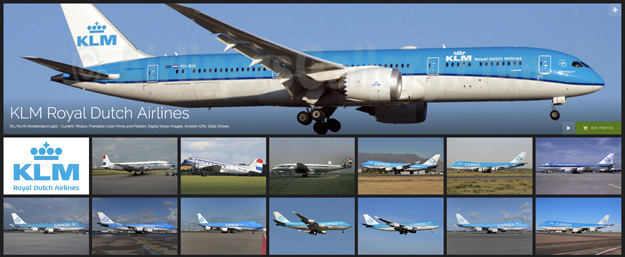
KLM aircraft photo gallery:

Air France and KLM are holding in-depth discussions with their respective governments and financial institutions

Air France-KLM has made this announcement:

From the start of the COVID-19 crisis, the Group has implemented adequate measures to protect its passengers and staff, as well as to preserve its financial sustainability.
In view of increasingly strict measures taken by many countries, including restrictions on travel opportunities or border closures, the Air France-KLM Group has drastically reduced its flight activity, which over the next few months should be less than 10% of last yearโ€™s level.

The Group has implemented strong measures since the beginning of the crisis which include, amongst others:

  • – ย Negotiation with governments of payment deferral for taxes (civil aviation, solidarity…), social contribution and various charges;
  • – ย Negotiation with lessors and airports of payment deferral;
  • – ย Cost reduction measures, estimated at this stage at โ‚ฌ500 million in 2020, an increase

    of โ‚ฌ300 million compared to previous announcements ;

  • – ย The possibility of early retirement of certain sub-fleets of aircraft;
  • – ย Implementation by Air France of partial activity measures and application by KLM for

    the โ€˜Temporary Emergency Bridging Measure for Sustained Employmentโ€™ (NOW), with

    an impact estimated at this stage at around โ‚ฌ1.1 billion for 2020;

  • – ย Review of the investment plan to reduce the capital expenditure plan by โ‚ฌ700 million in 2020, an increase of โ‚ฌ350 million compared to previous announcements, to which will be added the impact of the decline in own and third-party activity on the amount

    of maintenance investments.

In solidarity with the all employee groups, the Air France-KLM Board members, Chair and CEO will also participate in the effort in line with the measures applicable to the employees of the Group, with a similar reduction of their remuneration.

As the crisis continues, the conditions for a recovery remain uncertain, both in terms of our air operations, but more generally in terms of the timetable for economic and demand recovery.

Our current best estimates, incorporating the above-mentioned measures, show that in the absence of additional financing, a liquidity requirement is expected in the third quarter of 2020.

As a result, the Air France-KLM Group, Air France and KLM, have entered into in-depth discussions with their respective governments and financial institutions in order to grant the resources that will enable them to secure and sustain adequate levels of liquidity by all means, notably within the framework of the European Commission’s Temporary Framework on State Aid in force published on March 19, 2020.

At this stage, given the various options currently being considered and the quality of the discussions with the two States and financial institutions, the Air France-KLM Group is confident that it will be able to obtain additional financing to meet all its future financial obligations and enable it to ensure the recovery of its activity beyond the current crisis.

“We are facing an unprecedented crisis affecting without exception the airline industry, which is causing a great deal of uncertainty about the outlook for air transport,” said Benjamin Smith, Chief Executive Officer of Air France-KLM. “Since the beginning of this crisis, the Air France-KLM Group has done everything possible to ensure the health safety of its employees and customers and, on the financial side, to preserve its short-term liquidity and prepare for the future. Emergency measures have been rapidly implemented to reduce our costs and investments. I salute the exceptional commitment of our employees, who are giving their best in these difficult times, particularly the operational teams who are enabling the repatriation flights of our fellow citizens, as well as the transport of medical equipment to France and the Netherlands. It is now clearer than ever that support from our both Dutch and French governments is needed to meet our cash requirements and enable us to continue our operations once the crisis is over. Discussions with them and financial partners are ongoing,ย and I am confident in their willingness to support us and the future of the Air France-KLM Group, a key player for employment and the greater economies of our two nations, whose flags our airlines fly around the world. “

In other news, Air France has been flying medical supplies in France:

Our Air France Cargo teams are involved in the delivery of 100 tons of medical equipment in France, including several million masks. Thank you to all those who remain mobilized since the beginning of this health crisis.

Air France aircraft photo gallery:

The Boeing 747-400 Combi to the rescue at KLM

Type Retired: March 29, 2020 (flight KL686 MEX-AMS with PH-BFT) - Best Seller

KLM Royal Dutch Airlines is turning to its retired Boeing 747-400 Combi aircraft again to fly again. This time, without passengers.

KLM will reactivate two Boeing 747-400 Combi aircraft (plus a spare) (PH-BFT, PH-BFV and PH-BFW) due to high cargo demand. The aircraft will operate starting on April 13 to China (PEK and PVG). The China cargo airbridge is in cooperation with Philips Medical Systems for a 6-8 week period.

KLM Jumbos will be flying again!

Top Copyright Photo: KLM Royal Dutch Airlines Boeing 747-406 PH-BFT (msn 28459) (100 Years) AMS (Ton Jochems). Image: 949485.

KLM aircraft slide show:

KLM’s traffic drops 54% in March, fleet is parked at AMS

KLM Royal Dutch Airlines made this announcement:

The impact of the outbreak of the Covid-19 virus worldwide is strongly reflected in our traffic figures for March โ€“ countries increasingly shut down their airspace and passengers stopped travelling. The number of cancelled flights grew as the month progressed and, ultimately, operations in the closing days of March shrank to only ยฑ15% of the levels achieved last year. This effectively halved (-54%) KLMโ€™s passenger numbers across the network in comparison with the same month last year.

In comparison with March 2019, passenger load factor fell by 22% points against a drop in traffic of -49% (expressed in revenue passenger kilometres or RPKs) and a -32% reduction in seat capacity (expressed in available seat kilometres or ASKs). At -61.3%, the fall in passenger numbers was the most significant for destinations in Asia, followed by a -57.4% dip for destinations in Europe and North Africa. Cargo load factor fell by 0.2% points. This resulted from a combination of a -24.5% capacity reduction and a -24.7% decline in cargo traffic. The capacity reduction can be largely attributed to the drop in belly capacity due to flight cancellations.

KLM started the summer schedule on April 1 operating around 10% of its flights in comparison with the figures for last year. All operations have been suspended for Transavia. In the forthcoming period, an assessment will take place to determine the networkโ€™s further development based on circumstances as they unfold.

โ€œThe coronavirus pandemic is having a massive impact on the KLM Group. Within a very short space of time, we have literally had to park almost everything โ€“ and this embraces a workforce of around 30,000 people, 700 flights a day, and brilliantly oiled operations serving customers worldwide. The global economic impact of Covid-19 is enormous and it is unclear when KLMโ€™s worldwide network will again be operating at its previous levels. Either way, itโ€™s clear that it will take a great deal of time for the markets โ€“ and therefore KLM and Transavia โ€“ to recover. KLM will therefore be operating from its home base in the Netherlands for the time being, on the basis of an adjusted network. Numerous measures are being adopted for us to navigate through these trying times as best we can.โ€

KLM President & CEO Pieter Elbers

COVID-19: Flying with KLM – ‘Social distancing’ and other measures on board

Flight and aircraft handling are regarded as vital processes by the government. This means that the government believes that aviation is essential to society and that the continuity of a flight operation is therefore a priority. The guidelines for events and gathering therefore do not apply to aviation.

For airlines, flying during the corona crisis means that they have to operate under exceptional circumstances. The current situation calls for a series of measures that KLM implements in order to carry out its operation as safely as possible for passengers and crew. These measures are in line with information and instructions from the WHO, RIVM and GGD and KLM’s own health and safety services.

The most important measures are listed below.

Seat Blocking

Wherever possible, KLM works on the basis of the general guideline of the ‘social distance’ of 1.5 meters. In practice, this means that when the occupancy of an aircraft is low – which is now more common – as much space as possible is created around the passenger by keeping seats empty. On repatriation flights to Amsterdam, however, seat blocking may not be possible. In this case, returning as many Dutch nationals home as possible has the highest priority.

Service on board

One of the most important principles to ensure the safety of passengers and our crew is to minimize the contact moments between crew and passengers. This has an impact on onboard service. The offer of catering has therefore been simplified.

Hygiene on board

On board, the crew wears mouth caps and protective gloves. There is extra hygiene equipment on board, such as hand sanitizers, and on every flight a toilet is kept free exclusively for the crew. This gives them unrestricted access to a place where they can look after themselves and wash their hands. KLM’s aircrafts are additionally cleaned using suitable cleaning agents. The air on board the aircraft is drier and is rapidly refreshed along highly efficient filters to filter the air of potentially harmful particles and viruses.

Before and after boarding the plane

Safe travel is not only given the highest priority on board. Before and after boarding, a mix of measures is also in place at Schiphol. These include communication about ‘social distance’ at check-in, gates, service and transfer desks. The public can only pay for a number of services by debit card or creditcard. Custom boarding processes have also been set up, such as boarding in smaller groups. KLM also conducts passenger screenings on a number of flights.

About passenger screening

Several countries have recently imposed measures on airlines to prevent the spread of the coronavirus. These require all passengers to undergo a health check before boarding. For flights departing from Amsterdam to Canada, Singapore and South Korea, passengers are physically observed. Passengers flying to the last two destinations receive an additional temperature check. This is done at Schiphol by KLM ground staff in collaboration with KLM Health Services and Airport Medical Services staff. As of 8 April, KLM will provide passengers departing from New York JFK to Amsterdam Airport Schiphol with a health screening form. This will take place on the instructions of the Dutch government. On the basis of the answers, a passenger may be denied boarding by KLM on the orders of the Dutch government.

Large part of KLM fleet parked at Amsterdam Airport Schiphol

As a result of the coronavirus crisis, KLM keeps a large number of its aircraft on the ground from the start of the summer season. In addition to a few destinations in the network, repatriation flights are currently being carried out. The aircraft that do not fly are parked at Schiphol.

In order to keep the aircraft airworthy during this period, KLM is carrying out an active parking program. In this way, KLM ensures that the aircraft are well protected from the weather during this period. In addition, the program enables KLM to quickly deploy the aircraft when the weather permits. Periodic inspections are carried out throughout the entire parking period. KLM works well together with Schiphol in order to use the available time and space as efficiently as possible. In total, more than 200 aircraft of various airlines will eventually be parked at Schiphol, more than 100 of which will be KLM and KLC.

With regard to the large aircraft, the entire A330 fleet (13), the entire Boeing 777-200 fleet (15) and the remaining 747s (7) will be parked at Schiphol.

The smaller aircraft, all Embraer 175s (17), a large number of Embraer 190s (15) and a large number of Boeing 737s (34) are also parked at Schiphol.

The destinations KLM still flies to and the repatriation flights are flown with the remaining aircraft: the Boeing 777-300s, the Boeing 787-9 and -10 fleet, the remaining Embraer 190s and the remaining Boeing 737s.

All photos by KLM.

KLM launches airlift to pick up stranded travelers from Australia

KLM has made this announcement:

From April 2, KLM will start with an airlift from Amsterdam Schiphol to Australia, which will bring home almost 2,000 Dutch travelers in the coming days.

KLM operates these flights in collaboration with the Dutch Ministry of Foreign Affairs. In recent weeks, KLM has already brought tens of thousands of travelers from all over the world home.

โ€œWe are proud to be meaningful in this way during this global crisis,โ€ says Rene de Groot, KLM COO. โ€œThese flights are extra special in KLM’s history. We have had a strong relationship with Australia since 1950, as the country has been a valuable destination in our network for over 50 years. It is now the first time in 20 years that another KLM aircraft lands at Sydney Airport. โ€

The plane – KL827 – that departedย Schiphol at 08.50 pmย is the first in a series of six repatriation flights that flies between Amsterdam Schiphol and Australia. It will land at Sydney Airport on April 4 and fly to Schiphol on April 5 where it will arrive on April 6. This flight will be repeated from April 6-10 April *). KLM will then fly back and forth four times to Kuala Lumpur *) and from there partner Malaysia Airlines will pick up the Dutch from Australia and take them to Kuala Lumpur where they will transfer to a KLM flight to Schiphol. There will also be flown to other Australian cities and to New Zealand.

50 years of Australia

It was KLM’s wish before the Second World War to fly directly to the Australian continent, but it took a while before it came true. With the London-Melbourne race in 1934, the airline already demonstrated that it was able to cover such a long distance safely. But landing rights never came.

Fly three and a half days

On December 7, 1950, the time had come and KLM performed a passenger flight to Sydney for the first time. โ€œFortunately, we can do that faster now than we did then. It now takes us just over 23 hours. Back then it took three and a half days to get there,โ€explains De Groot. The airline continued to go back and forthย to Sydney for 50 years, until the partnership with Malaysian Air System, today’s Malaysia Airlines, was expanded. KLM expanded the number of flights to Kuala Lumpur and there were connections to various destinations in Australia and New Zealand.

http://www.bijzonderebijstandbuitenland.nl

Dutch travelers abroad who are unable to arrange their return themselves due to the Corona crisis are supported by the Ministry of Foreign Affairs, the Verbond van Verzekeraars, the travel industry organization ANVR and various other partners in the world of travel, such as KLM. To this end, the organizations have decided to take the enhanced special foreign assistance approach. The core of this is an arrangement for Dutch travelers stranded abroad who cannot rely on a travel organization or airline. The website on which travelers can register is: http://www.bijzonderebijstandbuitenland.nl. Emergency centers will then coordinate and organize the necessary air transport for the return.

*) with reservation, these flights are still in preparation

A KLM poster dating from 1951

KLM operates the last Boeing 747 revenue flight after 49 years of service

Type Retired: March 29, 2020 (flight KL686 MEX-AMS with PH-BFT) - Best Seller

KLM Royal Dutch Airlines today (March 29) operated the last Boeing 747 revenue flight.

The last revenue flight, flight KL686 from Mexico City to Amsterdam, was operated with 747-400 PH-BFT. The flight is due to arrive at AMS at 1537 (3:37 pm) CET local time today according to flightaware.com.

Airline Color Scheme - Introduced 1971 - Best Seller


Above Copyright Photo: KLM Royal Dutch Airlines Boeing 747-206B PH-BUC (msn 19924) MEX (Christian Volpati). Image: 906730.

KLM introduced the first Boeing 747-200B in 1971. The first 747-200B (PH-BUA), named “The Mississippi”, was delivered on January 16, 1971. On February 14, 1971, the 353-seat PH-BUA operated its first commercial flight to New York. KLM was the first airline to put the higher-gross-weight Boeing 747-200B, powered by Pratt & Whitney JT9D engines, into service in February 1971.

"Sir Frank Whittle", delivered on September 30, 1983

Above Copyright Photo: KLM Royal Dutch Airlines Boeing 747-306 N4548M (PH-BUU) (msn 23056) ATH (Richard Vandervord). Image: 949049.

On October 16, 1975 the first Boeing 747-300B Combi joined the KLM fleet, marking an important milestone for KLMโ€™s cargo operations. In the preceding years, overcapacity was a problem in the air cargo market and this new arrival ensured greater flexibility, improving KLMโ€™s competitive edge.

The coronavirus crisis and slowdown in travel has allowed KLM to early retire the Boeing 747-400 fleet.

Martinair will continue to operate Boeing 747-400F freighters for KLM.

Above Photo: The Boeing 747 was the queen of the KLM long-haul fleet. This 1991 photo shows the 747s gathering at the AM hub (KLM).

Top Copyright Photo: KLM Royal Dutch Airlines Boeing 747-406 PH-BFT (msn 28459) (100 Years) AMS (Ton Jochems). Image: 949485.

KLM aircraft slide show: