United Airlines expands industry-leading commitment to biofuel, powering more flights with more biofuel than any other U.S. carrier

United Airlines today further strengthened its emerging reputation as the world’s most environmentally conscious airline by renewing its contract with Boston-based World Energy, agreeing to purchase up to 10 million gallons of cost-competitive, commercial-scale, sustainable aviation biofuel over the next two years. The biofuel, which United currently uses to help sustainably power every flight departing its Los Angeles hub, achieves a greater than 60% reduction in greenhouse gas emissions on a lifecycle basis.

United’s contract renewal follows the airline’s original purchase agreement in 2013, helping United make history in 2016 when it became the first airline in the world to use sustainable aviation biofuel on a continuous basis. United is currently the only U.S. airline to use biofuel in its regular operations. World Energy’s biofuel is made from agricultural waste and has received sustainability certification from the Roundtable on Sustainable Biomaterials.

World Energy recently announced that it will invest $350 million to fully convert its Paramount, California, facility to renewable diesel and sustainable aviation jet fuel, bringing its total capacity to more than 300 million gallons of production annually at that location, one of the company’s six low-carbon fuel manufacturing plants.

“Investing in sustainable aviation biofuel is one of the most effective measures a commercial airline can take to reduce its impact on the environment,” said Scott Kirby, United’s president. “As leaders in this space, United and World Energy are setting an example for the industry on how innovators can work together to bring our customers, colleagues and communities toward a more sustainable future.”

“Great companies lead,” said Gene Gebolys, World Energy’s chief executive officer. “We are honored to renew our commitment to United to advance their efforts to drive change to a lower carbon future.”

United’s contract renewal with World Energy will further assist the airline in achieving its recently announced commitment to reduce its greenhouse gas emissions by 50% by 2050. United’s pledge to reduce emissions by 50% relative to 2005 represents the equivalent of removing 4.5 million vehicles from the road, or the total number of cars in New York City and Los Angeles combined. United’s biofuel supply agreements represent more than 50% of the commercial aviation industry’s total agreements for sustainable aviation biofuel.

United’s Commitment to the Environment

United’s latest investment in sustainable aviation biofuel, along with its commitment to reduce its greenhouse gas emissions, represents yet another innovative initiative the airline has undertaken to minimize its impact on the environment. Several of United’s most significant environmental achievements include:

  • Becoming the first airline to fly with Boeing’s Split Scimitar winglets, which reduce fuel consumption by an additional 2% versus standard winglets; United is the largest Scimitar winglet operator today, with nearly 400 aircraft equipped with these winglets.
  • Becoming the first U.S. airline to repurpose items from the carrier’s international premium cabin amenity kits and partnering with Clean the World to donate hygiene products to those in critical need.
  • Eliminating non-recyclable plastic stirring sticks and cocktail picks on aircraft and replacing them with an environmentally friendly product made of 100% bamboo.
  • Partnering with Audubon International to protect raptors โ€“ including hawks, owls and kestrels โ€“ in and around United’s hubs and resettle the birds of prey at habitats where the species are more likely to thrive.
  • Continuing to replace its eligible ground equipment with cleaner, electrically powered alternatives, with nearly 40% of the fleet converted to date.

United’s Award-Winning Eco-Skies Program

United’s award-winning Eco-Skies program represents the company’s commitment to the environment and the actions taken every day to create a sustainable future. In 2017, Air Transport World magazine named United the Eco-Airline of the Year for the second time since the airline launched the Eco-Skies program. Last year, United Airlines ranked No. 1 among global carriers in Newsweek‘s Global 500 Green Rankings, one of the most recognized environmental performance assessments of the world’s largest publicly traded companies.

https://airlinersgallery.smugmug.com/Airlines-USA6/United-Airlines-NC-Boeing/i-hxr6Kj3/A

Above Copyright Photo: United Airlines Boeing 737-824 WL N76516 (msn 37096) (Eco-Skies/Commitment to the Environment) BWI (Brian McDonough). Image: 907083.

United Airlines aircraft slide show (Boeing):


The Irish Times: EASA’s demands on Boeing signal rift among regulators

From the Irish Times:

“Europeโ€™s aviation safety agency has set out strict conditions before it will allow Boeingโ€™s 737 Max aircraft back into the skies, in a sign of the depth of the rift emerging among global regulators after two deadly crashes.

EASA said it had three โ€œpre-requisite conditionsโ€, including demands that design changes by Boeing are approved by the European agency, before it would lift the grounding of the Max following the crashes in Ethiopia and Indonesia.”

Read the full story.

Copyright Photo: Joe G. Walker.

British Airways to relaunch flights to Islamabad

British Airways made this announcement:

British Airways is beginning flights between London and Islamabad next week.ย  The final touches are coming together for the airlineโ€™s return ahead of the first flight on Sunday, June 2.

The three-per-week service is operated on a three-class Boeing 787 Dreamliner with World Traveller (long-haul economy), World Traveller Plus (long-haul premium economy) and Club World (long-haul business class) available.

Airbus celebrates 50 years

Airbus issued this statement:

In 1969, European aerospace was in the doldrums. The sectorโ€™s once-illustrious names had faded and, competing against each other, lagged far behind the Americans, who commanded more than 80% of the market for commercial aircraft. Against this backdrop, on 29thย May 1969, ministers from Germany and France agreed a new approach: a partnership between European nations, later joined by Spain and the UK, to develop the first Airbus aircraft, the twin-aisle A300.

Frankly, few people gave this pan-European venture much hope of success. Yet from that seed has flowered a global aerospace champion.

Ahead of this monthโ€™s European Parliament elections, the message must be heard that a strong and confident European Union is vital to Europeโ€™s economic future amid populist nationalism, fragile growth and simmering trade tensions. It is certainly the lesson of Airbusโ€™s past and present as the European aerospace manufacturer celebrates its 50thย anniversary, also this month.

Airbus has been a triumph of European integration. Over five decades, we have brought together civil and defence aviation businesses from throughout the continent, reducing costs and duplication. Today, Airbus produces half of the worldโ€™s large commercial aircraft and has thriving helicopter, defence and space businesses. We employ 130,000 highly-skilled people globally and are a powerful engine of productivity, exports and innovation for Europe.

Ours has been a heady story of political co-operation, transatlantic rivalry and headline-grabbing sales coups, all underpinned by the quiet excellence of generations of engineers who have helped to make air travel safer, more fuel-efficient and accessible to hundreds of millions of new passengers all over the world.

Landmark innovations have propelled Airbusโ€™s growth. Since 2014, our A350 aircraft, built with advanced lightweight composite materials, have reduced CO2 emissions on long-haul flights by 25% compared to many older jetliners. Our ability to move our parts, people and technology freely throughout Europe is at the heart of our business.

Whatโ€™s next? The aerospace industry stands on the cusp of a technological revolution to match anything in its history. Digital technology, autonomous flight, artificial intelligence and electrification will transform the way aircraft are designed, manufactured, flown and maintained. Itโ€™s already being called aerospaceโ€™s new โ€œgolden ageโ€ and will herald tougher competition and the emergence of new aviation powerhouses.

European aerospace should aspire to lead this coming revolution in innovation and the transition to a more sustainable aviation sector. The EUโ€™s flagship innovation programmes are well placed to nurture the radical technologies that will allow Europe to reaffirm its aerospace leadership for decades to come.

To prosper in this changing world, Airbus needs the support of the EU more than ever. For example, the EUโ€™s financial and political backing will be critical to the development of Europeโ€™s next generation of satellite technology and fighter jets.

Amid protectionism and political fragmentation, the bloc must continue to champion free trade in Europe and beyond. The EU should also remain grounded in the geo-political reality of global aerospace: the sectorโ€™s strategic significance means the EUโ€™s ability to project a strong, united voice has a direct bearing on Europeโ€™s prospects.

Airbus can thus renew the legacy of our founders who came together 50 years ago with an ambitious vision of innovation and international partnership – and the nerve to realize it.

The world of 1969 vanished long ago, but theirs remains a story for our times.

CNN: 737 MAX lawsuit suggests parallels to 1990s crashes

From CNN:

“A lawsuit filed by the former inspector general of the Department of Transportation accuses Boeing in a new lawsuit of repeatedly concealing design flaws in its aircraft and blaming pilots in the aftermath of crashes.

The suit, filed in federal court by former DOT inspector general Mary Schiavo on behalf of the estate of one of the victims in the Ethiopian Airlines crash, draws parallels between Boeing’s responses in the aftermath of the 737 MAX crashes in October and March and two crashes involving older 737 models in 1991 and 1994.”
Read the full report.

SAS and Airbus to research hybrid and electric aircraft

Scandinavian Airlines-SAS has made this announcement:

SAS and Airbus have signed a joint Memorandum of Understanding for hybrid and electric aircraft eco-system and infrastructure requirements research. This is a unique cooperation to establish the requirements for the next generation of sustainable aircraft. The project aims to gain an understanding of the introduction of hybrid-electric aircraft for large-scale commercial use.

The partnership involves a joint research project where SAS and Airbus will work together to build knowledge of the opportunities and challenges regarding operations and infrastructure linked to large scale introduction of hybrid and electric aircraft in commercial traffic.

โ€œWe are proud of our ambitious sustainability work and are now pleased that Airbus has chosen SAS to partner up with us for this future project. If this becomes a reality, it will revolutionize emissionsโ€, says Rickard Gustafson, CEO, SAS.

SAS has for decades worked to reduce emissions and worked hard and focused towards a more sustainable flying. SASโ€™s goal is to reduce emissions by 25 per cent by 2030, mainly by modernizing the fleet and increasing the use of biofuels. We see electric aircraft as the next step beyond the current technology.

โ€œWe are delighted to be embarking on this partnership with SAS,โ€ said Grazia Vittadini, Airbus Chief Technology Officer. โ€œLeveraging our respective expertise to explore the potential of hybrid-electric propulsion opportunities in our aviation eco-system.โ€

The collaboration also includes an ambition to involve a renewable energy supplier to ensure genuine zero emissions operations.

Alrosa today operates it last Tupolev Tu-134 flight, RA-65693 to be donated to a museum

Alrosa Air Company (Mirny) today (May 22) is retiring its last Tupolev Tu-134.

The pictured Tu-134B-3 RA-65693 today is operating flight 6R 693 between Mirny and Novosibirsk in Siberia.

After completing its final flight, the aircraft will be transferred to the Museum of Aviation History of Tolmachevo Airport, where it will join the previously decommissioned Tu-154M RA-85684, known as Izhma.

Type Retired: May 22, 2019 (flight 6R 693 Mirny - Novosibirsk with RA-65693)

Above Copyright Photo: Seen in a previous, mostly Aeroflot, livery: Alrosa Avia (Alrosa Air Company) Tupolev Tu-134B-3 RA-65693 (msn 63221) (Aeroflot colors) VKO (Christian Volpati Collection). Image: 946578.

Alrosa aircraft slide show:

Air Antwerp is born to fill the hole left by VLM Airlines

Air Antwerp (Antwerp) has been formed with the help of CityJet and KLM. CityJet will control 75% of the stock.

The new airline is going through the AOC process and hopes to serves at least three destinations from Antwerp Airport, including London (City) according to Travel Magazine of Belgium.

The new airline will start operations with one Fokker 50, hopefully later this year.


ALC delivers the first Airbus A350-900 to Sichuan Airlines

Air Lease Corporation on May 21announced the delivery of one new Airbus A350-900 aircraft on long-term lease to Sichuan Airlines.ย  Featuring Trent XWB-84 engines, this A350-900 is the first ALC A350-900 to deliver to an airline in China.ย  The aircraft is from ALCโ€™s order book with Airbus and joins eight Airbus aircraft currently on lease from ALC to Sichuan Airlines for a total of nine aircraft.

Sichuan Airlines took delivery of its first Airbus A350-900 in August 2018.

Newest Delta Sky Club evokes eclectic Austin

Delta Air Lines has made this announcement:

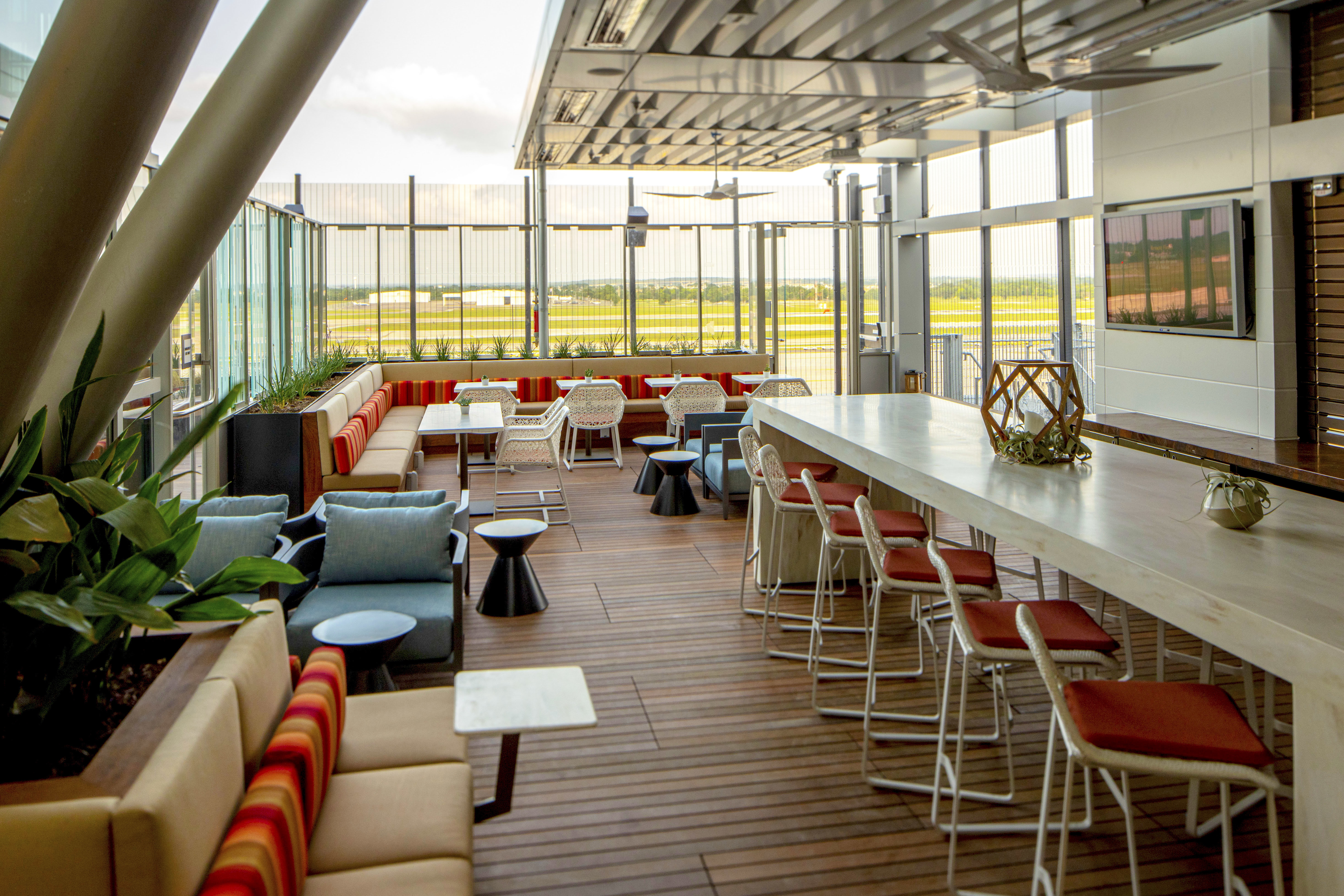
โ€‹Just in time for summer travel, the newest Delta Sky Club and first at Austin-Bergstrom International Airport will open for business on May 21.


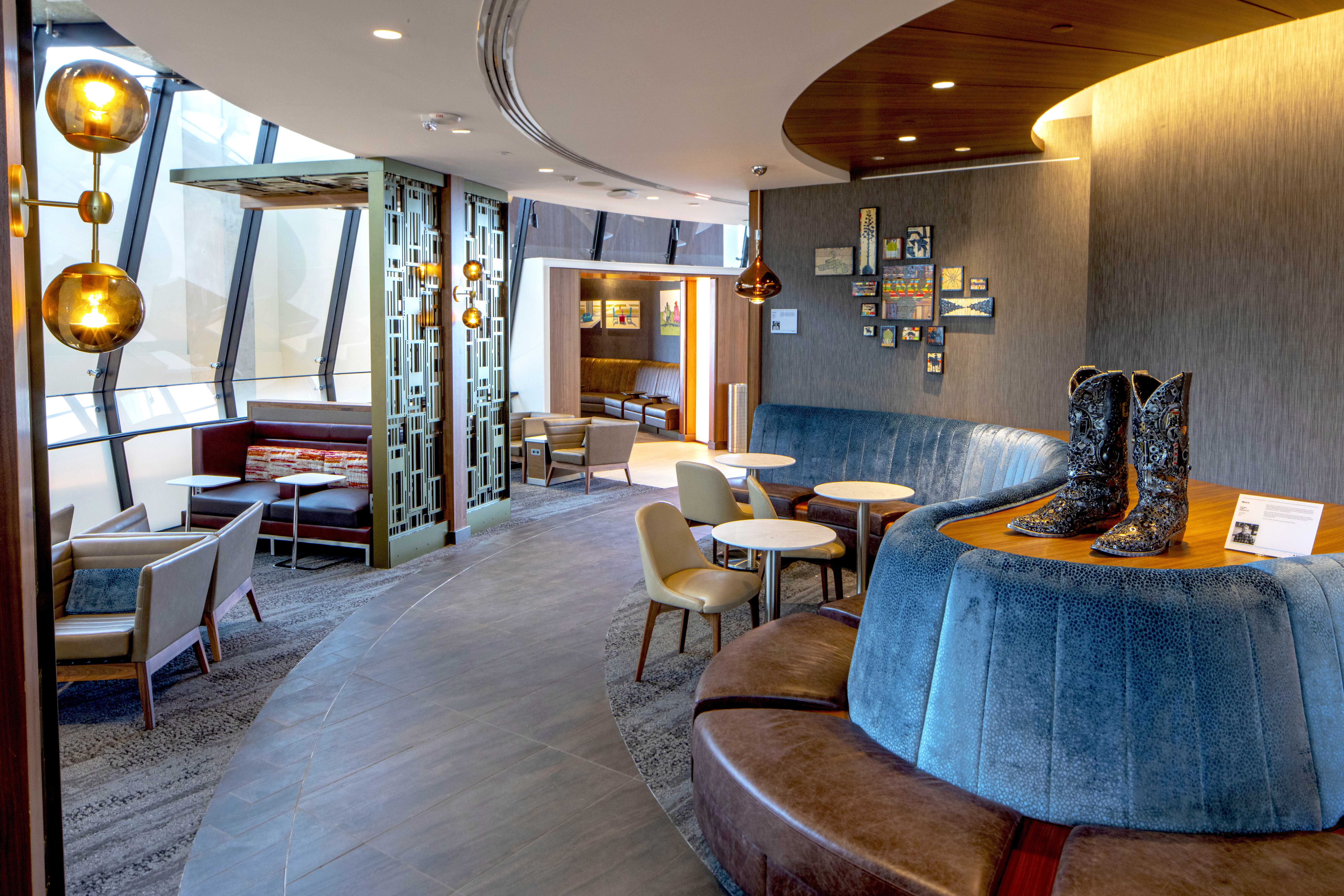
On the mezzanine level of the Barbara Jordan Terminal, this 9,000 sq. ft. Delta Sky Club conveniently located near the Delta gates features:

  • Covered Sky Deck, an outdoor patio that can be enjoyed year-round
  • Full-service bar that includes seasonal cocktails and wine, selected by Delta’s Master Sommelier Andrea Robinson, which will be stored in a temperature-controlled custom glass tower, along with the Agave Experience โ€” an extensive selection of tequila and mezcal that can be sampled in individual pours or tasting flights โ€” on the premium bar menu
  • Beer to try from around Texas, like Thirsty Planet Thirsty Goat, Hi Sign Violet the Blueberry Blonde and Saint Arnold Fancy Lawnmower, and rotating, seasonal food offerings inspired by the region, like handcrafted tacos and barbecue dishes
  • Unique, eclectic interior style inspired by Austin with warm walnut surfaces, metal finishes and rich fabrics
  • Select artwork from well-known and up-and-coming artists with connections to Texas
  • Comfortable seating areas, high-speed Wi-Fi and power outlets at nearly every seat

“We’ve put care into every detail โ€” from the curated, local artwork to the Club design to the seasonal food and beverage offerings,” said Claude Roussel, Managing Director โ€” Delta Sky Club. “We look forward to welcoming guests traveling through Austin โ€” they will be wowed by the experience and incredible service.”

The new Delta Sky Club is the latest investment Delta is making for Austin travelers. Delta offers 28 peak-day departures with nonstop service to all of its U.S. hubs, including three daily flights to both Los Angeles and New York City.


The Club is situated within the Austin airportโ€™s newly expanded concourse, from which Delta now operates. The $350 million project wrapped up earlier this year and added 9 new gates and nearly 170,000 square feet to the terminal, which features a multilevel design and new restaurants and retail