Embraer has agreed to the sale of eight new E175 jets to SkyWest, Inc. for operation with Alaska Airlines, adding to the 32 SkyWest E175 jets SkyWest already flies for Alaska. The E175 aircraft will fly exclusively with Alaska Airlines under a Capacity Purchase Agreement (CPA).
Alaska Airlines, a new member of the oneworld Alliance, currently has 62 Embraer E175 jets in their fleet, operated by Horizon Air and SkyWest Airlines. The 76-seat aircraft will be delivered in Alaska’s livery and three-class configuration, starting in 2022.
With recovery on the horizon, Alaska Airlines is taking advantage of strategic opportunities by adding 30 mainline and regional aircraft to fulfill capacity needs in the years ahead. And as more travelers search for additional leisure getaways, Alaska will begin flying to Belize City, Belize.
Growing the Alaska Air Group fleet
Alaska expects domestic travel to return to pre-COVID levels by the summer of 2022, which will require more aircraft across Air Group. To prime the airline for growth, Alaska is taking the following actions:
Adding 17 new Embraer 175 jets to the regional fleet in 2022 and 2023 – nine to be operated by Horizon Air and eight by SkyWest.
Exercising options for 13 Boeing 737-9 MAX deliveries in 2023 and 2024.
The 17 regional aircraft additions grow Air Group’s regional fleet to 111 planes: 71 at Horizon and 40 with SkyWest. Horizon will receive its nine additional E175s in the next two years: five scheduled for delivery in 2022 and four in 2023. This is in addition to three existing firm E175 orders to be operated by Horizon. All eight SkyWest aircraft will enter service for Alaska in 2022.
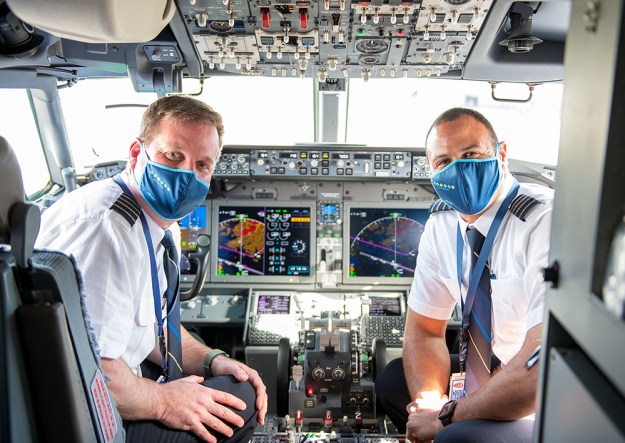
Photo: Alaska Airlines. In order to fly the 737-9, pilots are required to take eight hours of flight simulator and computer-based training that focus on the operation of the MAX. The pilot training program for the MAX is more extensive than what’s required by the FAA.
Alaska announced a restructured agreement with Boeing in December 2020 to acquire 68 737-9 MAX aircraft between 2021 to 2024, with options for another 52 deliveries between 2023 and 2026. The airline will accept the first 13 options over two years: nine in 2023 and four in 2024.
Alaska adds Belize to its international destinations
Alaska also announced today new nonstop service to Belize City, Belize, in Central America from the West Coast. Belize will be the fourth country Alaska flies to from its West Coast hubs, joining Canada, Mexico and Costa Rica.
You better BELIZE it! We're launching new service to Belize later this year. To celebrate, we're sending you & a friend to this paradise. ✈️ 🌴 Reply w/ hashtag #BelizePlease, tag a friend & tell us why Belize is on YOUR bucket list by 11:59pm PT on 5/14. https://t.co/LmWUYINCX7pic.twitter.com/UMhpVm8zg6
Alaska Airlines made this announcement on social media and their blog:
We are on a journey to make Alaska Airlines a place where everyone belongs and has opportunity. We also believe education is the key to equity and representation, with the power to transform the lives of young people––opening doors to careers in aviation and beyond. In partnership with UNCF, this special aircraft is a symbol of our commitment to education and advancing racial equity at Alaska Airlines, and we hope it inspires others as well.
One of our diversity, equity and inclusion commitments is to help create career pathways for young people by supporting programs like UNCF, the nation’s largest and most effective minority education organization, who we’ve been working with for more than 15 years. Today, we are proud to reveal a special aircraft that symbolizes our support for education and equity – called “Our Commitment.” We know there is much more to do, and this airplane is a flying reminder of the journey.
“The time is always right to do what is right.” – Rev. Dr. Martin Luther King, Jr.
“Education is the most powerful weapon which you can use to change the world.” – Nelson Mandela
“When you learn, teach, when you get, give.” – Dr. Maya Angelou
Cameron, Ron, his wife and Brandon.
London, her mom Sherry and Kim Ford.
Inspired by these words and designed in partnership with Alaska’s Black employees, allies and UNCF, Our Commitment aircraft features profiles of the next generation of leaders — the children, grandchildren and mentees of Alaska’s employees along with teachings from extraordinary social activists. Because when we create belonging, we can be our best and soar together.
“As a company, we know we are not yet where we need to be when it comes to diversity, but we are inspired and guided by our value to do the right thing. With this aircraft, we are doing the right thing by amplifying the conversation around education, equity and belonging and taking it to the skies,” said Ben Minicucci, Alaska Airlines CEO. “This aircraft will continue to be an inspiration for us on the journey.”
‘Education has the power to transport us from where we are to where we want to go.’
This aircraft will fly throughout Alaska’s network, inspiring conversation, raising awareness and spreading the word about UNCF, an organization dedicated to enabling under-represented students to become highly qualified college graduates.
In 2017, UNCF became one of our LIFT Miles partners, enabling guests to contribute airline miles alongside the company to ensure travel does not hold young people back from pursuing their dreams. Today, our company and guests have contributed more than 13.4 million Alaska Airlines miles to fly students to Historically Black Colleges and Universities (HBCUs) for college tours, career development events, and other UNCF programs.
As part of our commitment, Alaska will donate one million miles annually to support students attending HBCUs. We’ve also established a scholarship fund through UNCF to help students overcome the financial obstacles of getting a college education. Learn more about donating miles here.
Dr. Michael L. Lomax, president and CEO of UNCF says, “While small in number, our HBCUs are landmarks to our past and keys to our future. They enable us to keep a legacy — by their very existence. HBCUs are much more than schools. They are places where Black students can feel safe, welcomed, and embraced by the college community. Additionally, the nation’s HBCUs make up just 3% of America’s colleges and universities, yet they produce almost 20% of all African American graduates and 25% of African American graduates in the STEM fields of science, technology, engineering and mathematics — the critical industries of the future.”
We are proud to reveal a special livery to celebrate our commitment to equity in education – introducing the “Our Commitment” aircraft. Revenue service for the aircraft begins on April 27, with an inaugural flight from Seattle to Washington D.C.
Our Commitments
Earlier this year, we shared our commitments to racial equity.
Our commitments are not simply a statement of values, they are a statement of actions and accountable goals we believe are essential to making our guests feel welcome and our employees feel valued, respected and seen.
Based on input from employees, we set three areas of focus:
Representation: Increasing the racial diversity of our leadership to reflect the diversity of our frontline employees.
Culture: Cultivating an inclusive culture so employees feel welcomed and that they belong.
Public Leadership: Working with community-based organizations to positively impact the lives of young people through education and career development.
We are expanding our programs for outreach, recruitment and career pathways to cultivate and support diverse talent and continue to work closely with our employee business resource groups and external partners to learn and improve. See our latest DEI progress.
About the aircraft
Where did the idea come from?
As an airline with the unique asset of aircraft, we have a long history of wearing our values on our wings, including our “Honoring those who serve” aircraft, which honors the brave men and women of the U.S. military. We use our aircraft to drive awareness and inspire conversation around topics of importance to our company and the communities we serve.
Alaska employees inspired the aircraft following conversations with Alaska’s Black business resource group known as ABEA or Alaska Air Group Black Employees, Allies & Advocates, around last summer’s civil unrest.
De Marco Best, a Duty Manager of Simulator Operations in Seattle, who has been an ABEA leader since its inception in 2006, says this aircraft is a small part of Alaska’s equity and inclusion efforts. It represents the most visible part of its commitment for the next decade and holds us accountable for creating an equitable future, says Best—for our children, our grandchildren, and us all.
“This airplane supports kids and education. I happen to have an affinity for education and kids, especially underserved youth and those who look like me. I think all kids could be inspired by this plane to find a career that they’ll love. If every child can find a career—not a job— that they are passionate about, it could propel them and create lasting change that instills the power of education,” said Best.
We focused on one key question: How can Alaska do something lasting, inspirational and impactful? With aircraft as our biggest tool, we realized we could create a flying reminder of the work toward equity.
Who are the faces?
The custom-painted Boeing 737-900 ER features artistic renderings of 14 students connected to Alaska’s employees, along with quotes from legendary social activists, Dr. Martin Luther King Jr. and former South African President Nelson Mandela, whose leadership and words continue to drive our commitment. Learn more about the students represented on Our Commitment aircraft.
Who are the designers?
The typography and color palette on the aircraft were created by Adé Hogue, a Chicago-based artist and designer who found inspiration in Civil Rights Movement-era imagery.
“At the beginning, my mind went to protest posters from the 60s and the shape of the design slowly shifted into what you see today,” Hogue said. “A lot of the sort of lettering pieces I do, especially with things like this, I try to use the subject matter as a basis for things I’m creating. I think we integrated something that feels strong and impactful.”
Hogue worked with designer Jonny Mack, who has previously designed ten of Alaska’s special aircraft, to take our employees’ vision and make it a reality.
“Designing artwork for an airplane is incredible. It’s a big challenge and there’s lots of things that go into it. We knew we wanted to illustrate actual people instead of generic profiles that didn’t mean anything—we decided ‘let’s feature real people and have a real story to tell,’” said Mack.
The type treatment, he added, was a critical piece.
“The quotes from activists, thinkers and world changers on the plane are just as important as the people … and are a heavy weight to put on somebody—Adé was the first person I thought of for this project because I’ve seen his work and saw what he was doing in this space for social justice,” said Mack.
Adé Hogue and Jonny Mack met in 2019 at a Letter West design conference in Salt Lake City, sponsored by Alaska Airlines.
What can flyers expect onboard?
Onboard, guests will be able to learn more about the aircraft through a custom seatback card and digital resources featuring bios of the students on the aircraft, details on Alaska’s DEI commitments, and information about UNCF, including how to donate miles to support college students.
Alaska Airlines Group issued this financial report:
Financial Results:
Reported a net loss for the first quarter of 2021 under Generally Accepted Accounting Principles (GAAP) of $131 million, or $1.05 per share, compared to a net loss of $232 million, or $1.89 per share in the first quarter of 2020.
Reported a net loss for the first quarter of 2021, excluding CARES Act Payroll Support Program (PSP) wage offsets, special items and mark-to-market fuel hedge accounting adjustments, of $436 million, or $3.51 per share, compared to an adjusted net loss of $102 million or $0.83 per share, in the first quarter of 2020.
Decreased adjusted net debt to $1.6 billion at March 31, 2021 from $1.7 billion at December 31, 2020.
Reported a debt-to-capitalization ratio, including short-term borrowings related to COVID-19, of 62%.
Held $3.5 billion in unrestricted cash and marketable securities as of March 31, 2021, and available total liquidity of $5.3 billion.
Generated $167 million in operating cash flow in the first quarter, inclusive of PSP funding, bolstered by improved advance bookings for increased demand for air travel.
Operational Updates:
Welcomed Ben Minicucci as Air Group CEO and Constance von Muehlen as Alaska COO.
Formally joined the oneworld alliance on March 31 as the 14th member airline. Entry into the alliance transforms Alaska into a global airline, provides guests a seamless travel experience and increases the value of our loyalty and corporate travel offerings.
Finalized a previously announced amendment to the existing aircraft purchase agreement with Boeing to expand our total 737-9 MAX firm deliveries to 68 between 2021 and 2024, inclusive of 13 leased aircraft.
Took delivery of four 737-9 MAX aircraft during the first quarter.
Announced 12 new routes during the first quarter, aimed at offering our guests greater connectivity to and from West Coast destinations.
Announced plans to open a new Alaska Lounge in Terminal 2 of San Francisco International Airport.
Issued early recall notices to nearly 350 Alaska pilots on extended leaves to prepare for capacity growth.
Liquidity Updates:
Received $546 million through a combination of grants and loans from the U.S. Treasury under an extension of the PSP, and anticipate a supplemental payment of $80 million in late April.
Received notification from the U.S. Treasury that Alaska, Horizon and McGee are eligible to obtain an additional $584 million in incremental payroll support funding under a third round of the PSP.
Extended maturity of the 364-day Senior Secured Term Loan previously due to expire in March 2021 to March 2022, and in conjunction funded an incremental $54 million.
Sustainability Updates:
Published 2020 LIFT Sustainability Report including final data on our 2020 sustainability goals and Sustainable Accounting Standards Board disclosure, and shared new 2025 goals related to Environmental Social Governance.
Announced specific commitments for diversity, equity, and inclusion to increase diverse leadership representation, cultivate an inclusive culture, and to continue supporting education.
Set a course for net-zero carbon emissions by 2040, with 2025 milestone goals to be the most fuel-efficient U.S. airline, maintain carbon neutral growth, and cut ground service equipment climate emissions by 50%. As part of the net-zero commitment, joined The Climate Pledge alongside Amazon and other major businesses.
Announced a memorandum of understanding with SkyNRG focused on increasing the supply and production of sustainable aviation fuel from municipal solid waste and other waste streams, especially in the western United States.
Alaska Air Group Inc. today reported a first quarter 2021 GAAP net loss of $131 million, or $1.05 per share, compared to a net loss of $232 million, or $1.89 per share in the first quarter of 2020. Excluding the impact of payroll support program wage offsets, special items and mark-to-market fuel hedge adjustments, the company reported an adjusted net loss of $436 million, or $3.51 per diluted share, compared to an adjusted net loss of $102 million, or $0.83 per diluted share in 2020.
“This has been a long road, and I want to thank the employees at Alaska and Horizon for providing great guest service and everything they’ve done to get through the last challenging year and help us achieve positive cash flow in March,” said CEO Ben Minicucci. “We’re a big company, but still small enough that each person’s work makes a difference. We’re now laser focused on a return to profitability and growth, with aggressive cost control, optimal productivity across all our work groups, and the operational and financial discipline that Alaska is known for.”
The following table reconciles the company’s reported GAAP net loss per share (EPS) for the three months ended March 31, 2021 and 2020 to adjusted amounts.
Three Months Ended March 31,
2021
2020
(in millions, except per-share amounts)
Dollars
EPS
Dollars
EPS
GAAP net loss per share
$
(131)
$
(1.05)
$
(232)
$
(1.89)
Payroll support program wage offset
(411)
(3.31)
—
—
Mark-to-market fuel hedge adjustments
(22)
(0.18)
9
0.07
Special items – impairment charges and other
18
0.14
160
1.30
Special items – restructuring charges
11
0.09
—
—
Special items – merger-related costs
—
—
3
0.03
Income tax effect of reconciling items above
99
0.80
(42)
(0.34)
Non-GAAP adjusted net loss per share
$
(436)
$
(3.51)
$
(102)
$
(0.83)
Statistical data, as well as a reconciliation of the reported non-GAAP financial measures, can be found in the accompanying tables. A glossary of financial terms can be found on the last page of this release.
Time flies when you’re getting all dressed UP! Our newest special livery is in honor of our official membership into the @traveloneworld Alliance—look for it in the skies! pic.twitter.com/QkoDRQUaqu
Alaska Airlines and its regional partners serve more than 120 destinations across the United States and to Mexico, Canada and Costa Rica. The airline emphasizes Next-Level Care for its guests, along with providing low fares, award-winning customer service and sustainability efforts. On March 31, 2021, Alaska became the 14th member of oneworld. With the global alliance and Alaska Airlines’ additional partners, guests can travel to more than 1,000 destinations on more than 20 airlines while earning and redeeming miles on flights to locations around the world. Learn more about Alaska at newsroom.alaskaair.com and blog.alaskaair.com. Alaska Airlines and Horizon Air are subsidiaries of Alaska Air Group (NYSE: ALK).
CONDENSED CONSOLIDATED STATEMENTS OF OPERATIONS (unaudited)
Alaska Air Group, Inc.
Three Months Ended March 31,
(in millions, except per-share amounts)
2021
2020
Change
Operating Revenues:
Passenger revenue
$
659
$
1,481
(56)
%
Mileage Plan other revenue
94
109
(14)
%
Cargo and other
44
46
(4)
%
Total Operating Revenues
797
1,636
(51)
%
Operating Expenses:
Wages and benefits
493
612
(19)
%
Payroll support program wage offset
(411)
—
NM
Variable incentive pay
33
7
371
%
Aircraft fuel, including hedging gains and losses
203
384
(47)
%
Aircraft maintenance
81
115
(30)
%
Aircraft rent
62
81
(23)
%
Landing fees and other rentals
129
131
(2)
%
Contracted services
51
72
(29)
%
Selling expenses
33
55
(40)
%
Depreciation and amortization
97
108
(10)
%
Food and beverage service
23
49
(53)
%
Third-party regional carrier expense
30
37
(19)
%
Other
105
143
(27)
%
Special items – impairment charges and other
18
160
(89)
%
Special items – restructuring charges
11
—
.
NM
Special items – merger-related costs
—
3
(100)
%
Total Operating Expenses
958
1,957
(51)
%
Operating Loss
(161)
(321)
(50)
%
Nonoperating Income (Expense):
Interest income
7
9
(22)
%
Interest expense
(32)
(13)
146
%
Interest capitalized
3
3
—
%
Other – net
10
5
100
%
Total Nonoperating Income (Expense)
(12)
4
NM
Loss Before Income Tax
(173)
(317)
Income tax benefit
(42)
(85)
Net Loss
$
(131)
$
(232)
Basic Loss Per Share:
$
(1.05)
$
(1.89)
Diluted Loss Per Share:
$
(1.05)
$
(1.89)
Shares Used for Computation:
Basic
124.299
122.818
Diluted
124.299
122.818
Cash dividend declared per share:
$
—
$
0.375
CONDENSED CONSOLIDATED BALANCE SHEETS (unaudited)
Alaska Air Group, Inc.
(in millions)
March 31, 2021
December 31, 2020
Cash and cash equivalents
$
1,076
$
1,370
Marketable securities
2,473
1,976
Total cash and marketable securities
3,549
3,346
Other current assets
735
660
Current assets
4,284
4,006
Property and equipment – net
6,144
6,211
Operating lease assets
1,423
1,400
Goodwill
1,943
1,943
Intangible assets – net
105
107
Other assets
363
379
Total assets
14,262
14,046
Air traffic liability
1,297
1,073
Current portion of long-term debt
1,246
1,138
Current portion of operating lease liabilities
271
290
Other current liabilities
1,948
1,792
Current liabilities
4,762
4,293
Long-term debt
2,325
2,357
Long-term operating lease liabilities
1,283
1,268
Other liabilities and credits
3,017
3,140
Shareholders’ equity
2,875
2,988
Total liabilities and shareholders’ equity
$
14,262
$
14,046
Debt-to-capitalization ratio, including operating leases
62
%
61
%
Number of common shares outstanding
124.442
124.218
SUMMARY CASH FLOW (unaudited)
Alaska Air Group, Inc.
(in millions)
March 31, 2021
March 31, 2020
Cash Flows from Operating Activities:
Net loss
$
(131)
$
(232)
Non-cash reconciling items
137
277
Changes in working capital
161
(12)
Net cash provided by (used in) operating activities
167
33
Cash Flows from Investing Activities:
Property and equipment additions
(27)
(119)
Other investing activities
(516)
(8)
Net cash provided by (used in) investing activities
(543)
(127)
Cash Flows from Financing Activities:
82
684
Net increase (decrease) in cash and cash equivalents
$
(294)
$
590
Cash, cash equivalents, and restricted cash at beginning of year
1,386
232
Cash, cash equivalents, and restricted cash at end of the period
$
1,092
$
822
OPERATING STATISTICS SUMMARY (unaudited)
Alaska Air Group, Inc.
Three Months Ended March 31,
2021
2020
Change
Consolidated Operating Statistics:(a)
Revenue passengers (000)
4,666
8,932
(47.8)%
RPMs (000,000) “traffic”
5,393
10,656
(49.4)%
ASMs (000,000) “capacity”
10,397
15,304
(32.1)%
Load factor
51.9%
69.6%
(17.7) pts
Yield
12.22¢
13.90¢
(12.1)%
RASM
7.67¢
10.69¢
(28.3)%
CASMex(b)
10.93¢
9.22¢
18.5%
Economic fuel cost per gallon(b)
$1.79
$1.93
(7.3)%
Fuel gallons (000,000)
126
194
(35.1)%
ASM’s per gallon
82.4
78.9
4.4%
Average number of full-time equivalent employees (FTE)
17,140
22,473
(23.7)%
Mainline Operating Statistics:
Revenue passengers (000)
3,151
6,675
(52.8)%
RPMs (000,000) “traffic”
4,589
9,582
(52.1)%
ASMs (000,000) “capacity”
8,853
13,697
(35.4)%
Load factor
51.8%
70.0%
(18.2) pts
Yield
11.02¢
12.88¢
(14.4)%
RASM
7.11¢
10.05¢
(29.3)%
CASMex(b)
10.08¢
8.46¢
19.1%
Economic fuel cost per gallon(b)
$1.77
$1.92
(7.8)%
Fuel gallons (000,000)
98
163
(39.9)%
ASM’s per gallon
90.3
84.0
7.5%
Average number of FTE’s
12,473
16,818
(25.8)%
Aircraft utilization
8.5
10.1
(15.8)%
Average aircraft stage length
1,303
1,306
(0.2)%
Operating fleet(d)
201
225
(24) a/c
Regional Operating Statistics:(c)
Revenue passengers (000)
1,515
2,257
(32.9)%
RPMs (000,000) “traffic”
804
1,074
(25.1)%
ASMs (000,000) “capacity”
1,544
1,607
(3.9)%
Load factor
52.1%
66.8%
(14.7) pts
Yield
19.04¢
23.04¢
(17.4)%
RASM
10.84¢
16.09¢
(32.6)%
Operating fleet
94
94
— a/c
(a)
Except for FTEs, data includes information related to third-party regional capacity purchase flying arrangements.
(b)
See a reconciliation of this non-GAAP measure and Note A for a discussion of potential importance of this measure to investors in the accompanying pages.
(c)
Data presented includes information related to flights operated by Horizon and third-party carriers.
(d)
Excludes all aircraft permanently removed from operating service.
Given the unusual nature of 2020, we believe that some analysis of specific financial and operational results compared to 2019 provides meaningful insight. The table below includes comparative results from 2021 to 2019.
FINANCIAL INFORMATION AND OPERATING STATISTICS – 2019 RESULTS (unaudited)
Alaska Air Group, Inc.
Three Months Ended March 31,
2021
2019
Change
Passenger revenue
$
659
$
1,716
(62)
%
Mileage plan other revenue
94
110
(15)
%
Cargo and other
44
50
(12)
%
Total operating revenues
$
797
$
1,876
(58)
%
Operating expense, excluding fuel and special items
$
1,137
$
1,405
(19)
%
Economic fuel
203
420
(52)
%
Special items
(382)
26
NM
Total operating expenses
$
958
$
1,851
(48)
%
Consolidated Operating Statistics(a):
Revenue passengers (000)
4,666
10,417
(55)
%
RPMs (000,000) “traffic”
5,393
12,449
(57)
%
ASMs (000,000) “capacity”
10,397
15,508
(33)
%
Load Factor
51.9%
80.3%
(28.4)
pts
Yield
12.22¢
13.78¢
(11)
%
RASM
7.67¢
12.10¢
(37)
%
CASMex
10.93¢
9.06¢
21
%
FTEs
17,140
21,832
(21)
%
(a)
2019 comparative operating statistics have been recalculated using the information presented above, and as filed in our first quarter 2019 Form 10-Q
(a)
Includes consolidating entries, Air Group parent company, McGee Air Services, and other immaterial business units.
(b)
The Air Group Adjusted column represents the financial information that is reviewed by management to assess performance of operations and determine capital allocation and excludes certain charges. See Note A in the accompanying pages for further information.
(c)
Includes payroll support program wage offsets, special items and mark-to-market fuel hedge accounting adjustments.
GAAP TO NON-GAAP RECONCILIATIONS (unaudited)
Alaska Air Group, Inc.
CASM Excluding Fuel and Special Items Reconciliation
Three Months Ended March 31,
2021
2020
Consolidated:
CASM
9.21
¢
12.79
¢
Less the following components:
Payroll support program wage offset (benefit)
(3.95)
—
Aircraft fuel, including hedging gains and losses
1.95
2.51
Special items – impairment charges and other(a)
0.17
1.04
Special items – restructuring charges(b)
0.11
—
Special items – merger-related costs
—
0.02
CASM excluding fuel and special items
10.93
¢
9.22
¢
Mainline:
CASM
8.07
¢
11.55
¢
Less the following components:
Payroll support program wage offset (benefit)
(4.06)
—
Aircraft fuel, including hedging gains and losses
1.72
2.35
Special items – impairment charges and other(a)
0.20
0.72
Special items – restructuring charges(b)
0.13
—
Special items – merger-related costs
—
0.02
CASM excluding fuel and special items
10.08
¢
8.46
¢
(a)
Special items – impairment charges and other in the three months ended March 31, 2021 are primarily comprised of costs associated with leased aircraft that have been retired and removed from the operating fleet but not yet returned to the lessor.
(b)
Special items – restructuring charges in the three months ended March 31, 2021 represent incremental cost for pilot incentive leaves as a result of delayed recalls from what was anticipated at December 31, 2020 due to training limitations and other factors.
Fuel Reconciliation
Three Months Ended March 31,
2021
2020
(in millions, except for per-gallon amounts)
Dollars
Cost/Gallon
Dollars
Cost/Gallon
Raw or “into-plane” fuel cost
$
222
$
1.77
$
370
$
1.91
Losses on settled hedges
3
0.02
5
0.02
Consolidated economic fuel expense
225
1.79
375
1.93
Mark-to-market fuel hedge adjustment
(22)
(0.18)
9
0.05
GAAP fuel expense
$
203
$
1.61
$
384
$
1.98
Fuel gallons
126
194
Debt-to-capitalization, adjusted for operating leases
(in millions)
March 31, 2021
December 31, 2020
Long-term debt, net of current portion
$
2,325
$
2,357
Capitalized operating leases
1,554
1,558
COVID-19 related borrowings(a)
788
734
Adjusted debt, net of current portion of long-term debt
4,667
4,649
Shareholders’ equity
2,875
2,988
Total Invested Capital
$
7,542
$
7,637
Debt-to-capitalization ratio, including operating leases
62
%
61
%
(a)
To best reflect our leverage we included the short-term borrowings stemming from the COVID-19 pandemic which are classified as current liabilities in the consolidated balance sheets.
Adjusted net debt to earnings before interest, taxes, depreciation, amortization and special items
(in millions)
March 31, 2021
December 31, 2020
Current portion of long-term debt
$
1,246
$
1,138
Current portion of operating lease liabilities
271
290
Long-term debt, net of current portion
2,325
2,357
Long-term operating lease liabilities, net of current portion
1,283
1,268
Total adjusted debt
5,125
5,053
Less: Cash and marketable securities
(3,549)
(3,346)
Adjusted net debt
$
1,576
$
1,707
(in millions)
Twelve Months Ended March 31, 2021
Twelve Months Ended December 31, 2020
GAAP Operating Loss(a)
$
(1,615)
$
(1,775)
Adjusted for:
Payroll support program grant wage offset and special items
(474)
71
Mark-to-market fuel hedge adjustments
(39)
(8)
Depreciation and amortization
409
420
Aircraft rent
280
299
EBITDAR
$
(1,439)
$
(993)
Adjusted net debt to EBITDAR
(1.1x)
(1.7x)
(a)
Operating loss can be reconciled using the trailing twelve month operating income as filed quarterly with the SEC.
Note A: Pursuant to Regulation G, we are providing reconciliations of reported non-GAAP financial measures to their most directly comparable financial measures reported on a GAAP basis. We believe that consideration of these non-GAAP financial measures may be important to investors for the following reasons:
By eliminating fuel expense and certain special items (including the payroll support program wage offset, impairment and restructuring charges and merger-related costs) from our unit metrics, we believe that we have better visibility into the results of operations as we focus on cost-reduction initiatives emerging from the COVID-19 pandemic. Our industry is highly competitive and is characterized by high fixed costs, so even a small reduction in non-fuel operating costs can result in a significant improvement in operating results. In addition, we believe that all domestic carriers are similarly impacted by changes in jet fuel costs over the long run, so it is important for management (and thus investors) to understand the impact of (and trends in) company-specific cost drivers such as labor rates and productivity, airport costs, maintenance costs, etc., which are more controllable by management.
Cost per ASM (CASM) excluding fuel and certain special items, such as the payroll support program wage offset, impairment and restructuring charges and merger-related costs, is one of the most important measures used by management and by the Air Group Board of Directors in assessing quarterly and annual cost performance.
Adjusted income before income tax (and other items as specified in our plan documents) is an important metric for the employee incentive plan, which covers the majority of Air Group employees.
CASM excluding fuel and certain special items is a measure commonly used by industry analysts, and we believe it is the basis by which they have historically compared our airline to others in the industry. The measure is also the subject of frequent questions from investors.
Disclosure of the individual impact of certain noted items provides investors the ability to measure and monitor performance both with and without these special items. We believe that disclosing the impact of these items as noted above. Industry analysts and investors consistently measure our performance without these items for better comparability between periods and among other airlines.
Although we disclose our passenger unit revenues, we do not (nor are we able to) evaluate unit revenues excluding the impact that changes in fuel costs have had on ticket prices. Fuel expense represents a large percentage of our total operating expenses. Fluctuations in fuel prices often drive changes in unit revenues in the mid-to-long term. Although we believe it is useful to evaluate non-fuel unit costs for the reasons noted above, we would caution readers of these financial statements not to place undue reliance on unit costs excluding fuel as a measure or predictor of future profitability because of the significant impact of fuel costs on our business.
GLOSSARY OF TERMS
Adjusted net debt – long-term debt, including current portion, plus capitalized operating leases, less cash and marketable securities
Adjusted net debt to EBITDAR – represents net adjusted debt divided by EBITDAR (trailing twelve months earnings before interest, taxes, depreciation, amortization, special items and rent)
Aircraft Utilization – block hours per day; this represents the average number of hours per day our aircraft are in transit
Aircraft Stage Length – represents the average miles flown per aircraft departure
ASMs – available seat miles, or “capacity”; represents total seats available across the fleet multiplied by the number of miles flown
CASM – operating costs per ASM, or “unit cost”; represents all operating expenses including fuel and special items
CASMex – operating costs excluding fuel and special items per ASM; this metric is used to help track progress toward reduction of non-fuel operating costs since fuel is largely out of our control
Debt-to-capitalization ratio – represents adjusted debt (long-term debt plus capitalized operating lease liabilities) divided by total equity plus adjusted debt
Diluted Earnings per Share – represents earnings per share (EPS) using fully diluted shares outstanding
Diluted Shares – represents the total number of shares that would be outstanding if all possible sources of conversion, such as stock options, were exercised
Economic Fuel – best estimate of the cash cost of fuel, net of the impact of our fuel-hedging program
Load Factor – RPMs as a percentage of ASMs; represents the number of available seats that were filled with paying passengers
Mainline – represents flying Boeing 737, Airbus 320 and Airbus 321neo family jets and all associated revenues and costs
Productivity – number of revenue passengers per full-time equivalent employee
RASM – operating revenue per ASMs, or “unit revenue”; operating revenue includes all passenger revenue, freight & mail, Mileage Plan and other ancillary revenue; represents the average total revenue for flying one seat one mile
Regional – represents capacity purchased by Alaska from Horizon and SkyWest. In this segment, Regional records actual on-board passenger revenue, less costs such as fuel, distribution costs, and payments made to Horizon and SkyWest under the respective capacity purchased arrangement (CPAs). Additionally, Regional includes an allocation of corporate overhead such as IT, finance, other administrative costs incurred by Alaska and on behalf of Horizon.
RPMs – revenue passenger miles, or “traffic”; represents the number of seats that were filled with paying passengers; one passenger traveling one mile is one RPM
Yield – passenger revenue per RPM; represents the average revenue for flying one passenger one mile
Top Copyright Photo: Alaska Air Cargo (Alaska Airlines) Boeing 737-790 (F) WL N626AS (msn 30793) ANC (Michael B. Ing). Image: 951702.
Alaska Airlines today announced its commitment and roadmap to reduce the company’s carbon emissions to net-zero by 2040, and commitments across carbon, waste, and water impacts by 2025. Today’s announcement included the release of Alaska’s 2020 LIFT Sustainability Report detailing the company’s broader climate change strategy, including waste and water initiatives.
Alaska, together with its regional subsidiary Horizon Air, identified the reduction of greenhouse gas emissions as the company’s most important opportunity for environmental action.
Alaska’s roadmap to 2040 includes five focus areas to decarbonize air travel by 2040 – fleet renewal, operational efficiency, sustainable aviation fuel, novel propulsion and high-quality carbon offsetting technology.
Alaska’s roadmap to 2040 includes five focus areas to reach net-zero emissions:
With a recent Boeing 737 MAX order, Alaska’s newest aircraft have 22% better fuel-efficiency on a seat-by-seat basis than the aircraft they replace. Alaska is a leader in using advanced technology to improve flight efficiency, and will continue to standardize best practices, and expand use of first-of-its-kind artificial intelligence and machine learning technology to plan optimize routes. As part of its near-term goals, the airline will cut in half emissions of its ground services equipment by 2025 through the purchase and use of electric ground equipment and other renewables.
Long-term plans for achieving net-zero emissions include expanding the market for SAF and exploring and advancing novel propulsion approaches that support electrification technology for regional flying, that are either not dependent on fossil fuels, or more efficient than current methods. And because aviation is one of the most difficult sectors to decarbonize, Alaska will also work with science and technical advisory Carbon Direct to identify and vet credible, high-quality carbon offsetting technologies to close any remaining gaps on the path to net-zero.
“After a difficult year, this is an exciting time for our company, as we return to growth while embedding sustainability even deeper in our culture, set bold goals and collaborate with innovative partners to keep our company, our communities, and our environment strong and healthy for the long term,” said Diana Birkett Rakow, Alaska Airlines’ vice president of public affairs and sustainability. “The pandemic sharpened the clarity of our purpose and led us a stronger path forward. But we also know we can’t do this alone and that we must work together with government, manufacturers, innovators and other industry partners to decarbonize aviation.”
Joining the Amazon Climate Pledge As a result of its 2040 net-zero emissions strategy, Alaska Airlines today signed onto The Climate Pledge, a commitment to achieving net-zero-carbon 10 years ahead of the Paris Agreement.
In addition, the company also announced five-year goals to reduce waste through more sustainable packaging and restarting industry-leading inflight recycling post-COVID, while offsetting 100% of its operational water use through investments in high-quality habitat projects.
22,000 employees engaged to help reduce climate impact As a reflection of its importance, Alaska Airlines this year included a carbon emissions target in the incentive pay program for all 22,000 employees. Additionally, long-term executive compensation is now linked to diversity, equity and inclusion.
Top Copyright Photo: Alaska Airlines Boeing 737-9 MAX 9 N913AK (msn 44079) LAX (Michael B. Ing). Image: 953062.
Alaska Airlines is increasing its service and commitment to Santa Rosa/Sonoma County with more nonstop flights between Southern California and the heart of wine country. Starting June 1, the airline will offer daily nonstop service between Santa Rosa/Sonoma County and Burbank. On Sept. 8, Alaska will add additional flights to both Orange County and San Diego.
With the additional flight to Hollywood Burbank Airport, the airline will have nonstop service to six destinations from Sonoma County: Burbank, Los Angeles, Portland, Orange County, San Diego and Seattle/Tacoma. By fall, Alaska will operate 13 peak day departures, including eight daily nonstop flights to Southern California airports.
Alaska was the first commercial airline to resume service to Charles M. Schulz-Sonoma County Airport in 2007. The airline has long been the airport’s largest carrier. In 2019, three out of four passengers to Santa Rosa/Sonoma County flew on Alaska.
The new route between Santa Rosa/Sonoma and Burbank will be served by the Embraer 175 jet, an aircraft with only window and aisle seating; there are no middle seats. Guests will enjoy award-winning service in a three-class cabin that includes First Class and Premium Class; hundreds of free movies and TV shows available for viewing on personal devices; free texting on most flights; and Wi-Fi connectivity for purchase.
Alaska Airlines and SkyNRG Americas today announced the signing of a memorandum of understanding (MOU) committing to increased investment in sustainable aviation fuel (SAF). The MOU builds on a long history of Alaska leadership advancing SAF and partners the airline with the global SAF pioneers at SkyNRG Americas.
Under the MOU, SkyNRG Americas will initially focus on the development of dedicated SAF production facilities to supply Western U.S. airports. These facilities will use commercially available technologies that enable the use of municipal solid waste and other waste-based inputs as feedstocks, as well as incorporating green hydrogen and renewable energy for minimizing carbon intensity. Beyond the focus of building out SAF production capacity, SkyNRG Americas and Alaska Airlines will continue to build awareness and understanding of SAF technologies, and advocate for public policies to accelerate the development of the SAF industry and infrastructure.
About Sustainable Aviation Fuel
Aviation is one of the most challenging industries to decarbonize in the transportation sector. While there are exciting opportunities for innovation in electric and hybrid hydrogen-electric aircraft, especially for smaller and regional aircraft, medium and long-haul air travel will continue to require high-quality, low carbon liquid fuel supplies for many decades to come.
Sustainable Aviation Fuel is a low carbon replacement for fossil-based jet fuel that is certified to meet ASTM Standards for jet fuel safety. It is approved for use globally as a drop-in fuel with maximum blending levels of 50% with Jet A fuel. Alaska Airlines has been an early adopter of SAF beginning in 2010 with test flights and continuing use of regular SAF offtake at San Francisco International Airport today.
SAF can be produced using various renewable resources, but this collaboration is focused on SAF made from municipal solid waste (MSW) and other waste-based feedstock sources. With this strategy, SkyNRG’s SAF will reduce greenhouse gas emissions by more than 80%, burn cleaner in jet engines, and reduce particulate matter by 90%. There are significant volumes of MSW available throughout the U.S that end up buried in landfills for decades. SkyNRG considers MSW and the associated waste streams that result from landfilling garbage as attractive feedstocks for the production of low carbon SAF. Of critical importance for Alaska and SkyNRG will be the continued work to maximize recycling and reduce waste streams before any conversion of MSW to SAF occurs.
SkyNRG Americas has a strong commitment to best practices in sustainability, including requiring all its production facilities to follow comprehensive and rigorous sustainability standards, such as the Roundtable of Sustainable Biomaterials (RSB). SkyNRG Americas will be consistently advised by experts from its independent Sustainability Board and will have its operations and projects certified by RSB.
Alaska Airlines guests will have the opportunity to relax in the new Alaska Lounge at San Francisco International Airport by late summer, as the airline announces updated plans for Bay Area travelers. Under this new plan, Alaska will move into the former American Airlines Admirals Club space in Terminal 2, enabling the airline to open a new lounge just as guests start to return to travel.
The announcement comes as Alaska Airlines continues to expand its presence in the Bay Area. Alaska now operates more than 80 daily flights out of the Bay Area (including SFO, San Jose and Oakland) and has more than 1,700 Bay Area-based employees. In June, Alaska will begin service to Anchorage and Bozeman, Montana, from SFO. Other recent service announcements include:
Recently resumed service to Honolulu and Maui from SFO as of April 4
Resumed service to Los Cabos and Puerto Vallarta from SJC in early April
New service to Missoula, Mont., from SJC starting in May
When completed, this new lounge will be the second-largest of the Alaska Lounges at just under 10,000 sq. ft., behind Alaska’s flagship lounge in Seattle’s North Satellite Terminal. This space is also centrally located in Terminal 2, with easy access to additional dining and shopping options for guests. The Alaska Lounge at SFO joins seven other lounge locations in the Alaska Airlines portfolio, in Seattle; Portland, Oregon; Los Angeles; New York – JFK; and Anchorage.
The Lounge will include an espresso bar staffed by a trained barista, a full bar featuring complimentary local craft brews, West Coast wines and spirits and a wide selection of guest favorites like made-to-order pancakes, steel-cut oatmeal, fresh salads and hearty soups.
When it opens, Alaska expects the Lounge to create 30 jobs in the Bay Area. More details and timing will be announced over the coming months.
New Alaska Lounge membership pricing
In October 2021, Alaska Airlines will update its Lounge membership structure to give members more options and flexibility. Starting this fall, Alaska will offer two tiers for Lounge memberships: Alaska Lounge and Alaska Lounge Plus. With the standard Alaska Lounge membership, members will receive access to all Alaska Lounges they know and love when flying on any airline. With the optional addition of a Lounge Plus membership, members will also receive access to an extended network of partner airline lounges across the country when flying Alaska – including all American Airlines Admirals Clubs. Pricing will also be updated as follows, remaining as one of the best values for lounge membership in the industry:
Alaska Lounge membership: $450 annually ($350 for Alaska Airlines MVP, MVP Gold and MVP Gold 75k members)
Alaska Lounge Plus membership: $600 annually ($500 for Alaska Airlines MVP, MVP Gold and MVP Gold 75k members)
New Lounge membership enrollments and renewals made before Alaska’s two-tier structure goes into effect in October will be grandfathered into an Alaska Lounge Plus membership for the year.
Boeing and Alaska Airlines have announced the companies have completed an agreement for 23 737-9 airplanes and 15 options. With this agreement, the carrier’s 737 MAX order book, including options and lease commitments, stands at 120 airplanes.
This deal was first announced in December 2020 as a commitment and will be reflected on Boeing’s Orders & Deliveries website.
Alaska Airlines received its first Boeing 737-9 in January and began revenue service on March 1. Its second 737-9 entered service on March 18, with two additional 737-9s scheduled to begin revenue service next week.
Copyright Photo: Alaska Airlines Boeing 737-9 MAX 9 N913AK (msn 44079) LAX (Michael B. Ing). Image: 953062.
The airline is embarking on a fleet modernization program to further improve the efficiency and sustainability of its operations. The 737-9 – equipped with new, more fuel-efficient engines and improved aerodynamics – will use 20% less fuel and reduce emissions by 20% per seat compared to airplanes it replaces.
Marking a milestone in its 89-year history, Alaska Airlines today (March 31) celebrated its first day as a member of oneworld. Alaska becomes the 14th full member of the global alliance, just eight months after receiving a formal invitation from oneworld in July 2020.
N487AS is the first to wear the oneworld livery at AS.
With safety protocols in place due to the pandemic, Alaska and oneworld hosted a virtual celebration and news conference today in Seattle, the airline’s hometown. Fellow airline members from around the world welcomed Alaska to the alliance with video greetings and provided versions of employees performing the Alaska Safety Dance (see below), briefly renamed the Global Safety Dance.
Effective today, all Alaska Mileage Plan members can earn miles when they fly any of the other 13 member airlines. Mileage redemption for flights on airlines that Alaska did not have previous partnerships with will occur in the coming months.
The 14 full members of oneworld are: Alaska Airlines; American Airlines; British Airways; Cathay Pacific Airways; Finnair; Iberia; Japan Airlines; Malaysia Airlines; Qantas; Qatar Airways; Royal Air Maroc; Royal Jordanian; S7 Airlines and SriLankan Airlines. Fiji Airways is a oneworld connect partner offering select alliance benefits to frequent flyers from any oneworld member airline traveling on their flights.
Video:
In other news from Horizon Air:
This week, the Horizon team shared their gratitude for Brad Tilden and his 30-year career with the unveiling of a special @UW livery in his honor. Thank you for everything, Brad. Go Dawgs! pic.twitter.com/Eyui38RRxd







 This aircraft will fly throughout Alaska’s network, inspiring conversation, raising awareness and spreading the word about UNCF, an organization dedicated to enabling under-represented students to become highly qualified college graduates.


 “Designing artwork for an airplane is incredible. It’s a big challenge and there’s lots of things that go into it. We knew we wanted to illustrate actual people instead of generic profiles that didn’t mean anything—we decided ‘let’s feature real people and have a real story to tell,’” said Mack.


You must be logged in to post a comment.