Tag Archives: Alaska Airlines

Alaska’s Brad Tilden to retire, Ben Minicucci will take over

Alaska Air Group’s board of directors announced today that Brad Tilden will retire as chief executive officer on March 31, 2021, and Ben Minicucci, president of Alaska Airlines and a member of the Alaska Air Group board, will succeed him. Tilden will continue to serve as Alaska’s board chair.

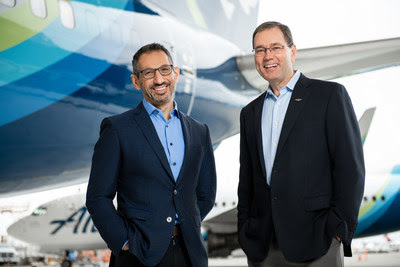
Alaska Airlines today announced Brad Tilden (right) will retire as chief executive officer on March 31, 2021, and Ben Minicucci (left), president of Alaska Airlines and a member of the Alaska Air Group board, will succeed him. Tilden will continue to serve as Alaskaโ€™s board chair.

“We are through the initial phases of our coronavirus response, and Alaska is on a solid trajectory,” said Tilden. “Now is the time to position Alaska for future growth, and now is the time to move forward with this long-planned transition. Ben has proven himself over a long career as a person who cares passionately about our people and our culture, as a leader who builds strong teams and produces results, and as a person who will work tirelessly to push this great company forward. He has earned this role, and I look forward to supporting him as board chair.”

“This announcement is the culmination of a multi-year succession planning process,” said Patricia Bedient, Alaska Air Group lead independent director. “The board has complete confidence in Ben’s ability to lead Alaska to great success in the years to come. We are also grateful to Brad for his outstanding leadership during his eight years as CEO. With Ben as CEO and Brad continuing as chair, Alaska’s future is bright.”

“I am honoredย andย humbledย byย this incredibleย opportunity, and profoundlyย grateful for Brad’sย leadershipย and partnership,” said Minicucci.ย “Our company is built on the strength of its people and our values, and I am so proud of who we are and all we have accomplished.ย The way in which our employees have navigated through challengesย is truly inspiringย โ€“ and the last nineย months is no exception.ย I’m excited andย optimistic about our futureย as we continue this journey together.”

During Minicucci’s 16-yearย career with Alaska,ย heย has contributedย inย various roles of increasing responsibility. In 2016, he became president of Alaska Airlines and he was also named CEO of Virgin America upon Alaska’s acquisition of theย airline. From 2009-2016, he served as executive vice president and chief operating officer where he directedย the implementation of a customer service guiding framework which empowers employees to deliver personal and kind-hearted experiences to guests.ย He also held the roleย ofย vice president of Seattleย operations (2007-2009) where he dramatically increased Alaska’s on-time performance and reliability. Minicucci joined Alaska in 2004 as staff vice president ofย maintenance.ย Heย holds a master’s degree in mechanical engineering from the Royal Militaryย College of Canadaย and servedย inย the Canadian Armed Forcesย for 14ย years. He has two children and lives in Issaquah, Washington.

Alaska Air Group is the holding company for Alaska Airlines, the fifth largest U.S. passenger airline, and regional carrier Horizon Air.


Alaska Airlines CEO Brad Tilden announces he will step down as CEO on March 31, 2021, and remain as board chair of Alaska Air Group, the parent company of Alaska Airlines and Horizon Air. The two airlines have 21,000 employees and fly to destinations throughout the United States, Canada, Mexico and Costa Rica.

Aviation veteran Ben Minicucci will succeed Brad Tilden as Alaska Air Group CEO next year. Minicucci has worked for Alaska Airlines for 16 years and is the current president of the 5th largest U.S. airline.

Alaska Air Group reports a third quarter net loss of $431 million

Alaska Air Group has made this announcement:

Financial Results:

  • Reported net loss for the third quarter of 2020 under Generally Accepted Accounting Principles (GAAP) of $431 million, or $3.49 per diluted share, compared to net income of $322 million, or $2.60 per diluted share in the third quarter of 2019.
  • Reported net loss for the third quarter of 2020, excluding payroll support program wage offsets, special items and mark-to-market fuel hedge accounting adjustments, of $399 million, or $3.23 per diluted share, compared to adjusted net income of $326 million or $2.63 per diluted share, in the third quarter of 2019.
  • Maintained adjusted net debt of $1.7 billion, flat from Dec. 31, 2019.
  • Reported a debt-to-capitalization ratio, including short-term borrowings related to COVID-19, of 59%.
  • Held $3.8 billion in unrestricted cash and marketable securities as of Sept. 30, 2020.

Liquidity Updates:

  • Reduced cash burn to approximately $4 million per day in the third quarter from approximately $5 million per day in the second quarter.
  • Obtained nearly $1.2 billion in financing through the issuance of Enhanced Equipment Trust Certificates, secured by 42 Boeing and 19 Embraer aircraft.
  • Reached an agreement with the U.S. Treasury in September to participate in the CARES Act loan program, and drew $135 million in September. The U.S. Treasury advised in October 2020 that the facility will be upsized to $1.9 billion.
  • Held $3.7 billion in cash and marketable securities as of Oct. 21, 2020 and total liquidity of $5.5 billion.

Operational and Guest Safety Updates:

  • Extending blocking of middle seats on mainline aircraft through Jan. 6, 2021.
  • Announced today a partnership with Microsoft to use sustainable aviation fuel to offset the environmental impact of certain business air travel.
  • Permanently eliminated change fees and extended the flexible travel policy for all new ticket purchases through Dec. 31, 2020.
  • Launched a partnership with certain healthcare providers to offer rapid and standardized COVID-19 testing for those guests traveling to destinations which require a negative test result.
  • Expanded the company’s Next-Level Care initiative, including implementation of new technology to create a touch-free experience for guests and a partnership with essential oils brand EO to provide hand sanitizing wipes onboard.
  • Strengthened face covering policy, requiring all guests over the age of two to wear a cloth mask or face covering at all times onboard.
  • Initiated voluntary early-out and incentive leave programs to our frontline employee workgroups, which were accepted by more than 4,000 employees. As a result, furloughs were limited to approximately 400 employees.
  • Announced 15 new routes during the third quarter, aimed at connecting West Coast travelers to key leisure destinations, including Jackson Hole, Wyoming, and Fort Myers, Florida.
  • Received official oneworld invitation on July 23, 2020. The company has announced it will officially join the alliance on March 31, 2021.

Alaska Air Group Inc. today reported third quarter 2020 GAAP net loss of $431 million, or $3.49 per diluted share, compared to net income of $322 million, or $2.60 per diluted share in the third quarter of 2019. Excluding the impact of payroll support program wage offsets, special items and mark-to-market fuel hedge adjustments, the company reported adjusted net loss of $399 million, or $3.23 per diluted share, compared to adjusted net income of $326 million, or $2.63 per diluted share in 2019.

“We are gaining momentum as we climb our way out of this crisis,” said Air Group CEO Brad Tilden. “Each of the last six months has been better than the month before in terms of flights offered and passengers carried, and to date, we’ve kept our net debt unchanged. Alaska has competitive advantages that continue to serve us well in this crisis, and we are fighting this battle with the most passionate and dedicated employees in the business.”

The following table reconciles the company’s reported GAAP net income and earnings per diluted share (diluted EPS) for the three and nine months ended Sept. 30, 2020 and 2019 to adjusted amounts.

Alaska Airlines aircraft photo gallery (Airbus):

Alaska Airlines and Microsoft sign partnership to reduce carbon emissions with flights powered by sustainable aviation fuel in key routes


Alaska Airlines has made this announcement:

Microsoft Corporation employees who fly between theirย globalย headquarters in Redmond, Washington, andย Californiaย on Alaska Airlines will fly more sustainably thanks to the use of sustainable aviation fuel (SAF) to cover their business travel. The SAF, supplied by SkyNRG, is an important option for the aviation industry to reduce CO2 emissions on a life-cycle basis. This first U.S. partnership of its kind is a model for other companies and organizations committed to reducing the environmental impact of business air travel.

The agreement applies to CO2 emissions from Microsoft employee travel between Seattle-Tacoma International Airport to San Francisco International Airport, San Jose International Airport, and Los Angeles International Airport โ€” the three most popular routes traveled by Microsoft employees on Alaska Airlines.ย Under a separate partnership agreement, Microsoft will purchase SAF credits from SkyNRG, and the SAF will be delivered to the airport fueling system used by Alaska Airlines. The companies will explore expanding the program in the future.

โ€œAfter a decade advancing sustainable aviation fuel, this partnership marks a significant milestone in the work to make SAF a commercially-viable aviation fuel alternative,โ€ said Brad Tilden, CEO of Alaska Airlines. โ€œSAF enables us to fly cleaner and reduce our impact on the environment. However, we cannot do this alone โ€” we must work together with other industries and business leaders like Microsoft and SkyNRG, among others who are thinking big, to achieve our goals and grow the marketplace for SAF.โ€

โ€œWe are excited to partner with Alaska Airlines to make business air travel a little greener by using sustainable aviation fuel supplied by SkyNRG to reduce the carbon impact of the flights Microsoft employees fly most,โ€ said Judson Althoff, executive vice president of Microsoftโ€™s Worldwide Commercial Business. โ€œWe hope this sustainable aviation fuel model will be used by other companies as a way to reduce the environmental impact of their business travel.โ€

Microsoft, Alaska Airlines and SkyNRG hope this partnership sets an example for other companies and organizations to purchase SAF, and support the development of the SAF industry by creating a stable demand signal, increasing supply and reducing the cost of SAF. The three companies are also supporting the development of a global environmental accounting standard for voluntary corporate SAF purchases through their participation in a pilot project of the World Economic Forumโ€™s Clean Skies for Tomorrow initiative. The companies plan to hold supplier and corporate forums to share learnings and increase interest in using SAF to lower the carbon emissions from business travel.

Alaska Airlines is one of the most fuel-efficient airlines in the U.S. with a strong commitment to sustainability. It was among the first airlines to use SAF in passenger travel, flying nearly 80 flights over the past 10 years. With a fuel-efficient fleet and use of modern technology in the flight deck, Alaska Airlines has reduced its intensity target of greenhouse gas emissions by 16% since 2012. Learn more about the partnership at https://blog.alaskaair.com/company-news/fly-greener/alaska-microsoft-reducing-carbon-footprint/.

Microsoft has ambitious sustainability goals, including a commitment to be carbon negative by 2030 and remove from the environment more carbon than they have emitted since its founding by 2050. The purchase and use of SAF contributes to the companyโ€™s sustainability goals.

For more than a decade SkyNRG has led the development in creating a SAF market, taking a no-compromise approach to sustainability. Replacing fossil jet fuels with SAF is what SkyNRG aims for, guaranteeing social and environmental sustainability throughout the supply chain.

โ€œThe emergence of a SAF production system and market is a once-in-a-century opportunity to launch a new energy source for an entire industry, guided by strong sustainability standards from day one,โ€ said Theye Veen, managing director, SkyNRG. โ€œWe are very pleasedย to be joined byย leading companies Microsoft and Alaska Airlines in this next step.โ€

As part of Microsoftโ€™s partnership agreement with SkyNRG, Microsoft will become the newest member of Board Now, a coalition of leading companies that aims to accelerate the transition to sustainable air travel. Organizations commit to reducing carbon emissions from flying and directly contribute to the development of new SAF production capacity.

Background on sustainable aviation fuel

Rather than being refined from petroleum, SAF is generally produced from sustainable resources, like waste oils and agricultural residues. It can even be produced from carbon captured from the air. SAF is an important solution for the aviation industry to reduce CO2 emissions and can also contribute to other positive social and environmental benefits, such as job creation and biodiversity. SAF results in a reduction in carbon emissions across its lifecycle. The SAF supplied by SkyNRG under this agreement is produced in the U.S. by World Energy using waste oils and delivers a carbon reduction of approximately 75% compared with fossil jet fuel. SkyNRG guarantees the sustainability of the fuel it supplies through its certification from the Roundtable on Sustainable Biomaterials (RSB), the most complete and robust standard for verification of sustainable practices, and its independent Sustainability Board, which includes representatives from WWF International, the European Climate Foundation, Solidaridad Network and the University of Groningen.

More from the Alaska Airlines blog:

Alaska Airlines and Microsoft will fly more sustainably thanks to the use of sustainable aviation fuel (SAF) supplied by SkyNRG to cover Microsoft employee travel on the routes they fly most. Microsoft has ambitious sustainability goals, including a commitment to be carbon negative by 2030 and remove all historical carbon emissions by 2050. Weโ€™re grateful for the opportunity to support them on this path.

SAF is produced from sustainable resources, including feedstocks and waste oils, and is an important way for the aviation industry to reduce CO2 emissions on a life cycle basis.

โ€œAs an airline, we are responsible for reducing the negative environmental impacts of air travel in our community and the communities where we operate. To do that, weโ€™re focused on ongoing efforts to improve our operational efficiency, including growing our use and the market for SAF,โ€ said Diana Birkett Rakow, vice president of external relations at Alaska Airlines. โ€œWe believe deeply in the transformational benefits of air travel. Itโ€™s what connects peopleโ€”and helps communities worldwide grow and thrive. We know to continue to deliver these benefits, we must operate sustainably.โ€

Weโ€™re excited about this milestone and remain committed to a long journey of reducing carbon emissions, including creating a marketplace for SAF, especially here in the Pacific Northwest. More than a decade ago, we were one of the first airlines to demonstrate the use of SAF in passenger travel, and by managing a fuel-efficient fleet and using technology to make flight paths most efficient, we have reduced its intensity target of Greenhouse Gas emissions by 16% since 2012. But there is a lot more work to do, and many partners on this journey, from airports like our home hub SEA to California hubs and research institutions.

So today, we also announced a two-year investment with Washington State University to support additional research at the WSU-PNNL Bioproducts Institute to advance the mid- and long-term development of SAF as an economically viable option, particularly in the Pacific Northwest.

What if I donโ€™t work for Microsoft, but want to offset your carbon footprint? Good news! Travelers can invest in carbon offsets from our new partner The Good Traveler, which is then invests in carbon reduction projects that restore the climate balance. Since the inception of the program, more than 667 million miles have been flown and with the help of The Good Traveler โ€“ who also partners with airports from SEA to SFO and beyond โ€“ and 229 million pounds of CO2 has been removed from the air through funding projects like planting trees, protecting habitats, composting waste and using renewable energy.

Alaska Airlines aircraft photo gallery:

Alaska Airlines launches Embraer 175 jet service in the state of Alaska

Alaska Airlines added jet service on the Embraer 175 aircraft in the state of Alaska on October 18, 2020. The E175, operated by regional partner Horizon Air, now serves select markets in Alaska.

With the reduction of air service in Alaska earlier this year, the E175 jet gives Alaska Airlines the flexibility to increase daily frequency between Anchorage and Fairbanks, and to provide year-round service to King Salmon and Dillingham.

Photo: Alaska Airlines.


Alaska Airlines to offer rapid COVID-19 testing for Hawaii-bound guests

Alaska Airlines has made this announcement:

To help guests prepare for Hawaii’s pre-travel testing program, Alaska Airlines will partner with Carbon Health to offer rapid COVID-19 testing at its pop-up clinics across the West Coast, starting Oct. 12 in Seattle. Hawaii will begin to welcome back visitors on Oct. 15 by allowing out-of-state travelers to enjoy the islands without a 14-day quarantine when they test negative for COVID-19 within 72 hours of their final leg of departure to Hawaii.

Tech-enabled health care provider Carbon Healthย will make rapid COVID-19 testing available at its pop-up clinic located in downtown Seattle at 220 6th Avenue North. Guests will be able to make an appointment with Carbon Health starting Oct. 8, with priority testing for Alaska Airlines flyers on Mondays, Wednesdays and Fridays from 9 a.m. to 7 p.m. PDT, starting on Oct. 12. Test results will be ready within two hours at a discounted cost of $135. More information, including how to schedule an appointment, will be available after Oct. 5 at alaskaair.com/hawaii-bound.

At this time, testing will be offered in Seattle, as the airline has focused the full return of twice-daily flights to all four major Hawaiian Islands from its largest hub starting Oct. 15. Additionally, on Nov. 1, nonstop service to Hawaii will resume from Portland, Oregon; San Jose, California; and San Diego, California. Hawaii service will begin from Anchorage, Alaska, and Los Angeles on Nov. 20. Carbon Health is planning additional pop-up and full-service clinics for rapid COVID-19 testing in those Lower 48 cities in the coming weeks.

Carbon Health utilizes the Abbott ID NOW rapid test, whichย meets the requirements of the State of Hawaii’s pre-travel testing program. The company will work closely with the Hawaii Department of Health to meet the state’s Trusted Testing Partner requirements. Testing will be available for all Alaska guests โ€“ of any age over three months old โ€“ as well as for travelers to the state of Alaska, which also has a 72-hour testing requirement.

Alaska Airlines will continue to share available testing options with guests, including the State of Hawaii’s trusted testing partners, as the airline continues to expand its list of testing providers. In addition, Alaska has been working closely with the Port of Seattle on developing future opportunities for on-site testing at Seattle-Tacoma International Airport.

With a continued focus on keeping our guests and employees safe, Alaska has implemented nearly 100 safety measures, as part of the airline’s commitment to Next-Level Care. The airline emphasizes a layered approach to safety, which starts with the requirement that all employees and guests wear a face mask or covering through the airport and on board, with no exceptions. Flyers must also enter into a health agreement at check-in to confirm that they are not experiencing COVID-19 symptoms and will adhere to the mask policy. Alaska has also extended physical distancing on board by limiting the number of guests and blocking middle seats through Nov. 30, 2020 and extended its flexible travel policy for all new ticket purchases, including Saver fares, through Dec. 31, 2020.

Alaska Airlines aircraft photo gallery (Boeing):

Alaska Airlines advances its ‘sun and snow’ strategy with additional wintertime routes

Alaska Airlines has made this announcement:

Alaska Airlines announced today five new routes that will better connect Los Angelesย International Airport and Palm Springs International Airport to key West Coast markets and the Yucatan Peninsula in Mexico. From fun in the (warm) sun to bright (cool) days in the mountains, the airline is ready to take travelers to locations near and far.

Alaska will begin daily nonstop service on December 17 between Los Angeles and Cancun, Mexico, and Reno, Nevada. Cancun is one of Mexico’s most popular getaways, and Reno is the gateway to Lake Tahoe and its endless possibilities. These additions build on Alaska’s leading intra-West and transborder route network from Los Angeles. On the same date, the airline is adding daily nonstop service between Palm Springs and Boise, Reno and San Jose, California.

Start Date City Pair Frequency Aircraft
Dec. 17 โ€“ April 12, 2021 ย Los Angeles – Cancun Daily 737
Dec. 17, 2020 Los Angeles – Reno Daily E175
Dec. 17 โ€“ April 12, 2021 Palm Springs – Boise Daily E175
Dec. 17 โ€“ April 12, 2021 Palm Springs – Reno Sun, Mon, Thurs, Fri, Sat E175
Dec. 17, 2020 Palm Springs โ€“ San Jose, Calif. 2x Daily E175

The daily flights between Los Angeles-Reno and Palm Springs-San Jose will be year-round. The flights between Los Angeles-Cancun, Palm Springs-Boise and Palm Springs-Reno are part of the airline’s seasonal schedule from Dec. 17 through April 12, 2021.

Alaska is also increasing the frequency of service on certain routes from Los Angeles starting December 17:

  • Guadalajara increases to two daily flights
  • Salt Lake City increases to two daily flights
  • Boise increases from one to three daily flights

The newly added service at Los Angeles builds on recent additional routes to cites across the West for a total of 14 new routes this year alone. In July, Alaska announced seven new routes from Los Angeles to further connect its guests between Southern California and key markets around the country, including the first nonstop service from the West Coast to Fort Myers/Naples, Florida, which begins Nov. 20.

Just in time for fall travel, Alaska is also extending physical distancing on board by limiting the number of guests and blocking middle seats through Nov. 30, 2020. Alaskaย is also extending its flexible travel policy for all new ticket purchases, including Saver fares, through Dec. 31, 2020.

Alaska Airlines brings back ‘Get the Row with BOGO’

Alaska Airlines made this announcement:

Alaska Airline’s ‘Get the Row with BOGO’ is back! Beginning today through Sept. 16, guests traveling by Oct. 31 could get a whole row to themselves when they book a flight and get a second ticket on the same flight for just the taxes and fees.

Alaska Airlineโ€™s โ€˜Get the Row with BOGOโ€™ is back! Get the whole row for you and your guest with the middle seat blocked through Oct. 31, 2020

“Our hope is that with this offer, as well as our Next-Level Care and middle seat blocking through Oct. 31, our guests are given further peace of mind while traveling to our more than 115 destinations this fall,” said Sangita Woerner, Alaska Airlines’ senior vice president of marketing and guest experience. “We have added layers of safety to keep our guests and employees safe when they are ready to fly, and hope to see many of them in the skies in the coming months.”

When guests make the decision to fly again, they will be met with the same Alaska hospitality they have come to know and love, as well as new layers of safety to keep everyone healthy. As part of nearly 100 Next-Level Care safety measures, Alaska is:

  • Extending physical distancing on board for fall travel with blocked middle seats on all mainline flights and reduced capacity on regional flights through Oct. 31*.
  • Strengthening face mask policies, including:
    • Requiring all guests over the age of two to wear a mask or face covering, with no exceptions. If a traveler does not wear a mask, they will not be allowed to fly. This policy applies to anywhere Alaska conducts business โ€“ at ticket counters, gate areas and inflight.
    • In late June, Alaska empowered its flight attendants to issue a final notice to any guest โ€“ in the form of a yellow card handed to them โ€“ who repeatedly disregards or disobeys the requirement to wear a mask or face covering. If a guest still does not comply after that warning, their travel with Alaska will be suspended immediately instead of undergoing a review process.
  • Over the coming weeks, new touch-free options for Alaska guests and employees will include the ability:
    • To pre-order meals and purchase food and beverages on board using a stored credit card (pending return of food and beverage for purchase in main cabin).
    • To print bag tags without having to touch check-in kiosks.
    • For agents to scan boarding passes up to six feet away while boarding.
    • To receive a text message instead of a printed boarding pass if guests don’t already have the Alaska Airlines mobile app.
    • To get an emailed receipt for baggage instead of printed receipt.
  • Continuing enhanced cabin cleaning procedures that exceed CDC guidelines, including cleaning between flights, using electrostatic disinfectant sprayers for a next-level clean.
  • Extending flexible travel policies, with Peace of Mind waivers that allow for no change or cancellation fees for flights booked through Dec. 31, if travelers’ plans should change**.

Terms and conditions

For the BOGO sale, tickets must be purchased by 11:59 p.m. (PT) on Sept. 16, 2020, for travel between Sept. 15, 2020 and Oct. 31, 2020. To get the row, select seats when purchasing. Day of week and other restrictions apply. View complete terms and conditions at Alaskaair.com/GETYOURROW.

*ย Blocked middle seats are only available on Alaska Airlines flights 1-1999. Our regional aircraft do not have middle seats. An open middle seat is not guaranteed. Certain occasions, such as aircraft changes or re-accommodating guests from a previously canceled flight, may require guests to be seated next to someone not in their party.ย  If you’re uncomfortable with the distance between you and others on your date of travel, please speak with a customer service agent about your options.

**ย Change and cancellation fees are waived for all tickets purchased through December 31, 2020, and on January 1, 2021, we will be eliminating change fees permanently. Learn more about our flexible travel policy.

Wildfire smoke prompts Alaska to temporarily suspend flights in Portland and Spokane

Alaska Airlines ย made this announcement:

Alaska Airlines began the temporary suspension of all flights to and from airports in Portland and Spokane starting at 3 p.m. on Monday, Sept. 14, as the Pacific Northwest continues to battle intense wildfires and hazardous air quality. The flight suspensions are expected to last until 3 p.m. on Tuesday, September 15.

Across the West, fires are creating thick smoke and haze, causing very poor air quality conditions in the Portland and Spokane areas. We made the difficult decision to stop our operation so that our employees and guests can remain safe.

Alaska Airlines, along with its regional carrier Horizon Air, has canceled dozens of flights in Portland and Spokane for that 24-hour period.

Alaska and Horizon have also canceled flights at smaller airports due to fire and smoke including Eugene, Medford and Redmond/Bend in Oregon, and Pasco and Walla Walla in Washington.

Improving weather conditions in the coming days could begin to dissipate smoke in Portland and Spokane. However, other airports in the West could be impacted by drifting smoke.

From NASA:

Winds of Change Move Western Smoke Into the Pacific

Clouds of smoke cascade off the west coast of the United States

NOAA/NASA’s Suomi NPP satellite captured these series of images (made into an animated GIF) showing the winds changing direction on Sep. 06, 2020 when choking clouds of brown smoke began to billow and cascade into the Pacific Ocean. (Dates displayed in lower left hand corner.)ย By Sep. 10, the smoke cloud had traveled over 1,300 miles. The square miles of smoke in theย image below totals 963,269. That estimate has been computed using the measurement tool within the NASA Worldview application.

A stunning 3.1 millionย acres have burnedย thisย year in California alone (per CAL fire), which is up from a total of 2.5 millionย acresย as of Wednesday, Sep. 09, 2020. In addition,ย 805,314ย acres have been lost in Oregon (State of Oregon Fires and Hotspots Dashboard,ย as of 9:30am EDT Sep. 11) andย 500,000ย acres (Northwest Interagency Coordination Center) in Washington state. Winds blowing throughย the westย have been stoking fires and helping spread them quickly as evidenced in the growth of over a half million acres in less than two days. Thereย haveย been 12ย wildfire-related fatalities thisย year. Records have been shattered during this fire season and experts continue to blame drought, excessive heat and strong winds for this tragedy. Because the climate continues to change, scientists also believe that these types of fire events will not only continue but will worsen. Predictive meterologist for the National Interagency Fire Center, Nick Nausler, tweeted: “Multiple fires made 20-plus mile runs in 24 hours over the last few days in California, Oregon and Washington. Such distances traveled so quickly may not be all that rare in grassland fires. However, most of these fires are making massive runs in timber and burning tens of thousands of acres and in some cases 100,000-plus acres in one day. The sheer amount of fire on the landscape is surreal.”

Square miles of smoke from western U.S. fires
The square miles of smoke in the image below totals 963,269. That estimate has been computed using the measurement tool within the NASA Worldview application.
Credits: NASA Worldview

NASA’sย Earth Observing System Data and Information System (EOSDIS) Worldview application provides the capability to interactively browse over 700 global, full-resolution satellite imagery layers and then download the underlying data. Many of the available imagery layers are updated within three hours of observation, essentially showing the entire Earth as it looks “right now.โ€ Actively burning fires, detected byย thermal bands, are shown as red points.ย Image Courtesy: NASA Worldview, Earth Observing System Data and Information System (EOSDIS). Caption:ย Lynn Jenner

Alaska Airlines joins the group, drops change fees

Alaska Airlines is giving guests more peace of mind and effective immediately will eliminate change fees on all domestic and international tickets.

Alaska Airlines eliminates change fees permanently. (PRNewsfoto/Alaska Airlines)

“COVID has taught us that flexibility in travel is key. As we evolve our approach to travel to include more than 100 safety actions, it’s important to give our guests flexibility when they book by eliminating change fees,” said Andrew Harrison, executive vice president and chief commercial officer for Alaska Airlines.

The new change-fee policy applies to all tickets, except for Saver fares. Previously, Alaska’schange fee of $125 applied to all non-Saver travel, except for guests traveling on refundable tickets and Mileage Plan top elite status members.

During the pandemic Alaska is also extending its flexible travel policy for all new ticket purchases, including Saver fares through Dec. 31, 2020.

Alaska Airlines continues to add travel-friendly policies and actions to its layered approach to safety. As part of nearly 100 Next-Level Care safety measures, designed to keep guests and employees safe, Alaska has:

  • Flown more than a million passengers, 99.99% of whom have adhered to Alaska’s“No Mask. No Travel.” policy. To date, the airline has suspended travel for 75 guests due to non-compliance.
  • Rolled out a series of innovations making it easier for guests to travel touch-free.
  • Extended physical distancing on board for fall travel, with blocked middle seats on all mainline flights and reduced capacity on regional flights through Oct. 31.
  • Continued its enhanced aircraft cleaning program, sanitizing planes between flights, including disinfecting high-touch areas of the plane such as tray tables, armrests and buckles.
  • Extended 2020 elite status through next year. Additionally, miles earned between January 2020 โ€“ April 2020 can be used towards earning status for 2022.
  • Learn more at Next-Level Care.

Alaska Airlines announces new nonstop flights to Jackson, WY

Alaska Airlines has made this announcement:

It has been a challenging time, and for many the great outdoors has become a safe haven. For Alaska Airlines guests, the Grand Tetons just got a bit closer. Today the airline announced new seasonal service to Jackson Hole, Wyoming, offering nonstop flights between Seattle; and the first nonstop flights from San Jose, Calif. and San Diego.

With five-times weekly service from Seattle/Tacoma and San Diego from December 17 through April 11, 2021, and twice weekly flights from San Jose from December 19 through April 10, guests can hit the slopes faster with all flights taking less than three hours. Flights times offer afternoon departures from Seattle, San Jose and San Diego, for easy West Coast connections (hello long weekend) and late afternoon or early evening departures from Jackson Hole to allow for maximum time on the slopes.


Guests will fly onboard the Embraer 175 jet from all departure cities and enjoy the experience they have come to know and love about Alaska, including three classes of service and Wi-Fi, as well as Next-Level Care โ€“ the layers of nearly 100 actions taken to ensure the safety of guests and employees during the COVID-19 pandemic. Those actions include enhanced aircraft and airport cleaning; mandatory facial masks; hospital-grade HEPA air filters, an air filtration system that brings fresh, outside air into the cabin every three minutes; hand-sanitizing stations throughout the journey and more.