Berniq Airways expands to international operations

Berniq Airways (Benghazi, Libya) commenced its first international route on February 4 connecting Benghazi with Tunis.

The Brak – Tunis route will start on February 27.

The airline operates Airbus A320s.

The company received its AOC in early 2021.

The carrier started domestic operations on March 4, 2021 on the Benghazi-Tripoli route.

Allegiant announces a leadership change

Allegiant Travel Company (Allegiant Air) announced today that Maurice J. Gallagher, Jr., Allegiant chairman and chief executive officer, will assume the role of executive chairman of the board, while John Redmond, company president, will take on the additional role of chief executive officer. The transition will be effective June 1, 2022.

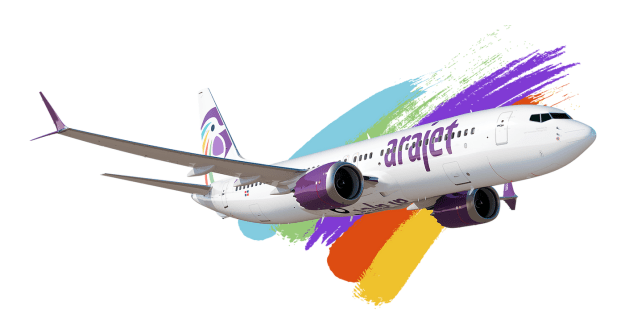
Flycana is getting ready to launch low-fare Boeing 737 MAX operations as Arajet

Dominican Wings (Santo Domingo) was in business from February 5, 2016 until May 15, 2018 when it rebranded as flycana after an ownership change.

The carrier originally targeted 2020 as the start of operations but that was been delayed to 2021, now it is 2022.


flycana has now rebranded again as Arajet due to a possible name conflict with Sky Cana.

According to the new airline, AraJet will be a low-fare airline for travel on direct flights to and from the Dominican Republic. It plans to operate from the second half of 2022.

Now the first Boeing 738-8 MAX 8 (the pictured HI026, msn/ln 60195/8035), namedย  Pico Duarte, has been painted by Boeing at Renton pending delivery.

Above and below copyright photos by Joe G. Walker, reporting from Seattle.

American Airlines and Gol complete agreement to form exclusive partnership

American Airlines has announced it has signed a definitive investment agreement with Gol, Brazilโ€™s largest airline, deepening the relationship between the two carriers to create the broadest and most rewarding network in the Americas. The combined networks will provide customers with more than 30 destinations in the U.S. served by American and more than 34 new destinations in South America served by Gol.

American has served Latin America since 1942 and offers service to 17 destinations in South America, including Sao Paulo (GRU) and Rio de Janeiro (GIG) in Brazil, from its U.S. hubs in Dallas-Fort Worth (DFW), Miami (MIA) and New York (JFK). American has flown more than 14 million customers between the U.S. and Brazil in the last 10 years โ€” more than twice as many as any other U.S. carrier. Gol serves 63 destinations in Brazil and is the countryโ€™s largest airline.

As part of the investment agreement previously announced last year, American will invest $200 million in 22.2 million newly issued preferred shares of Gol in a capital increase, for a 5.2% participation in the companyโ€™s economic interest. The execution of the other agreements described in this press release, and the closing of the equity investment, are subject to certain conditions, including government and regulatory approvals and other customary closing conditions.

Enhanced Joint Loyalty Offering

The largest network in the Americas will also be the most rewarding for travelers. In 2022, GOLโ€™s SMILES and Americanโ€™s AAdvantageยฎ loyalty members will gain access to their status benefits on both airlines, such as priority check-in, priority security, priority boarding, a larger checked baggage allowance, lounge access and preferred seats. The two airlines also expect to offer an enhanced joint loyalty offering to give customers more ways to earn and redeem miles.

Frontier Airlines to buy Spirit Airlines for $6.6 billion

2021 "Spirit Untamed" promotional livery

Frontier Airlines is about to get a lot larger:

Frontier Airlines has agreed to buy Spirit Airlines for $25.83 a share reflecting a cash deal that will be valued at $6.6 billion, including debt.ย 

Spirit equity stockholders will receive 1.9126 shares of Frontier stock plus $2.13 in cash for each Spirit share they own. The transaction represents a 19% premium to Spirit’s closing price on Friday.

Spirit Airlines will be merged into Frontier Airlines.

Frontier Airlines issued this statement:

Spirit Airlines, Inc. and Frontier Group Holdings, Inc., parent company of Frontier Airlines, Inc., today announced a definitive merger agreement under which the companies will combine, creating Americaโ€™s most competitive ultra-low fare airline.

Together, Frontier and Spirit expect to change the industry for the benefit of consumers, bringing more ultra-low fares to more travelers in more destinations across the United States, Latin America and the Caribbean, including major cities as well as underserved communities. The stronger financial profile of the combined company will empower it to accelerate investment in innovation and growth and compete even more aggressively, especially against the dominant โ€œBig Fourโ€1ย airlines, among others.

William A. Franke, the Chair of Frontierโ€™s Board of Directors and the managing partner of Indigo Partners, Frontierโ€™s majority shareholder, noted that Indigo has a long history with both Spirit and Frontier, and is proud to partner with them in creating a disruptive airline. โ€œWe worked jointly with the Board of Directors and senior management team across both carriers to arrive at a combination of two complementary businesses that together will create Americaโ€™s most competitive ultra-low fare airline for the benefit of consumers.โ€

Consumers Win With More Ultra-Low Fares to More Places

The combined airline is expected to:

  • Deliver $1 billion in annual consumer savings.
  • Offer more than 1,000 daily flights to over 145 destinations in 19 countries, across complementary networks.
  • Expand with more than 350 aircraft on order to deliver more ultra-low fares.
  • Increase access to ultra-low fares by adding new routes to underserved communities across the United States, Latin America and the Caribbean.
  • Deliver even more reliable service through a variety of operational efficiencies.
  • Expand frequent flyer and membership offerings.

Team Members Win With Expanded Opportunities and Increased Stability

  • By 2026 Spirit and Frontier expect to add 10,000 direct jobs and thousands of additional jobs at the companiesโ€™ business partners.
  • Given the growth of the combined company, it is expected that all current team members will have an opportunity to be a part of the combined airline.
  • Team Members of the combined airline will have better career opportunities and more stability as part of the most competitive ultra-low fare airline in the United States.

Sustainability Wins With Americaโ€™s Greenest Airline

Frontier and Spirit will be Americaโ€™s Greenest Airline, providing nationwide access to sustainable and affordable air travel. The combined airline will have the youngest, most modern and fuel-efficient fleet in the United States, featuring the largest fleet of A320neo family aircraft of any airline in the country. The combined airline is expected to achieve over 105 seat miles per gallon by 2025.

Shareholders Win With Superior Value Creation

The combination of Spirit and Frontier is expected to deliver enhanced value to shareholders of both companies.

  • On a combined basis, the company would have annual revenues of approximately $5.3 billion based on 2021 results.
  • Once combined, Frontier and Spirit expect to deliver annual run-rate operating synergies of $500 million once full integration is completed, which will be primarily driven by scale efficiencies and procurement savings across the enterprise with approximately $400 million in one-time costs.
  • The combined airline is expected to have a strengthened financial profile, with a cash balance of approximately $2.42ย billion as of the end of 2021 on a combined basis.

Under the terms of the merger agreement, which has been unanimously approved by the boards of directors of both companies, Spirit equity holders will receive 1.9126 shares of Frontier plus $2.13 in cash for each existing Spirit share they own.ย This implies a value of $25.83 per Spirit share at Frontierโ€™s closing stock price of $12.39 on February 4, 2022, representing a premium of 19% over the February 4, 2022, closing price of Spirit, and a 26% premium based on the 30 trading-day volume-weighted average prices of Frontier and Spirit.ย The transaction values Spirit at a fully diluted equity value of $2.9 billion, and a transaction value of $6.6 billion when accounting for the assumption of net debt and operating lease liabilities.

Upon closing of the transaction, existing Frontier equity holders will own approximately 51.5% and existing Spirit equity holders will own approximately 48.5% of the combined airline, on a fully diluted basis, providing both Frontier and Spirit equity holders with substantial upside potential.

Bringing Our Airlines Together โ€“ Governance and Timing to Completion

The Board of Directors for the new airline will be comprised of 12 directors (including the CEO), seven of whom will be named by Frontier and five of whom will be named by Spirit. Mr. Franke will be Chairman of the Board of the combined company.

The merger is expected to close in the second half of 2022, subject to satisfaction of customary closing conditions, including completion of the regulatory review process and approval by Spirit stockholders. Frontierโ€™s controlling stockholder has approved the transaction and related issuance of shares of Frontier common stock upon signing of the merger agreement. The combined companyโ€™s management team, branding and headquarters will be determined by a committee led by Mr. Franke prior to close.

Top Copyright Photo: Spirit Airlines Airbus A320-271N WL N932NK (msn 10008) (Spirit Untamed) BWI (Brian McDonough). Image: 953897.

Frontier Airlines aircraft slide show:

Spirit Airlines aircraft slide show:


Spirit Airlines reports fourth quarter and full year 2021 results

Spirit Airlines, Inc. today reported fourth quarter and full year 2021 financial results.

Ended the year 2021 withย $1.7 billionย of unrestricted cash, cash equivalents, short-term investment securities and liquidity available under the Company’s revolving credit facility.

As Reported

(unaudited)

Fourth Quarter 2021

Fourth Quarter 2020

Fourth Quarter 2019

Total Operating Revenues

$987.6 million

$498.5 million

$969.8 million

Pre-tax Income (Loss)

$(91.8) million

$(204.5) million

$106.8 million

Net Income (Loss)

$(87.2) million

$(157.3) million

$81.2 million

Diluted Earnings (Loss) Per Share

$(0.80)

$(1.61)

$1.18

Adjusted1

Fourth Quarter 2021

Fourth Quarter 2020

Fourth Quarter 2019

Adjusted EBITDA

$14.9 million

$(91.1) million

$187.7 million

Adjusted EBITDA Margin

1.5%

(18.3)%

19.4%

Adjusted Pre-tax Income (Loss)

$(90.3) million

$(207.9) million

$108.0 million

Adjusted Net Income (Loss)

$(69.4) million

$(159.5) million

$82.1 million

Adjusted Net Income (Loss) Per Share, Diluted

$(0.64)

$(1.63)

$1.20

“Our fourth quarter 2021 results came in better-than-expected, despite the negative impact from Omicron-related flight disruptions, primarily due to very strong demand over the peak December holiday period. I want to thank the entire Spirit team for their professionalism and commitment to providing excellent service to our Guests,” saidย Ted Christie, Spirit’s President and Chief Executive Officer.

“Looking ahead to the first quarter 2022, we have seen sequential improvement in bookings since mid-January and early trends indicate travel demand in the second half of the first quarter should be quite strong. Also, today we announced that Spirit and Frontier have signed a definitive merger agreement under which we plan to combine to bring more ultra-low fares to more travelers in more destinations acrossย the United States,ย Latin Americaย and theย Caribbean. We are excited about this combination and believe it will have tremendous benefits for consumers, Team Members, and shareholders.”

COVID-19
Since its initial onset in early 2020, the impact of the COVID-19 pandemic has evolved and continues to be fluid. Therefore, the Company’s financial and operational outlook remains subject to change. The Company continues to monitor the impact of the pandemic on its operations and financial condition, and to adjust its mitigation and operational strategies accordingly. Spirit has implemented measures for the safety of its Guests and Team Members as well as to mitigate the impact of COVID-19 on its financial position and operations. Please see the Company’s Annual Report on Form 10-K for the period endingย December 31, 2021ย for additional disclosures regarding these measures.

The Company believes that providing analysis of financial and operational performance compared to fourth quarter 2019 is a more relevant measure of performance due to the severe impacts from the COVID-19 pandemic on our financial results and operational performance for 2020.

Fourth Quarter 2021 Results
Adjusted EBITDA for the fourth quarter 2021 wasย $14.9 million. The Company had an unusual number of operational disruptions and flight cancellations during the peakย December 2021ย holiday period, due to staffing shortages as a result of the rapid spread of the Omicron variant. The irregular operations during the peakย December 2021ย holiday period negatively impacted fourth quarter 2021 Adjusted EBITDA by approximatelyย $30 million, primarily due to additional passenger re-accommodation expenses and higher labor expenses, partially offset by lower fuel expense and landing fees. Despite this impact, Adjusted EBITDA margin for the fourth quarter 2021 was 1.5 percent, better than the Company’s initial expectations of flat to negative 5 percent.

Capacity and Operations
Load factor for the fourth quarter 2021 was 79.8 percent on a 9.5 percent capacity increase versus fourth quarter 2019. Spirit’s fourth quarter 2021 DOT on-time performance2ย was 78.1 percent and its Completion Factor2ย was 97.7 percent.

The Company’s operations stabilized during the first week ofย January 2022ย and for the full month ofย January 2022, the Company’s on-time performance2ย was 73.8% and Completion Factor2ย was 96.5%.

Revenue Performanceย ย 
Total operating revenues for the fourth quarter 2021 came in better than expected atย $987.6 million, an increase of 1.8 percent versus fourth quarter 2019. The irregular operations over the peakย December 2021ย holiday period negatively impacted total operating revenues by approximatelyย $7 million.

On a per passenger flight segment basis, for the fourth quarter 2021 total revenue per passenger flight segment (“Segment”) increased 3.1 percent compared to the same period in 2019 toย $114.15. Fare revenue per Segment increased 0.5 percent toย $52.93ย and Non-ticket revenue per Segment increased 5.5 percent toย $61.223. Investments in enhanced product offerings and improved merchandising as well as the realized benefits from revenue management initiatives continue to drive the improvement in Non-Ticket revenue performance.

Cost Performance
Compared to the fourth quarter 2019, total GAAP operating expenses for the fourth quarter 2021 increased 24.1 percent toย $1,049.1 million. Adjusted operating expenses for the fourth quarter 2021 increased 24.7 percent compared to the fourth quarter 2019 toย $1,047.6 million4. Compared to the fourth quarter 2019, in addition to costs driven by increased flight volume and a greater number of aircraft, these increases were primarily driven by passenger re-accommodation expense incurred as a result of the irregular operations over the peakย December 2021ย holiday period and rate increases related to fuel, labor, and airport rents.

For the fourth quarter 2021, the Company’s adjusted operating expenses came in better than expected as the net costs related to the December irregular operations were more than offset by lower average fuel rates, lower airport costs, and overall effective cost management.

“Our Adjusted EBITDA margin for the fourth quarter 2021 was 1.5 percent, 400 basis points better than the mid-point of our guide on higher revenue and lower costs,” saidย Scott Haralson, Spirit’s Chief Financial Officer. “Over the next year we will leverage opportunities to restore and optimize our network and we will continue to push the horizon on non-ticket production. We will also remain keenly focused on managing costs and finding efficiencies to offset inflationary cost headwinds we face.”

Fleet
Spirit took delivery of five new A320neo aircraft during the fourth quarter 2021. The Company ended the year with 173 aircraft in its fleet.

Liquidity and Capital Deployment
Spirit ended fourth quarter 2021 with unrestricted cash, cash equivalents, short-term investment securities and liquidity available under the Company’s revolving credit facility ofย $1.7 billion.

Total capital expenditures for the twelve months endedย December 31, 2021ย wereย $333.1 million, primarily related to pre-delivery deposits associated with future aircraft deliveries and the purchase of four aircraft and two engines off lease, and twoย spare engines purchased with cash. In addition, one of the three aircraft delivered under sale-leaseback transactions during the fourth quarter 2021 did not qualify to be accounted for as a sale-leaseback; therefore, it is being accounted for as an aircraft financed through fixed-rate long-term debt. The net purchase price of this aircraft was recorded within capital expenditures in the fourth quarter 2021.

SmartLynx Airlines to become a new Boeing 737 MAX operator

SmartLynx Airlines has announced it will become a Boeing customer again:

The beginning of 2022 marks a significant milestone in SmartLynx Airlinesโ€™ expansion. The leading ACMI and charter operator has signed an agreement with SMBC Aviation Capital to lease two Boeing 737 MAX 8 aircraft to meet growing demand from European and overseas markets. This deal launches a successful partnership between the airline and one of the biggest global lessors, with deliveries of the aircraft to SmartLynx Airlines already being underway.ย 

Such strategic expansion into the Boeing aircraft family will allow SmartLynx Airlines to build a reliable fleet that will ensure the provision of even greater and more versatile products and services. Additionally, the longer range of the Boeing 737 MAX 8 opens new market opportunities for SmartLynx Airlines and its customers.

SMBC Aviation Capital is one of the worldโ€™s leading aircraft operating lease companies and will be the first lessor to support SmartLynx with 737 MAX 8 type aircraft.

The first two 737 MAX 8 units will be introduced to the SmartLynx fleet in April, with further type additions planned later in the Summer, 2022. To ensure successful deliveries, SmartLynx has also entered into a partnership with Boeing, which will support airline throughout the whole entry into the service process. ย 

The 737 MAX 8 will be the first returning Boeing aircraft to be operated by SmartLynx Airlines after a decade long break.ย 

A recruitment campaign has already been launched to source suitably qualified crews for the newly leased aircraft.


SAS in January reports a 170% increase in traffic compared to the same month last year

In January 760,000 passengers traveled with SAS, an increase of 170% compared to the same month last year. SASโ€™ capacity also increased by approximately 170% compared with the same period last year. In comparison with last month, the total number of passengers decreased with almost 25% and capacity was reduced by almost 10%. The flown load factor for January was 49%, an improvement of 19 percentage points compared to January last year.

โ€œIt will come as no surprise that Omicron had an impact on customer demand during the month, with additional travel restrictions being imposed on our core markets. The overall operational environment was also negatively affected due to increased sickness rates. Winter is in general a slower season and the industry still faces uncertainties regarding the development of the pandemic and SAS must continue to respond to changes in demand. However, our longer-term outlook is that we see the demand for travel increase as restrictions ease,” says Anko van der Werff, President & CEO of SAS.

SAS scheduled traffic Jan21 Change1 Nov21-ย Jan22 Change1
ASK (Mill.) 2,063 157.6% 6,745 145.4%
RPK (Mill.) 982 309.8% 3,712 361.5%
Passenger load factor 47.6% ย ย ย ย ย ย ย  17.7pp 55.0% ย 25.8 pp
No. of passengers (000) 724 158.5% 3,010 201.5%
Geographical development, schedule Jan22ย ย ย ย ย ย ย ย ย ย  vs.ย ย ย ย ย ย ย ย ย  Jan21 Nov21-ย Jan22ย ย ย vs.ย ย  Nov20-Jan21
RPK ASK RPK ASK
Intercontinental 944.5% 207.6% 989.0% 179.2%
Europe/Intrascandinavia 361.6% 262.4% 497.2% 292.5%
Domestic 84.0% 35.7% 102.4% 23.4%
SAS charter traffic Jan22 Change1 Nov21-ย Jan22 Change1
ASK (Mill.) 151 2,088.6% 327 1,492.0%
RPK (Mill.) 103 3,723.5% 241 2,975.5%
Load factor 68.0% 29.1 pp 73.6% 35.5 pp
No. of passengers (000) 34 4,704.1% 72 3,200.8%
SAS total traffic (scheduled and charter) Jan22 Change1 Nov21-ย Jan22 Change1
ASK (Mill.) 2,214 174.1% 7,072 155.4%
RPK (Mill.) 1,085 347.7% 3,953 386.8%
Load factor 49.0% 19.0 pp 55.9% 26.6 pp
No. of passengers (000) 758 169.9% 3,082 208.0%

1ย Change compared to same period last year, p p = percentage points

Preliminary yield and PASK Jan22 Nominal change1 FX adjusted change
Yield, SEK 0.85 -29.1% -27.4%
PASK, SEK 0.40 12.8% 15.5%
Jan22
Punctuality (arrival 15 min) 75.2%
Regularity 97.1%
Change in total CO2ย emissions 35.2%
Change in CO2ย emissions per available seat kilometer, -8.9%
Carbon offsetting of passenger related emissions 42.8%

Definitions:

RPK โ€“ Revenue passenger kilometers

ASK โ€“ Available seat kilometers
Load factor โ€“ RPK/ASK
Yield โ€“ Passenger revenues/RPK (scheduled)

PASK โ€“ Passenger revenues/ASK (scheduled)

Change in CO2ย emissions per available seat kilometers โ€“ SAS passenger related carbon emissions divided with total available seat kilometers (incl non-revenue and EuroBonus tickets), rolling 12 months vs rolling 12 months previous year

Carbonย offsettingย ofย passengerย relatedย emissions โ€“ Share of SAS passenger related carbon emissions compensated by SAS (EuroBonus members, youth tickets and SAS’ staff travel) during the month

From fiscal year 2020 we report change in CO2ย emissions in total and per Available Seat Kilometers (ASK) to align with our overall goal to reduce our total CO2ย emissions by 25% by 2025, compared to 2005.

easyJet adopts SkyBreatheยฎ 360ยฐ eco-flying platform to reduce CO2 emissions

easyJet has chosen SkyBreatheยฎ, an advanced eco-flying solution to reduce the fuel burn and thus CO2 emissions of their fleet, as part of their ambition to reduce their carbon footprint from flying acrossย Europe.

Most aviation emissions come from fuel consumption and the resulting carbon emissions. SkyBreatheยฎ is an innovative eco-flying solution developed by OpenAirlines. It is based on Cloud, Artificial Intelligence and Big Data and enables airlines to save fuel and reduce their carbon footprint by up to 5%.

Under the agreement, the fuel management software will automatically collect and analyze the data from the 300+ aircraft operated by easyJet and combine them with data from other sources, including payload, weather conditions, maintenance, flight paths, and Air Traffic Control.

The solution will identify the most relevant fuel saving opportunities and generate actionable insights shared with all stakeholders through synthetic and easy-to-read dashboards. Based on this information, the airline will benefit from a thorough understanding of its operations. The solution allows for the implementation of the most efficient procedures on the ground (pushback, taxi, takeoff, turnaround, etc.) and during flight (climb, cruise, approach, landing, etc.) to maximize carbon reduction.

QANTAS has announced it will add Broken Hill to its domestic route network

QANTAS Airways made this announcement:

Qantas has announced it will add Broken Hill to its domestic route network for the first time, with the airline to begin direct flights from Sydney.

From April 8, 2022, Qantas will operate two weekly return flights between Sydney and Broken Hill with its 50-seat Q300 aircraft.