Tag Archives: Airbus A380-861

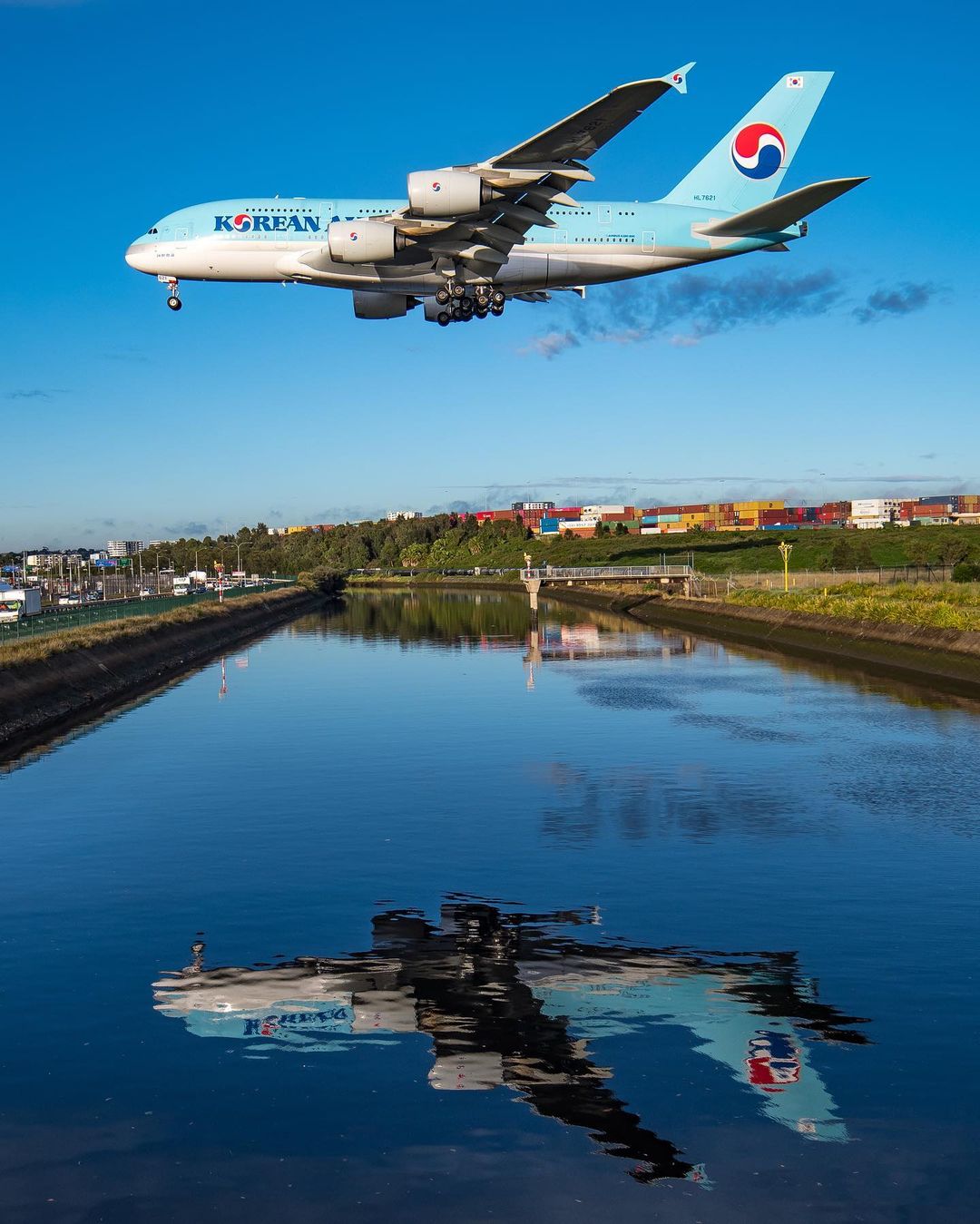
Korean Air plans to retire its Airbus A380s in five years and Boeing 747-8s in 10 years

Korean Air Airbus A380-861 HL7619 (msn 096) LHR (SPA). Image: 954739.

Korean Air’s Airbus A380 fleet is mostly parked since the entire fleet was grounded on March 9, 2020 due to COVID-19. At least one aircraft appears to be operating currently. The airline hopes to get the full A380 fleet back in the air when the traffic returns.

The CEO in an interview with FlightGlobal stated the ultimate goal is to retire the 10 A380-800s by 2026.
Image

Additionally the 10 Boeing 747-8 Intercontinental aircraft should also be retired by 2031.

The carrier is adding new Boeing 787 Dreamliners to replace these two types.

On a related subject, the airline previously made this announcement about its Boeing 747-400s:

Korean Air has recently commenced a joint research project with Seoul National University, which was commissioned by the Republic of Korea Air Force, to develop the feasibility of using large commercial aircraft for air launching.

As part of the joint research, Korean Air will analyze the Boeing 747-400โ€™s current technology capability, major technology to be applied, annual operating costs, and necessary aircraft modification for air launching. The airline will further explore ways to commercialize the modified aircraft in the market.

Until now, it was not possible to develop projectiles that launch in the air due to the Korea-U.S. โ€œguidelinesโ€ that restricted the range of Koreaโ€™s ballistic-missiles. However, with the termination of these regulations in May 2021, the development and operation of an air launch system is now possible.

This research is especially meaningful as air launching capabilities will help Korea to overcome its geographical limitations. Currently, satellites can only be launched southward from Naro Space Center, Koreaโ€™s spaceport located in the southwest province. However, air launch vehicles can be launched in various directions and routes. Air launch vehicles are launched at altitudes of 12 km, making them less affected by weather conditions, which are a common drawback of ground launches.

In addition, air launching cuts the cost of building and maintaining a site to launch vehicles. There is also the possibility to generate revenues by providing services to other countries that do not have their own launch site.

For this reason, some countries have already been utilizing commercial aircraft for air launches. LauncherOne, an orbital launch vehicle developed by Virgin Orbit in the U.S, was successfully launched using a modified Boeing 747-400 in January and June 2021.

While the military, government and companies scramble to announce plans to utilize small satellite constellations in the โ€œnew space age,โ€ an environment to launch small satellites in Korea has not been established yet. Therefore, it is inevitable to use overseas projectiles, which take more than two years on average from the signing of the contract to the actual launch. This is the reason why the development of air launching capabilities must be prioritized.

“To attract the fast-growing, worldwide demand for small satellite launches, it is essential to develop capabilities for air launching, which is not affected by weather or geographical conditions,โ€ said Korean Air. โ€œWe will use our extensive experience operating aircraft and expertise in the aerospace business, which includes aircraft system integration and assembling Koreaโ€™s first space launch vehicle, Naro, to develop an air launch system that is competitive in the global market.โ€

Top Copyright Photo: Korean Air Airbus A380-861 HL7619 (msn 096) LHR (SPA). Image: 954739.

Korean Air aircraft slide show:


Emirates and Dubai Health Authority implements digital verification of COVID-19 medical records

"Choose to Vaccinate" special logo

Emirates and the Dubai Health Authority (DHA) have begun to implement full digital verification of COVID-19 medical records connected to testing and vaccination for travelers based in the UAE.

Emirates customers who have undertaken a PCR test in Dubai can choose to check-in without presenting their physical COVID-19 PCR test report. Moreover, customers who have received their COVID-19 vaccination at a DHA health center in Dubai can, together with their COVID-19 PCR test results, have their documents synchronized during flight check-in. The new streamlined verification procedures will enable secure and faster processing times for customers departing from Dubai International Airport. The information will then be matched-up with the entry requirements of the destination.

Emirates will only process the relevant information specifically related to the COVID-19 entry requirements of the customer’s destination. Once check-in formalities are completed, information related to COVID-19 medical records will be immediately discarded from the Emirates systems.

The integration comes less than two months after the signing of the MoU between Emirates and the Dubai Health Authority, and is a first-of-its-kind agreement between an airline and a government health authority. The integration also makes Dubai one of the first cities in the world to implement full digital verification of traveler medical records related to COVID-19 testing and vaccination.

Emirates’ collaboration with the Dubai Health Authority is another way to provide customers with a streamlined experience and meet current travel requirements, making travel safe and convenient. Emirates is one of the airlines that has introduced best business practices and applications to reenergize and stimulate international travel. In the coming months, the next phase of digital verification will see secure integration of health records within the IATA Travel Pass as another option to help facilitate travel for passengers.

Customers who have done PCR testing or vaccinations outside of Dubai will be required to physically provide their travel documents at check-in. Some destination countries require travelers to carry physical documents when traveling. Customers are encouraged to check the latest entry requirements for their destination by visiting: www.emirates.com/help/covid-19/travel-requirements-by-destination/.

Top Copyright Photo: Emirates Airline Airbus A380-861 A6-EVN (msn 267) (Choose to Vaccinate) CDG (Manuel Negrerie). Image: 953444.

Emirates aircraft slide show:

BEA Report: Accident to the Airbus A380-861 registered F-HPJE and operated by Air France on September 30, 2017 en route over Greenland

BEA has issued this incident report:

On Saturday, September 30, 2017, the Airbus A380-861 operated by Air France, was carrying out scheduled flight AF066 from Paris (France) to Los Angeles (USA). It took off at 09:50. At 13:49, while the crew were changing en-route flight level, they heard an explosion and observed asymmetric thrust from the right side of the aeroplane, immediately followed by severe vibrations. The โ€œENG 4 STALLโ€ and then the โ€œENG 4 FAILโ€ messages nearly simultaneously appeared on the ECAM. The crew diverted to Goose Bay airport (Canada) where they landed at 15:42 without any further incident.

A visual examination of the engine found that the fan, first rotating assembly at the front of the engine, along with the air inlet and fan case had separated in flight leading to slight damage to the surrounding structure of the aircraft.

The factors likely to have contributed to the accident include:

  • engine designerโ€™s/manufacturerโ€™s lack of knowledge of the cold dwell fatigue phenomenon in the titanium alloy, Ti-6-4;
  • absence of instructions from the certification bodies about taking into account macro-zones (i.e. colony of similarly oriented alpha grains) and the cold dwell fatigue phenomenon in the critical parts of an engine, when demonstrating conformity;
  • absence of non-destructive means to detect the presence of unusual macro?zones in titanium alloy parts;
  • an increase in the risk of having large macro-zones with increased intensity in large Ti-6-4 forgings due to bigger engines, and in particular, bigger fans.

After the accident, regular inspections of the fleet in service found that there were no cracks detected in the areas considered at risk on the fan hubs of the Engine Alliance engines equipping the A380. The certification bodies and engine manufacturers are currently considering how to better understand the cold dwell fatigue phenomenon and take it into account in the design of future engines.

Air France Airbus A380-861 F-HPJE (msn 052) MIA (Bruce Drum). Image: 105408.

Copyright Photo: Air France Airbus A380-861 F-HPJE (msn 052) MIA (Bruce Drum). Image: 105408.


Air France bids farewell to the last Air France A380 flight

Air France Airbus A380-861 F-HPJH (msn 099) LAX (Michael B. Ing). Image: 946095.

Air France today operated a special local flight in France for invited guests from Paris (CDG) of the Airbus A380. Although not a revenue flight, the airline is touting the special flight as a final salute and flight of the AF Airbus A380:

72 meters long, 24 meters high and with a wingspan of 79 meters, the A380 bids its final farewell, 11 years after its first flight sporting the Air France colors.

Friday, June 26, 2020, 11 years after its flight flight sporting the Air France colors, the A380 bids a final farewell during its last flight from Paris-Charles de Gaulle Airport. Bye-bye big bird!

Note: The special flight departed and arrived back at CDG Airport after a trip to the south of France. It was operated with the pictured F-HPJH.

Top Copyright Photo: Air France Airbus A380-861 F-HPJH (msn 099) LAX (Michael B. Ing). Image: 946095.

Video:

For the record, the actual last regular A380 revenue flight was flight AF995 between Johannesburg and Paris (CDG) on March 24, 2020 with F-HPJF.

Air France slide show:

https://airlinersgallery.smugmug.com/frame/slideshow?key=rDrBLs&autoStart=1&captions=1&navigation=1&playButton=1&randomize=1&speed=3&transition=fade&transitionSpeed=2

Emirates retires its first Airbus A380

Emirates Airline Airbus A380-861 A6-EDB (msn 013) LHR (David Apps). Image: 901468.

Emirates has retired its first Airbus A380.

A6-EDB performed its last revenue flight on February 23, 2020 from Muscat to the Dubai hub. It has been in storage since then.

A6-EDB was delivered on October 24, 2008.

Top Copyright Photo: Emirates Airline Airbus A380-861 A6-EDB (msn 013) LHR (David Apps). Image: 901468.

Emirates aircraft slide show:

x

Air France retires its Airbus A380 fleet

Type Retired: March 24, 2020 (flight AF995 JNB-CDG with F-HPJF)

Air France today made this announcement concerning its nine stored Airbus A380-800s:

In the context of the current COVID-19 crisis and its impact on anticipated activity levels, the Air France-KLM Group announces on May 20, 2020 the definitive end of Air France Airbus A380 operations.

Initially scheduled by the end of 2022, the phase-out of Airbus A380 fleet fits in the Air France-KLM Group fleet simplification strategy of making the fleet more competitive, by continuing its transformation with more modern, high-performance aircraft with a significantly reduced environmental footprint.

Five of the Airbus A380 aircraft in the current fleet are owned by Air France or on finance lease, while four are on operating lease. The global impact of the Airbus A380 phase-out write down is estimated at 500 million euros and will be booked in the second quarter of 2020 as a non-current cost/expenses.

Airbus A380 will be replaced by new generation aircraft, including Airbus A350 and Boeing 787, whose deliveries are ongoing.

Note for the record: The pictured F-HPJF (top) operated the last revenue flight (AF995 JNB-CDG) on March 24, 2020. The fleet has been in storage since then.

Top Copyright Photo: Air France Airbus A380-861 F-HPJF (msn 064) YUL (Ken Petersen). Image: 908293.

Air France aircraft slide show:

Emirates Group announces half-year performance for 2019-20, with AED 1.2 billion profit, 7.9% increase in passengers carried to Dubai

Emirates Airline Airbus A380-861 A6-EUA (msn 211) AMS (Ton Jochems). Image: 948121.

Emirates Group has issued this statement:

The Emirates Group has announced its half-year results for its 2019-20 financial year.

Groupย revenueย was AED 53.3 billion (US$ 14.5 billion) for the first six months of 2019-20, down 2% from AED 54.4 billion (US$ 14.8 billion) during the same period last year. This slight revenue decline was mainly due to planned capacity reductions during the 45-day Southern Runway closure at Dubai International airport (DXB), and unfavourable currency movements in Europe, Australia, South Africa, India, and Pakistan.

Profitability was up 8% compared to the same period last year, with the Group reporting a 2019-20 half-yearย net profitย of AED 1.2 billion (US$ 320 million). The profit improvement was primarily due to the decline in fuel prices of 9% compared to the same period last year, however the gain from lower fuel costs were partially offset by negative currency movements.

The Groupโ€™sย cash positionย on 30th September 2019 stood at AED 23.0 billion (US$ 6.3 billion), compared to AED 22.2 billion (US$ 6.0 billion) as at 31stย March 2019.

  • Group:ย Revenue down 2% to AED 53.3 billion (US$ 14.5 billion), and profit of AED 1.2 billion (US$ 320 million), up 8%. Results impacted by Dubai International Airport (DXB) runway closure, decline in fuel cost, unfavourable currency movements, and bankruptcy of Thomas Cook.
  • Emirates:ย Revenue down 3% to AED 47.3 billion (US$ 12.9 billion), and profit increase of 282% to AED 862 million (US$ 235 million). Improved seat load factor of 81.1%, up 2.3%pts, with 29.6 million passengers carried. Dubaiโ€™s strong attraction as a destination sees the airline carrying 7.9% more customers to its hub city compared to same period last year.
โ€œ
His Highness (HH) Sheikh Ahmed bin Saeed Al Maktoum, Chairman and Chief Executive, Emirates Airline and Group

“The Emirates Group delivered a steady and positive performance in the first half of 2019-20, by adapting our strategies to navigate the tough trading conditions and social-political uncertainty in many markets around the world. Both Emirates and dnata worked hard to minimise the impact of the planned runway renovations at DXB on our business and on our customers. We also kept a tight rein on controllable costs and continued to drive efficiency improvement, while ensuring that our resources were deployed nimbly to capitalise on areas of opportunity.

โ€œThe lower fuel cost was a welcome respite as we saw our fuel bill drop by AED 2.0 billion compared to the same period last year. However, unfavourable currency movements wiped off approximately AED 1.2 billion from our profits.

โ€œThe global outlook is difficult to predict, but we expect the airline and travel industry to continue facing headwinds over the next six months with stiff competition adding downward pressure on margins. As a Group we remain focussed on developing our business, and we will continue to invest in new capabilities that empower our people, and enable us to offer even better products, services, and experiences for our customers.โ€

His Highness (HH) Sheikh Ahmed bin Saeed Al Maktoum, Chairman and Chief Executive, Emirates Airline and Group

The Emirates Groupโ€™s employee base remained unchanged compared to 31 March 2019, at an overall average staff count of 105,315. This is in line with the companyโ€™s planned capacity and business activities, and also reflects the various internal programmes to improve efficiency through the implementation of new technology and workflows.

Emirates airline

During the first six months of 2019-20, Emirates received 3 Airbus A380s, with 3 more new aircraft scheduled to be delivered before the end of the 2019-20 financial year. It also retired 6 older aircraft from its fleet with a further 2 to be returned by 31 March 2020. The airlineโ€™s long-standing strategy to invest in the most advanced wide-body aircraft enables it to improve overall efficiency, minimise its emissions footprint, and provide high quality customer experiences.

Emirates continues to offer ever better connections for its customers across the globe with just one stop in Dubai. In the first six months of its financial year, Emirates added two new passenger routes: Dubai-Bangkok-Phnom Penh, and Dubai-Porto (Portugal). As of 30 September, Emiratesโ€™ global network spanned 158 destinations in 84 countries. Its fleet stood at 267 aircraft including freighters.

Emirates also further developed its partnership with flydubai. Both airlines continued to leverage their complementary networks to optimise flight schedules and offer new city-pair connections through Dubai, as well as open new routes including Naples (Italy) and Tashkent (Uzbekistan) in the first half of 2019-20. Customers also enjoy even more benefits with a single loyalty programme under Emirates Skywards, and passengers connecting between Emirates and flydubai can experience seamless transits with 22 flydubai flights now operating from Emirates Terminal 3 at DXB.

Overall capacityย during the first six months of the year declined by 7% to 29.7 billion Available Tonne Kilometres (ATKM) mainly due to the DXB runway closure and reduction in fleet during this 45-day period.ย Capacityย measured in Available Seat Kilometres (ASKM), shrunk by 5%, whilstย passenger trafficย carried measured in Revenue Passenger Kilometres (RPKM) was down by 2% with averageย Passenger Seat Factorย rising to 81.1%, compared with last yearโ€™s 78.8%.

Emirates carried 29.6 million passengers between 1 April and 30 September 2019, down 2% from the same period last year, however, passenger yield increased by 1% period-on-period. The volume of cargo uplifted at 1.2 million tonnes has decreased by 8% while yield declined by 3%. This reflects the tough business environment for air freight in the context of global trade tensions and unrest in some key cargo markets.

In the first half of the 2019-20 financial year,ย Emirates net profitย was AED 862 million (US$ 235 million), up 282%, compared to last year. Emiratesย revenue, including other operating income, of AED 47.3 billion (US$ 12.9 billion) was down 3% compared with the AED 48.9 billion (US$ 13.3 billion) recorded during the same period last year. This result was driven by increased agility in capacity deployment, with healthy customer demand for Emiratesโ€™ products driving improved seat load factors and better margins.

Emirates operating costs shrunk by 8% against the overall capacity decrease of 7%. On average, fuel costs were 13% lower compared to the same period last year, this was largely due to a decrease in oil prices (down 9% compared to same period last year), as well as a lower fuel uplift due to reduced capacity during 45-day runway closure at DXB. Fuel remained the largest component of the airlineโ€™s cost, accounting for 32% of operating costs compared with 33% in the first six months of last year.

Top Copyright Photo: Emirates Airline Airbus A380-861 A6-EUA (msn 211) AMS (Ton Jochems). Image: 948121.

Emirates aircraft slide show:

Air France to bring the Airbus A380 to Atlanta

Air France Airbus A380-861 F-HPJH (msn 099) LAX (Michael B. Ing). Image: 946095.

Air France on March 31ย will be launching La Premiรจre service on its Paris-Charles de Gaulle โ€“ Atlanta route for the first time ever.

Air France is the first airline to offer a La Premiรจre service to Europe from Atlanta and the only airline to operate A380 from Atlanta Delta hub with four cabins. In the La Premiรจre cabin, passengers receive a tailored personalized service from Air France staff at all times. Whatever you need during your flight, we will be ready at hand.

Together with their partner Delta, Air France brings opportunity to discover the La Premiรจre experience from more than 150 cities via Atlanta to Europe, the Middle East and Africa. With Atlanta, Georgia, La Premiรจre is now available from seven gateways in the U.S.

Video:

SERVICE ON BOARD

In the Laย Premiรจre cabin, you will receive a tailored personalized service from our staff at all times. Whatever you need during your flight, we will be ready at hand.

Once you arrive on board, the crew will introduce themselves to you. Next, you will be welcomed into the Laย Premiรจre cabin where every feature emanates sophistication and style: soft leather, suede, textile fabrics with a tweed trim, subtle wood and metallic finishesโ€ฆ In your private space, each detail is designed for your pleasure, so you can enjoy your flight in pure comfort and tranquility.

YOUR OWN PERSONALIZED LIVING SPACE

In the Laย Premiรจre suite, you are free to orchestrate your trip in whichever way you see fit. Move around in the cabin or enjoy some privacy, as you please. Make yourself at home in the sky, with a range of services available to you, including an individual cloakroom, storage space, and a bedside lamp. And if you’re traveling with someone else, feel free to invite him or her to join you at your large table by taking a seat on an elegant and comfortable ottoman.
Book a flight in the Laย Premiรจre cabin

YOUR SEAT, YOUR BED

In your private suite, you can sleep soundly. Your comfortable upright seat transforms into a bed measuring 2ย mย / 6.5ย ft in length and 77ย cmย / 30ย in in width*. It has a memory foam mattress, a pillow and a large fluffy duvet. This way, you are sure to enjoy a full night’s sleep in hotel-standard comfort.

*ย On board the A380 aircraft, your upright seat transforms into a full-size bed measuring 2ย mย / 6.5ย ft in length and 60ย cmย / 24ย in in width.

Discover the Laย Premiรจre accessories

GREAT ENTERTAINMENT, AT YOUR FINGERTIPS

From the moment you board the aircraft to the moment you land, you are in control of a complete, latest-generation entertainment system. The intuitive touchscreen interface and remote control exists in 12ย languages.

Movies, games, TV shows, documentaries, music, relaxation videosโ€ฆ Enjoy 1,000ย hours of on-demand entertainment and browse through our catalog of items for sale on board. Feature movies are available in HD, transforming your 24-inch screen into a veritable movie theaterโ€ฆ

On board the A380 aircraft, your 10.4-inch interactive screen gives you access to a varied program of on-demand video.

Find out more about comfort on board the A380

STEP INSIDE THE LAย PREMIรˆRE CABIN

Enter and explore the Laย Premiรจre environment thanks to our virtual tour platform. Discover this exceptionally designed space and let us delight you with our Laย Premiรจre experience.


Top Copyright Photo: Air France Airbus A380-861 F-HPJH (msn 099) LAX (Michael B. Ing). Image: 946095.

Air France aircraft slide show:

Qatar Airways to start phasing out its 10 Airbus A380s in 2024

Type to be phased out starting in 2024

Qatar Airways’ CEO Akbar al-Baker stated at the ITB Travel Fair in Berlin it will start phasing out its Airbus A380s in 2024 when the type is 10 years old. The airline currently operates 10 of the type.

Top Copyright Photo (all others by the airline): Qatar Airways Airbus A380-861 A7-APH (msn 197) LHR (SPA). Image: 941161.

Qatar Airways aircraft slide show:

x

Airbus and Emirates reach agreement on A380, sign new wide body orders – A380 production to end in 2021

Emirates Airline Airbus A380-861 A6-EOG (msn 172) (Year of Zayed 2018) LAX (Michael B. Ing). Image: 945699.

Airbus has made this announcement:

Following a review of its operations, and in light of developments in aircraft and engine technologies, Emirates is reducing its A380 orderbook from 162 to 123 aircraft. Emirates will take delivery of 14 further A380s over the next two years. As a consequence and given the lack of order backlog with other airlines, Airbus will cease deliveries of the A380ย  in 2021.

Emirates has also decided to continue growing with Airbusโ€™ newest generation, flexible wide body aircraft, ordering 40 A330-900 (above) and 30 A350-900 aircraft (below).

โ€œAs a result of this decision we have no substantial A380 backlog and hence no basis to sustain production, despite all our sales efforts with other airlines in recent years. This leads to the end of A380 deliveries in 2021,โ€ said Airbus Chief Executive Officer Tom Enders.ย โ€œThe consequences of this decision are largely embedded in our 2018 full year resultsโ€.

Airbus will start discussions with its social partners in the next few weeks regarding the 3,000 to 3,500 positions potentially impacted over the next three years. However, the ongoing A320 ramp-up and the new widebody order from Emirates Airline will offer a significant number of internal mobility opportunities.

In addition, Emirates made this announcement:

Emirates airline today announced an order for 40 A330-900 aircraft, and 30 A350-900 aircraft, in a heads of agreement signed with Airbus. The deal is worth US$21.4 billion at list prices.

The latest generation Airbus A330neo and A350 aircraft, will be delivered to Emirates starting from 2021 and 2024 respectively.

In addition, Airbus and Emirates reached an agreement on outstanding A380 deliveries. The airline will receive 14 more A380s from 2019 until the end of 2021, taking its total A380 order book to 123 units.

Commenting on the agreement on A380 deliveries, His Highness Sheikh Ahmed bin Saeed Al Maktoum, Chairman and Chief Executive, Emirates Airline and Group, said: โ€œAfter many months of discussions, we have come to an agreement with Airbus and Rolls-Royce.

โ€œEmirates has been a staunch supporter of the A380 since its very inception. While we are disappointed to have to give up our order, and sad that the program could not be sustained, we accept that this is the reality of the situation. For us, the A380 is a wonderful aircraft loved by our customers and our crew. It is a differentiator for Emirates. We have shown how people can truly fly better on the A380, and Emirates has set the standards for that by introducing customer experiences that are unique to the A380 like our Shower Spas and Onboard Lounge. The A380 will remain a pillar of our fleet well into the 2030s, and as we have always done, Emirates will continue to invest in our onboard product and services so our customers can be assured that the Emirates A380 experience will always be top-notch.

On the decision to purchase A330neos and A350s, HH Sheikh Ahmed said: โ€œEmiratesโ€™ fleet strategy to operate a young, modern, and efficient all-wide body fleet remains unchanged.ย  The 40 A330neos and 30 A350s that we are ordering today will complement Emiratesโ€™ fleet mix, support our network growth, and give us more flexibility to better serve seasonal or opportunistic demand. Both the A330neos and A350s will play an important role in our future fleet and network plans.โ€

The A330neos will be deployed on Emiratesโ€™ regional destinations, and also enable the airline to serve smaller airports and thereby open new routes and connectivity for its global network. The A350s will supplement Emiratesโ€™ long-haul operations, providing the carrier with added flexibility in terms of capacity deployment on 8 to 12 hour missions from its Dubai hub.

Top Copyright Photo (all others by Airbus):ย Emirates Airline Airbus A380-861 A6-EOG (msn 172) (Year of Zayed 2018) LAX (Michael B. Ing). Image: 945699.

Emirates aircraft slide show:

x