Tag Archives: Jetstar Airways

QANTAS Group reports a first half loss, attacks ownership of Virgin Australia, tough decisions ahead to reduce costs

QANTAS Group (Sydney) (QANTAS Airways and Jetstar Airways) today issued its first half financial report:

QANTAS announced an Underlying PBT loss of A$252 million ($225.1 million USD) and a Statutory Loss After Tax of A$235 million ($209.9 million USD) for the six months ending on December 31, 2013.

The underlying result is in line with guidance and reflects fundamental changes in the Australian aviation market, with a significant deterioration in earnings during the half.

Chief Executive Officer Alan Joyce said the result was unacceptable and comprehensive action would be taken in response.

โ€œWe are facing some of the toughest conditions QANTAS has ever seen,โ€ Mr Joyce said.

โ€œAustralia has been hit by a giant wave of international airline capacity, with a 46 per cent increase in competitor capacity since 2009 โ€“ more than double the global increase of 21 per cent over the same period.

โ€œThe Australian domestic market has been distorted by current Australian aviation policy, which allows Virgin Australia to be majority-owned by three foreign government-backed airlines and yet retain access to Australian bilateral flying rights.

โ€œLate last year, these three foreign-airline shareholders invested more than $300 million in Virgin Australia at a time when, as Virgin Australia reported to the ASX on February 6, it was losing money. That capital injection has supported continued domestic capacity growth by Virgin Australia despite its growing losses.

โ€œQANTAS has been undertaking its biggest ever transformation over the past four years, cutting comparable unit costs by 19 per cent over four years, but this is not enough for the circumstances we face now.

โ€œWith structural economic changes being exacerbated by the uneven playing field in domestic aviation, we must now take actions that are unprecedented in scope and depth.

โ€œWe will accelerate our QANTAS Transformation program to achieve $2 billion in cost reductions by FY17. Hard decisions will be necessary to overcome the challenges we face and build a stronger business.โ€

Summary of Results

QANTAS Domestic

QANTAS Domestic reported Underlying EBIT1 of A$57 million, down from A$218 million in 1H13.

Competitor capacity growth in the domestic market continued to outpace QANTAS Group capacity growth, as it has since FY12. At the same time, demand was lower than market growth, putting pressure on yields and passenger loads.

Overall, the total domestic profit pool has shrunk from more than $700 million in FY12 to less than $100 million in 1H14. During this period the Virgin Australia Group added 4.5 billion Available Seat Kilometers (ASKs), compared to 4.3 billion ASKs added by the QANTAS Group.

A softening resources market, corporate account pricing pressure, and fuel and foreign exchange impacts also affected the QANTAS Domestic result.

Despite the challenging market conditions, QANTAS Domestic continues to deliver outstanding service, earning record customer advocacy. It was the most punctual major domestic airline in 12 out of 12 months during 2013, while its ongoing fleet renewal program helped reduce unit costs and improve the customer experience.

QANTAS Domestic remains the airline of choice for business travellers, holding more than 80 per cent of the corporate market by revenue in the half.

QANTAS International

Qantas International reported an Underlying EBIT loss of A$262 million, compared with a loss of A$91 million in 1H13.

The trend of intense competitor capacity growth in the Australian international market continued in the half. Total international market capacity growth for FY14 is expected to be 9 per cent, well above the global average, resulting in particularly strong yield pressure for QANTASโ€™ Asian and European markets.

QANTAS International made continued progress in reducing comparable unit costs (by 4 per cent in the half) and maintained record customer advocacy.

However, the lower Australian dollar has meant higher fuel costs, with a significant impact on the long-haul sectors flown by QANTAS International.

Jetstar Airways

The Jetstar Group reported an Underlying EBIT loss of A$16 million, down from an Underlying EBIT profit of A$128 million in 1H13.

Competitive pressure on yields (especially in South East Asia), a A$29 million share of associate losses, and fuel price and foreign exchange impacts were the main factors behind the result. Jetstarโ€™s domestic operations in Australia remained profitable.

The fundamentals of Jetstarโ€™s low-cost carrier model remain strong, with a 2 per cent improvement in unit costs1 and increased ancillary revenue1 during the half, and customer advocacy is at record levels. The introduction of the Boeing 787-8 into Jetstarโ€™s long-haul network is delivering cost and customer service benefits.

QANTAS Loyalty

QANTAS Loyalty reported Underlying EBIT of A$146 million, a record result , up from Underlying EBIT of A$137 million in 1H13. The business continues to perform very strongly, with billings up 9 per cent in the half, three million awards redeemed and record customer advocacy. There are currently 9.8 million QANTAS Frequent Flyer members , with a target of 10 million for the full year.

QANTAS Loyaltyโ€™s growth initiatives are exceeding expectations, with a positive customer response to both the new QANTAS Cash member card and the AQUIRE small-to-medium enterprise loyalty platform.

QANTAS Freight

QANTAS Freight reported Underlying EBIT of A$11 million, down from A$22 million in 1H13, in the context of reduced capacity, consolidation and a weak global cargo market.

ย Financial Position and Capital Expenditure

QANTAS has strong liquidity of A$3 billion, comprising A$2.4 billion in cash and A$630 million in undrawn debt facilities, as at December 31, 2013. There are no major unsecured debt maturities until April 2015.

Approximately 30 per cent of the QANTAS Groupโ€™s passenger fleet is debt-free. The Group has added 31 new unencumbered aircraft since FY10, including seven added in the first half of FY14. Twenty mid-life aircraft become debt-free in FY14. The Groupโ€™s average passenger fleet age is 7.6 years, the youngest in two decades.

Capital expenditure in FY14 is weighted to the first half, with $900 million invested in the six months to December 31, 2013 and a further A$300 million planned for the second half.

Following the review launched in December, planned capital investment has been aligned with financial performance, with a total reduction of A$1 billion over FY15 and FY16. Capital expenditure in FY15 and FY16 will be A$800 million in each year, including movements in operating lease liabilities1, while the Group maintains flexibility to make further changes if needed.

Outlook

The Groupโ€™s 2H14 operating environment remains very challenging and volatile. Soft underlying domestic demand is continuing in the seasonally weaker half, with domestic and international yields and loads expected to remain depressed.

The Groupโ€™s current operating expectations are as follows:

โ€ข Group capacity to increase by 3-3.5 per cent in 2H14 compared to 2H13.

โ€ข Group domestic capacity to increase by 3-4 per cent in 2H14 compared to 2H13, while maintaining flexibility.

โ€ข Underlying fuel costs expected to be approximately A$4.6 billion in FY14.

No Group profit guidance can be provided at this time due to major transformation being undertaken by Qantas, the high degree of volatility and uncertainty in the competitive environment, global economic conditions, fuel prices and foreign exchange rates.

Copyright Photo: Michael B. Ing/AirlinersGallery.com. Airbus A380-842 VH-OQK (msn 063) with “The Modern Family Flyer” sub-titles arrives in Los Angeles.

In January 2014 QANTAS issued this announcement:

QANTAS has announced a partnership with Twentieth Century Fox Television and Twentieth Century Fox Consumer Products to bring the top rated American comedy series โ€œModern Familyโ€ to film in Australia.

QANTAS will fly the cast and crew from Los Angeles in February as the Pritchett-Dunphy-Tucker clan takes a vacation down under for an episode to be broadcast later this season. Filming in Australia is expected to take two weeks.

Lauded for revitalizing the television sitcom, โ€œModern Familyโ€ is one of the largest critical and commercial hits of the past decade.ย  The recipient of four consecutive Emmy Awards for Outstanding Comedy Series and a Golden Globe Award for Best Comedy Television Series, โ€œModern Familyโ€ is both Network Ten and the ABC Television Networkโ€™s top-rated comedy series.

The partnership between QANTAS and Twentieth Century Fox Televisionโ€™s โ€œModern Familyโ€ and Twentieth Century Fox Consumer Products follows the airlineโ€™s support in 2013 for a visit by The Ellen DeGeneres Show, which provided a 22 per cent increase in inbound flights to New South Wales alone, as well as overall boost in destination awareness for Australia.

The entire โ€œModern Familyโ€ cast, including, Ed Oโ€™Neill (Jay), Julie Bowen (Claire), Ty Burrell (Phil), Sofรญa Vergara (Gloria), Jesse Tyler Ferguson (Mitchell), Eric Stonestreet (Cameron), Sarah Hyland (Haley), Nolan Gould (Luke), Ariel Winter (Alex), Rico Rodriguez (Manny) and Aubrey Anderson-Emmons (Lily) will join co-creator and executive producer Steven Levitan for the visit to Australia.

โ€œModern Familyโ€ producers will travel to Australia in advance of the shoot in January to scout and identify preferred filming locations and potential storylines.

The series is produced by Twentieth Century Fox Television in association with Picador Productions and Steven Levitan Prods. Steven Levitan and Christopher Lloyd are the creators/executive producers. Danny Zuker, Dan Oโ€™Shannon, Bill Wrubel, Paul Corrigan, Brad Walsh, Abraham Higginbotham, Jeffrey Richman and Jeff Morton also serve as executive producers.

QANTAS Airways:ย AG Slide Show

Jetstar Airways:ย AG Slide Show

Emirates and Jetstar Airways to codeshare

Emirates (Dubai) and Jetstar Airways (Melbourne) have announced an agreement which is set to open up new destinations for Emirates passengers across Australia, New Zealand and South East Asia as the Dubai-based airline continues to connect people, places and passions.

Emiratesโ€™ code will now be placed on a number of routes operated by Jetstar Airways in Australia and New Zealand and Jetstar Asia, giving passengers access to 27 new routes and six new destinations such as Bali in Indonesia, Byron Bay in Australia, Dunedin in New Zealand and Siem Reap in Cambodia*.

From April 6, 2014, all Emiratesโ€™ passengers on Jetstar flights will receive boarding passes on check-in at their first international departure point for connecting international services.

The codeshare includes seven domestic routes in Australia to add to the 50 that Emirates already codeshares with cornerstone investor in the Jetstar Group, QANTAS Airways; four new routes in New Zealand, six new routes between Australian and New Zealand over the Tasman Sea and ten international routes out of Singapore to Indonesia, Cambodia, Vietnam, Malaysia, Thailand and Hong Kong.

*Subject to final regulatory approval.

Top Copyright Photo: Ken Petersen/AirlinersGallery.com. Emirates’ Boeing 777-31H ER A6-ECV (msn 35594) touches down on the runway at New York’s JFK International Airport.

Emirates:ย AG Slide Show

Jetstar Airways (Australia):ย AG Slide Show

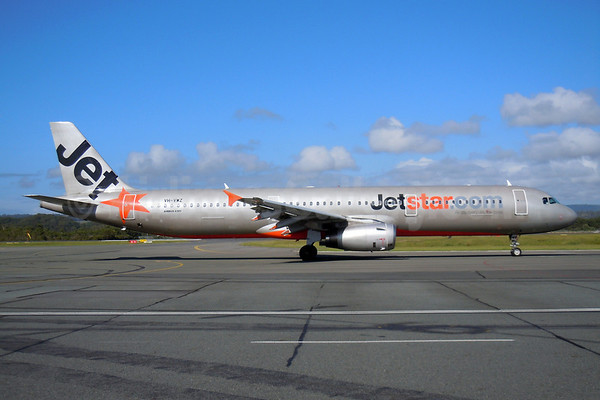
Bottom Copyright Photo: Christian Laugier/AirlinersGallery.com. Jetstar’s Airbus A321-231 VH-VWZ (msn 1195) taxies at the Gold Coast.

Jetstar Airways announces expanded Boeing 787 routes

Jetstar Airways (Melbourne) has announced a series of new Boeing 787 routes introducing the new type to new destinations. The 787 will be operated from Melbourne (Tullamarine) to Auckland from February 26 through March 28, 2014.

Jetstar took delivery ofย its first 787, the pictured 787-8 VH-VKA, on October 7 and received its second in December and third in early January 2014.

Jetstar introduced the Boeing 787 from Melbourne to the Gold Coast) on November 13, 2013 (see video below).

Jetstar introduced the 787 on its first international route on December 18 between Melbourne and Denpasar, Bali. The budget airline will add the new type on the Sydney-Denpasar, Bali route next month and Sydney-Phuket, Thailand in February. The Brisbane-Denpasar, Bali route will follow on April 16.

Jetstar 787s carry 335 passengers and feature a 21 seat business class cabin and 314 seats in economy with inflight entertainment available for purchase in every seat.

The airline will have transitioned to an all 787 long haul fleet by 2015, with the Dreamliner eventually replacing all current Jetstar Airbus A330 services, including Melbourne-Phuket. The A330s will be reassigned back to parent QANTAS Airways in order to replace the Boeing 767-300s.

Copyright Photo: Keith Burton/AirlinersGallery.com. The first 787-8, VH-VKA (msn 36227) arrives at the Melbourne (Tullamarine) base.

Jetstar Airways:ย AG Slide Show

Jetstar (Japan) logo

Routes from Melbourne:

Jetstar 12.2013 MEL Route Map

Video:

QANTAS Group issues a loss warning, asks the government for an even playing field

The QANTAS Group (QANTAS Airways) (Sydney) has announced a market update, accelerated cost reductions and a capital expenditure and structural review, in response to fundamentally changed market conditions.ย 

Market update

The Group expects to report an underlying loss before tax in the range of $250 million to $300 million for the six months ending December 31, 2013.ย  Trading conditions saw a marked deterioration in November in particular, with both passenger loads and yields below the already negative trends for the year to date.

The Group can also provide the following guidance for the first half of FY14:

    • Group capacity is expected to increase by 1.1 per cent in 1H FY14 compared to 1H FY13. Group Domestic capacity (comprising QANTAS Domestic, QANTAS Link and Jetstar Domestic) is expected to increase by 1.9 per cent in 1H FY14 compared to 1H FY13;
    • Total domestic market capacity is expected to increase by approximately 2.7 per cent, driven by estimated competitor capacity growth of 3.9 per cent;
    • Group yield (excluding the impact of foreign exchange movements) is expected to be approximately 3.5 per cent lower in 1H FY14 compared to 1H FY13, largely due to increased capacity in the domestic and international markets;
    • Group loads are expected to be 1.6 percentage points lower in 1H FY14 compared to 1H FY13; and
    • Underlying fuel costs (excluding the impact of the carbon tax) for 1H FY14 are expected to be approximately $2.27 billion, an increase of $88 million from 1H FY13.

The outlook for the second half of FY14 remains volatile and, given the uncertainty in global economic conditions, fuel prices and foreign exchange rates, it is not possible to provide further guidance at this time.

QANTAS CEO Alan Joyce said the circumstances demanded urgent action.

โ€œWe will do whatever we need to do to secure the QANTAS Groupโ€™s future,โ€ Mr Joyce said.

โ€œThe challenges we now face are immense โ€“ but we will overcome them and we will continue to build a stronger and better QANTAS for Australia.

โ€œSince the Global Financial Crisis, QANTAS has confronted a fiercely difficult operating environment โ€“ including the strong Australian dollar and record jet fuel costs, which have exacerbated QANTASโ€™ high cost base.

โ€œThe Australian international market is the toughest anywhere in the world.

โ€œOur competitors in the international market, almost all owned or generously supported by their governments, have increased capacity to pursue Australian dollar profits, changing the shape of the market permanently.

โ€œSince early 2012, there has also been an unprecedented distortion of the Australian domestic market, with Virgin Australiaโ€™s strategy to seek majority ownership and massive financial backing from foreign government-owned airlines (see Appendix 1).

โ€œThis foreign government capital has been used to finance dramatic increases in domestic capacity, with profound implications for the future of Australiaโ€™s aviation industry.ย  In November, Virgin Australia signaled its intention to continue its strategy, which is designed to weaken QANTAS in the domestic market, with a $300 million-plus injection from its foreign owners.

โ€œThe uneven playing field in Australian aviation is being tilted further.”

โ€œWe cannot and we will not stand still in these extraordinary circumstances.”

โ€œAs we take these urgent actions, we will continue to take the fight to the competition and strengthen our leading position in the domestic market, and we will continue the turnaround of Qantas International.โ€

Accelerated cost reduction program

The Group will make accelerated cost reductions across all areas of the business, to achieve total cost savings of $2 billion over three years.

The existing QANTAS Transformation program will be accelerated, with an expanded mandate to achieve these targets, including the following steps:

    • Head count reduction of at least 1,000 positions within 12 months, with an ongoing review
    • CEO and Board pay cut
    • Pay freeze and no FY14 bonus for executives
    • Review of spending with top 100 suppliers
    • Network optimisation and improved fleet utilization
    • Further overhead reductions

Mr Joyce said the Group had already made significant progress in becoming leaner and more efficient.

โ€œWe have reduced the Groupโ€™s unit costs, excluding fuel, by a total of 19 per cent since FY09, including by 5 per cent in FY13 (see Appendix 2).

โ€œBut these actions are not enough to deal with the current situation.โ€

Capital expenditure and structural review

Given the deterioration in earnings, the Group no longer expects to generate positive net free cash flow in the current financial year.

The Group will conduct a review of all planned capital expenditure to achieve further substantial reductions to ensure that the business generates positive net free cash flow from FY15.

This continues the deep cuts to capital expenditure already achieved since 2011.

The Group will also launch an immediate review to identify structural changes that could potentially unlock sources of capital and value for shareholders.ย  No options will be excluded from the review.

Mr Joyce said the Group would take all steps necessary to respond to the toughest market conditions it had ever faced.

โ€œWe will focus relentlessly on cutting costs and improving productivity, while maintaining our competitive advantages as a business,โ€ Mr Joyce said.

Australiaโ€™s best airline for customers

Mr Joyce said customers would remain at the heart of the Groupโ€™s strategy, with a continued focus on service in all areas.

โ€œWe have Australiaโ€™s best airline and loyalty program, with nearly 10 million loyal frequent flyers,โ€ Mr Joyce said.ย  โ€œOver the past two years, we have developed a global network based on strategic alliances, including the ground-breaking Emirates partnership and expanding relationships in Asia.

โ€œThe QANTAS customer experience is the best it has ever been.ย  After an intensive fleet renewal program, our average passenger aircraft age is now below eight years, the youngest in two decades, and we have revitalised service with a focus on training and new technology. ย Customer satisfaction is soaring, with record scores in both the international and domestic markets.โ€

Discussions with the Australian Government

โ€œAs we work through our cost reductions, capital expediture and structural review, no options will be off the table,โ€ Mr Joyce said.

โ€œPolitical leaders recognize QANTASโ€™ strategic importance, its critical role in providing essential air services, and the benefits to Australia of a strong and viable national carrier.

โ€œNone of the measures being discussed with the government would alleviate the need for us to take the comprehensive actions we have announced today.ย  Government action will, however, be key in enabling us to keep competing effectively on a level playing field.โ€

Read the analysis by Reuters: CLICK HERE

Copyright Photo: John Adlard/AirlinersGallery.com.ย QANTAS Airways’ Boeing 737-838 VH-VXA (msn 29551) with special “Official Airline of Cricket Australia – Now It’s On Our Turf” color scheme in support of Cricket Australia.

QANTAS Airways:ย AG Slide Show

Jetstar Airways takes delivery of its first Boeing 787

Jetstar Airways (Melbourne) andย Boeing (Chicago) celebrated the delivery of the carrier’s first 787 today, which is also the first 787 for Australia.

Jetstar’s 787 Dreamliner departed Monday morning from Boeing’s Everett, Washington delivery center en route to Melbourne, Australia where the plane will be greeted by airline employees and special guests.

Jetstar, the QANTAS Group’s low-cost brand, plans to introduce the 787 first on domestic routes and then its international network. The airline has a total of 14 787 on order and expects to fly an all-787 long-haul fleet by 2015.

Copyright Photo: Nick Dean/AirlinersGallery.com. The pictured 787-8 VH-VKA (msn 36227) at Paine Field near Everett is the first 787 for Jetstar.

Jetstar Airways:ย AG Slide Show

QANTAS Group returns to being profitable, halving its losses on international routes

QANTAS Airways (Sydney) is already reaping the benefits of its new relationship with Emirates (Dubai) and the changes it has already made on its international route structure. The QANTAS Group has been shedding unprofitable international routes, cutting jobs, reducing capital spending and selling assets in order to reduce its debt. The QANTAS Group reported a fiscal year underlying profit before tax of A$192 million ($171.5 million),ย a statutory profit before tax of A$17 million ($15.1 million) and a statutory profit after tax of A$6 million ($5.3 million) for the year ended June 30, 2013.

QANTAS Domestic, Jetstar Airways and QANTAS Loyalty were all profitable, while QANTAS International halved its
underlying EBITย losses.

On the domestic front which is softening, QANTAS is facing stiff competition from Virgin Australia Airlines (Brisbane).

Read the analysis by Reuters: CLICK HERE

Read the full report from QANTAS: CLICK HERE

In other news, QANTAS also announced a series of improvements to its international network:

The improvements are:

    • Starting a new route,ย Perthโ€“Auckland*, to be offered on a seasonal basis between early December and the end of January, operated by a QANTAS A330 aircraft twice per week.
    • Upgrading one returnย Sydneyโ€“Hong Kongย service to an Airbus A380 aircraft, increasing the number of A380 return services on this route from four to five per week.
    • Increasing frequency to daily onย Brisbaneโ€“Los Angeles*ย using the aircraft made available by the A380 upgrade on the Hong Kong route.
    • Retiming Qantasโ€™ existingย Sydneyโ€“Christchurch*ย service so that it connects with more international services from Sydney and complements the existing Emirates service on this route.

QANTAS Alan Joyce and Gareth Evans

QANTAS Group Chief Executive Officer Alan Joyce and Gareth Evans head the briefing.

*Subject to regulatory approval

The schedule is being progressively loaded from today for travel after 27 October 2013

ROUTE CHANGE EFFECTIVE DATE CUSTOMER BENEFIT
Perthโ€“Auckland New route, seasonal.Two return services per week, departing Perth on Friday and Saturday, using a QANTAS A330. First service from Perth will be 6 December 2013.Last service from Auckland will be 1 February 2014. Adding almost 1,000 seats per week to what is currently a monopoly route over the busy Christmas and summer holiday period.An internationally configured A330 with Skybeds used on the route.
Sydneyโ€“Hong Kong Upgrading one return service per week from a B747 to A380.Increases the number of A380 services on this route from four to five per week, with the remainder operated by B747s. 4 November 2013 Increase in capacity by almost 5 per cent per week.Additional A380 flying into Asia.
Brisbaneโ€“Los Angeles Increase in the number of services on this route from six to seven using a B747. 2 December 2013 Additional convenience of a daily service from Brisbane.Increase in capacity on this route by about 15 per cent per week.
Sydneyโ€“Christchurch QANTAS flight retimed from morning to evening, meaning that the return flight (Christchurch to Sydney) arrives in Sydney at 8:50am instead of 3:55pm. Qantas code available on Emirates flight from Christchurch, which leaves at 4:55pm to arrive in Sydney at 6:15pm. Qantas code also available on Jetstar flight from Christchurch, which leaves at 6.35am to arrive in Sydney at 8.05am. 27 October 2013 Greatly improved onward connections for customers flying from Christchurch to Sydney and then to onward international and domestic flights.Removes need for South Island residents to fly via Auckland to connect with key international flights out of Sydney.Complements the existing Emirates service by providing a double daily service scheduled at either end of the day.

Copyright Photo: John Adlard/AirlinersGallery.com. Airbus A380-842 VH-OQD (msn 026) is pictured in action at the Sydney base.

QANTAS Airways:ย AG Slide Show

Jetstar Airways celebrates its 100th aircraft with a special livery

Jetstar Airways (Australia) (Melbourne) this month celebrated reaching 100 aircraft, a milestone reflecting the impressive scale of the airline across Asia Pacific.

Since launching in 2004, Jetstar has grown from a small domestic carrier โ€“ with just 14 aircraft flying up and down the east coast of Australia โ€“ to become the fastest airline brand in Asia Pacific to grow its fleet to 100 aircraft.

Jetstar Group Chief Executive Officer Jayne Hrdlicka said this milestone was only possible because of the 400,000 passengers who choose to fly with the Jetstar Group each week.

To commemorate this milestone, Jetstar has applied a special 100th aircraft livery on its first Sharklet-equipped Airbus A320.

The livery features 132 people doing the Jetstar star jump including passengers and ambassadors from across Asia Pacific representing the five Jetstar branded airlines.

โ€œThis aircraft also celebrates the huge achievement of carrying more than 100 million passengers in our nine year history,โ€ Ms Hrdlicka added.

โ€œThe delivery of this new A320, with its remarkable wing-tip technology, reflects our on-going commitment to invest in modern aircraft and innovation to benefit our customers.

โ€œThe distinctive wing-tips bring about higher fuel efficiencies and help us to continue to deliver everyday low fares to our customers.โ€

The Jetstar Group now has three aircraft fitted with the fuel saving Sharklets โ€“ one each for Jetstar Asia, Jetstar Japan and now Jetstar Australia and New Zealand.

The Airbus A320-232 with the special 100th livery registration of VH-VFN (msn 5566) will be flown on major domestic routes and over the coming months and is expected to visit New Zealand, Singapore and Japan.

The Jetstar Group is made up of Jetstar Airways (subsidiary of the QANTAS Group) in Australia and New Zealand, Jetstar Asia in Singapore, Jetstar Pacific in Vietnam and Jetstar Japan in Japan.

Subject to regulatory approval, Jetstar Hong Kong will fly to destinations in Greater China, Japan, South Korea and South East Asia later this year.

Copyright Photo: John Adlard. VH-VFN taxies at Sydney with the special celebratory photos and livery.

Videos:

Hot New Photos:ย AG Hot New Photos

Jetstar Airways (Australia):ย AG Slide Show

QANTAS cancels 35 Boeing 787-9 Dreamliners

QANTAS Group (QANTAS Airways and Jetstar Airways) (Sydney) has restructured its fleet plans which includes the cancellation of 35 Boeing 787-9 Dreamliners after reporting its financial results for its fiscal year.

The issued the following statement:

“The Qantas Group announced it would restructure its Boeing 787 aircraft delivery schedule as part of the five-year Qantas International turnaround plan.

There is no change to the Groupโ€™s plans for the Boeing 787-8 aircraft. Deliveries of 15 Boeing 787-8s to Jetstar Airways will continue as planned, with the first aircraft to arrive in the second half of 2013. This will enable the transfer of Airbus A330 aircraft from Jetstar to Qantas Domestic, and the eventual retirement of Qantasโ€™ Boeing 767 fleet.

Fifty Boeing 787-9 options and purchase rights will be retained and brought forward by almost two years, available for delivery from 2016. However, firm commitments for 35 Boeing 787-9s will be cancelled. The restructure means a two-year delay in the Groupโ€™s first Boeing 787-9 delivery.

The changes will result in a reduction in capital expenditure commitments that would equal US$8.5 billion at list prices.

Qantas Group CEO Alan Joyce said the changes were consistent with the goals of the Groupโ€™s broader
strategy.

โ€œQantas continues to practice disciplined capital management and, in the context of returning Qantas International to profit, this is a prudent decision,โ€ Mr Joyce said. โ€œThe Boeing 787 is an excellent aircraft and remains an important part of our future. However, circumstances have changed significantly since our order several years ago. It is vital that we allocate capital carefully across all parts of the Group.

โ€œQantas has always maintained flexibility in its fleet plan and made changes when required. We have now substantially completed our fleet renewal program for the Qantas Group, with 114 new aircraft delivered over the past four years. Our average scheduled passenger fleet age is 8.3 years, the lowest since privatisation and highly competitive by international standards.

โ€œWe have 12 A380s in service across our long-haul network and the reconfiguration of nine Boeing 747-400s will beย complete by late 2012. Boeing 737-800s will continue to enter the Qantas Domestic fleet as part of the Groupโ€™s existing fleet plan, while Airbus A330s will transfer from Jetstar as Boeing 787s are delivered. And Jetstarโ€™s domestic and pan-Asian fleet requirements will be met over the long-term by our existing A320 order book and the arrival of Boeing 787-8s.

โ€œFifty Boeing 787-9s will remain available to the Group from 2016, in line with the timeframe of the Qantas International turnaround plan.”

On the financial side the group issued this report (all amounts in Australian dollars):

Qantas Group today (August 23) announced Underlying Profit Before Tax of $95 million for the year ended 30 June 2012.

The Group’s portfolio of businesses faced a challenging year โ€“ however, it is well-positioned for a strong,sustainable future.

The result was materially impacted by record high fuel costs ($4.3 billion, up $645 million) and industrial action culminating in the grounding of the Qantas fleet ($194 million). Operating conditions for the global aviation industry deteriorated significantly during the year, affecting most major airline businesses.

There were also one-off costs of $398 million, which are not included in Underlying PBT, as the Group initiated a turnaround plan for Qantas’ international network and addressed its legacy cost base.

As a result, the Group reported a Statutory Loss After Tax of $244 million for the year.

All parts of the Group were profitable with the exception of Qantas’ international network. Jetstar and Qantas Frequent Flyer achieved record results2ย and Qantas’ domestic operations outperformed the prior year. The Group holds a leading position in the Australian domestic market while Jetstar continues to expand in Asia, including through the successful launch of Jetstar Japan.

In line with previous market guidance, Qantas’ international network made an Underlying EBIT loss of approximately $450 million and Qantas and Jetstar’s domestic networks together delivered Underlying EBIT of approximately $600 million.

Qantas Group CEO Alan Joyce said the Group had launched the biggest transformation program since
privatisation in extremely challenging circumstances.

โ€œQantas has been through an exceptional period in its history over the past 12 months,โ€ Mr Joyce said.

โ€œOver the course of the year we made significant progress in advancing the Group’s strategy โ€“ building on our strong domestic business and frequent flyer program and growing Jetstar across Asia. Qantas’ international turnaround plan is on track and set for improvement in 2012/13.

โ€œWe are now coming off a period of high capital expenditure that has given us the youngest fleet since Qantas became a public company in 1995 โ€“ an average age of 8.3 years for passenger aircraft4. Our Boeing 747 reconfiguration program is nearly complete, with the aircraft receiving outstanding customer feedback, and from this October we will also upgrade our domestic Boeing 767 fleet.

โ€œWe will continue to invest capital efficiently as we target greater competitiveness and customer satisfaction to deliver a stronger Qantas Group.โ€

The Group improved cash flow during the year, achieving a free cash flow positive position of $206 million in the second half of 2011/12. Cash held at 30 June 2012 was $3.4 billion with access to a $300 million undrawn standby facility, and the Group retained an investment-grade credit rating. Ten narrow-body aircraft were purchased with cash, meaning the Group has added 18 new unencumbered aircraft over the past two years.

During the year the Group took steps to reduce planned 2012/2013 capital expenditure to $1.9 billion, and expenditure will remain at that level through 2013/2014.

Fleet renewal is substantially complete after the delivery of 114 new aircraft over the past four years and the Group will now shift its focus to debt reduction. The Group’s future fleet delivery profile has been restructured with a reduction in potential commitments for the Boeing 787-9 from 85 to 50 (announced separately today), available from 2016.

Segment performance

Qantas reported an Underlying EBIT loss of $21 million, down $249 million compared with 2010/11, reflecting the poor performance of the international network. The Qantas segment result was also severely impacted by record fuel costs and industrial action.

Customer satisfaction in the domestic market is at its highest level in over three years and the Group continues to invest in Qantas’ domestic network, product and service. It remains the airline of choice for corporate travellers with strong double-digit corporate revenue growth and an estimated 84 per cent share of the domestic corporate travel market.

Significant progress was made in Qantas’ international turnaround plan launched in August 2011. Qantas increased capacity to its Dallas/Fort Worth and Santiago hubs, reconfigured seven out of a planned nine Boeing 747 aircraft with award-winning A380 interiors, strengthened alliance relationships and withdrew from major loss-making routes. Major business transformation initiatives, including heavy maintenance consolidation, were commenced during the year.

The benefits from these initiatives have started to flow and will deliver annual savings of approximately $300 million when all measures announced to date have been implemented.

Jetstar reported record Underlying EBIT of $203 million, up $34 million or 20 per cent on the prior year. Ancillary revenues grew by 27 per cent and unit costs were reduced to record lows. Domestically, Jetstar continues to hold a clear leadership position in the price-sensitive market.

Despite challenging operating conditions, Jetstar achieved capacity and passenger growth in all markets. Jetstar Japan was established during the year and commenced operations in July 2012, five months ahead of schedule, complementing airlines based in Singapore (Jetstar Asia) and Vietnam (Jetstar Pacific) โ€“ with Jetstar Hong Kong to be added in 2013, subject to regulatory approval. Each of these investments draws on Jetstar’s well-established brand, world-class ancillary revenue model and strong local partners.

Qantas Frequent Flyer achieved a record result, with Normalised Underlying EBIT of $231 million, up 14 per cent compared with 2010/11. The continued expansion and enhancement of the program saw billings increase by 14 per cent to $1.2 billion. Membership now stands at 8.6 million members, with over 500 program partners.

The acquisition of Wishlist Holdings Ltd, establishment of a new membership tier (Platinum One) and addition of major new partners such as Optus all contributed to Qantas Frequent Flyer’s strong performance.

Qantas Freight’s Underlying EBIT was $45 million, down $17 million compared with the prior year. The result reflects a broader downturn in global air freight markets, plus adverse fuel price and foreign exchange impacts that were only partially offset by yield improvements.

Outlook

The Group’s operating environment and economic outlook for the first half of 2012/2013 remains challenging, volatile and dependent on a number of uncontrollable external factors.

Group capacity is expected to increase by 3-4 per cent in the first half of 2012/2013 compared to the first half of 2011/2012, while maintaining flexibility.

The Group aims to maintain a profit-maximising 65 per cent domestic market share. Given current market conditions, Group domestic capacity is expected to increase by 9-11 per cent in the first half of 2012/2013 compared to the first half of 2011/2012. However, the Group has significant flexibility to adjust domestic capacity should current market conditions change.

Underlying fuel costs (excluding carbon tax) for the Group are expected to be approximately $2.3 billion5ย in the first half of 2012/2013 compared to $2.2 billion in the first half of 2011/2012, due to higher forward market jet fuel prices and increased flying.

No Group profit guidance is provided at this time due to the high degree of volatility and uncertainty in global economic conditions, fuel prices, exchange rates, as well as the major transformational change agenda underway.

1ย Underlying Profit Before Tax (Underlying PBT) is a non-statutory measure and is the primary measure used by the Group’s chief operating decision making bodies for the purposes of assessing the financial performance of the Group. All line items in the Media Release are reported on an Underlying basis. A detailed reconciliation of Statutory and Underlying PBT is included in the Review of Operations.

2ย Jetstar result based on Underlying EBIT. Qantas Frequent Flyer result based on Normalised EBIT, which is Underlying EBIT normalised for prior period changes in accounting estimates. Refer to the Review of Operations for a reconciliation of Normalised EBIT to Underlying EBIT.

3ย Free cash flow โ€“ Operating cash flows less investing cash flows. Free cash flow is a measure of the amount of operating cash flows that are available (i.e. after investing activities) to fund reductions in net debt or payments to shareholders.

4ย Average fleet age of the Group’s scheduled passenger fleet based on manufacturing dates.

5ย As at 15 August 2012.

Copyright Photo: John Adlard. The Boeing 767-300 ERs are now likely to be operated longer under this revised plan. Boeing 767-338 ER VH-OGD (msn 24407) arrives at Sydney.

QANTAS Airways:ย 

Jetstar Airways:ย 


QANTAS and Airbus finalize Australia’s largest aircraft order

QANTAS Airways (Sydney) and Airbus have finalized a contract for 110 A320 Family aircraft, to help with the airlineโ€™s fleet renewal and expansion plans in the coming years. The firm order for 78 A320neo and 32 A320s is the largest single order in Australian aviation history by aircraft units and follows a commitment signed in August.

The new aircraft will be deployed mainly by Jetstar Airways.

Jetstar Slide Show: CLICK HERE

Jetstar Route Map:


Jetstar apologizes to its NZ customers

Jetstar Airways (Jetstar.com) (Melbourne) has apologized to its New Zealand customers about its “late arrivals and poor customer service”. Jetstar started operating in NZ on June 10.

News link:

www.bloomberg.com/apps/news?pid=20601081&sid=aRKj5v7CcdQI