
Air Canada (Montreal) today issued its financial report for 2013 (all figures in Canadian dollars):
Air Canada reported record full year earnings before interest, taxes, depreciation, amortization and impairment, and aircraft rent (EBITDAR(1)) of $1.433 billion (or $1.515 billion including the impact of benefit plan amendments) compared to EBITDAR of$1.320 billion (or $1.447 billion including the impact of benefit plan amendments) in 2012, an increase of$113 million (or $68 million including the impact of benefit plan amendments). Operating income of $619 million increased $177 million from 2012. On a GAAP basis, in 2013, net income was $10 million or $0.02per diluted share compared to a net loss of $136 million or $0.51 per diluted share in 2012. On an adjusted basis(1), net income was $340 million or $1.20 per diluted share, a record for Air Canada, compared to net income of $55 million or $0.20 per diluted share in 2012, an improvement of $285 millionor $1.00 per diluted share.
For the fourth quarter of 2013, Air Canada reported EBITDAR of $277 million (or $359 million including the impact of benefit plan amendments) compared to EBITDAR of $283 million in the fourth quarter of 2012. Air Canada estimates that December 2013 EBITDAR was negatively impacted by $15 million as a result of severe weather conditions. Operating income of $135 million increased $88 million from the fourth quarter of 2012. On a GAAP basis, in the fourth quarter of 2013, Air Canada reported a net loss of $6 million or $0.02 per diluted share compared to a net loss of $60 million or $0.22 per diluted share in the fourth quarter of 2012. In the fourth quarter of 2013, Air Canada reported adjusted net income of $3 million or $0.01 per diluted share compared to an adjusted net loss of $5 million or $0.02 per diluted share in the same quarter in 2012, an improvement of $8 million or $0.03 per diluted share.
“I am extremely pleased to report Air Canada’s best full year financial performance in the Corporation’s history,” said Calin Rovinescu, President and Chief Executive Officer. “Adjusted net income for the year was a record $340 million and represents a six-fold increase from 2012. These results underscore the significant operating leverage opportunity that we have. We achieved this increase in adjusted net income based on total revenue growth of 2.2 per cent for the year and on a decrease in unit costs of 1.5 per cent. Very good progress was made last year in executing on our transformation strategy and this was recognized by the investment community with a tripling of our share price in 2013. I would like to thank Air Canada’s 27,000 employees for their part in helping to achieve the significant accomplishments of 2013 and enabling us to begin the new year on a solid strategic foundation.
“Our performance in 2013, especially the last three quarters where adjusted net income improved each quarter versus the prior year, establishes a strong foundation for continued success in 2014. We started 2014 facing challenges of extreme weather conditions at our Canadian hubs and a falling Canadian dollar. As we forecasted weakness in the Canadian dollar as part of our annual budgeting process, although not at its current level, we had a head start looking at ways to mitigate the exposure, such as through additional cost reduction and new revenue enhancement initiatives. We also have over $1 billionin U.S. dollar revenues, a currency hedge position and U.S. cash reserves that will absorb some of the exposure. Additionally, historically, the price of crude oil and the Canadian dollar have shown some correlation, where decreases in the value of the Canadian dollar have been associated, to an extent, with decreases in the cost of fuel. However, given severe weather conditions, the weaker Canadian dollar and the impact of increased capacity in certain markets, we expect our first quarter EBITDAR to be below last year’s level by $15 to $30 million. We are confident in our ability to mitigate the financial impact of these factors over the 2014 fiscal year,” concluded Mr. Rovinescu.
In 2013, Air Canada launched its new lower-cost leisure carrier, Air Canada rouge; introduced specially-configured new Boeing 777-300 ER aircraft on international routes with higher demand for economy travel; announced the first phase of its narrow-body fleet renewal plan for up to 109 Boeing MAX aircraft to further lower operating costs; transferred its entire Embraer 175 fleet to a lower cost regional operator, and continued to diversify its regional airline strategy. In addition, the airline concluded an enhanced commercial agreement with the GTAA to grow international connecting traffic at Toronto Pearson Airport on a more cost effective basis; completed a $1.4 billion refinancing of high yield notes; concluded the first offering in Canada of enhanced equipment trust certificates to finance aircraft on very favourable terms; and finalized special pension funding arrangements with the federal government. As disclosed in Air Canada’s news release dated January 22, 2014, based on preliminary estimates, Air Canada projects its Canadian registered retirement pension plans at January 1, 2014 to be in a small surplus position, compared to a solvency deficit position of $3.7 billion at January 1, 2013. Final valuations as of January 1, 2014 will be completed in the first half of 2014. Please see section below entitled “Caution Regarding Forward-Looking Information”.
By the summer of 2014, Air Canada is scheduled to take delivery of the first three of 37 Boeing 787 Dreamliner aircraft. This fuel efficient aircraft will improve the performance of routes currently operated with Boeing 767 aircraft and will allow the airline to pursue new international growth opportunities, such as the recently announced Toronto-Tokyo Haneda route. The 787 Dreamliner will also premier Air Canada’s new cabin product, including the international Premium Economy cabin first introduced with its new Boeing 777-300 ER aircraft, the fifth and final one of which was delivered in February 2014.
Full Year Income Statement Highlights
In 2013, system passenger revenues amounted to $11,021 million, an increase of $284 million or 2.6 per cent over 2012, on a 2.1 per cent growth in traffic and a 0.5 per cent improvement in yield. Passenger revenue per available seat mile (RASM) increased 0.6 per cent from 2012 mainly on the yield growth. Air Canada reported a record passenger load factor of 82.8 per cent in 2013, a 0.1 percentage point improvement year-over-year.
In 2013, operating expenses amounted to $11,763 million, an increase of $91 million or 1 per cent from 2012. Excluding the operating expense reductions related to benefit plan amendments recorded in the fourth quarter of 2013 and the third quarter of 2012, operating expenses increased $46 million year-over-year.
In 2013, the unfavorable impact of a weaker Canadian dollar on foreign currency denominated operating expenses (mainly U.S. dollars), when compared to 2012, increased operating expenses by $147 million. This currency impact was partially offset by a favourable currency impact on passenger revenues of $27 million and realized currency derivative gains of $55 million.
Air Canada’s adjusted cost per available seat mile (adjusted CASM(1)), which excludes fuel expense, the cost of ground packages at Air Canada Vacations and unusual items, decreased 1.5 per cent compared to 2012. The 1.5 per cent reduction in adjusted CASM was in line with the adjusted CASM decrease of 1.5 per cent to 2.0 per cent projected in Air Canada’s news release dated November 8, 2013.
In 2013, Air Canada recorded operating income of $619 million compared to operating income of $442 million in 2012, both including operating expense reductions related to benefit plan amendments.
Fourth Quarter Income Statement Highlights
In the fourth quarter of 2013, system passenger revenues amounted to $2,560 million, an increase of $47 million or 1.9 per cent over the fourth quarter of 2012, on a 2.5 per cent growth in traffic as yield declined 0.6 per cent year-over-year. Passenger revenue per available seat mile (RASM) decreased 1.7 per cent from the fourth quarter of 2012 on a decrease in passenger load factor and on the yield decline. Air Canada reported a passenger load factor of 80.3 per cent in the fourth quarter of 2013, 0.9 percentage points below the fourth quarter 2012.
In the fourth quarter of 2013, operating expenses of $2,759 million decreased $33 million or 1 per cent from the fourth quarter of 2012. Excluding the operating expense reduction related to benefit plan amendments of $82 million in the fourth quarter of 2013, operating expenses increased $49 million or 2 per cent year-over-year.
In the fourth quarter of 2013, the unfavorable impact of a weaker Canadian dollar on foreign currency denominated operating expenses (mainly U.S. dollars), when compared to the fourth quarter of 2012, increased operating expenses by $75 million. This currency impact was partially offset by a favourable currency impact on passenger revenues of $24 million and realized currency derivative gains of $13 million.
Air Canada’s adjusted cost per available seat mile (adjusted CASM), which excludes fuel expense, the cost of ground packages at Air Canada Vacations and unusual items, decreased 2.3 per cent from the fourth quarter of 2012. The 2.3 per cent reduction in adjusted CASM was in line with the adjusted CASM decrease of 2.0 per cent to 3.0 per cent projected in Air Canada’s news release dated November 8, 2013.
In the fourth quarter of 2013, Air Canada recorded operating income of $135 million compared to operating income of $47 million in the fourth quarter of 2012. As discussed above, in the fourth quarter of 2013, Air Canada recorded an operating expense reduction of $82 million related to benefit plan amendments.
Financial and Capital Management Highlights
At December 31, 2013, unrestricted liquidity (cash, short-term investments and undrawn lines of credit) amounted to $2,364 million or 19 per cent of annual operating revenues (December 31, 2012 – $2,018 million or 17 per cent of annual operating revenues). Air Canada’s principal objective in managing liquidity risk is to maintain a minimum unrestricted liquidity level of $1.7 billion.
At December 31, 2013, adjusted net debt(1) amounted to $4,351 million, an increase of $214 million fromDecember 31, 2012. The increase in adjusted net debt was largely due to the purchase of four Boeing 777 aircraft in 2013. The airline’s adjusted net debt to EBITDAR ratio was 3.0 at December 31, 2013versus a ratio 3.1 at December 31, 2012. Air Canada uses this ratio to manage its financial leverage risk and its objective is to maintain the ratio below 3.5.
In 2013, negative free cash flow(1) of $231 million declined $430 million from 2012. While operating cash flows improved year-over year, which was consistent with the improvement in operating earnings, free cash flow was impacted by the addition of four Boeing 777-300 ER aircraft delivered in 2013.
For the 12 months ended December 31, 2013, return on invested capital (ROIC(1)) was 11.0 per cent versus 7.9 per cent at December 31, 2012. Air Canada’s goal is to achieve a sustainable ROIC of 10 to 13 per cent by 2015.
U.S. dollar currency derivatives and U.S. dollar cash reserves, which, as at December 31, 2013, amounted to US$1,547 million and US$743 million, respectively, are employed to offset approximately 50 per cent of the net U.S. dollar currency exposure in 2014. The currency derivatives enable Air Canada to purchase U.S. dollars at a weighted average price of C$1.0341. These derivatives and U.S. dollar cash reserves will be available to mitigate certain cash flow exposure from the currency movements in 2014; however the benefit of these hedging activities is recorded as a foreign exchange gain and not within operating income.
Current Outlook
For the first quarter of 2014, Air Canada expects its system ASM capacity, as measured by available seat miles (ASMs), to increase in the range of 3.5 to 4.5 per cent when compared to the first quarter of 2013.
Air Canada expects its full year 2014 system ASM capacity to increase in the range of 7.0 to 9.0 per cent and its domestic ASM capacity to increase in the range of 3.5 to 4.5 per cent when compared to the same periods in 2013. The domestic capacity growth will be primarily on transcontinental services. The projected system and domestic capacity increase will be achieved at a unit cost which is significantly below historical levels. Air Canada reduced its full year 2014 projected system ASM capacity growth from the 9.0 to 11.0 per cent ASM increase previously projected in Air Canada’s November 8th, 2013 news release, primarily as a result of a reduction in projected capacity in the Pacific market.
For the first quarter of 2014, Air Canada expects adjusted CASM to decrease in the range of 1.0 to 2.0 per cent when compared to the first quarter of 2013.
For the full year 2014, Air Canada expects adjusted CASM to decrease in the range of 2.5 to 3.5 per cent from the full year 2013. The projected weaker Canadian dollar adversely impacts the 2014 adjusted CASM outlook by 1.4 percentage points.
Air Canada’s outlook assumes Canadian GDP growth of 2.0 to 3.0 per cent for 2014. Air Canada also expects that the Canadian dollar will trade, on average, at C$1.10 per U.S. dollar in the first quarter of 2014 and for the full year 2014 and that the price of jet fuel will average 93 cents per litre for the first quarter of 2014 and 92 cents per litre for the full year 2014.
For the full year 2014, Air Canada also expects:
- Depreciation, amortization and impairment expense to decrease by $40 million from the full year 2013.
- Employee benefits expense to decrease by $20 million from the full year 2013.
- Aircraft maintenance expense to increase by $110 million ($40 million of which is expected to be due to the weaker Canadian dollar when compared to the U.S. dollar) from the full year 2013.
- Net financing expense relating to employee benefits (in non-operating expense on Air Canada’s statement of operations) to decrease by $75 million from the full year 2013.
The outlook provided constitutes forward-looking statements within the meaning of applicable securities laws and is based on a number of additional assumptions and subject to a number of risks. Please see section below entitled “Caution Regarding Forward-Looking Information.”
(1) Non-GAAP Measures
Below is a description of certain non-GAAP measures used by Air Canada to provide additional information on its financial and operating performance. Such measures are not recognized measures for financial statement presentation under Canadian GAAP and do not have standardized meanings and may not be comparable to similar measures presented by other public companies. Refer to Air Canada’s 2013 MD&A for reconciliation of non-GAAP financial measures.
- Adjusted net income (loss) and adjusted net income (loss) per diluted share are used by Air Canada to assess its performance without the effects of foreign exchange, net financing expense on employee benefits, mark-to-market adjustments on derivatives and other financial instruments recorded at fair value and unusual items.
- EBITDAR is commonly used in the airline industry and is used by Air Canada to assess earnings before interest, taxes, depreciation, amortization, impairment and aircraft rent as these costs can vary significantly among airlines due to differences in the way airlines finance their aircraft and other assets.
- Adjusted CASM is used by Air Canada to assess the operating performance of its ongoing airline business without the effects of fuel expense, the cost of ground packages at Air Canada Vacations and unusual items, such as impairment charges and benefit plan amendments, as such expenses may distort the analysis of certain business trends and render comparative analyses to other airlines less meaningful.
- Free cash flow is used by Air Canada as an indicator of the financial strength and performance of its business because it shows how much cash is available for such purposes as repaying debt, meeting ongoing financial obligations and reinvesting in Air Canada.
- Adjusted net debt is a key component of the capital managed by Air Canada and provides a measure of the airline’s net indebtedness. Adjusted net debt is calculated as the sum of total long-term debt and finance lease obligations and capitalized operating leases less cash and cash equivalents and short-term investments.
- Return on invested capital is used by Air Canada to assess the efficiency with which it allocates its capital to generate returns. Return is based on Adjusted net income (loss) (as discussed in the section above), excluding interest expense and implicit interest on operating leases. Invested capital includes average long-term debt, average finance lease obligations, the value of capitalized operating leases (calculated by multiplying annualized aircraft rent expense by 7) and the average market capitalization of Air Canada’s outstanding shares.
Notes:
| (1) |
In 2013, Air Canada recorded an interest charge of $95 million related to the purchase of its senior secured notes which were to become due in 2015 and 2016. |
| (2) |
Adjusted net income (loss) and adjusted net income (loss) per share – diluted are non-GAAP financial measures. Refer to section 20 “Non-GAAP Financial Measures” of Air Canada’s 2013 MD&A for additional information. |
| (3) |
In the fourth quarter of 2013, Air Canada recorded an operating expense reduction of $82 million related to amendments to defined benefit pension plans. In the third quarter of 2012, Air Canada recorded an operating expense reduction of $127 million related to changes to the terms of the ACPA collective agreement pertaining to retirement age. Refer to section 20 “Non-GAAP Financial Measures” of Air Canada’s 2013 MD&A for additional information. |
| (4) |
EBITDAR (earnings before interest, taxes, depreciation, amortization, impairment and aircraft rent) is a non-GAAP financial measure. Refer to section 20 “Non-GAAP Financial Measures” of Air Canada’s 2013 MD&A for additional information. |
| (5) |
Unrestricted liquidity refers to the sum of cash, cash equivalents, short-term investments and the amount of available credit under Air Canada’s revolving credit facilities. At December 31, 2013, unrestricted liquidity was comprised of cash and short-term investments of $2,208 million and undrawn lines of credit of $156 million. At December 31, 2012, unrestricted liquidity was comprised of cash and short-term investments of $1,973 million and undrawn lines of credit of $45 million. |
| (6) |
Free cash flow (cash flows from operating activities less additions to property, equipment and intangible assets) is a non-GAAP financial measure. Refer to section 9.5 of Air Canada’s 2013 MD&A for additional information. |
| (7) |
Adjusted net debt (total debt less cash, cash equivalents and short-term investments plus capitalized operating leases) is a non-GAAP financial measure. Refer to section 9.3 of Air Canada’s 2013 MD&A for additional information. |
| (8) |
Return on invested capital (ROIC) is a non-GAAP financial measure. Refer to section 20 of Air Canada’s 2013 MD&A for additional information |
| (9) |
Operating statistics (except for average number of FTE employees) include third party carriers (such as Jazz Aviation LP (“Jazz”)) operating under capacity purchase agreements with Air Canada. |
| (10) |
Adjusted CASM is a non-GAAP financial measure. Refer to section 20 “Non-GAAP Financial Measures” of Air Canada’s 2013 MD&A for additional information. |
| (11) |
Reflects FTE employees at Air Canada. Excludes FTE employees at third party carriers (such as Jazz) operating under capacity purchase agreements with Air Canada. |
| (12) |
Includes fuel handling expenses. Economic fuel price per litre is a non-GAAP financial measure. Refer to sections 6 and 7 of Air Canada’s 2013 MD&A for additional information. |
| (13) |
Revenue passengers are counted on a flight number basis which is consistent with the IATA definition of revenue passengers carried. |
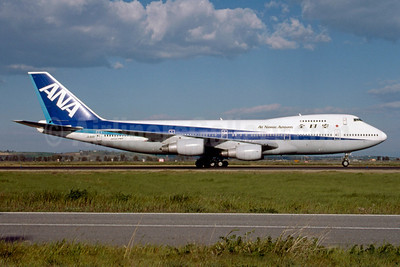
Copyright Photo: Michael B. Ing/AirlinersGallery.com. Boeing 777-333 ER C-FIVQ (msn 35240) prepares to land in Tokyo (Narita).
Air Canada: 
Air Canada rouge:




You must be logged in to post a comment.