Tag Archives: DCA

Virgin America posts a record first quarter GAAP net profit of $12.8 million

Virgin America (San Francisco) today reported its financial results for the first quarter of 2015.

Key highlights from the first quarter include:

First quarter 2015 net income was $10.5 million excluding special items1, an increase of $32.9 million from the first quarter of 2014. Operating income and operating margin excluding special items were $13.1 million and 4.0 percent, respectively.

On a GAAP basis, net income was $12.8 million. This represents the first time in its history that Virgin America has recorded a profit in the first quarter of the year, and the tenth consecutive quarter of year-over-year improvement in profitability. Operating income and operating margin on a GAAP basis were $15.4 million and 4.7 percent, respectively.

Fully diluted earnings per share excluding special items was $0.24. On a GAAP basis, fully diluted earnings per share was $0.29.

โ€œVirgin America continues to perform exceptionally well, achieving net income of $10.5 million excluding special items in the first quarter of 2015,โ€ said David Cush, Virgin Americaโ€™s President and Chief Executive Officer. โ€œThis marks the tenth consecutive quarter of year-over-year improvement in our financial performance, off the back of a record year of profitability in 2014. This is a testament to our business model, our product and Teammates who delivered an outstanding experience for our guests.โ€

First Quarter 2015 Financial Highlights

โ€ข Operating Revenue: Total operating revenue was $326.4 million, an increase of 4.1 percent over first quarter of 2014.

โ€ข Revenue per Available Seat Mile (RASM): Passenger revenue per available seat mile (PRASM) increased 2.6 percent compared to the first quarter 2014, to 10.27 cents. Year-over-year PRASM growth was driven by a 0.9 point increase in load factor and a 1.4 percent increase in yield. Total RASM increased 2.7 percent year-over-year.

โ€ข Cost per Available Seat Mile (CASM): Total CASM excluding special items decreased 5.5 percent compared to the first quarter of 2014, to 11.11 cents. Decreases in fuel costs and reduced heavy maintenance activity contributed to the decline in CASM, partially offset by increases in salaries, wages and benefits. Salaries, wages and benefits costs included a $2.1 million accrual for teammate profit sharing and payroll taxes related to 2014 profit sharing. CASM excluding special items, fuel costs and profit sharing for the quarter increased 3.0 percent year-over-year, to 7.82 cents.

โ€ข Fuel Expense: Virgin America realized an average economic fuel cost per gallon including taxes and the impact of hedges of $2.45, which was 22.7 percent lower year-over-year. This amount includes certain fuel expense adjustments described as special items below.

โ€ข Special Items: Special items in the first quarter of 2015 relate to $2.3 million of adjustments for fuel hedges that settled during the first quarter of 2015 but for which unrealized losses had been previously recorded under GAAP and mark-to-market adjustments for fuel hedges that mature subsequent to March 31, 2015, which did not qualify for hedge accounting treatment.

โ€ข Operating Income: First quarter 2015 operating income excluding special items was $13.1 million, an increase of $26.3 million as compared to 2014. The Companyโ€™s operating margin excluding special items of 4.0 percent, improved by 8.2 points year-over-year.

โ€ข Net Income: Net income excluding special items for the first quarter was $10.5 million, an increase of$32.9 million year-over-year.

โ€ข Fully Diluted EPS: Fully diluted earnings per share, excluding special items, was $0.24 for the first quarter of 2015. First quarter 2015 fully diluted earnings per share was $0.29 on a GAAP basis.

โ€ข Capacity: Available seat miles (ASMs) for the first quarter of 2015 increased 1.5 percent year-over-year compared with the first quarter of 2014. The airline was affected by severe winter weather, reducing capacity growth by 1.5 percent versus the Companyโ€™s original plan. Virgin America ended the quarter with 53 Airbus A320-family aircraft, unchanged from the first quarter of 2014.

โ€ข Liquidity: Unrestricted cash was $418.3 million as of March 31, 2015.

2015 Aircraft Financing

Virgin America entered into agreements to finance approximately 80 percent of the purchase price of its five 2015 Airbus A320 aircraft deliveries. The weighted average interest rate on these financing commitments, if fixed at current underlying interest rates, would be under 5.0 percent.

Second Quarter 2015 Outlook

The Companyโ€™s expectations for the second quarter of 2015 are based on currently available information. These expectations are forward-looking, and actual results could differ materially depending on market conditions and the factors set forth under โ€œForward-Looking Statementsโ€ below. You should not place undue reliance upon these expectations.

The Company expects capacity, as measured by available seat miles, to decrease by approximately 0.0 percent to 1.0 percent for the second quarter of 2015 as compared to the second quarter of 2014. Based on current revenue trends, the Company expects PRASM to decrease between 0.0 percent and 2.0 percent versus the second quarter of 2014. The Company expects CASM excluding fuel and profit sharing to increase between 8.0 percent and 10.0 percent versus the second quarter of 2014. CASM excluding fuel and profit sharing is increasing in the second quarter due to a decrease in average stage length year-over-year of approximately 4.0 percent, additional maintenance costs expected during the quarter, and previously announced increases in salaries, wages and benefits.

The Company is targeting a full year 2015 increase in CASM, excluding fuel and profit sharing, of approximately 7.0 percent to 9.0 percent, primarily due to the previously announced increase in salaries, wages and benefits and to a decrease in average stage length. In 2016, the Company is currently targeting CASM, excluding fuel and profit sharing, to remain flat year-over-year.

Based on Virgin Americaโ€™s hedge portfolio and current market prices for aviation fuel products, the Company expects Virgin Americaโ€™s economic fuel cost per gallon inclusive of related taxes and hedge costs to average between $2.10 and $2.20 for the second quarter of 2015. This number may change depending on fluctuations in market prices for jet fuel during the quarter.

Copyright Photo: Brian McDonough/AirlinersGallery.com. Airbus A320-214 N854VA (msn 5058) Arrives in Washington (Reagan National).

Virgin America aircraft slide show:ย AG Airline Slide Show

AG You do not have to pay

Frontier dedicates Orville, the Red Cardinal, to the State of Ohio

Frontier Airlines (2nd) (Denver), as previously reported, has painted its second aircraft in the new livery. The pictured Airbus A320-214 N228FR (msn 5526), named Orville, the red Cardinal, is also dedicated to the Buckeye State of Ohio where it has been expanding at Cleveland and Cincinnati. N228FR is also dedicated to aviation explorer Orville Wright. The cardinal is also the state bird of Ohio. The airline has now issued this new Orville and Wilbur Wright video and photo.

Frontier (2nd) 2015 logo

Above Copyright Photo: Brian McDonough/AirlinersGallery.com. N228FR arrives at Washington’s Reagan National Airport (click on the photo for the full size view).

Frontier Airlines (2nd) aircraft slide show:ย AG Airline Slide Show

Photo Below: Frontier Airlines. The two actors portraying Orville (1871 – 1948) and Wilbur (1867 – 1912) Wright.

Frontier-Orville and Wilbur Wright (actors)(Frontier)(LR)

Video: Frontier Airlines.ย We’d like to introduce the newest animal to our fleet, dedicated to the state of Ohio, Orville the Red Cardinal! Check out our video to meet Orville:

Frontier Airlines Route Map (click on map for the full size view):

Frontier (2nd) 4.2015 Route Map


Southwest Airlines launches nine new destinations from Dallas Love Field

Southwest Airlines (Dallas) yesterday (April 8)ย began operating more daily itineraries between Dallas Love Field and nine additional cities around the United States (Columbus, Ohio; Indianapolis, Indiana; Memphis, Tennessee; Milwaukee, Wisconsin; Panama City Beach, Florida; Portland, Oregon; Sacramento, California; San Jose, California; and Seattle/Tacoma, Washington) and will launch Saturday-only flights between Dallas and Charleston, South Carolina, on April 11, 2015.

In addition, Southwest began additional flights between Dallas Love Field and Ft. Lauderdale/Hollywood, Oakland (San Francisco Bay Area), and Santa Ana/Orange County. The carrier also initiated daily service between San Antonio and Cancun, and between Kansas City International Airport and New York LaGuardia.

Copyright Photo: Brian McDonough/AirlinersGallery.com. Boeing 737-8H4 N8646B (msn 36935) in the now old 2001 livery and also with Split Scimitar Winglets completes the river approach to Washington’s Reagan National Airport (DCA).

Southwest Airlines aircraft slide show (historic liveries):ย AG Airline Slide Show

Southwest Airlines aircraft slide show (new livery only):ย AG Airline Slide Show

AG WAN-Powered by AG

Jay Selman’s An Inside Look: Connie Tobias – An Aviation Legend Retires

Connie Tobias – An Aviation Legend Retires

Assistant Editor Jay Selman

Assistant Editor Jay Selman

by Assistant Editor Jay Selman

There are pilots, and there are aviators. When Captain Connie Tobias shut down the engines of her Airbus A321 at the conclusion of US Airways Flight 1967 on March 17, 2015, it brought to an end one chapter in a remarkable career of a remarkable aviator.

Connie Tobias in the cockpit (JS)(LRW)


Above Photo: Jay Selman/AirlinersGallery.com. Connie Tobias in the left seat of the retirement Airbus A321.

Below Photo: Jay Selman/AirlinersGallery.com. The Airbus A321 receives a congratulatory water cannon salute on arrival at Charlotte Douglas International Airport (CLT).

Connie Tobias A321 water cannon salute (JS)(LRW)

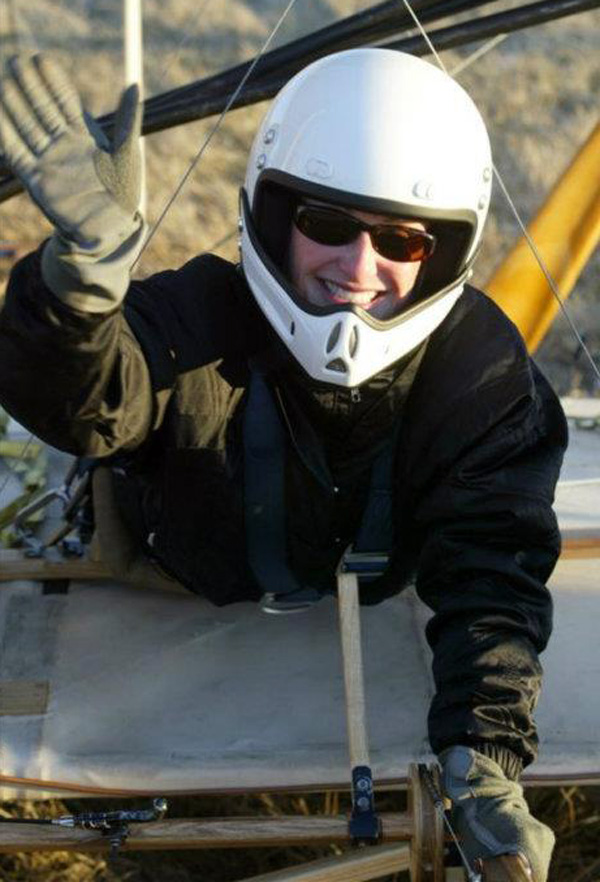
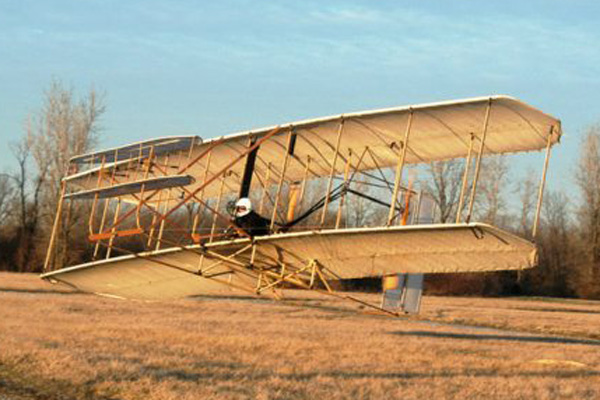
In over 40 years of flying, Connie has logged over 22,000 flight hours and flown over 70 different kinds of aircraft, ranging from a 1902 Wright Glider (below) and 1909 Bleriot (below) to the Airbus A330-300. That, in itself, would be a career to be proud of, but the career of Connie represents so much more.
1903 Wright Flyer

Connie Tobias 1902 Wright Glider (LR)

Connie Tobias 1909 Bleriot (LR)

Connie has not lost any of the feistiness that must have been necessary to break through one barrier after another as a woman born in 1950. She reflects, โ€œWhen I was a five year old girl, I was expected to play with dolls. I didโ€ฆsort of. I lined them up at an imaginary airport waiting for the imaginary airplane that I was pretending to be! Even at that age, I was captivated by the lure of flight. In those days, of course, women were not expected to pursue careers as professional pilots.

In fact, when I went to a military recruiter in 1969 to see about becoming a military pilot, I was told rather strongly to go home and be a wife to someone. A year later, I sent a letter to American Airlines seeking employment, I received a similar response. Today, such a response would seem outrageous, but 45 years ago, those answers were generally accepted as the norm.โ€

Connie Tobias in the Wright Glider (LR)

However, Connie Tobias is anything but the norm. She does not claim to be a rebel, nor is she an iconoclast. She is, however, a strong-willed woman who sets out to accomplish what is important to her. She notes, โ€œPeople will try to steal your dreams. I refuse to let that happen.โ€ In 1975, Connie, always a fitness freak, set out to bicycle her way across the United States, from California to Delaware. While taking a rest stop somewhere in Missouri, she had her epiphany. โ€œI looked up to the sky and saw a jet airliner cruising high above, leaving a condensation trail in its wake. It was at that exact moment that I decided that there was no way I could spend the next 40 years working in an office cubicle which may or may not have windows. No, that was the moment that I decided that I would do whatever I had to do in order to make the cockpit of an airplane MY office.โ€

Connie began to take flying lessons in 1975 in Xenia, Ohio. Later, she used a unique angle to build up time. โ€œI washed planes at Ohio University Airport in Athens, Ohio. A freshly-washed airplane needs to be dried quickly, and what better way to dry an airplane than to fly it? I looked for any way possible to build up hours. I flew for a truck and oil field manufacturer, in and out of Eastern Kentucky, West Virginia, Ohio, and Indiana. I earned my Certified Flight Instructor (CFI) rating and built up hours that way. I even flew as a โ€œbird dogโ€ for fire patrol operations, flying single-engine and light twin-engine aircraft. Basically, I did whatever I could to build up flying time.โ€

Connieโ€™s big break came in 1982 when she applied for a pilotโ€™s position that was posted at Aeromech Airlines, a regional airline based in Clarksburg, WV. She recalls with a wry grin, โ€œThe owner of Aeromech was a Greek gentleman, Angelo Koukoulis. The folks in Personnel at the airline accepted my application from Connie Tobias, probably believing that they were getting a Greek man. Of course, I was neither! In those days, female pilots were very few and far between. I was the second female pilot hired by Aeromech Airlines (below). Letโ€™s just say I was generally not greeted with open arms into the fraternity that was almost exclusively male.โ€

Above Copyright Photo: Jay Selman/AirlinersGallery.com. Aeromech Airlines Embraer EMB-110P1 Bandeirante N615KC (msn 110230) is parked at the commuter terminal gate at Washington’s National Airport in Allegheny Commuter colors in February 1980.

As soon as she was checked out on the Embraer Bandierante, Connie was advised that she would have to earn an Air Transport Pilot (ATP) rating. Using pretty much the last of her meager savings, Connie passed her ATP practical with flying colors, and her written exam with an astounding 99%. Soon afterward, she learned that none of the male first officers at the airline had ATP ratings! Rather than being angry, she made up her mind that the best way to flourish in any environment was to be the happiest, most positive personality that she could be. Before long, she had built up an impressive stack of complimentary letters. While the aviation fraternity was still slow to accept her, it was apparent that the flying public loved her.

In 1983, Aeromech Airlines merged with Cleveland-based Wright Air Lines, and Connie found herself based in Albany, NY, flying the Convair 600/640. While the Bandeirante was configured for 15 seats, it was a new generation airplane. While the Convair held up to 50 passengers, it was late 1940s technology, devoid of any power-enhanced controls. โ€œThe Convair really had to be man-handled, and it was quite a challenge for someone of my size. I worked hard to develop the proper technique to control the Convair, and I believe that that helped earn respect and acceptance from some of the male pilots I flew with.โ€

Above Copyright Photo: Bruce Drum/AirlinersGallery.com. Wright Air Lines Convair 640 N862FW (msn 9) is seen in Miami on October 30, 1983.

Unfortunately, the merger between Wright and Aeromech proved to be a bad marriage and before long, Connie received word that the airline was on its last legs. โ€œFirst officers for regional airlines were generally earning something below poverty-level wages, and Wright was no exception. I was living paycheck to paycheck, and I knew I had to do something. I had enough money to apply to exactly one airline.โ€ She elected to put in an application to Piedmont Airlines (1st), which was known to be actively hiring women as pilots. In mid-1984, Connie Tobias was hired by Piedmont, becoming the 16th female pilot flying for the company. Today, by comparison, women make up approximately 5% of the US Airways pilot workforce.

Above Copyright Photo: Bruce Drum/AirlinersGallery.com. Ex-Northeast Airlines/Delta Air Lines Boeing 727-295 N1643 (msn 19448) displays the 1974 livery for Piedmont.

In the mid-1980s, Piedmont was growing by leaps and bounds. Connie started out as a first officer on the Boeing 727 (above), a dramatic step up from the archaic Convair. Piedmont proved to be the Land of Opportunity for Connie, and a mere 26 months later, she became a captain on the companyโ€™s Fokker F-28. In rapid succession, she graduated to captain on the twin-engine Boeing 737 and later,ย the larger tri-jet Boeing 727.

In 1989, Piedmont merged with USAir, later US Airways. As the airline added larger aircraft, Connie made a decision to trade in her low-seniority captainโ€™s seat in exchange for a more comfortable lifestyle of a high-seniority first officer. Connie was able to hold a position in the right seat on the transcontinental Boeing 757 (below) and intercontinental wide-body Boeing 767. She later became a first officer on the largest and longest-range aircraft in the US Airways fleet, the Airbus A330. By all measures, Connie had beaten the odds and broken through the glass ceiling, achieving success in a field that had been considered a male world when she began her journey.

Above Copyright Photo: Bruce Drum/AirlinersGallery.com. USAir’s ex-Eastern Boeing 757-225 N604AU (msn 22199) taxies at Miami in the 1989 livery.

Some seven years ago, however, Connie suddenly found herself facing a new battle, this one against Mother Nature. She explains, โ€œTo discuss my medical challenges would take another entire article, but letโ€™s just say I had a total of 13 medical issues. Altogether, I was out of work for six years. I was told that I would probably never again be able to pass a first class medical exam that airline pilots must pass twice a year.โ€

Connie took on the greatest battle of her life with the same tenacity as she faced other challenges. โ€œI was determined to finish my airline career in the cockpit, and not in a hospital bed. To that end, over the course of six years, I required the services of 19 doctors, and was put under anesthesia ten times. This was the biggest battle of them all in my career, and my life.โ€ But Connie has never been one to accept โ€œNoโ€ for an answer, and in typical fashion, she fought back. First, she literally clawed her way back into a healthy body. Once that was accomplished, she worked unceasingly to bring her flying skills back up to speed.

Above Copyright Photo: Bruce Drum/AirlinersGallery.com. Airbus A319-112 N765US (msn 1371) painted in the 1997 color scheme departs the runway at Charlotte.


Finally, in 2013, she was restored to flying status with US Airways, on the Airbus A320 family (above). After being off flying status for six years, she was required to fly in the right seat for six months, but in July of 2014, Connie Tobias once again earned the right to wear the four stripes of a captain on the Airbus.

As inspiring as the story of her airline career is, there is much more to the story of this aviator. She explains, โ€œYou might say that an aviator has a love affair with the sky. I love flying, and as airliners become more and more automated, it is easy to get a little bit bored. Sure, there are times when I get to exercise and challenge my piloting skills, but I wanted to do more pilotingโ€ฆmore aviatingโ€ฆthan what airline life was offering me. I began looking at opportunities outside of the airline environment to get my piloting fix.โ€

That search took Connie to the Collings Foundation, a private non-profit educational facility dedicated to the preservation and public display of transportation-related history, including historic aircraft. For an aviator like Connie Tobias, it was a dream-come-true. โ€œThe Collings Foundation gave me the opportunity to fly all sorts of exotic aircraft, from a McDonnell F4D Phantom II (below) to a 1909 Bleriot XI Monoplane. Of course, in order to fly these aircraft, I had to earn a variety of ratings and endorsements, including seaplane and glider and taildragger skills. I also took an extended course in aerobatics and upsetย recovery. Ironically, while flying the Phantom was one heck of a kick in the pants, it was the Bleriot that required the greatest challenge and the most researchโ€ฆand opened the most unique of doors for me.โ€

Connie Tobias F-4 Phantom (LR)

It started with Foundation founder Bob Collings running into Connie one day and remarking, โ€œYou know, you look like Harriet Quimby. Will you portray her and, while you are at it, learn to fly the Bleriot?โ€ Quimby was an award-winning photojournalist as well as a movie screenwriter who was also interested in aviation.ย On August 1, 1911, she became the first woman to earn a pilotโ€™s license in the United States. The following year, she became the first female to fly across the English Channel. There is a saying that it is a lucky man who hears opportunity knock, but it is a wise man who opens the door. Obviously, the same applies to a woman, and Connie Tobias proved to be an extremely wise woman who opened the door that led to her parallel career and unique claim to fame. She took Bob Collingsโ€™ suggestion and developed a presentation of the life and accomplishments of Harriet Quimby, which she has performed for audiences around the world.

She says, โ€œIt is an honor and privilege to be in a position where I can be an inspiration to future aviators, especially girls and young women. In the days when I was breaking into the aviation world, there really werenโ€™t many female role models I could emulate. Iโ€™d like to think that between my own accomplishments in aviation and my portrayal of Harriet Quimby, I can inspire others to dream big.โ€

Flying the Bleriot required intense preparation. Connie relates, โ€œOne day, I was watching the movie โ€˜Those Magnificent Men and Their Flying Machinesโ€™. As the movie concluded, I realized that all of the pilots had one thing in common. They all crashed. It was a stark reminder that those early airplanes were very crude in their design, and extremely delicate to fly. I wanted to fly the Bleriot, but I wanted to make darned sure that I was successful. I spoke to the folks at the Old Rhinebeck Aerodrome, home to a number of pre-World War I airplanes including another 1909 Bleriot. The Bleriot guru at Old Rhinebeck suggested that I contact another expert in Texas, and I kept following one lead after another, taking in as much as I could about flying an aircraft that was controlled by powered wing warping. Wing warpingย was a system for lateral control of early aircraft, and basically a precursor to the aileron.โ€ Connie even referred to Louis Bleriotโ€™s writings in her quest to understand everything she could about the Bleriot and wing warping. In the end, she did, indeed, fly the Bleriot, and she flew it well.

Success begets success. The popular concept is Six Degrees of Separation, that we are connected with anyone in the world by six or fewer steps. In the aviation world, it is closer to Two Degrees of Separation. In 2003, the owners of the Wright Flyer collection were looking for pilots to fly both the 1902 Wright Glider replica and the exact replica of the 1903 Wright Flyer, which made the first powered flight. Thanks to her exposure flying the Bleriot, Connie Tobias was selected as one of a handful of pilots to fly the Glider. She wowโ€™ed the organizers by using her skills honed by her tons of research, including hang gliding, by choosing the proper moment to fly the Glider in a near-perfect hover on the sand dunes of Kitty Hawk, NC. Of those pilots, only Connie had previous experience flying an aircraft that utilized powered wing warping. Late in 2003, she became the first and only woman to fly the 1903 Wright Flyer exact replica. When asked what airplane in her logbook was the most memorable, she answers, โ€œThe 1903 Wright Flyer. After all, how many men or women can say that they flew that airplane?โ€

Connie’s commitment to inspiring students with Quimby’s story along with her involvement in flying the 1903 Wright Flyer and 1909 Bleriot has won her special recognition from The National Aeronautic Association and the National Aviation Hall of Fame. Connie has appeared in numerous documentaries, is a Distinguished Graduate of Engineering, holds the Medal of Merit from Ohio University, and has been inducted into the Amelia Earhart Forest of Friendship. She has been generous in her donations to a cause near and dear to her heart, a scholarship fund at her alma mater, Ohio University. The scholarship assists young men and women in pursuit of a career in aviation. She says, โ€œI remember what it was like trying to break into the aviation world with an empty bank account. There were several times early in my career when I was literally down to my last few dollars. If I can help young men or women avoid some of the financial struggles that I went through, I am happy to do so.โ€ This scholarship is appropriately named The Harriet Quimby Scholarship.

Connie Tobias and the Cabin Crew (JS)(LRW)

Above Copyright Photo: Jay Selman/AirlinersGallery.com. Connie poses with the cabin crew on her last flight with US Airways.

Now that Connie Tobias has retired from her airline job, what does she plan to do with all that free time? โ€œFree time? What free time? My last flight with US Airways was on March 17. The following day, my birthday, is being spent packing for a long-awaited trip to a gala birthday party in Paris. I leave on the 19th, and will spend a little time touring Europe. Once I get home, I will have plenty to keep me busy. I plan to do some hiking, learn another language, and play the piano better. Iโ€™d love to continue to fly small airplanes and regain those skills. I still have my instructorโ€™s rating, so that is a possibility. I still have a dream of flying a Bleriot across the English Channel. There is a possibility that the Wright airplane collection will be going to China, and if it does, I plan to go over there for that. I have also thought about flying for the Collings Foundation. And, of course, there is still a demand for Harriet, so I plan to continue portraying her as time permits. I expect to have a full dance card for the foreseeable future.โ€

If that is not enough, Connie is involved with the following organizationsโ€
International Society of Women Airline Pilots (ISA),โ€จNinety Nines (99’s),โ€จWomen in Aviation International (WAI),โ€จExperimental Aircraft Association (EAA),โ€จAviation Advisory Board and Board of Visitors –ย Russ College of Engineering – Ohio University,โ€จNational Alumni Board of Directors – Ohio University,โ€จNational Aviation Hall of Fame – Board of Nominations

Free time? What free time? We can all learn from the life of Connie Tobias. US Airways is losing a senior captain, but aviation is not. No way.

Copyright Photo Below: Jay Selman/AirlinersGallery.com. Fellow female pilots come to salute Connie on her last airline flight and her arrival at gate D7 at Charlotte.

Connie Tobias + Female Crew Members (JS)(LRW)

Republic Airways Holdings reports net income of $64.3 million for 2014

Republic Airways Holdings Inc. (Republic Airlines and Shuttle America) (Indianapolis) has reported its financial results for the fourth quarter and full year ended December 31, 2014. The companyย reported net income of $64.3 million for 2014, a significant increase from its ย net income of $26.7 million in 2013.

As planned, Chautauqua Airlines ended operations on December 31, 2014 and was rolled into Shuttle America as previously reported.

The company issued this report:

Republic Airways Holdings logo

Republicโ€™s pre-tax income excluding special items, for the fourth quarter of 2014 was $32.1 million, an 8.4 percent increase over the fourth quarter or 2013. Republicโ€™s adjusted income from continuing operations for the fourth quarter of 2014 was $19.8 million, or $0.39 per diluted share, and its adjusted pre-tax margin was 9.3 percent.

For the full year of 2014, Republicโ€™s pre-tax income, excluding special items, was $120.2 million, a $17.7 million increase over 2013. Republicโ€™s adjusted income from continuing operations for 2014 was $73.4 million, or $1.40 per diluted share, with an adjusted pre-tax margin of 8.7 percent.

On a GAAP basis, including special items, Republicโ€™s fourth quarter 2014 pre-tax loss was $1.4 million, pre-tax margin was -0.4 percent and income from continuing operations was $11.7 million, or $0.23 per diluted share. On a GAAP basis, including special items, Republicโ€™s 2014 pre-tax income was $85.2 million, pre-tax margin was 6.2 percent and income from continuing operations was $64.3 million, or $1.24 per diluted share.

On January 1, 2015, Republic completed its consolidation of all Chautauqua Airlines operations onto the Shuttle America operating certificate. All operating aircraft and related employees are now transferred to Shuttle Americaโ€™s operation. Republic hopes to sell the remaining Chautauqua Airlines entity and related assets during the first half of 2015.

During the fourth quarter of 2014, Republic extended the service terms of aircraft under its fixed-fee capacity purchase agreements with US Airways, Inc. and Delta Air Lines, Inc. Republic also agreed to operate an additional nine E170 aircraft for Delta Air Lines, Inc.

โ€œWe took some significant steps in 2014 in our effort to simplify and streamline our business,โ€ said Republic Airways Holdings Chairman, President and CEO Bryan Bedford. โ€œWhile this simplification strategy results in near-term transition expenses, such as the fleet impairment charge we took this quarter, the actions that weโ€™ve taken in 2014 and that we intend to take in 2015 are key to the future success of our airline.โ€

The impairment and other charges in 2014 were due to impairment and other charges on owned E140 aircraft which were abandoned of $19.9 million; owned E190 aircraft which are in the process of being sold of $14.4 million; owned Q400 aircraft which are scheduled to come out of service in the third quarter of 2016 of $13.3 million, and a loss on sale of E190 aircraft of $5.8 million. The 2013 impairment charges of $21.2 million related to owned E190 aircraft and the write-off of maintenance deposits on leased E190 aircraft.

Fleet Highlights

During 2014, our operational fleet decreased from 258 to 244. The company took delivery of 22 E175 aircraft, permanently parked 15 E140 aircraft, temporarily parked 13 E145 aircraft, sold two E190 aircraft and leased three E145 aircraft and three E190 aircraft.

During 2014, we took delivery of 22 E175 aircraft and removed 28 small regional jets.

In December 2014, we completed the sale of two E190 aircraft and executed an agreement to sell three other E190 aircraft. The sale of these five aircraft will leave us with two owned E190 aircraft and three leased E190 aircraft that are expected to be removed from fixed-fee charter service in August of 2015. We expect to return the three leased aircraft to the lessor in 2015 and the remaining two aircraft are under a firm sales agreement.

Balance Sheet and Liquidity

The Companyโ€™s total cash balance decreased $55.1 million to $245.6 million as of Dec. 31, 2014, compared to Dec. 31, 2013. Restricted cash decreased $2.3 million, to $21.7 million, from Dec. 31, 2013, due to the escrow requirements under our fixed-fee charter agreements. The Companyโ€™s unrestricted cash balance decreased $52.8 million, to $223.9 million, from Dec. 31, 2013, due primarily to equity investments in new aircraft and the redemption of the $22.3 million and $26.5 million convertible notes on April 7, 2014, and Oct. 28, 2014, respectively. The Company also purchased 212,881 shares of its common stock on the open market, during the third quarter of 2014 for total consideration of $2.1 million. A consolidated balance sheet and summary cash flow statement have been included in the tables section of this release.

The Companyโ€™s debt increased to $2.34 billion as of Dec. 31, 2014, compared to $2.17 billion at Dec. 31, 2013, primarily related to the financing of 22, new E175 aircraft purchased for our American Airlines fixed-fee agreement. As of Dec. 31, 2014, approximately 98 percent of our debt is at a fixed interest rate. The Company has significant long-term lease obligations for aircraft that are classified as operating leases and are not reflected as liabilities on the Companyโ€™s consolidated balance sheet. At a 6 percent discount factor, the present value of these lease obligations was approximately $0.48 billion and $0.59 billion as of Dec. 31, 2014, and Dec. 31, 2013, respectively.

Corporate Information

Republic Airways Holdings Inc., based in Indianapolis, Indiana, is an airline holding company that owns Republic Airlines, Shuttle America and Chautauqua Airlines, collectively โ€œthe airlines.โ€ As of Dec. 31, 2014, the airlines operated a combined fleet of about 245 aircraft and offered scheduled passenger service on more than 1,300 flights daily to approximately 100 cities in the U.S., Canada and the Caribbean through fixed-fee flights operated under our major airline partner brands, including American Eagle, Delta Connection, United Express, and US Airways Express. The Company currently employs about 6,500 aviation professionals.

Copyright Photo: Brian McDonough/AirlinersGallery.com. During 2014 Republic took delivery of 22 Embraer E175 aircraft. Republic Airlines’ Embraer ERJ 170-200LR (ERJ 175) N415YX (msn 17000378) arrives in Washington (Reagan National).

American Eagle-Republic Airlines:ย AG Airline Slide Show

AG Aviation friend


Delta to add new Hawaii service from both Seattle/Tacoma and Portland, will introduce the 717 to SEA

Delta Air Lines (Atlanta) next winter is adding two additional seasonal routes from the Pacific Northwest to Hawaii. According to Airline Route, the carrier will add daily Boeing 757 service from Seattle/Tacoma to Kona (Hawaii) and Portland-Honolulu flights starting December 19, 2015.

On February 23 Delta issued this statement:

Delta Air Lines is adding service from its hub at Seattle-Tacoma International Airport to Kona International Airport and will increase service from select seasonal markets beginning as soon as summer 2015.

The new and increased Seattle service will operate as follows:

One daily flight to Kona on the Big Island of Hawaii beginning December 19, 2015

One additional daily flight to Palm Springs, California, for a total of two daily seasonal flights beginning December 19, 2015

One daily seasonal flight to Tucson, Arizona, which was previously Saturday service, beginning December 19, 2015

Extension of seasonal service to daily year-round service to Fairbanks and Juneau, Alaska, beginning May 15, 2015

Expanded seasonal service to Los Cabos and Puerto Vallarta, Mexico, beginning October 3, 2015

Service to Kona will be operated with Boeing 757-200 aircraft. Fairbanks, Juneau and Puerto Vallarta will use Boeing 737-800 aircraft, while Los Cabos will use Airbus A319 aircraft. Palm Springs and Tucson service will be operated by Delta Connection carrier SkyWest Airlines using two-class, 65-seat Bombardier CRJ700 aircraft.

Additionally, Delta will introduce Boeing 717 aircraft on some existing routes between Seattle/Tacoma and Las Vegas, Los Angeles and Phoenix starting on September 1.

As Seattle’s global airline, Delta offers customers access to a worldwide network of destinations throughout Asia, Europe and the U.S. with 85 peak-day departures to 31 destinations from Seattle. By summer, the airline will operate 126 flights to 35 destinations from its West Coast hub.

Delta will serve Seattle’s top 15 destinations in the Western U.S. when recently announced service to Boise, Idaho; Denver; and Sacramento, Calif., launches this spring. Ketchikan and Sitka, Alaska, service will also launch in May, completing the top five destinations in Alaska.

During the summer, Delta offers 10 long-haul international flights from Seattle/Tacoma, providing as much long-haul international service from Seattle/Tacoma as all other airlines combined. This includes the top five destinations in Asia and three of the top four destinations in Europe. Delta is the only carrier to offer nonstop service from Seattle/Tacoma to Amsterdam, Hong Kong, Paris, Shanghai and Tokyo-Haneda.

Copyright Photo: Brian McDonough/AirlinersGallery.com. Ex-Northwest Boeing 757-251 N549US (msn 26496) completes its final approach into Washington’s Reagan National Airport (DCA).

Delta Air Lines aircraft slide show (current livery):ย AG Airline Slide Show

AG Bottom Ad Bar

AG Print Sizes

JetBlue Airways to fly to Nantucket from Washington, D.C.

JetBlue Airways (New York) has announced it will launch new seasonal Ronald Reagan Washington National Airport (DCA) to Nantucket, Massachusetts (ACK) service this summer. The new nonstop route will be launched on June 19, 2015, and will operate on Fridays, Saturdays and Sundays through September 6, 2015. Additional flights will be added for the Fourth of July holiday weekend.

Nantucket marks the 12th nonstop destination from Reagan National, where JetBlue has steadily increased its presence since it started serving the close-in Washington airport in 2010.

Flights will be operated on JetBlue’s 100-seat Embraer E190. It is the largest aircraft to serve Nantucket Memorial Airport.

JetBlue operates 30 daily flights at Reagan National Airport, making it the airline’s sixth largest city. JetBlue also serves the National Capital Region with flights from Washington Dulles International Airport (IAD) and Baltimore/Washington International Thurgood Marshall Airport (BWI).

Copyright Photo: Brian McDonough/AirlinersGallery.com. Embraer ERJ 190-100 IGW N353JB (msn 19000576) completes the final river approach into Washington’s Reagan National Airport (DCA).

JetBlue Airways aircraft slide show:ย AG Airline Slide Show

AG Thank you


American takes delivery of the first Embraer 175 to be operated by Compass Airlines

American Airlines Group (Dallas/Fort Worth) yesterday (February 11) took delivery of the first Embraer ERJ 175 (ERJ 170-200LR) (N200NN, msn 17000456) to be operated by newcomer Compass Airlines (Minneapolis/St. Paul). Compass will operate the first 20 aircraft.ย The remaining 40 ERJ 175s will be operated by American Airlines Group subsidiary Envoy Air (Dallas/Fort Worth).

Compass logo

Embraer issued this statement:

At a ceremony held on February 11 at the Companyโ€™s headquarters in Sรฃo Josรฉ dos Campos, Embraer delivered to American Airlines the first of 60 firm order E175 jets under the contract signed between the two companies in December 2013. The contract also included options for another 90 E175s, taking the total order potential to 150 aircraft.

American Airlines selected Compass Airlines, a wholly owned subsidiary of Trans States Holdings, to operate the first 20 E175 aircraft under the American Eagle brand. The E175s will be configured with 12 First Class, 20 Main Cabin Extra and 44 Main Cabin seats, for a total of 76 seats.

Copyright Photo: Brian McDonough/AirlinersGallery.com. Republic Airlines is already an Embraer ERJ 175 operator for American Eagle.ย Republic Airlines’ (2nd) Embraer ERJ 170-200LR (ERJ 175) N407YX (msn 17000370) completes the final approach to Washington’s Reagan National Airport.

American Eagle-Republic aircraft slide show:ย AG Airline Slide Show

AG No Ads-Top Notch


American Airlines’ pilots and flight attendants to receive membership in CBP’s Global Entry program

American Airlines (Dallas/Fort Worth), in close coordination with the United States Department of Homeland Security (DHS) and U.S. Customs and Border Protection (CBP), has announced it is the first carrier to offer its nearly 40,000 pilots and flight attendants complimentary membership in CBP’s Global Entry program. Membership in Global Entry allows expedited CBP clearance for pre-approved, low-risk travelers upon arrival in the United States.

Started as a pilot program in 2008, Global Entry is now operational at 42 U.S. airports and 11 pre-clearance locations. As an added benefit, Global Entry members are also eligible to participate in the TSA PreCheckโ„ข expedited screening program. As part of the process, all participants must be pre-approved for the Global Entry program and undergo a rigorous background check and interview before enrollment. Eligible American flight crew members may begin enrolling in the program this month.

Envoy Air Inc., an American Airlines Group wholly owned regional carrier, will also offer complimentary Global Entry membership to its more than 2,700 crew members.

Copyright Photo: Brian McDonough/AirlinersGallery.com. Boeing 737-823 N837NN (msn 30908) in the Oneworld scheme departs the runway at Washington’s Reagan National Airport.

American Airlines aircraft slide show (current livery):

http://airlinersgallery.smugmug.com/Airlines-UnitedStates-1/Airlines-UnitedStates-1/American-Airlines

Shuttle America to operate nine additional Embraer ERJ 170s for Delta Air Lines

Republic Airways Holdings Inc. (Indianapolis) has announced it has reached an amendment to its Capacity Purchase Agreement (โ€œCPAโ€) with Delta Air Lines (Atlanta) to operate nine additional 69-seat Embraer ERJ 170 (E170) aircraft. The aircraft are scheduled to be placed into service between the 3rd quarter of 2015 and the 2nd quarter of 2016 and will operate for a term of six years per aircraft. In addition, the Company and Delta have agreed to extend the term of the agreement for the existing 14 ERJ 170 aircraft by four years, or through October 2021, and the existing 16 ERJ 175 aircraft by approximately five years, or through February 2024. Both types are operated for Delta by subsidiary Shuttle America.

The nine additional ERJ 170 aircraft will either be sourced internally by the Company or with used aircraft available in the open market.

Republic Airways Holdings Inc., based in Indianapolis, Indiana, is an airline holding company that owns Chautauqua Airlines, Republic Airlines and Shuttle America.

Copyright Photo: Brian McDonough/AirlinersGallery.com. Embraer ERJ 170-100SU N870RW (msn 17000138) arrives in Washington (Reagan National).

Delta Connection-Shuttle America aircraft slide show:

http://airlinersgallery.smugmug.com/Airlines-UnitedStates-1/Airlines-UnitedStates-1/Delta-Connection-Shuttle