Tag Archives: Airbus

EasyJet cuts its pretax loss in the first half to $93 million

EasyJet (UK) (easyJet.com) (London-Luton) has reported its first half financial results:

A. HIGHLIGHTS

2013 2012 Change
Total revenue (ยฃ million) 1,601 1,465 9.3%
Loss before tax (ยฃ million) (61) (112) 45.5%
Pre-tax margin (%) (3.8) (7.6) +3.8ppt
Loss per share – basic (pence) (12.0) (21.2) 43.4%
Return on capital employed (%)1 (0.9) (2.8) +1.9ppt

Revenue initiatives and the focus on maintaining EasyJetโ€™s cost advantage, combined with competitor capacity reductions and the timing of Easter have enabled easyJet to reduce its first half pre-tax loss year on year by ยฃ51 million to ยฃ61 million.

EasyJet ended the first half of the financial year with ยฃ1,194 million of cash, a decrease of ยฃ17 million against last year. Net cash as at 31 March 2013 was ยฃ433 million compared to ยฃ42 million at 31 March 2012.

On 1 May 2013, John Barton succeeded Sir Mike Rake as easyJet Chairman. The whole team at easyJet wishes to note its thanks for Sir Mike Rakeโ€™s strong leadership of the Board for three years during which easyJetโ€™s total shareholder return was 233%.

Progress against strategic objectives:

Drive demand, conversion and yields across Europe

  • Total revenue per seat increased by 8.6% year on year on a constant currency basis, and by 5.8% per seat on a reported basis, to ยฃ53.39 as the half year benefited from an early Easter, competitor capacity retrenchment, returns focused changes to EasyJetโ€™s network and improvements to its revenue management system.
  • Average load factors increased by 1.7 percentage points to 88.6% whilst capacity grew by 3.3% to 30 million seats.

Maintain cost advantage

  • Cost per seat excluding fuel grew by 3.4% on a constant currency basis and by 3.1% on a reported basis to ยฃ38.89. Year on year cost increases were largely driven by increased charges at regulated airports and from higher weather related disruption and de-icing costs.
  • EasyJet lean delivered an incremental ยฃ25 million of savings in the period.

Build strong number 1 and 2 network positions

  • Successful deployment of capacity from Madrid base which was exited in December 2012 to strengthen easyJetโ€™s position in Edinburgh, Manchester, Gatwick, Geneva, Lisbon and Lyon.

Disciplined use of capital

  • In the six months to 31 March 2013, EasyJet has returned ยฃ85 million or 21.5 pence per share to shareholders through the increased payment of ordinary dividend, at three times earnings cover.
  • Further to the January 2013 IMS, easyJet has signed sale and operating leaseback agreements for 12 new A320 and 12 of the oldest A319 aircraft.
  • Significant improvements have been made in underperforming routes increasing overall network returns.
  • easyJet is in the final stages of the commercial evaluation of the next generation of short-haul engine technology. The process has been subject to high standards of governance. In the event that the Board of easyJet concludes that an order will be in the interest of all shareholders, easyJet will bring a proposal to shareholders that will cover both the next generation of deliveries, which are likely to be after 2017, and a plan for the bridging period from 2015 to 2017.

Commenting on the results, Carolyn McCall, easyJet Chief Executive said:

โ€œEasyJet delivered a strong first half performance, demonstrating the Companyโ€™s structural advantage in the European short-haul market against both legacy and low cost competition, and a continuing resilience against a challenging European macro-economic environment.

Our performance reflects measurable progress against EasyJetโ€™s four key strategic objectives that have been amply demonstrated by a significant reduction in the loss for the first half and significant improvement in ROCE over the same period.

Whilst there is always the potential for unexpected events to impact short term financial performance, the outlook for the second half of the financial year combined with the strong reduction in first half losses means that EasyJet expects to deliver improved returns and profitability for the year ending 30 September 2013.โ€

In other news, the company is nearing a decision to order the re-engined Airbus A320neo or the Boeing 737 MAX.

Read the full story and analysis by Reuters: CLICK HERE

Copyright Photo: Christian Volpati/AirlinersGallery.com.ย Airbus A319-111 G-EZBR (msn 3088) with the special Airbus 100 markings stops at Paris (CDG).

EasyJet (UK):ย AG Slide Show

Newsworthy Photo of the Day – May 14, 2013

British Airways Airbus A380-841 F-WWSK (G-XLEA) (msn 095) XFW (Gerd Beilfuss). Image: 912074.

Copyright Photo: Gerd Beilfuss.

Video:

Hot New Photos:ย AG Hot New Photos

British Airways:ย AG Slide Show

JetBlue and Emirates to expand their partnership agreement with a bilateral codeshare

JetBlue Airways (New York)ย and Emirates (Dubai) today announced their intention to expand their current partnership to include bilateral codesharing, pending FAA and DOT regulatory approval and subject to receipt of foreign government operating authority. Under the expanded agreement, JetBlue will place its “B6” airline code on all flights currently operated by Emirates between the U.S. and Dubai International Airport, as well as between New York’s John F. Kennedy International Airport (JFK) and Milan, Italy.

The agreement deepens a three-year partnership between JetBlue and Emirates. Emirates started placing its code on select JetBlue-operated flights in April 2012, expanding an interline agreement that dates back to 2010. Current codeshare routes offered by Emirates on JetBlue-operated flights cover 28 destinations including Boston, Chicago, Orlando and Puerto Rico.ย Since March this year, Emirates also began placing its code on additional JetBlue routes, including Bridgetown, Barbados, Cancun, Mexico, Montego Bay, Jamaica and Santo Domingo, Santiago and Punta Cana, Dominican Republic. Through the existing agreement, customers enjoy the convenience of a single combined ticket for Emirates and JetBlue-operated flights, plus other benefits including one-stop check-in and baggage transfer.

Members of Skywards, the Emirates reward program, can earn miles on JetBlue-operated flights and also redeem miles for flights to any of JetBlue’s 77 destinations (and counting) throughout the Americas. Similarly, members of JetBlue’s TrueBlue loyalty program can earn points for Emirates-operated flights worldwide.

Emirates’ global network encompasses 133 destinations in 77 countries across six continents and the airline currently operates 56 passenger flights per week between Dubai and the U.S.ย including flights from Dallas/Fort Worth, Houston, Los Angeles, San Francisco, Seattle, Washington, D.C. and the twice daily A380 service from JFK to Dubai International Airport.ย , Emirates’ extensive network gives travellers in the U.S. access not only to the carrier’s home of Dubai, the commercial and tourism hub of the United Arab Emirates and the Gulf region, but also to cities across Africa, India, and throughout Asia Pacific.

From New York JFK, Emirates offers two daily nonstop flights to its global hub at Dubai International Airport โ€“ both aboard its flagship A380 โ€“ offering travellers fine dining, personalized service and multi award-winning entertainment options. From Washington Dulles, Emirates offers one daily nonstop flight to Dubai.

Top Copyright Photo: Stephen Tornblom.ย Airbus A320-232 N779JB (msn 3811) (Real Salt Lake-2009 Champions) taxies from the gate at Long Beach.

JetBlue Airways:ย AG Slide Show

Emirates:ย AG Slide Show

Bottom Copyright Photo: Stephen Tornblom.ย Airbus A380-861 A6-EDN (msn 056) carefully taxies at New York (JFK).

Aeroflot gets ready to introduce its 1956 retrojet to celebrate its 90th Anniversary

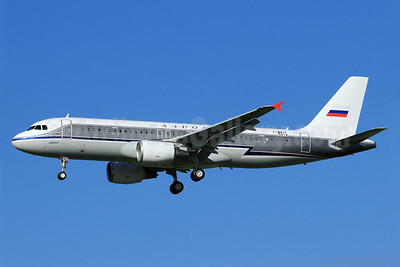
Aeroflot Russian Airlines (Moscow) as we first reported on November 19, 2012, is getting ready to introduce this 1956 retrojet.

Aeroflot issued this statement back in November:

On November 12, 2012 the open Internet voting for Aeroflot new aircraft retro livery was finished. Celebrating the companyโ€™s 90th Anniversary, an airplane in a heritage livery will join the Aeroflot fleet in 2013.

In the middle of this summer Aeroflot addressed to its passengers through social networks, asking about their vision of expected Aeroflot jubilee events. As a result, more than 45 per cent of our flyers wished to see one of the national carrierโ€™s aircraft in a retro livery.

So, the voting in Aeroflot official Facebook group had begun. There were four candidates representing four different types of painting historically worn by Aeroflot airplanes. More than 2500 passengers participated in the voting process, and the livery of one of the first worldโ€™s jet airliners โ€“ Tupolev Tu-104 (appeared in 1956) was declared a winner.

During the voting Aeroflot received from its passengers a lot of useful recommendations and remarks, which will allow updating and improving of the color scheme of the livery.

One of the brand new A320 aircraft to make part of Aeroflot fleet in the first middle of 2013 will wear a retro livery. The painting itself will be made at the Airbus manufacturing plant.

Copyright Photo: Eurospot. The pictured brand-new Airbus A320-214 has been painted in a modified 1956 almost-retro livery. Still carrying the test registration of F-WWIF, the airframe will be delivered as VP-BNT (msn 5614). The airliner is pictured at Toulouse today.

Hot New Photos:ย AG Hot New Photos

Aeroflot:ย AG Slide Show

Virgin America achieves a 4Q operating profit but loses $31.7 million in 2012

Virgin America (San Francisco) has reported its financial results for the fourth quarter of 2012, full-year 2012, and the first quarter of 2013. ย The airline reported its first-ever fourth quarter operating profit in the quarter ending in December 2012, with a 4.4 point improvement in operating margin over the fourth quarter of 2011.ย  In addition, Virgin America improved financial results in the first quarter of 2013, significantly narrowing its operating loss from the same period the year prior.ย  For the first quarter of 2013, Virgin America reported a 69 percent year-over-year improvement in operating results compared with the first quarter of 2012, driven by an 18 percent growth in RASM.

Highlights of the two quarters are as follows:

Fourth Quarter 2012 Financial Highlights

  • Virgin America achieved its first-ever fourth quarter operating profit with $5.1 million of operating income, an improvement of $13.2 million, compared with the fourth quarter of 2011.
  • Fourth quarter revenue per available seat mile (RASM) increased by 9 percent, the highest in the domestic industry.
  • Available seat miles (ASMs) increased by 16 percent, primarily the result of increases to the fleet size early in 2012.
  • The airline recorded operating revenues of $350.4 million in the fourth quarter, a year-over-year increase of 27 percent.
  • Its average fare increased 14 percent year-over-year, indicative of growing awareness and guest loyalty that Virgin America has built in its markets through its industry-leading product and service.
  • Cost per available seat mile (CASM) excluding fuel increased by 6 percent compared to the year earlier quarter, largely a result of the airline’s change in strategy to reduce aircraft utilization and eliminate seasonally weaker frequencies.
  • The average fuel cost per gallon during the quarter was $3.00, a decline of 6 percent year-over-year.
  • EBITDAR increased to $65.1 million in the fourth quarter, a year-over-year improvement of 54 percent.
  • The airline held $76 million in unrestricted cash as of December 31, 2012.

First Quarter 2013 Financial Highlights

  • Virgin America reduced its operating loss by $33.6 million or 69 percent year-over-year, posting a modest operating loss of $15 million.
  • The Company significantly outpaced the entire U.S. airline industry with year-over-year RASM growth of 18 percent.
  • ASMs decreased by 4 percent year-over-year, as the airline focused on improving its schedule for business travelers and eliminating seasonally weak frequencies during the winter.
  • Its average fare increased by 19 percent over the year earlier quarter, continuing the trend demonstrated in the fourth quarter of 2012 of increased demand by guests for Virgin America’s product.
  • Operating revenues were $301.3 million, an increase of 13 percent from the first quarter of 2012.
  • CASM excluding fuel increased by 8 percent year-over-year, primarily due to reduced utilization of the fleet.
  • EBITDAR increased seven fold to $44.7 million from $6.5 million in the same period a year-ago.
  • Unrestricted cash was $58 million as of March 31, 2013.

“We’re pleased with our first-ever fourth quarter operating profit and the progress we have seen in the first quarter โ€“ traditionally the most challenging period for our industry,” said David Cush, Virgin America’s President and CEO. “Our improved financial performance reflects the changes we made last year to optimize our winter network schedule as we slow our growth. And it also reflects the growing guest awareness and loyalty we’ve seen as our network has grown.ย  We’ve always said that once people fly us, they stick with us โ€“ and show a preference for our service.ย  Our industry-leading RASM growth for the past six months is a testament to that and to the work of a team that has truly delivered on the promise of creating the best guest experience in the skies.”

The airline’s full-year 2012 operating loss was $31.7 million.ย  The Company’s operating margin for 2012 improved by 0.2 points, to (2.4) percent, compared with 2011.ย  Year-over-year, revenue grew by 29 percent in 2012, to $1.3 billion, on a 27 percent increase in capacity.ย  Virgin America added six Airbus A320 family aircraft to its fleet during 2012, ending the year with an operating fleet of 52 aircraft.ย  The airline ended 2012 with $76 million in unrestricted cash.

Virgin America completed a major two-year growth phase during 2012, having taken delivery of 25 aircraft between the second quarter of 2010 and the second quarter of 2012, almost doubling the size of the fleet.ย  With this major growth phase largely behind the Company, Virgin America is now experiencing improved revenue performance across its network. Virgin America took delivery of one aircraft in the first quarter of 2013, increasing its total operating fleet to 53 aircraft.ย  The Company does not expect to increase its fleet size again until 2015, when aircraft on order from Airbus are scheduled for delivery.ย  The Company expects continued improved year-over-year financial performance throughout the remainder of 2013 as a result of the slower growth strategy.

In addition to slowing growth by deferring new aircraft deliveries, Virgin America made targeted changes to its network schedule in the first quarter to optimize seasonal flying and better match supply with winter demand. These changes resulted in a 17 percent reduction in the average daily utilization of the fleet to 10.3 hours per aircraft per day.ย  While the reduced schedule was a major driver behind the 18 percent improvement in RASM, it also contributed to an 8 percent increase in CASM excluding fuel costs. The airline ended the quarter with $58 million in unrestricted cash.

Balance Sheet Improvements

The airline also announces today that it has recently reached agreements with investors to modify the interest rate on a large portion of existing debt and to eliminate certain indebtedness to restructure its balance sheet. The restructuring eliminated $290 million of debt as of December 31, 2012, and approximately $20 million of accrued interest recorded in the first quarter of 2013.ย  If this restructuring had been in place on January 1, 2013, Virgin America’s first quarter net loss would have been reduced by approximately $20 million.ย  These changes with investors are a first step toward preparing the Company for access to the public markets at a future date.

In addition, the Company closed an additional $75 million debt financing that was fully funded at the closing.ย  This additional liquidity will further strengthen Virgin America’s improving financial position.

As a result of these balance sheet and liquidity initiatives, the Company expects its interest expense for the second half of 2013 to be approximately $20 million, or roughly one third of the interest expense recorded in the second half of 2012.

“With the strong improvement in first quarter 2013 financial performance, we are on track for a significant operating profit for the full year,” said David Cush.ย  “The agreements reached with our investors enhance the improvements we are seeing in our business, and are a first step in modifying the Company’s capital structure to one more in line with public companies.ย  With this solid improvement to our capital structure, we now expect to achieve a net profit in the second half of 2013, and are well positioned for sustained healthy financial performance in 2014 and beyond.”

Virgin America continued to drive significant growth in 2012:ย  expanding its fleet from 46 aircraft in January 2012 to 52 aircraft in December 2012 (in March 2013, the carrier took delivery of its 53rdaircraft, which came into service in April); achieving major carrier status as defined by the U.S. Department of Transportation (DOT); launching service to Philadelphia, Portland, Ore., and Washington D.C.’s Reagan National Airport; and in December announcing plans to inaugurate Newark service from both San Francisco and Los Angeles in 2013.

Operational Highlights

  • In 2012 the Virgin America achieved an 83.5 percent cumulative A-14 on-time ranking, compared to the industry average of 81.9 percent.
  • The airline’s baggage handling rate for 2012 was 0.87 mishandled baggage reports per 1,000 guests, placing it first among all U.S. carriers reporting to the DOT for baggage reliability.
  • Virgin America took theย top honors for the fifth consecutive year as “Best Domestic Airline” in the prestigiousย Travel + Leisureย World’s Best Awards readers’ surveyย as well as the Condรฉ Nast Traveler’s 2012 Readers’ Choice Awards.
  • Virgin America was named the best airline in 2012 in the Airline Quality Rating, a joint research project conducted annually by faculty at Wichita State University and Purdue University that looks at airlines’ on-time performance and baggage handling, involuntary denied boarding and the customer complaint rates as reported by the DOT.

Key milestones achieved in the fourth quarter of 2012 include:

  • The airline added three newย interline partners.
  • The airline introduced codeshare and agreed upon frequent flyer partnerships withย Singapore Airlinesย andย ย Hawaiian Airlines.
  • In December, the airlineย announced plans to begin flying to Newark Liberty International Airport from both SFO and LAX.
  • In December,ย the airline opened its first ever domestic lounge, the Virgin America Loft at LAX.
  • In December,the airline entered into a codeshare agreement with Singapore Airlines.
  • In December, the airlineย inaugurated the only nonstop flight offered from the New York City area (JFK) to Palm Springsย with new winter seasonal service between the two cities.

Key milestones achieved in the first quarter of 2013 include:

  • In January, the airline announcedย plans forย new daily service between Los Angeles and Las Vegas.
  • In February, the airline announced plans for new daily service betweenย San Jose and Los Angeles. ย Also in February, the airline announced plans for new daily service betweenย San Francisco and Austin, Texas and new summer seasonal service between San Francisco and Anchorage, Alaska.
  • In March, the airline announced the appointment ofย industry veteran Steve Forte as its chief operating officer.

Copyright Photo: Mark Durbin. Airbus A320-214 N361VA (msn 5515), the first with Sharklets, pushes back from the gate at the SFO base.

Virgin America:ย AG Slide Show

Kuwait Airways to order 10 Airbus A350-900s and 15 A320neos

Kuwait Airwaysย (Kuwait City) is planning to orderย 10 Airbus A350-900s and 15 A320neo aircraft according to this report by Reuters.

Read the full report: CLICK HERE

Copyright Photo: Paul Denton. The new Airbus aircraft will replace the older Airbus aircraft. Agingย Airbus A300B4-605R 9K-AME (msn 721) taxies at Geneva.

Kuwait Airways:ย AG Slide Show

Emirates Group announces its 25th consecutive profitable year

The Emirates Group (Emirates Airline) (Dubai) has announced it 25thย consecutive year of profit and company-wide growthย ending the year in a strong position despiteย continuing highย fuel pricesย andย aย weakย global economicย environment. The financial year also ended with some very positive newly reached capacity milestones throughout the business.

The company posted an AED 3.1 billion ($845 million) net profit, up 34 per cent from last year.ย  Even with external challenges, the Groupโ€™s revenue reached AED 77.5 billion ($21.1 billion) an increase of 17 per cent over last yearโ€™s results.ย  The Groupโ€™s cash balance grew by 53 per cent reaching a solid AED 27.0 billion ($7.3 billion).

โ€œAchieving our 25thย consecutive year of profitย in a financial year with ourย largest ever increase in capacity across the networkย is an achievement thatย speaks to the strength of our brands and our leadership,โ€ย said His Highness (H.H) Sheikh Ahmed bin Saeed Al Maktoum, Chairman and Chief Executive, Emirates Airline and Group.

โ€œThroughout the 2012-13 financial year the Group has collectively investedย overย AEDย 13.8 billionย (US$ย 3.8 billion)ย in new aircraft,ย products,ย servicesย andย handling facilitiesย as well as the newly opened JW Marriott Marquis Hotel in Dubai. This investment hasย resulted in an increased customer base and a rise in global brand awareness.ย Every dirham that we earn is strategicallyย placedย back into our business andย it is this tenacious approachย that has allowed the Group to maintain such strong and consistent profitabilityย under challenging circumstances.โ€

Despite a difficult operating environment, the Group continued to invest in and expand on its employeeย base, increasing its overall staff countย by 12 per centย toย 68,000.

Emiratesย continued with its growth plan and during the financial yearย saw the largest increase in capacity in the airline’s historyย receiving a staggeringย 34ย new aircraft, theย highestย in any single year and an unprecedented achievement. These aircraft wereย funded by raising more than $7.8 billion, also a first, through a variety of financing structures. Overall capacity measured in Available Tonne Kilometres (ATKMs) increased by 5.5 billion ton-kilometers. Other significant capacity increases include launchingย 10 new destinationsย across six continents, shipping more than 2 million tonnes of cargo for the first time and carrying an additional 5.4 million passengers over last year, the highest increase in a financial year.

In the 2012-13 financial year Emiratesโ€™ fuel bill increased byย 15ย per cent over last year to reach AEDย 27.9ย billion ($7.6ย billion). Withย totalย operating costs increasing byย 16ย per cent compared to a revenue increase ofย 17ย per cent over last year.

โ€œManaging volatile exchange rates, coupled withย a persistently highย fuel billย accounting forย 40 per cent of our total expenditures, has requiredย continuedย strong resolve,” added Sheikh Ahmed. โ€œEven withย these lingering challenges we continue to grow andย remain profitableย despite the industry norms because we continue to rely on our proven business model andย understanding of the marketplace.โ€

โ€œStayingย the course, our strategy for growth has reaped high benefits this past financial year, which has been our strongest ever in relationship to capacity growth,” said Sheikh Ahmed. “Emiratesย seat load factor over the last three years has been 80 per cent despite our increase in capacity by 44 per centย during the same period, showing the continued global demand for our product.ย  In addition ourย capacity measured in terms of Available Tonne Kilometres (ATKMs), which includes passenger and cargo capacity, crossed the 40 billionย tonne-kilometresย mark, another first for Emirates.โ€

Highlighting its sound financialsย and investor confidence,ย Emirates raised more than AED 28.6 billion (US$ 7.8 billion) in new funding mainly to secure its on-going fleet expansion, a record amount for the airline. This impressive total included US$ 587.5 million financing for additional A380โ€™s with a bond that used the debt capital market in the U.S., a first for a non-U.S. airline in years. Emirates also issuedย a 10-year amortised Sukuk for US$ 1 billion and raised US$ 750 million with a 12-year amortised bond matched to the payment cycle for the aircraft.ย ย It further includes more than AED 20 billion (US$5.4 billion) raised through finance and operating leases.

โ€œWe move into the new financial year withย confidenceย and aย clearย vision of where we are headed. We understand that succeeding in this industry requires determination and we are unapologetic about our drive to be the best,โ€ย added Sheikh Ahmed. โ€œWeย strive to provide superior customer experiences and as our customersโ€™ expectationsย increase so do the expectations we set for ourselves.ย With the help of ourย 68,000ย strong multicultural work force we have no doubt that the year ahead will again be more profitable than the last.โ€

Emirates revenue reached a record high of AEDย 73.1 billion ($19.9ย billion) growing by 17 perย cent when compared to theย 2011-12ย financial year.ย Althoughย theย averageย price of jet fuel did not increaseย over lastย year, it remains high and hasย impacted Emiratesโ€™ bottom line with the airlineโ€™s profitย atย AEDย 2.3ย billion (US$ 622ย million) representing an increase ofย 52 perย cent over last yearโ€™s results.

Carrying a record 39.4ย million passengers, an increase ofย 16ย perย cent, Emirates logged a robust Passenger Seat Factor, at 80 perย cent, remaining consistent with last yearโ€™s results. With an increase in seat capacity-Available Seat Kilometres (ASKMs) ofย 18 perย cent the result highlights a strong consumer desire to fly on Emiratesโ€™ state-of-the-art aircraft.

Passenger yieldย remained steady with 30.5ย filsย (8.3ย US cents) per Revenue Passenger Kilometre (RPKM)

Revenue generated from across Emiratesโ€™ six regions continues to be well balanced, with no region contributing more than 30 perย cent of overall revenues. East Asia and Australasia remained the highest revenue contributing region with AEDย 20.9ย billion (US$ย 5.7ย billion) up 15 perย cent from 2011-12. Europe, up 18 perย cent to AEDย 20.1billion (US$ย 5.5ย billion) and the Americas up 24ย perย cent to AEDย 8.3ย billion (US$ย 2.3ย billion) sawย the mostย significant growth, reflecting new destinations as well as increased frequency and capacity to these regions.

Across the rest of the globe Emirates saw strong revenue increases from West Asia and the Indian Ocean up 13ย perย cent to AEDย 8.0ย billion (US$ย 2.2ย billion), Gulf/Middle East up 13 per cent to AEDย 7.1ย billion (US$ย 1.9ย billion) and Africa with AED 6.7ย billion (US$1.8ย billion) in revenue, upย 10ย perย cent.

Emirates premium seat factor remained strong despite the global financial uncertainty.ย  Premium and overall seat factor for the airlineโ€™s flagship Airbusย A380ย aircraft outperformed the network, highlighting the continued demand for the product from passengers.

With a furtherย 198ย aircraft on order worth over ย $71ย billion, combined with the airlineโ€™s increasing worldwide passenger traffic, Emiratesโ€™ is set to continue to drive considerable economic growth in the countries that it serves.

Forging ahead with its intricately planned expansion, Emirates receivedย 34ย newย wide-body aircraft during the year includingย 20ย Boeing 777-300 ERs,ย 10ย Airbusย A380s andย 4ย Boeing 777 LRFs comparedย with last yearโ€™s 22 aircraft.ย With an increased fleet, Emirates launchedย 10ย new destinations in 2012-13 includingย Hoย Chi Minh City, Barcelona, Lisbon, Erbil,ย Washington,ย DC, Adelaide, Lyon,ย Phuket, Warsawย andย Algiers.

Looking forward to 2013-14, Emirates has to date announced four new routes; Haneda, Clark in the Philippines, Stockholm and Milan to New York.

New A380 destinations for the airline in 2012-13 included;ย Amsterdam, Melbourne, Singapore andย Moscow.ย Bringing the total number of A380 destinations toย 21.ย  In addition,ย a second A380 was deployed onย theย existing Paris and New York routes, making both now aย double daily A380 service. Two of ourย aircraftย to London Heathrowย were also upgraded to A380s,ย making all five daily flightsย now A380s.

Focusing on our customer touch points,ย Emirates openedย threeย new dedicated airport lounges during the year includingย Milan and the new First Class and Business Class Concourse Aย facilities at Dubai Airport, which are among the largest in the world, bringing the total number of Emirates lounges to 35.ย  The existing Business Class lounge in Dubai Airportโ€™s Concourse C was also refurbished to provide passengers with an enhanced experience.

Defying the industry trend, the 2012-13 financial year has been a strong one for Emirates SkyCargo who for the first time reported a revenue over AED 10 billion reaching AED 10.3 billion ($2.8 billion) mark, an 8 per cent increase over last year.

Emirates SkyCargoโ€™s tonnage increased 16 per cent reaching a remarkable 2.1 million tonnes in a shrinking airfreight market, highlighting its ability to grow revenues against the industry norm.ย  This year, freight yield per Freight Tonne Kilometer (FTKM) decreased by 6 per cent.

Contributing 15ย per cent of Emiratesโ€™ total transport revenue Emirate SkyCargo continues to play an integral role in the companyโ€™s expanding operations.

At the end of the financial year, Emirates SkyCargo freighter fleetย totalledย 10ย aircraftย โ€“ย eightย on operating leaseย and two on wet lease.

Copyright Photo: Paul Denton.ย Airbus A380-861 A6-EDZ (msn 107) with the special Expo 2020 Dubai UAE markings arrives at the Dubai hub.

Emirates:ย AG Slide Show

EasyJet to test AVOID ash detection technology through creation of artificial volcanic ash cloud

EasyJet (UK) (stylized as easyJet) (London-Luton) and its partners Airbus and Nicarnica are planning the final stage of testing for the AVOID technology. Last week EasyJet flew back a ton of volcanic ash from Iceland collected by the Institute of Earth Sciences in Reykjavik. The ash, dried to create the consistency of fine talc, will be used in a unique experiment which is planned for this summer.

The next phase of testing will involve two Airbus test planes, one of which has the ability to disperse the ash into the atmosphere, thereby creating an artificial ash cloud for a second Airbus test aircraft with the AVOID technology fitted to detect and avoid at over 30,000 feet.

The experiment, which is expected to be conducted in August, will take place when the Seviri and Calypso satellites are aligned to be able to image the ash cloud from space thereby helping to prove the accuracy and effectiveness of the AVOID technology.

Ian Davies, easyJet’s Engineering Director, commented: “The threat from Icelandic volcanoes continues and so finalizing the approval of the AVOID technology is as crucial now as ever to ensure we never again see the scenes of spring 2010 when all flying ceased for several days.

“Transporting a ton of volcanic ash from Iceland is an important step in the final journey of testing the technology and moving towards commercial certification.”

Dr Fred Prata, inventor of the AVOID technology, said: “This is the perfect science experiment.ย  We will know exactly how much ash we have placed in the atmosphere, and also its concentration and composition.ย  AVOID will then measure it and demonstrate the technology.”

Manfred Birnfeld, Senior flight Test Engineer for Airbus,ย  said:ย “We are all working towards reducing the impact of volcanic ash clouds, and the technology being developed in AVOID could prove valuable in identifying airspace free of ash contamination and provide data for pilots and airlines on the precise localisation of ash clouds.

“This is why Airbus is supporting the development of AVOID and we hope this system will contribute towards three dimensional, dynamic mapping tools to allow the airlines to take necessary decisions for a safe flight under the full knowledge of current location of ash clouds.”

The AVOID system can be likened to a weather radar for ash. Created by Dr Fred Prata, Chief Technology Officer at Nicarnica Aviation, the system comprises of infrared technology (developed by the U.S. military) fitted to aircraft to supply images to pilots and an airlineโ€™s operations control center. The images will enable pilots to see an ash cloud, up to 100 kilometers ahead of the aircraft and at altitudes between 5,000 feet and 50,000 feet, thus allowing them to make small adjustments to the planeโ€™s flight path to avoid any ash cloud. The concept is very similar to weather radars which are standard on commercial airliners today.

On the ground, information from aircraft with AVOID technology would be used to build an accurate image of the volcanic ash cloud using real time data. This could open up large areas of airspace that would otherwise be closed during a volcanic eruption, which would benefit passengers by minimising disruption.

Copyright Photo: Paul Bannwarth.ย Airbus A319-111 G-EZIK (msn 2482) touches down at EuroAirport servingย Basel/Mulhouse/Freiburg.

EasyJet (UK):ย AG Slide Show

Finnair introduces a second Marimekko print Airbus A330-300 logojet, this one for Metsรคnvรคki โ€œforest dwellersโ€

Finnair A330-300 (13-Metsรคnvรคki)(Flt)(Finnair)(LR)

Finnair (Helsinki) has introduced a second Marimekko Airbus logojet.

The airline issued this statement today:

The design collaboration betweenย Finnairย and Marimekko enters a new phase as Finnair brings textiles and tableware designed by the iconic Finnish design and fashion house to its aircraft starting on May 15. As an emblem of the cooperation, a Finnair Airbus 330 was unveiled today with a blue-forest livery based on the Marimekko print Metsรคnvรคki (โ€œforest dwellersโ€). The plane will fly from Finnairโ€™s Helsinki hub to the airlineโ€™s 13 Asian destinations plus New York, joining a sister aircraft painted in Marimekkoโ€™s Unikko (โ€œpoppyโ€) print last October.

As part of the collaboration, a selection of Marimekko for Finnair items is also available for purchase, both through in-flight sales and the Finnair PlusShop.

โ€With our Marimekko cooperation, we want to bring timeless yet modern Finnish design to the travel experience of Finnair customers,โ€ saysย Anssi Komulainen, Senior Vice President, Customer Service. โ€From mid-May onwards, our Business Class customers will enjoy their in-flight meals from tableware tailor-made for Finnair by Marimekko, and Marimekko napkins, blankets, pillows and head rest covers will be introduced during summer. The same classic prints are featured in Economy Class paper cups, headrest covers, fleece blankets and pillows.โ€

The Marimekko for Finnair collection was designed according to the airlineโ€™s needs by Marimekko designer Sami Ruotsalainen in collaboration with Kristina and Emma Isola, in original Marimekko patterns by Maija Isola. The blue, green and grey colors and the classic prints used in the collection tell the story of Finnish nature and the views seen when looking down from an aircraft window.

โ€The Metsรคnvรคki print by Kristina Isola is a strong statement about the Finnish spirit and the forest-inspired energy that makes Finns tick. The print combines the majesty and fairytale-like magic of the Finnish forest. This makes it an ideal greeting from Finland, carried on the blue and white wings of Finnair around the world,โ€ saysย Minna Kemell-Kutvonen, Creative Director at Marimekko.

Marimekko for Finnair tableware and textiles have been designed to accommodate the special requirements of commercial aviation. The Business Class tableware is made of special light-weight porcelain which helps Finnair reduce aircraft weight, thus contributing to fuel efficiency and a lighter carbon footprint.

The fairytale like Metsรคnvรคki (โ€œforest dwellersโ€) print was created by Maija Isolaโ€™s daughter Kristina Isola in 2007. The print is dedicated to dear and faithful friends: to the trees and bushes of the forest, which stay put year after year. Peace and trust are also reflected in the colorings of the design, in shades of green, brown and blue, of which the blue print was a natural choice to celebrate the Marimekko for Finnair partnership.

Image: Finnair.

Video:

Finnair:ย AG Slide Show

Air Astana takes delivery of its first Sharklet equipped Airbus A320

Air Astana A320-200 WL F-WWIC (P4-KBB)(02)(Ldg) TLS (YD)(LRW)

Air Astana (Almaty), Kazakhstanโ€™s flag carrier, has taken delivery of its first A320 aircraft equipped with Airbusโ€™ Sharklet fuel saving wing tip devices. The airline becomes the first in the region to benefit from the new wing-tip devices. Air Astanaโ€™s A320-232 P4-KBB (msn 5613), powered by IAE V2500 engines, features a comfortable two class cabin, seating 148 passengers with 16 in business class and 132 in economy.

Sharklets are newly designed wing-tip devices that improve the aircraftโ€™s aerodynamics and significantly cut the airlineโ€™s fuel burn and emissions by four per cent on longer sectors. They are made from light-weight composites and are 2.4 meters tall. Sharklets are an option on A320 Family aircraft. They offer the flexibility to A320 Family operators of either adding around 100 nautical miles more range or allowing an increased payload capability of up to 450 kilograms.

Air Astana started commercial service with its first Airbus aircraft, an A320, in 2006, and is currently operating one A319, seven A320s and four A321s.

Copyright Photo: Eurospot. The pictured A320-232 F-WWIC became P4-KBB when it was handed over on May 4, 2013 at Toulouse.

Air Astana:ย AG Slide Show