Tag Archives: Heathrow

American and United support the Department of Homeland Security’s plan to expand preclearance to 10 additional gateway airports

American Airlines (Dallas/Fort Worth) and United Airlines (Chicago) have publicly come out in support of theย announcement of the U.S. Department of Homeland Security of its intent to expand customs, immigration and agriculture preclearance to 10 additional gateway airports:

American Airlines issued this statement:

American Airlines 2013 logo

American Airlines applauds the announcement by the United States Department of Homeland Security (DHS) and Customs and Border Protection (CBP) for their plans to enter negotiations to expand preclearance operations to 10 key gateway airports โ€“ seven of which are served by American.

“Expanding air preclearance is a tremendous step forward for improving the overall travel experience for our customers and welcoming more visitors to the United States,” said Robert Isom, chief operating officer for American Airlines. “Preclearance eases the congestion at our U.S. gateway airports and ensures our customers get to their destinations faster. We fully support Secretary Jeh Johnson and the Obama Administration’s plans for bringing more tourists to the United States, and we are excited to begin discussions on expanding preclearance facilities.”

American currently serves seven of the airports on the list for potential preclearance expansion โ€“ London Heathrow; Manchester, England; Tokyo’s Narita International; Spain’s Madrid-Barajas; Brussels; Amsterdam Schiphol; and Punta Cana International in the Dominican Republic.

At preclearance facilities, CBP Officers are stationed abroad to screen passengers and their accompanying goods or baggage heading to the United States. CBP Officers retain the authority to inspect these passengers after arriving in the U.S.

American will continue to work with DHS and CBP to ensure the negotiations are successful.

United Airlines issued this statement:

United logo-1

We have worked closely with U.S. Customs and Border Protection (CBP) and support developments that provide more convenience for our customers. We thank Secretary Johnson and his team at the Department of Homeland Security and CBP for their engagement with United and the airline industry, and we look forward to partnering with them on this initiative to facilitate travel and reduce wait times.

Top Copyright Photo: SPA/AirlinersGallery.com. Airbus A330-323 N274AY (msn 342) of American Airlines climbs away from the runway at London’s Heathrow Airport.

American Airlines aircraft slide show (current livery):ย AG Airline Slide Show

United Airlines aircraft slide show (current livery):ย AG Airline Slide Show

Bottom Copyright Photo: Paul Bannwarth/AirlinersGallery.com. United Airlines Boeing 767-424 ER N69063 (msn 29463) lands in Zurich.


IAG moves one step closer to acquiring a 25% share of Aer Lingus

IAG logo

British Airways (London) and Iberia (Madrid) parent company International Airlines Group (IAG) (London) has confirmed that it has reached agreement with Aer Lingus (Dublin) to make a โ‚ฌ1.4 billion ($1.5 billion) (ยฃ1 billion) cash offer for Ireland’s national carrier.

Aer Lingus clover logo

The deal, which comes after months of negotiations, values Aer Lingus at โ‚ฌ2.55 a share ($2.80 a share).

The board of the Irish carrier is recommending the offer, which was made after confirmation from the Irish government that it is willing to sell its 25 percent stake in Aer Lingus.

The decision of the sale was made at a meeting of the Irish cabinet late on Tuesday, which itself followed indications earlier in the day from Brussels that European competition authorities would not stand in IAGโ€™s path.

Yesterday (May 28) IAG updated the Aer Lingus offer with this formal statement: CLICK HERE

Read more from The Irish Times: CLICK HERE

Assistant Editor Oliver Wilcock reporting from Manchester.

Copyright Photo: AirlinersGallery.com.ย Aer Lingus Airbus A320-214 EI-DEO (msn 2486) in the special Green Spirit – Official Airline of the Irish Rugby Team livery taxies at the home of IAG and British Airways – London (Heathrow).

Aer Lingus aircraft slide show:ย AG Airline Slide Show

Malaysia Airlines is placed into receivership, operations continue

Malaysia Airlines (Malaysian Airline System Berhad-MAS) (Kuala Lumpur) today (May 25) was placed into receivership as the company transitions to a new company (Malaysia Airlines Berhad-MAB). The transfer of assets will occur on September 1, 2015. The restructuring could result in the loss of a significant number of jobs as the national carrier downsizes under its 12-point MAS Recovery Plan.

The airline issued two statements:

Malaysia logo-1

The first statement:

Khazanah Nasional Berhad, the sole shareholder of Malaysian Airline System Berhad (MAS), today (May 25) announced the appointment of Datoโ€™ Mohammad Faiz Azmi as Administrator for MAS, effective May 25, 2015.

The appointment of the Administrator will facilitate the transfer of selected assets and liabilities from MAS to the new company Malaysia Airlines Berhad (MAB), effectively by September 1, 2015. MAS continues to operate throughout the period up to and including August 31, 2015, after which MAB will operate the business of the airline from September 1, 2015 onwards.
The appointment is a voluntary undertaking by Khazanah and is made pursuant to the Malaysian Airline System Berhad (Administration) Act 2015 (MAS Act), which was passed by both houses of the Malaysian Parliament last year. The MAS Act provides for an effective, efficient and seamless means to transition the business, property, rights, liabilities and affairs of MAS to MAB.
The transition from MAS to MAB is a key component of the 12-point MAS Recovery Plan, which was announced on August 29, 2014, to restructure the national carrier and set it on a path towards sustainable profitability. The MRP also includes conditional investment funding by Khazanah of up to RM6 billion, disbursed on a staggered basis and subject to the fulfillment of strict conditions.

The second statement:

Christoph Mueller, Chief Executive Officer of Malaysian Airline System Berhad (MAS) and CEO-designate of the new airline, Malaysia Airlines Berhad (MAB), assures customers that MAS operations continue as normal with the appointment of the Administrator.

Mueller states, โ€œI assure you our operations are very much business as usual. All MAS flights, schedules, and reservations continue to operate as normal. We remain committed to serving you with our world-class Malaysian Hospitality, and look forward to welcoming you on board Malaysia Airlines.โ€

โ€œThis appointment does not affect our daily operations or existing reservations. You can continue to make reservations in full confidence that our flights and schedules are operating as normal, that tickets sold will be honored, and that our Enrich frequent flyer program continues with Miles and status preservedโ€, Mueller added.

Today, Khazanah Nasional Berhad (Khazanah) announced the voluntary appointment of an Administrator for MAS. This appointment reflects the continuing and considerable effort to September 1, 2015, when MAB becomes operational with a new business model and a new management team, led by Mueller.

The appointment by Khazanah, Malaysiaโ€™s sovereign fund and the sole shareholder of MAS, is backed by the Malaysian Airline System Berhad (Administration) Act 2015 (MAS Act) enacted by the Government of Malaysia. Under the MAS Act, the Administrator plays a critical role to facilitating the transfer of selected assets and liabilities to MAB, which will replace MAS as Malaysiaโ€™s new national carrier.

Copyright Photo below: SPA/AirlinersGallery.com.ย The Airbus A380 are likely to be sold with the restructuring.ย Malaysia Airlines Airbus A380-841 9M-MNF (msn 114) (100th A380 logo) climbs away from London (Heathrow).

Malaysia Airlines aircraft slide show:ย AG Airline Slide Show

Alitalia to end its Air France-KLM partnership

Alitalia (Societa Aerea Italiana) (3rd) (Rome) has a new growing relationship with partner Etihad Airways (Abu Dhabi). This expanding partnership with the Gulf carrier has made the older Air France-KLM (Air France and KLM Royal Dutch Airlines) (Paris and Amsterdam) relationship less important. As a result, Alitalia has decided to withdraw from the Air France-KLM partnership at the end of 2016. Will it also leave SkyTeam? The Italian airline issued this statement:

Alitalia logo

Alitalia SAI has announced that it will not renew its partnership agreement and ancillary joint ventures agreements with Air France-KLM when they come up for renewal in 2017.

The agreements govern passenger services operated by the three carriers between Italy and France (and beyond), and between Italy and the Netherlands (and beyond), as well as the marketing, sales and distribution of Alitalia Cargo belly services undertaken by Air France-KLM.

The original agreements were concluded with Alitalia CAI (Compagnie Aerea Italiana) in 2009 and 2010 under very different economic circumstances, and were subsequently transferred to Alitalia SAI in January 2015.

Silvano Cassano, CEO of Alitalia, said: โ€œThese agreements are no longer beneficial, either commercially or strategically, to the new Alitalia and its ambitious turnaround plan. They were negotiated when Alitalia was in a very different position, with the result that the agreements in their current forms favor the other party.

โ€œThey are undermining our ability to restructure our network and the airline effectively to achieve the long term sustainability of our business.

โ€œThe new Alitalia is in a new position. Our business needs agreements which deliver equitable value to each party.

โ€œFor Italy and for Alitalia, our first priority is to win back the inbound tourism market, while better serving Italian leisure and business travellers.

โ€œIn our plans we also want to deliver up-to-date cargo solutions to the Italian manufacturing industry, the second largest in Europe, which has growing needs to export goods worldwide.

โ€œWe have indicated to Air France-KLM that we are willing to discuss more equitable arrangements that benefit all the parties involved, but thus far we have been unable to achieve this result.

โ€œWe remain open to further discussions to achieve a mutually acceptable solution. However in the interest of transparency and certainty for all parties, we felt it necessary to announce our intention not to renew these agreements under the present conditions.โ€

Alitalia (1st, 2nd and 3rd) aircraft slide show:AG Airline Slide Show

Copyright Photo below: AirlinersGallery.com. Airbus A321-112 EI-IXJ (msn 959) taxies at London (Heathrow).

Virgin Atlantic plans to operate the last Boeing 747 flight from Heathrow in April 2016

Virgin Atlantic Airways (London) has tentatively scheduled the last Boeing 747-400 revenue flight for Heathrow Airport with an arrival on April 18, 2016 in London. According to Airline Route, the last planned flight is currently flight VS 006 departing Miami at 9:50 pm (2150) on April 17, 2016 and arriving the next day (April 18) at London (Heathrow) at 11:30 am (1130).

Virgin Atlantic has operated the Boeing Jumbo since its inception on June 22, 1984. The pictured ex-Aerolineas Argentinas Boeing 747-287B G-VIRG (msn 21189) (above), named “Maiden Voyager”, operated the first Virgin Atlantic flight between London (Gatwick) and Newark.

Top Copyright Photo: Richard Vandervord/AirlinersGallery.com. Boeing 747-287B G-VIRG (msn 21189) holds short of the runway, ready for departure from Gatwick Airport. Click on the photo for the large view (note the humorous painted-on painter falling off the tail and dropping red paint on the fuselage).

Virgin Atlantic aircraft slide show:ย AG Airline Slide Show

Bottom Copyright Photo: SPA/AirlinersGallery.com. Virgin Atlantic added the first Boeing 747-400 on April 28, 1994 with the arrival of Boeing 747-4Q8 G-VFAB (msn 24958) “Lady Penelope”. Sister ship Boeing 747-4Q89 G-VBIG (msn 26255) arrives at London (Heathrow).

AG Ad - Captain's Log 5.2015 (LRW)

United Airlines offers free miles to hackers to hack their websites, will lease 11 Airbus A319s, adds new domestic routes

United logo-1

United Airlines (Chicago) according to Fortune, “is now offering free frequent flier miles to would-be hackers who can crack the airline’s various websites and mobile apps as part of a bug bounty program”.

Read the full article: CLICK HERE

Additionally, according to Reuters, United will lease 11 used Airbus A319s from AerCap Holdings NV over the next two years in order to reduce the number of 50-seat regional jets operated. The airline also has the right to lease 14 additional A319s over the next five years.

In other news, United will also offer two new twice-daily United Express Embraer 175 flights from Denver to both Charlotte and Raleigh/Durham starting on September 13 per Airline Route.

In addition, United will start summer seasonal twice-weekly United Express Bombardier CRJ700 service from Denver to Coos Bay/North Bend, Oregon (Southwest Oregon Regional Airport) starting on July 1.

Copyright Photo above: SPA/AirlinersGallery.com. Still active and going strong, Boeing 767-322 ER N662UA (msn 27159) climbs away from London’s Heathrow Airport (LHR).

Finally, the Boeing 767-300s of United still are in demand by passengers. According to The Street, the 30 remodeled 767-300s are the second most favored wide-body aircraft (after the new Boeing 787) in the UA fleet according to passengers after-flight surveys.

Read the full report: CLICK HERE

Copyright Photo below: Brian McDonough/AirlinersGallery.com. Mesa Airlines‘ Embraer ERJ 170-200LR (ERJ 175) N85320 (msn 17000454) completes the approach to Washington’s Reagan National Airport (DCA).

United Airlines aircraft slide show (current livery):ย AG Airline Slide Show

United Express-Mesa Airlines aircraft slide show:ย AG Airline Slide Show

Lufthansa to fly Finland’s ski center in the Kittilรค, Lapland region

Lufthansa logo-2

Lufthansa (Frankfurt) has announced it willย fly from Munich nonstop to the largest and best-known winter sports center in Finland for the first time. From December 19. 2015, Lufthansa will be taking off every Saturday for Kittilรค, nearby to the ski resort at Levi. Until March 26, 2016, the winter seasonal route to Lapland will be operated with an Airbus A320 with 168 seats.

In other route news, Lufthansa will operate this summer from Munich to Glasgow with Airbus A319s starting on May 16. The route will operate one day a week.

Lufthansa Premium Economy Class (Lufthansa)(LR)

In other news,ย Lufthansa Technik completed the installation of Premium Economy class seats (above) on an Airbus A340-300 with the registration of D-AIGO. Thus, a total of 53 aircraft now offer the extra comfort in Economy Class on approximately 2,000 new, well-equipped seats. Passengers can thus already enjoy the airline’s new travel class on half of all long-haul jets.

The retrofit order is carried out according to the type of aircraft. Therefore, all Boeing 747-8 and Airbus A380 aircraft on routes from the Frankfurt hub already have Premium Economy on board. A total of 15 of the Airbus A340-600 aircraft stationed in Munich and the A340-300 aircraft in Dusseldorf also feature the new seats.

The remaining aircraft of the type Airbus A330-300, A340-300, A340-600 and Boeing 747-400 will be retrofitted in the coming weeks. The retrofitting is expected to be completed in the autumn of 2015.

Copyright Photo: AirlinersGallery.com. Airbus A320-211 D-AIPB (msn 070) taxies at London’s Heathrow Airport (LHR).

Lufthansa aircraft slide show:ย AG Airline Slide Show

AG Ad - Captain's Log 5.2015 (LRW)

Air Canada reports a first quarter net profit of $122 million

Air Canada logo-1

Air Canada (Montreal) today (May 12) reported first quarter adjusted net income of $122 million (all amounts are in Canadian dollars) or $0.41 per diluted share compared to an adjusted net loss of $132 million or $0.46 per diluted share in the first quarter of 2014, an improvement of $254 million or $0.87 per diluted share. EBITDAR(1) (earnings before interest, taxes, depreciation, amortization and aircraft rent) amounted to $442 million compared to EBITDAR of $147 million in the same quarter in 2014, an increase of $295 million or 200 per cent year-over-year.

Here is the rest of the financial report:


On a GAAP basis, Air Canada reported operating income of $200 million in the first quarter of 2015 compared to an operating loss of $62 million in the first quarter of 2014, an improvement of $262 million. The airline recorded an operating margin of 6.2 per cent compared to a negative operating margin of 2.0 per cent in the first quarter of 2014, an improvement of 8.2 percentage points.

“I am delighted to report the best first quarter financial performance in Air Canada’s history,” said Calin Rovinescu, President and Chief Executive Officer. “Record results in adjusted net income, operating income, operating margin, EBITDAR, passenger revenues and passenger load factor for the quarter all underscore our team’s success in executing on our value-enhancing strategies. We have continued to see a strong demand environment, and in the first quarter our margins expanded dramatically, bolstered by strong cost control, with adjusted CASM declining 1.8 per cent despite the weaker Canadian dollar, and solid traffic growth particularly on leisure sun routes.

“While fuel prices remain volatile, in 2015 we expect to continue to expand margins, increase adjusted net income, strengthen our balance sheet and create value for shareholders. We also expect to set a new record for second quarter operating income this year; however year-over-year improvements will likely be modest when compared to the first quarter improvement. This is due to a particularly strong revenue performance in the second quarter of 2014 and higher projected maintenance expense, the absence of favourable tax-related provisions adjustments of $41 million recorded in the second quarter of 2014, as well as higher relative fuel prices in the second quarter versus the first quarter of 2015.

“I would like to thank Air Canada’s 27,000 employees for their hard work earning the loyalty of our customers as we continue to implement our commercial strategy focused on international growth with a renewed fleet and onboard product.”

First Quarter Income Statement Highlights

In the first quarter of 2015, on capacity growth of 9.3 per cent, system passenger revenues of $2.786 billion increased $178 million or 6.9 per cent from the first quarter of 2014. The increase in system passenger revenues was due to traffic growth of 10.9 per cent partly offset by a yield decline of 4.2 per cent. An increase in average stage length of 2.7 per cent versus the same quarter in 2014, reflecting international long-haul growth, had the effect of reducing system yield by 1.6 percentage points. On a stage length adjusted basis, system yield decreased 2.6 per cent year-over-year. Modest yield declines are an anticipated and natural consequence of the successful implementation of Air Canada’s strategy to profitably increase long-haul international and leisure flying.

Passenger revenue per available seat mile (PRASM) decreased 2.7 per cent from the first quarter of 2014 as the lower yield was partly offset by a passenger load factor improvement of 1.2 percentage points.

In the first quarter of 2015, operating expenses of $3.049 billion decreased $78 million or 2 per cent from the first quarter of 2014 on capacity growth of 9.3 per cent. The decline in operating expenses reflected the impact of lower jet fuel prices largely offset by the impact of the weaker Canadian dollar and capacity-related cost increases. The unfavourable impact of a weaker Canadian dollar on foreign currency denominated operating expenses (mainly U.S. dollars) in the first quarter of 2015, when compared to the first quarter of 2014, increased operating expenses by approximately $135 million. This currency impact was partly offset by a favourable currency impact of $38 million on passenger revenues and realized currency derivatives gains of $51 million.

Air Canada’s adjusted cost per available seat mile (adjusted CASM(1)), which excludes fuel expense, the cost of ground packages at Air Canada Vacationsยฎ and unusual items, decreased 1.8 per cent from the first quarter of 2014, better than the 0.5 to 1.5 per cent increase projected in Air Canada’s news release dated February 11, 2015. The better than expected adjusted CASM performance was largely due to:

Lower than anticipated aircraft maintenance expenses, primarily driven by the acceleration of aircraft lease extensions and certain favourable lease return condition provision adjustments, reducing maintenance expenses by $22 million in the first quarter of 2015;
The impact of the new Jazz CPA, effective January 1, 2015, whereby certain costs, such as ground handling services performed by Air Canada, are no longer recovered from Jazz and passed through to Air Canada under the Jazz CPA as capacity purchase fees, thereby reducing both other revenues and capacity purchase fees; and

Lower than expected employee benefits expense due to lower benefit payments and improved plan experience.

Financial and Capital Management Highlights

At March 31, 2015, unrestricted liquidity (cash, short-term investments and undrawn lines of credit) amounted to over $3.1 billion (March 31, 2014 โ€“ $2.5 billion). Air Canada’s principal objective in managing liquidity risk is to maintain a minimum unrestricted liquidity level of $1.7 billion.

At March 31, 2015, adjusted net debt(1) amounted to $5.19 billion, an increase of $58 million from December 31, 2014, as higher long-term debt and finance lease balances were largely offset by higher cash and short-term investments balances. The airline’s adjusted net debt to EBITDAR ratio was 2.6 at March 31, 2015 versus a ratio of 3.1 at December 31, 2014. Air Canada uses this ratio to manage its financial leverage risk and its objective is to maintain the ratio below 3.5.

In the first quarter of 2015, free cash flow(1) of $383 million was $349 million higher than in the first quarter of 2014, reflecting higher cash flows from operating activities partly offset by an increase in capital expenditures which included the acquisition of two Boeing 787-8 aircraft in the first quarter of 2015.

For the 12 months ended March 31, 2015, return on invested capital (ROIC(1)) was 15.2 per cent versus 10.9 per cent for the 12 months ended March 31, 2014. Air Canada’s goal is to maintain a sustainable ROIC of 10 to 13 per cent.

Further to Air Canada’s foreign exchange risk management practices (which are more fully described in Air Canada’s 2014 MD&A dated February 11, 2015), foreign denominated revenues essentially act as a natural hedge against U.S. dollar denominated non-fuel operating expenses. As such, net U.S. dollar operating expenses are largely attributable to the airline’s fuel purchases which are currently at a much lower cost in Canadian dollars despite the impact of a weaker Canadian dollar.

U.S. dollar currency derivatives and U.S. dollar cash reserves which, as at March 31, 2015, amounted to US$2.2 billion and US$711 million, respectively, are employed to offset approximately 65 per cent of the net U.S. dollar currency exposure over the next 18 months. The currency derivatives enable Air Canada to purchase U.S. dollars at a weighted average price of C$1.1784 (subject to various option pricing features, such as knock-out terms and profit cap limitations). These derivatives and U.S. dollar cash reserves would be available to mitigate certain cash flow exposure from the currency movements over the next 18 months; however the benefit of these hedging activities is recorded as a foreign exchange gain and not within operating income.

Current Outlook

Capacity

Air Canada expects second quarter 2015 system ASM capacity, as measured by available seat miles (ASMs), to increase 8.75 to 9.75 per cent when compared to the second quarter of 2014, and to be comprised of an increase in the total number of seats dispatched (system) of 5.5 to 6.5 per cent and an increase in system average stage length (measured by ASMs divided by seats dispatched) of approximately 3.0 per cent when compared to the same quarter in 2014.

Air Canada continues to expect its full year 2015 system ASM capacity to increase by 9.0 to 10.0 per cent. For the full year 2015, Air Canada continues to expect an increase in the total number of seats dispatched (system) of 6.0 to 7.0 per cent and an increase in average stage length (system) of approximately 3.0 per cent when compared to the full year 2014. Approximately 55 per cent of the 2015 forecasted capacity increase will be through the continued lower-cost growth of Air Canada rougeยฎ while approximately 38 per cent of the capacity growth will be targeted to international markets operated by the mainline carrier.

Air Canada continues to expect its full year 2015 domestic ASM capacity to increase 3.5 to 4.5 per cent when compared to 2014, with a large part of the growth focused on the airline’s transcontinental services. The increase on transcontinental services is partly driven by the positioning of certain Boeing 777 and 787 aircraft at Air Canada’s major hubs in Toronto and Vancouver. Furthermore, in 2015, an overlap of the aircraft brought into the fleet to replace the exiting Embraer 190 aircraft is expected to account for approximately 30 per cent of the projected domestic capacity growth in 2015. This overlap is designed to better match capacity with expected 2015 summer season demand. For the full year 2015, Air Canada continues to expect an increase in the total number of seats dispatched (domestic) of 2.5 to 3.5 per cent and an increase in average stage length (domestic) of approximately 1.0 per cent when compared to the full year 2014.

Adjusted CASM

For the second quarter of 2015, Air Canada expects adjusted CASM (which excludes fuel expense, the cost of ground packages at Air Canada Vacations and unusual items) to increase 0.25 to 1.25 per cent when compared to the second quarter of 2014.

For the full year 2015, Air Canada now expects adjusted CASM to decrease 1.5 to 2.5 per cent from the full year 2014 (as opposed to the decrease of 0.75 to 1.75 per cent projected in Air Canada’s February 11, 2015 news release). This improvement is largely driven by the impact of the new Jazz CPA, effective January 1, 2015, whereby certain costs, such as ground handling services performed by Air Canada, are no longer recovered from Jazz and passed through to Air Canada under the Jazz CPA.

Major Assumptions

Air Canada’s outlook assumes annual Canadian GDP growth of 1.75 to 2.25 per cent for 2015. Air Canada also expects that the Canadian dollar will trade, on average, at C$1.22 per U.S. dollar in the second quarter of 2015 and for the full year 2015 and that the price of jet fuel will average 69 cents per litre for the second quarter of 2015 and 70 cents per litre for the full year 2015.

(1) Non-GAAP Measures

Below is a description of certain non-GAAP measures used by Air Canada to provide additional information on its financial and operating performance. Such measures are not recognized measures for financial statement presentation under Canadian GAAP and do not have standardized meanings and may not be comparable to similar measures presented by other public companies. Refer to Air Canada’s First Quarter 2015 MD&A for reconciliation of non-GAAP financial measures.

Adjusted net income (loss) and adjusted net income (loss) per diluted share are used by Air Canada to assess its performance without the effects of foreign exchange, net financing expense on employee benefits, mark-to-market adjustments on fuel and other derivatives and unusual items.

EBITDAR is commonly used in the airline industry and is used by Air Canada to assess earnings before interest, taxes, depreciation, amortization, impairment and aircraft rent as these costs can vary significantly among airlines due to differences in the way airlines finance their aircraft and other assets.

Adjusted CASM is used by Air Canada to assess the operating performance of its ongoing airline business without the effects of fuel expense, the cost of ground packages at Air Canada Vacations and unusual items, as such expenses may distort the analysis of certain business trends and render comparative analysis to other airlines less meaningful.

Adjusted net debt is a key component of the capital managed by Air Canada and provides a measure of the airline’s net indebtedness. Adjusted net debt is calculated as the sum of total long-term debt and finance lease obligations and capitalized operating leases less cash and cash equivalents and short-term investments.

Free cash flow is used by Air Canada as an indicator of the financial strength and performance of its business because it shows how much cash is available for such purposes as repaying debt, meeting ongoing financial obligations and reinvesting in Air Canada.

Return on invested capital (ROIC) is used by Air Canada to assess the efficiency with which it allocates its capital to generate returns. Return is based on Adjusted net income (loss) (as referred to in the above paragraph), excluding interest expense and implicit interest on operating leases. Invested capital includes average year-over-year total assets, net of average year-over-year non-interest-bearing operating liabilities, and the value of capitalized operating leases (calculated by multiplying annualized aircraft rent by 7).

Copyright Photo below: SPA/AirlinersGallery.com. Air Canada acquiredย two Boeing 787-8 aircraft in the first quarter of 2015. C-GHPQ (msn 35257) departs from London (Heathrow).

Air Canada aircraft slide show:ย AG Airline Slide Show

Emirates Group announces its 27th consecutive year of profit, $1.5 billion net profit, up 34%, will launch weekly cargo service to Columbus, Ohio

The Emirates Group (Emirates Airline and Emirates SkyCargo) (Dubai) has announced its 27th consecutive year of profit. The profit for the fiscal year was $1.5 billion, up 34 percent from the previous year. The airline issued this statement:

Emirates logo-1

The Emirates Group announced its 27th consecutive year of profit and steady growth across the company, ending the year in a strong position despite the many global and operational challenges during this period. The financial year ending March 31, 2015 also marked the achievement of new capacity milestones at both Emirates and dnata, as the Group continued to expand its global footprint, and strengthen its business through strategic investments.

Released in its 2014-15 Annual Report the Emirates Group posted an AED 5.5 billion (US$1.5 billion) profit, up 34% from last year. The Groupโ€™s revenue reached AED 96.5 billion (US$26.3 billion), an increase of 10% over last yearโ€™s results, and the Groupโ€™s cash balance remained strong, growing to AED 20.0 billion (US$5.5 billion).

โ€œ2014-15 was a turbulent year for aviation. The fall in oil prices provided cost relief in the second half of our financial year, however it did not offset the hit to our profitability caused by significant currency fluctuations, nor the hit to our revenue from operational adjustments in addressing the Ebola outbreak, armed conflicts in several regions, and the 80-day runway upgrading works at Dubai International airport (DXB). Achieving our 27th consecutive year of profit and one of our best performances to date, is testimony to the strength of our brands and business fundamentals, as well as the dedication and talent of our workforce,โ€ said His Highness (H.H.) Sheikh Ahmed bin Saeed Al Maktoum, Chairman and Chief Executive, Emirates Airline and Group.

The strong rise of the US dollar against currencies in many of Emiratesโ€™ and dnataโ€™s key markets had an AED 1.5 billion (US$412 million) impact to the Groupโ€™s bottom line, while the 80-day disruption at DXB had an estimated impact of AED 1.7 billion (US$467 million) on Group revenue.

โ€œEvery year brings a new set of challenges. In addressing these, we are always guided by the best interest of our people, our customers, and our long-term goals. As a Group, we keep a close eye on our top and bottom lines, but we never take our foot off the gas pedal when it comes to investing to enhance our business performance, and looking after our people. In 2014-15, the Group collectively invested over AED 20.2 billion (US$5.5 billion) in new aircraft and equipment, modern facilities, the latest technologies, and staff initiatives. This was the second highest amount ever in one financial year after last yearโ€™s record investment.โ€

The Groupโ€™s employee base across its more than 80 subsidiaries and companies increased by 11% to over 84,000-strong representing over 160 different nationalities.

โ€œLooking ahead, the ongoing uncertainty for many currencies and economic markets around the world will continue to pose a challenge, as will the looming threat of protectionism in some countries. However, we move into the new financial year with confidence, and a strong foundation for continued profitability with our strong balance sheet, solid track record, diverse global portfolio, and international talent pool,โ€ said Sheikh Ahmed. โ€œWe will continue on our journey of steady and rational growth, and work even harder to meet and exceed our customersโ€™ expectations.โ€

In line with the overall profit increase, the Group declared a dividend of AED 2.6 billion (US$ 700 million) to the Investment Corporation of Dubai.

Emirates performance

In 2014-15, Emirates increased capacity by 4.0 billion Available Ton Kilometers (ATKMs). For the first time in the airlineโ€™s history, Emiratesโ€™ total passenger and cargo capacity crossed the 50 billion mark, to 50.8 billion ATKMs at the end of the financial year, cementing its position as the worldโ€™s largest international airline.

Emirates received 24 new aircraft during the year, including 12 A380s, ten Boeing 777-300 ERs and two Boeing 777Fs, bringing its total fleet count to 231. At the same time 10 aircraft were phased out, taking the average fleet age to 75 months or approximately half the industry average of 140 months. The airline remains the worldโ€™s largest operator of the Boeing 777 and A380 โ€“ both aircraft being amongst the most modern and efficient wide-bodied jets in the sky today.

With the delivery of new aircraft, Emirates launched five new passenger destinations: Abuja, Brussels, Budapest, Chicago, Oslo and four new additional freighter-only destinations: Atlanta, Basel, Mexico City, and Ouagadougou. It also added services and capacity to 34 cities on its existing route network across Africa, Asia, Europe, the Middle East, and North America, offering customers even greater choice and connectivity.

The 80-day runway closure at DXB necessitated the grounding of 19 Emirates aircraft, reducing the airlineโ€™s capacity by 9%, and causing the reduction of services to 41 destinations over this period. The estimated impact on airline revenue was AED 1.6 billion (US$ 436 million). The Ebola outbreak in Africa prompted route suspensions and increased health and safety screenings at other ports; and geopolitics resulted in the suspension of services and re-routing of flight paths to avoid overflying conflict zones.

Despite these challenges, Emirates revenue reached a new record of AED 88.8 billion (US$24.2 billion). The average price of jet fuel dropped significantly during the second half of the financial year and has supported Emiratesโ€™ bottom line improvement. Emiratesโ€™ fuel bill decreased by 7% over last year to AED 28.7 billion (US$7.8 billion). Fuel is now 35% of operating costs, down by 4%pts compared to last year. However, fuel remained the biggest cost component for the airline. Total operating costs increased by 6%, compared to a revenue increase of 7% over the 2013-14 financial year.

The airline successfully managed increased competitive pressure across all markets to record a profit of AED 4.6 billion (US$1.2 billion), an increase of 40% over last yearโ€™s results, and a healthy profit margin of 5.1%, the strongest margin since 2010-11.

Carrying a record 49.3 million passengers, up 11% from last year, Emirates managed to achieve a Passenger Seat Factor of 79.6%, an improvement compared with last yearโ€™s results (79.4%) in spite of a 9% increase in seat capacity byAvailable Seat Kilometres (ASKMs). This highlights thestrong consumer desire to fly on Emiratesโ€™ state-of-the-art aircraft, and via efficient routings through its Dubai hub.

Under pressure from the weakening of all major currencies against the USD, passenger yield dropped to 29.7 fils (8.1 US cents) per Revenue Passenger Kilometre (RPKM).

Emirates also improved its premium seat factor despite lingering economic uncertainty and strong competition in many markets. Premium and overall seat factor for the airlineโ€™s flagshipA380aircraft outperformed the network, underscoring the popularity of Emiratesโ€™ premium and A380 product amongst passengers. At 31 March 2015, Emirates had 59 A380 aircraft in its fleet, serving one out of every four destinations on its passenger network.

To fund its fleet growth, Emirates raised a total of AED 18.7 billion (US$5.1 billion), using a variety of financing structures. Emirates achieved a major landmark when it closed the first ever Japanese Operating Lease on an A380. It also entered into a Japanese Operating Lease with a Call Option (JOLCO) with respect to one A380-800 aircraft to expand the investor base of the A380 into the Japanese market. During the year, Emirates also successfully closed sale and leaseback transactions for five B777-300ERs and one B777-200ER aircraft.

The financing highlight of the year was the successful issuance of a UK Export Finance (UKEF) guaranteed Sukuk bond of AED 3.4 billion (US$913 million) to fund the acquisition of four A380 aircraft to be delivered in 2015. This deal marked the worldโ€™s first Sukuk financing supported by UKEF and the largest ever capital markets offering in the aviation space with an Export Credit Agency guarantee.

These deals align with Emiratesโ€™ strategy to seek diverse financing sources, and underscore its sound financials and the strong investor confidence in the airlineโ€™s business model. Emirates closed the financial year with a healthy AED 13.3 billion (US$3.6 billion) cash flow from operating activities.

Revenue generated from across Emiratesโ€™ six regions continues to be well balanced, with no region contributing more than 30% of overall revenues. Europe is the highest revenue contributing region with AED 25.2 billion (US$6.9 billion), up 7% from 2013-14. East Asia and Australasia follows closely with an increase of 3% and AED 24.6 billion (US$6.7 billion). The highest growth with 20% was recorded for the Americas to AED 11.0 billion (US$3.0 billion). Gulf and Middle East revenue increased 4% to AED 8.6 billion (US$2.3 billion).

Across the rest of the globe Emirates saw strong revenue increases from West Asia and Indian Ocean up 11% to AED 9.2 billion (US$ 2.5 billion) and Africa with AED 8.1 billion (US$2.2 billion) in revenue, up 5%.

In line with its customer-focused proposition, Emirates invested over AED 73 million (US$20 million) last year to equip its fleet with free Wi-Fi. By March 31, 2015, 107 of its Airbus A380 and Boeing 777 aircraft offered Wi-Fi services. The airline also opened new dedicated airport lounges in Glasgow and Los Angeles, taking to 37 the number of dedicated Emirates Lounges across the world. Emirates also opened a new 300-seat contact centre in Budapest to support its growth and supplement its language and response capability.

Looking forward to 2015-16, Emirates has to date announced two new routes including Denpasar and Orlando aside from a number of capacity upgrades to existing destinations.

The 2014-15 financial year has been a strong one for Emirates SkyCargo who reported a revenue of AED 12.3 billion (US$ 3.4 billion), a very remarkable 9% increase over last year. Contributing 15% of the airlineโ€™s total transport revenue Emirates SkyCargo continues to play an integral role in the companyโ€™s expanding operations.

Emirates SkyCargoโ€™s tonnage strongly increased by 6% to reach 2.4 million tonnes in an airfreight market that remained challenging with fast-changing demand patterns. Emirates SkyCargoโ€™s performance highlights its ability to grow revenues against the industry norm. This year, freight yield per Freight Tonne Kilometre (FTKM) decreased by 1%, and was also impacted by the weakening of major currencies.

On May 1, 2014, Emirates SkyCargo marked a major milestone with the move of its freighter operations to its new cargo terminal at Dubai World Centralโ€™s Al Maktoum International airport (DWC). Capable of handling 700,000 tons of cargo annually, the new terminal at DWC is equipped with state-of-the-art technology and has the potential for further expansion to handle 1 million tonnes annually, positioning the business for future growth.

At the end of the financial year, the Emirates SkyCargo freighter fleet had grown to 14 aircraft – 12 Boeing 777Fs, and 2 Boeing 747-400Fs.

Emiratesโ€™ hotels recorded revenue of AED 693 million (US$ 189 million), an impressive increase of 23% over last year. This positive development was supported by the opening of the second tower of the JW Marriott Marquis Hotel in Dubai, the worldโ€™s tallest hotel.

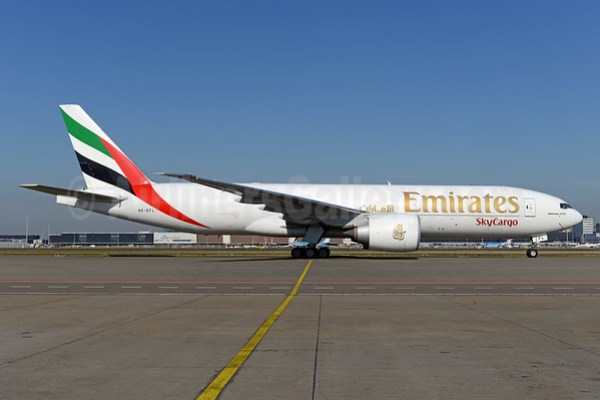
In other news,ย Emirates SkyCargo, the freight division of Emirates, has announced that Columbus, the State Capital of Ohio in the United States, will join its global freighter network with the launch of a weekly service to Rickenbacker International Airport from May 27, 2015.

The new freighter service to Americaโ€™s 15th largest city will become Emirates SkyCargoโ€™s 48th destination in its worldwide freighter network and sixth in the US. The announcement was made on the side lines of the 7th Air Cargo Europe Exhibition and Conference taking place in Munich, Germany, where Emirates SkyCargo is showcasing its products and services.
The flight will be operated by an Emirates SkyCargo Boeing 777 Freighter, which has the capacity to carry just over 100 tonnes of cargo, and with its main deck cargo door being one of the widest of any aircraft, enables it to uplift outsized cargo and carry larger consignments.

Top Copyright Photo: SPA/AirlinersGallery.com. Emirates added an even dozen new Airbus A380s during the year. A380-861 A6-EEX (msn 154) departs from Heathrow Airport in London.

Emirates aircraft slide show:ย AG Airline Slide Show

Bottom Copyright Photo: Ton Jochems/AirlinersGallery.com. Emirates SkyCargo is coming to Columbus, Ohio starting on May 27. Boeing 777-F1H A6-EFL (msn 42230) taxies at Amsterdam.

AG Bottom Ad Bar

British Airways announces two new routes from London Heathrow, also increases Gatwick frequencies

British Airways logo

British Airways (London) has announced that it will serve two new routes from its London-Heathrow hub for Winter 2015/16, with one route ending a 7-year hiatus to and from Iceland.

The British flag-carrier will begin thrice-weekly services between London (Heathrow) and Keflavik (near Reykjavik) from October 2015, and then a twice-weekly service from London (Heathrow) to Salzburg, Austria beginning in December 2015.

Lynne Embleton, BAโ€™s director of strategy and business units, said: โ€œReykjavik is a new destination for us, and customers will now have the convenience of flying from Heathrow as well as Gatwick to Salzburg.โ€

BA will also increase the frequencies on its routes from London (Gatwick) to Funchal, Faro, Seville and Turin for the winter 2015/16 season starting on October 27, 2015 and running to March 25, 2016.

The airline will add two flights from London (Gatwick) to Faro on Tuesdays and Thursdays, two flights to Seville on Tuesdays and Wednesdays, two flights to Funchal, Madeira, on Wednesdays and Fridays, and one extra frequency to Turin on Sundays, which will operate between December 13, 2015, and March 20, 2016.

Assistant Editor Oliver Wilcock reporting from Manchester.

Copyright Photo: AirlinersGallery.com. Airbus A320-232 G-EUYA (msn 3697) taxies at the London (Heathrow) hub.

British Airways aircraft slide show:ย AG Airline Slide Show

AG Vote for Favorites

AG Thank you